Riding From a Colorado Campground to the Trail
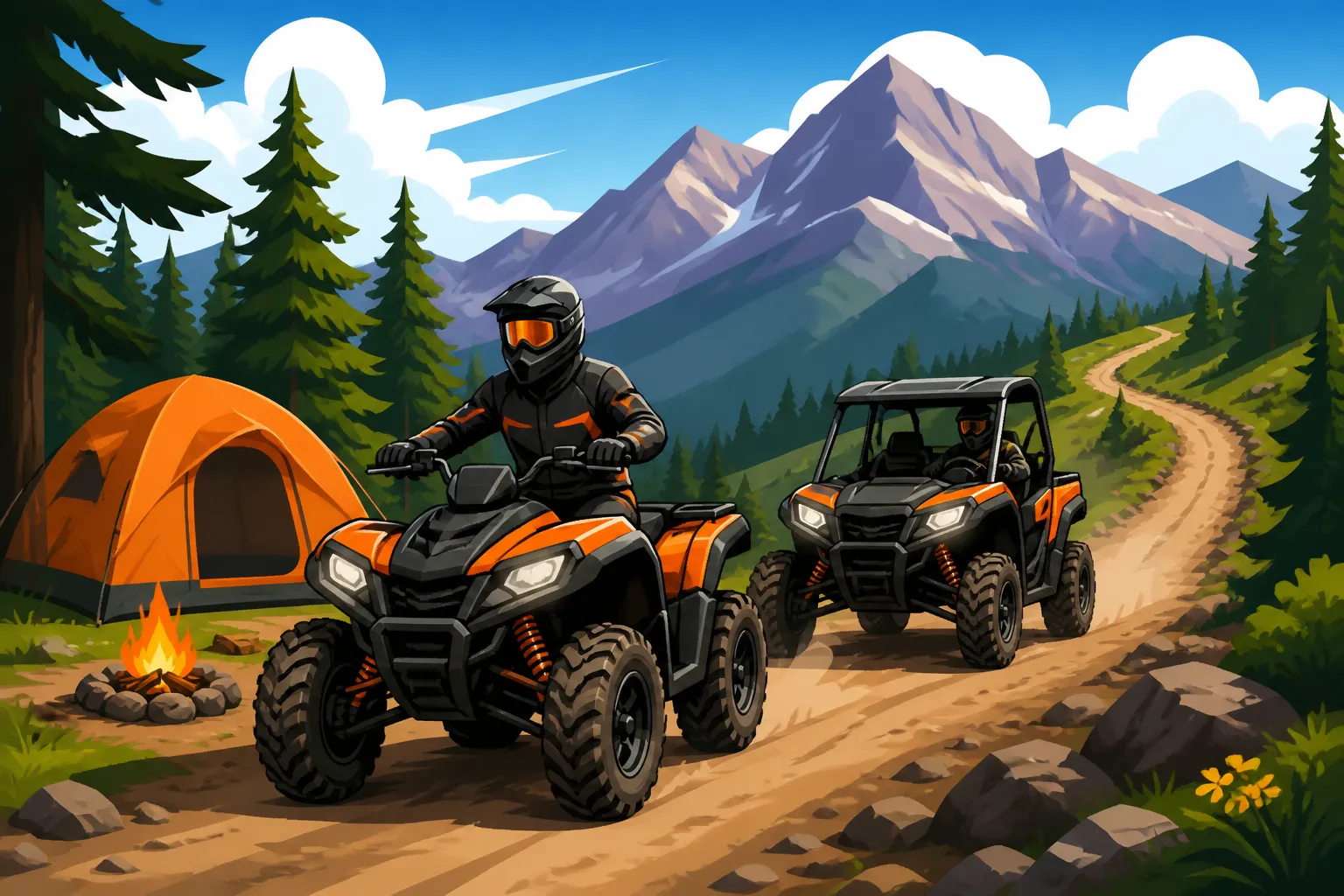
There's nothing quite like the dream of waking up at your favorite Colorado campground, rolling out of your tent or RV, and firing up your ATV or UTV to head directly to the trails. The thought of avoiding the hassle of loading and unloading, battling traffic with a trailer, and searching for trailhead parking is incredibly appealing. However, the reality of making that dream come true in Colorado can feel like navigating a legal minefield. Many riders get frustrated trying to understand where they can and can't ride their machine on public roads to link up with the trails. This guide is here to untangle the complexities and give you a realistic roadmap for riding from your Colorado campground straight to the dirt.
Understanding Colorado's Complex Road Rules for OHVs
Why "Street Legal" Isn't a Statewide Reality
This is often the first major hurdle and source of confusion for riders, especially those visiting from other states that might have more permissive statewide "street legal" ATV/UTV laws. In Colorado, there isn't a single, overarching state law that allows you to simply add turn signals, a horn, and a license plate to your ATV or UTV and consider it road-ready everywhere. That's a huge disappointment for many, who might have invested in aftermarket kits from companies like SuperATV designed to make their machines compliant in other jurisdictions. While these kits certainly add safety features and are a smart upgrade for any machine, they don't automatically grant you the freedom to cruise down any Colorado highway or county road. The state generally views ATVs and UTVs as off-highway vehicles, meant for designated trails, not public paved roads. This distinction is critical and often catches people off guard, leading to fines and frustration if they don't understand the local nuances.
Imagine you're driving in from Utah, where you can legally plate your UTV and drive it on most roads. You arrive at a Colorado campground, assuming your "street legal" machine will be fine. You might be in for a rude awakening when a local sheriff explains that those Utah plates don't hold the same weight here when it comes to general road access. It's a patchwork system, and understanding that Colorado operates differently is step one. [Why Colorado Will Not Plate Your UTV] delves into this more deeply, but the core takeaway is: don't assume your machine is road-legal just because it looks like it could be.
County and Town Ordinances: Your Local Lifeline
So, if the state doesn't give you blanket permission, who does? The answer lies with individual counties and incorporated towns. Colorado law does allow local jurisdictions the authority to open certain public roads or segments of roads within their boundaries to OHV use. This is where the term "local lifeline" truly comes into play because these ordinances are your golden ticket to riding from your campground to the trail.
Each county or town that chooses to open roads will have its own specific set of rules. This can include designated routes, speed limits (often much lower than the posted car speed limit), times of day when OHV travel is permitted, and specific equipment requirements beyond what's needed for trail riding. One town might allow OHVs on all county roads within its limits, while a neighboring county might only open a few specific "feeder" routes to connect trail systems. [Colorado County Roads Open to OHVs] is an excellent resource to start your research. This localized approach means that what's perfectly legal in, say, Lake City and Hinsdale County, where the Alpine Loop is celebrated, might be strictly prohibited just a few miles down the road in another jurisdiction. It's not uncommon to see signs marking the boundaries where OHV access begins or ends, and paying close attention to these is paramount. The difference between a leisurely ride and a hefty fine often comes down to knowing which side of a specific sign you're on.
Required Equipment for Any Road Use
Even when a county or town does open roads to OHVs, they don't just wave you through with your trail setup. There are usually specific equipment requirements that your machine must meet to be considered safe and compliant for road travel. These are often aligned with basic motor vehicle standards, even if your OHV isn't getting a full "street-legal" plate.
Common requirements often include:
- Headlights and Taillights: Operational lights are a given, especially if you plan to be out around dusk or dawn. Many aftermarket options from reputable brands like SuperATV include these as part of their street-legal kits, which are very helpful here.
- Brake Lights: Essential for signaling stops to other vehicles.
- Turn Signals: Required for indicating turns, just like a car.
- Horn: A functional horn for signaling.
- Rearview Mirrors: At least one, often two, side mirrors are typically required to provide visibility of traffic behind you.
- Muffler and Spark Arrester: Your machine must have an adequate muffler to prevent excessive noise, and a spark arrester is legally required on all public lands to prevent wildfires. [Mufflers and Spark Arresters in Colorado] provides more detail.
- Brakes: A properly functioning braking system is non-negotiable.
- DOT-Approved Helmet: While Colorado doesn't have a universal helmet law for adults on trails, many local ordinances do require helmets for OHV operators and passengers when riding on public roads, regardless of age. Always check local rules. [Colorado Helmet and Eye Protection: What Is Actually Required] is a must-read.
Meeting these equipment standards is not just about avoiding a ticket; it's about ensuring your safety and the safety of others sharing the road. A UTV with a full windshield, a functional horn, and proper lighting from a brand like SuperATV is much better equipped for short road sections than a barebones trail quad.
Planning Your Ride: From Campground Gate to Trailhead
Researching Your Campground's Local Area
This cannot be stressed enough: do your homework before you go. The beautiful thing about Colorado's diverse landscape is that every region offers something different, but this also means the OHV rules can vary wildly from one mountain town to the next. What's allowed around Lake City might be strictly forbidden in Silverton, even though they are just a stone's throw away on the Alpine Loop.
Before you even pack your bags, identify the specific county and any incorporated towns your chosen campground is located within or near. Then, search for that county or town's official website. Many municipalities, especially those that embrace OHV tourism, will have a dedicated section on their website detailing their OHV ordinances, often with maps of approved routes. Look for terms like "OHV ordinance," "off-highway vehicle access," or "recreational vehicle regulations." You can also call the local sheriff's office or the town hall directly. Campground hosts are another fantastic, often underutilized, resource. They live and work in the area and usually have a very good understanding of local rules, though it's always best to cross-reference with official sources. Don't rely solely on online forums or anecdotal advice, as rules can change. [Finding Your Colorado County's OHV Ordinance] is a great starting point for this crucial research. A simple check beforehand can save you a lot of grief and potential fines once you're on vacation.
Navigating Designated Routes and "Feeder" Roads
When a town or county opens roads to OHVs, it's rarely a free-for-all. They will typically designate specific routes that serve as connectors or "feeder" roads, allowing riders to get from lodging, campgrounds, or staging areas to the actual trailheads. These designated routes are often clearly marked with signage that indicates "OHV Route" or "Shared Use Road."
It's vital to stay on these marked routes. Veering off onto a road that isn't designated for OHV use can lead to serious penalties, including significant fines and potential loss of riding privileges. These routes are carefully chosen to minimize impact on residential areas, address safety concerns, and ensure a smooth flow of traffic. For example, in towns that embrace OHV tourism, you might find that the main street, which is often a state highway, is off-limits, but parallel side streets or specific county roads are open. You might be able to ride your machine from a campground directly to a gas station or a restaurant, but only if that establishment is located along an approved route. [Colorado Towns That Let OHVs Use Their Streets] gives some examples of places that have embraced this. Always keep an eye out for signs; they are your best friends in unfamiliar territory. Many riders use GPS apps with downloaded maps that show OHV-approved roads, which can be invaluable when you're exploring.
The Importance of a Colorado OHV Registration
Regardless of whether you're on a designated trail or a short connecting road approved by a local ordinance, if you're riding your OHV on any public land or publicly maintained road in Colorado, you must have a valid Colorado OHV registration sticker. This is non-negotiable. Even if your machine is technically street-legal in another state, or if you're only riding a few hundred yards on an approved local road, that state-issued OHV sticker from Colorado Parks and Wildlife (CPW) is required.
Think of it this way: the local ordinances give you permission to ride on certain roads, but the state registration gives your machine the legal standing to be on public land at all. These two requirements work hand-in-hand. The funds collected from OHV registrations go directly back into maintaining and improving the very trails and staging areas we all love, so it's a critical part of supporting the sport. You can obtain your registration online, by phone, or from vendors across the state, including many sporting goods stores. [Colorado Parks and Wildlife OHV Registration Explained] covers the process in detail. Don't ever assume that because you're just "commuting" from your campsite to the trail, you can skip this essential step. A ranger checkpoint at a trailhead will definitely be looking for that sticker.
Practical Tips for a Smooth Campground-to-Trail Transition
Safety First: Gear, Speed, and Awareness
When you're making that short journey from your campground to the trailhead on an approved public road, it's crucial to shift your mindset from trail riding to sharing the road with cars, trucks, and even cyclists. Safety needs to be your absolute priority.
First, gear up appropriately. Even if the local ordinance doesn't explicitly require it, wearing a DOT-approved helmet and eye protection is just plain smart. You're more exposed on an OHV than in a car, and the risks of a collision, even at low speeds, are significant. If you’ve invested in aftermarket products from SuperATV to enhance safety and comfort, leverage them.
Second, mind your speed. Local OHV road ordinances often impose lower speed limits than those for traditional vehicles. These limits are there for a reason – to account for the different handling characteristics of OHVs, the presence of pedestrians, and often the narrower, unpaved nature of these feeder roads. Going too fast kicks up excessive dust, disturbs residents, and drastically reduces your reaction time if something unexpected happens.
Third, maintain heightened awareness. Watch for cars, especially around blind corners and crests. Assume other drivers might not expect to see an OHV. Keep a safe following distance. Use your mirrors frequently. Be particularly cautious around children playing near campgrounds or residences. Remember, you're a guest on these roads. [Colorado Rules for a Road Ride] offers great general advice.
Respecting Locals and Minimizing Impact
The privilege of riding OHVs on public roads to access trails is often hard-won and can be easily lost if riders don't act responsibly. Many mountain towns have had passionate debates about OHV access, and it's incumbent upon all riders to be good stewards.
- Noise Control: Your machine might sound awesome on the trail, but that throaty exhaust can be incredibly disruptive in a quiet campground or residential area. Keep your RPMs low, especially when passing campsites or homes. Make sure your muffler and spark arrester are in good working order. Excessive noise is a common complaint that leads to communities restricting OHV access.
- Dust Management: On unpaved county roads, OHVs can kick up a lot of dust. This is annoying for residents, homeowners, and other road users. Slow down, especially when passing homes or other vehicles, to minimize dust clouds.
- Stay on Course: Stick to the designated routes. Do not cut through private property, even if it seems like a shortcut. Do not ride on lawns or undesignated shoulders. Respect all private property signs and fences.
- Be Courteous: Wave to pedestrians, yield to horses, and give cyclists a wide berth. A friendly rider leaves a positive impression, which helps maintain and expand access for everyone. [Riding Slowly Past Homes on a Route] emphasizes this crucial point. Remember, the way you behave reflects on the entire OHV community.
What to Do If You're Unsure
Despite all your research and planning, you might encounter a situation where you're just not sure if a particular road segment is open to OHVs. Maybe a sign is missing, or the map isn't perfectly clear. In these moments, it's always better to err on the side of caution.
- Don't Guess: If you're unsure, don't assume you're allowed. Turn back, find an alternative route, or return to your campground and seek clarification.
- Ask a Local: If you see a local resident, rancher, or another experienced rider, politely ask for guidance. Just remember to verify what they say with official sources if possible, as local interpretations can vary.
- Contact Authorities (Non-Emergency): If you have a non-emergency question, you can call the local sheriff's office or town hall during business hours. They are the ultimate authority on local ordinances. Your campground host might also have phone numbers for these resources.
- Have a Backup Plan: Always have a backup plan. If a road you hoped to use is closed or restricted, be prepared to trailer your machine to the trailhead if necessary. This might be less convenient, but it beats a citation or, worse, an accident.
By being proactive, respectful, and safety-conscious, you can significantly enhance your chances of a smooth and enjoyable transition from your Colorado campground directly to the fantastic trails that await.
| Scenario | OHV Registration Required? | Typical Road Equipment Needed? | Local Ordinance Check Essential? | Best Practice |
|---|---|---|---|---|
| Riding on Designated Trail | Yes (CO CPW Sticker) | Basic Trail Safety | No (MVUM is key) | Follow MVUM, stay on trail, yield. |
| Connecting from Campground to Trail via County Road | Yes (CO CPW Sticker) | Yes (Lights, horn, mirrors, etc.) | Absolutely | Research specific county rules, look for signs. |
| Entering a Mountain Town on a Designated OHV Route | Yes (CO CPW Sticker) | Yes (Lights, horn, mirrors, etc.) | Absolutely | Obey posted speed limits, be courteous, stay on route. |
| Riding on Private Land | No | Basic Trail Safety | No (Landowner rules) | [Written Permission Before Riding Private Land], respect property. |
| Using State Highway (Non-Designated) | No (Generally Prohibited) | N/A (Illegal) | Yes (To confirm closure) | Avoid unless specifically posted otherwise, expect fines. |
[Registering an OHV in Colorado] is step one for every public land rider. Beyond that, a smart rider always checks local rules. You'll find that many of the amenities you might add to your machine, whether it's improved lighting or a full windshield kit from a company like SuperATV, will make any allowed road sections safer and more comfortable. Remember, the ultimate goal is to enjoy the incredible Colorado backcountry responsibly and legally. [Colorado Penalties for a Missing OHV Permit] are no fun for anyone, so make sure you're covered! [Colorado OHV Registration for Seasonal Residents] is also a good read if you spend part of the year in Colorado. [Where Colorado OHV Registration Money Goes] shows how your fees support the trails. If you're coming from out-of-state, check [Registering an Out-of-State Machine in Colorado]. Finally, don't forget [Colorado Ranger Checks at a Trailhead] can happen any time.
Disclaimer
This article is for general informational purposes only and does not constitute professional advice. Laws, prices and regulations vary by location and change over time. Consult a qualified professional for guidance on your specific situation.