Speed Limits for OHVs on Colorado County Roads
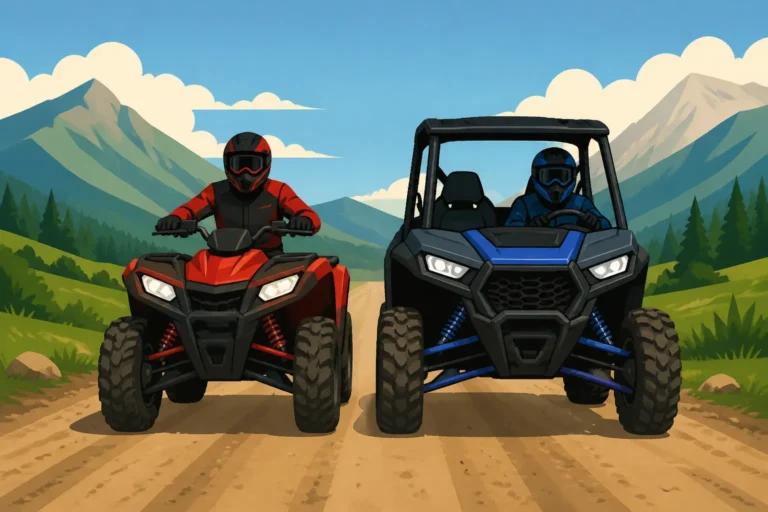
Navigating Colorado's vast network of county roads with your ATV or UTV can be an absolute blast, offering access to breathtaking trails and scenic vistas. However, many riders find themselves scratching their heads, feeling frustrated and unsure about the specific rules, especially when it comes to OHV speed limits on Colorado county roads. It’s not always as straightforward as it seems, and missteps can lead to unexpected fines or even put your safety at risk. This guide is here to untangle the complexities, helping you understand the regulations, nuances, and best practices for safe, compliant, and enjoyable riding.
Decoding Colorado's Default OHV Speed Limits on County Roads
The moment you pull your ATV or UTV onto a Colorado county road that's open to off-highway vehicles, you’re no longer just on the trail. You're entering a shared space with cars, trucks, cyclists, and sometimes even livestock, and that comes with a different set of rules, particularly around how fast you can go. It's a common point of confusion for riders, and rightly so, because the answer isn't always a simple, universal number.
The Basic Statewide Rule and How It Applies
One of the biggest misconceptions out there is that there's a specific, blanket statewide OHV speed limit that applies to every single county road in Colorado. In reality, the state operates more on a system of general default speed limits for all vehicles on roads where no specific limit is posted. For instance, in an urban or residential district, the default speed limit is often 25 miles per hour (MPH). On a paved county road in an open, rural area, it might be 40 MPH if not otherwise marked. Gravel county roads often fall under a similar default.
The trick here is understanding that these general defaults only apply to OHVs when they are legally allowed on a given county road. This means that if a county or town has passed an ordinance allowing OHVs on certain roads, those OHVs are then subject to the same posted or default speed limits as any other vehicle, unless the ordinance specifies otherwise. It’s a subtle but critical distinction. For many riders, this can feel like a game of "figure it out as you go," which is definitely not ideal when you're trying to enjoy a day on the trails.
The Critical Role of Local Ordinances and Posted Signs
While statewide defaults exist, the real game-changer for ATV speed rules and UTV speed limits on county roads comes down to local control. Counties, cities, and towns in Colorado have the significant authority to enact their own specific ordinances governing OHV use on their roads, and this absolutely includes setting speed limits. This is why you might find that the rules can vary wildly from one mountain town or county to the next, sometimes even changing within a few miles as you cross jurisdictional lines.
One county might allow OHVs on many of its rural roads but impose a blanket 25 MPH limit for OHVs on all of them, even if the general vehicle speed limit is 40 MPH. Another might match the OHV speed limit to the posted speed for cars and trucks. You'll often see specific posted speed limits in areas known for OHV traffic, especially as you enter or leave town limits, or along designated routes. [Colorado Counties With OHV Road Ordinances] are becoming more common, and these ordinances are where you'll find the specific, legally binding speed limits for OHVs. It's truly essential to do your homework before you head out, because relying solely on what feels right could land you in hot water. Always be on the lookout for signs, and if in doubt, err on the side of caution and slow down. [How Colorado Opened Some Roads to OHVs] often involves these very specific local regulations.
Beyond the Sign: Factors for Responsible OHV Speed on County Roads
While posted speed limits and local ordinances provide the legal framework for how fast you can go, responsible OHV riding on county roads extends far beyond simply adhering to the numbers on a sign. The unique characteristics of off-highway vehicles, combined with the often challenging and shared nature of Colorado's rural roads, demand a more nuanced approach to speed. It’s not just about what’s legal, but what’s safe and respectful.
Road Conditions, Terrain, and Unexpected Hazards
Colorado's county roads are a mixed bag. You'll encounter everything from smooth, graded gravel to heavily washboarded surfaces, rocky stretches, and roads carved precariously into hillsides. Even if the posted limit suggests a higher speed, the actual road conditions might make that utterly unsafe. Driving a UTV at 35 MPH on a severely washboarded road can quickly lead to a loss of control, not to mention a very uncomfortable ride. The same goes for loose gravel, which can make braking and steering unpredictable.
Then there are the terrain challenges: blind crests that hide oncoming traffic, sharp turns with minimal visibility, and narrow sections where meeting another vehicle requires extreme caution. A speed that might be fine on a straight, flat section could be downright dangerous just around the bend. You also need to consider how quickly conditions can change. A dry, dusty road in the morning could turn into a muddy, rutted mess after an afternoon thunderstorm, demanding a significant reduction in speed for safety. Always be prepared to adjust your speed based on what's immediately in front of you, not just what the sign says.
Visibility, Dust, and Respect for Other Users
One of the most frequent complaints from residents and other road users about OHVs on county roads is the dust. Kicking up a massive cloud of dust at high speeds is not only disrespectful to homes along the route but also a significant safety hazard. It drastically reduces visibility for you, the rider, and for anyone else on the road, including oncoming traffic or vehicles behind you. This is why dust control often becomes an unofficial, but heavily enforced, speed regulator in many areas.
Beyond dust, consider overall visibility. Many county roads wind through dense forests or have tall embankments that create blind corners. Approaching these too quickly means you have no time to react to an oncoming vehicle, a deer, or even a fallen rock. Moreover, these roads are often shared with hikers, mountain bikers, horseback riders, and even free-range cattle. Speeding past these users is not only dangerous but also creates a negative perception of OHV riders as a whole. Being mindful of your speed in these situations, slowing down, and giving a friendly wave can go a long way in fostering good relations and ensuring continued access to these roads. [Sharing a Mountain Road With Cyclists] and [Muffler Noise Limits in Colorado] are both critical considerations here.
Navigating Specific County Road Scenarios for OHVs
Riding an OHV on a county road isn't a monolithic experience; different sections of road present different challenges and demand distinct approaches to speed and caution. From bustling small towns to remote rural stretches, understanding these specific scenarios is key to a safe and enjoyable journey. You wouldn’t ride the same speed through a quiet residential street as you would on an open, deserted gravel road, even if both are technically "county roads."
Riding Through Populated Areas and Designated OHV Routes
This is where local ordinances really come into play, and where reducing your speed drastically becomes paramount. When your OHV route takes you through the main street of a quaint Colorado mountain town or into a residential neighborhood, the expectation is that you will slow down significantly. Many towns, like Silverton, Lake City, and Ouray, have opened their streets to OHVs, but they've done so with strict rules, often including very low in-town speed limits, sometimes as low as 15 MPH. These limits are in place for pedestrian safety, noise reduction, and dust mitigation.
It's about respect for the community. Even if the state's default speed limit for that residential area is 25 MPH, the local ordinance for OHVs might be lower, and often, even slower is simply courteous. You'll see children playing, people walking dogs, and cars backing out of driveways. Maintaining a slow, controlled speed demonstrates responsible riding and helps ensure that these towns continue to welcome OHV traffic. Ignoring these unspoken (and often spoken) rules is a quick way to get [Fines for an Unregistered OHV in Colorado] or, more likely, a citation for speeding or reckless operation. Remember, [Colorado Towns That Let OHVs Use Their Streets] do so on their terms, and we want to keep that access. [Riding Slowly Past Homes on a Route] is more than just a good idea; it's often a requirement.
Interacting with Full-Size Vehicles and Traffic
County roads, by their nature, are typically shared spaces. While you might be enjoying your OHV, you're likely to encounter full-size pickup trucks, SUVs, and even the occasional passenger car. These vehicles generally travel at higher speeds and have different handling characteristics than your ATV or UTV. This means that when you're on a county road, you need to be acutely aware of your surroundings and how your speed interacts with theirs.
If you're traveling at a slower speed, which is often the case for OHVs, it's crucial to stay as far to the right as safely possible to allow other vehicles to pass. Use your mirrors frequently, and be prepared to pull over if necessary to let traffic go by. When approaching intersections or making turns, remember that your acceleration and braking might be different from a car, so give yourself plenty of space and signal clearly. The last thing you want is a fast-moving truck coming up behind you unexpectedly. While you might be legally allowed to be on the road, maintaining a safe and predictable speed helps everyone share the road harmoniously. [Riding an OHV on the Road in Colorado] means being part of the general traffic flow, even if you’re moving a bit slower.
Staying Out of Trouble: Enforcement and Consequences of Speeding
Nobody wants their adventure cut short by flashing lights in their rearview mirror, but ignoring OHV speed limits on Colorado county roads can quickly lead to just that. Understanding how law enforcement operates and the potential repercussions of speeding is just as important as knowing the speed limits themselves. It's about proactive compliance, not just reactive avoidance of a ticket.
What Law Enforcement Looks For on County Roads
In Colorado's OHV-friendly counties, local sheriff's deputies and Colorado Parks and Wildlife (CPW) rangers are frequently patrolling roads open to OHVs. They're not just looking for registration stickers; they're actively observing rider behavior. When it comes to speed, they're not always using radar guns in the same way they might on a highway. Instead, they often pay close attention to contextual clues.
Excessive speed for conditions, kicking up too much dust, riding too close to other vehicles, or simply operating in a manner that appears unsafe or disrespectful to residents are all red flags. A ranger might be stationed at the edge of a small town, observing how fast OHVs are entering the residential zone. They're often looking for common sense and courtesy. If you're going slow, being mindful of dust, and clearly making an effort to be responsible, you're far less likely to draw unwanted attention. However, if you're flying through a main street, causing a commotion, or clearly ignoring posted limits, you can expect to be pulled over. [Sheriff Enforcement in Colorado Mountain Towns] is a very real part of the riding experience.
Penalties for Exceeding OHV Speed Limits
If you are caught exceeding the ATV speed rules or UTV speed limits on a Colorado county road, the consequences can be more significant than you might think. A speeding ticket on an OHV is typically treated similarly to a speeding ticket in a car. This means you could face:
- Fines: These can vary based on how fast you were going over the limit and the specific county or municipality, but they can quickly add up.
- Points on your Driver's License: Depending on the severity of the infraction, a speeding ticket could result in points being added to your Colorado driver's license. Accumulating too many points can lead to license suspension.
- Reckless Driving Charges: If your speed is deemed excessively high for the conditions, or if you're operating in a manner that endangers others, you could face a more serious charge of reckless driving. This carries steeper fines and more significant license penalties.
- Loss of Access: Beyond the immediate penalties, repeated violations by riders can lead to counties reconsidering or revoking OHV access to their roads. This is perhaps the biggest long-term consequence for the entire riding community.
It’s easy to think "it's just a county road," but law enforcement takes these rules seriously. An afternoon of fun isn't worth a hefty fine or jeopardizing your driving privileges. [Colorado Fines for Illegal Road Riding] and [Colorado Citations for Road Riding] are serious matters that can impact your ability to ride in the future.
Equipping Your OHV for Safe and Compliant Road Riding Speeds
While following speed limits is primarily about rider behavior, having your OHV properly equipped can make a significant difference in both safety and compliance when you're on county roads. The demands of varied terrain and interacting with other vehicles at different speeds mean that some aspects of your machine might need a closer look or even an upgrade.
Enhancing Braking and Suspension for Mixed-Surface Roads
Your OHV's braking system is crucial on any terrain, but on county roads, especially those with descents or unexpected stops, its performance really matters. Stock brakes are typically designed for off-road use, which can mean short, bursts of braking in loose conditions. On longer stretches of hard-packed gravel or even paved sections (where legally allowed for crossing), sustained braking can lead to fade or reduced effectiveness. Consider upgrading to performance brake pads or even larger rotors for better stopping power and heat dissipation, especially if you frequently ride longer road sections.
Similarly, a robust suspension system is vital. County roads are rarely perfectly smooth. Washboarding, potholes, and unexpected dips can quickly upset your machine, especially at higher speeds. A well-tuned suspension, perhaps even with aftermarket shocks or components from a reputable brand like SuperATV, can dramatically improve control, stability, and rider comfort. Enhanced suspension allows your wheels to stay in contact with the ground more effectively, which translates to better traction for both accelerating and braking, making for a much safer ride at varying UTV speed limits. [Pre-Purchase Inspection at Altitude] should include a thorough check of these critical components.
Tires and Their Impact on Road Performance and Traction
The tires you choose for your OHV play a massive role in how it handles on county roads. While aggressive mud tires might be kings on the gnarliest trails, their deep lugs can be noisy, wear quickly, and offer less stable contact on hard-packed gravel or pavement. This can affect steering precision and braking effectiveness, especially at the faster end of the OHV speed limits allowed on county roads.
If a significant portion of your riding involves county roads, consider an all-terrain (AT) tire specifically designed to offer a balance of off-road grip and smoother, more stable performance on harder surfaces. These tires often have a tighter tread pattern and a more rounded profile, making them more predictable and quieter on gravel and pavement. Also, pay close attention to tire pressure. The ideal pressure for soft trails is often different from what's best for harder-packed roads, where too low a pressure can lead to excessive tire flex and reduced stability.
Lighting and Visibility Aids for Road Safety
On county roads, you're sharing the space with other vehicles that are often larger and faster. Making yourself as visible as possible is not just a good idea; it's often a legal requirement. Ensure your OHV has fully functional headlights, taillights, and brake lights. If local ordinances require it for road use, make sure you have turn signals. Many riders add additional lighting, such as LED light bars (used responsibly and covered when not needed), or even simple, bright whip flags, especially in dusty conditions or at dusk.
Being seen is half the battle. A brightly colored machine, reflective decals, and even wearing high-visibility riding gear can all contribute to your safety. Even during daylight hours, having your headlights on can help other drivers spot you more easily, giving them more time to react to your presence and speed. This is particularly important on roads where the permitted Colorado county roads OHV speed limits might allow for faster travel, meaning other vehicles will be closing the distance quickly. [Lighting Requirements for a Colorado Road Ride] are non-negotiable for safe public road use.
| Location Type | General Colorado Default Speed Limit (for all vehicles) | Common OHV Ordinance Speed (example) | Key Considerations for OHVs |
|---|---|---|---|
| Residential Area/Town | 25 MPH | 15 MPH | Dust, noise, pedestrians, children, respect for residents |
| Open County Road | 40 MPH (or as posted) | 25-35 MPH (often lower than default) | Road conditions (gravel, washboard), blind corners, other traffic |
| Designated OHV Route | Varies by local ordinance | 15-35 MPH (often specific to route) | Signs are critical, local rules may override general defaults |
| Crossing Paved Highway | As posted for highway | Slow, often stop & yield | Quick crossing only, yield to all traffic, minimal speed |
Disclaimer
This article is for general informational purposes only and does not constitute professional advice. Laws, prices and regulations vary by location and change over time. Consult a qualified professional for guidance on your specific situation.