Losing Trail Access After a Colorado Citation
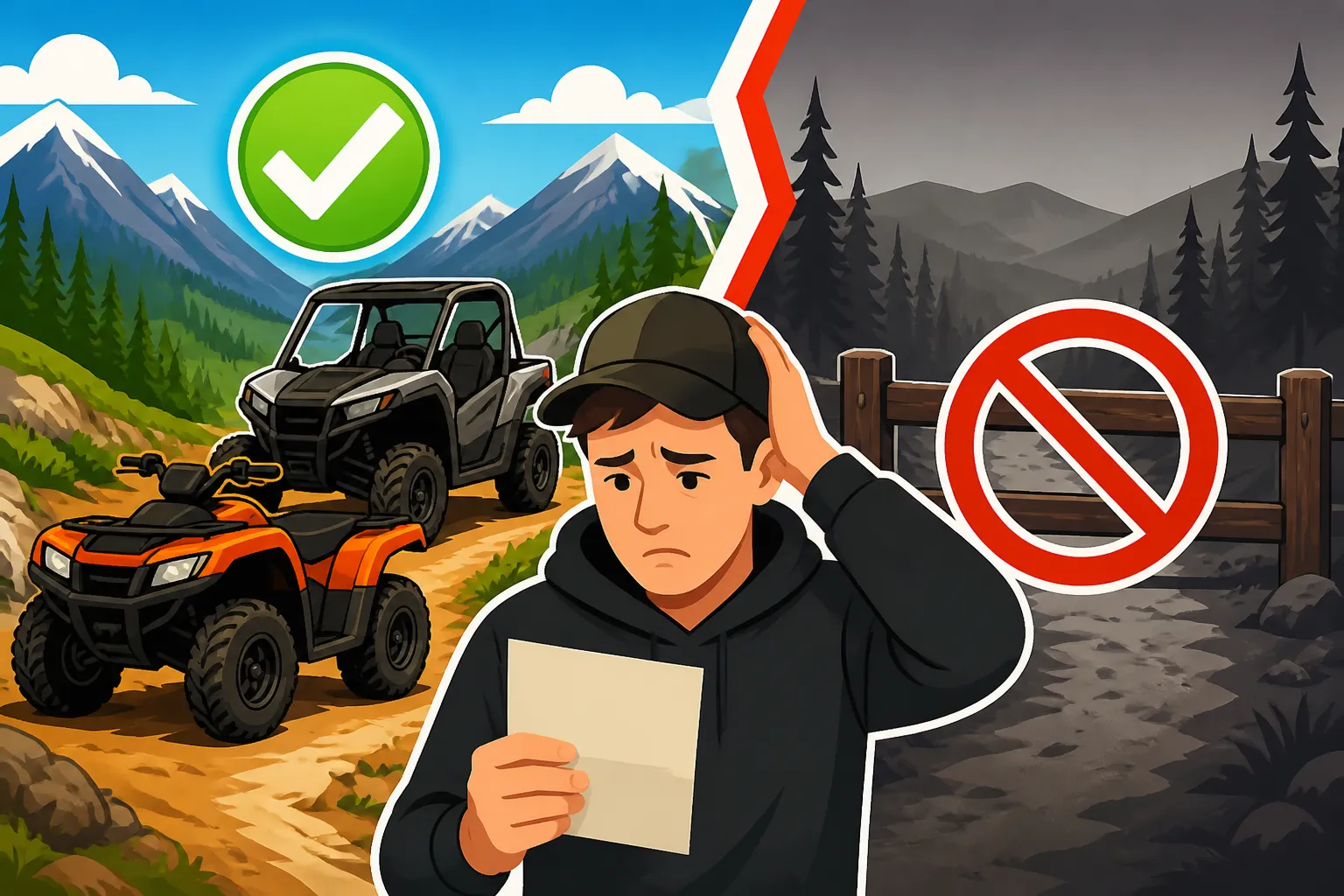
There’s nothing quite like the feeling of hitting a Colorado trail on your ATV or UTV, the crisp mountain air filling your lungs, and the incredible scenery unfolding around you. But that feeling can quickly turn to dread if you find yourself facing a citation from a ranger or sheriff. Beyond the immediate hit to your wallet, one of the most unsettling fears for any rider is the possibility of losing the very trail access that brings so much joy. This guide will walk you through how a Colorado citation can jeopardize your riding privileges, what common mistakes to avoid, and what steps you can take to protect your access to our beautiful public lands.
The Harsh Reality of Citations on Colorado Trails
Getting pulled over while riding your off-highway vehicle (OHV) can be an intimidating experience. Whether it's a Forest Service ranger, a BLM officer, or a local sheriff, their job is to ensure everyone follows the rules to keep trails safe and open. While some citations might seem minor at first glance, like a missing sticker or an expired registration, others can have much more significant, long-lasting consequences, including restricting your ability to ride altogether. It’s a bitter pill to swallow when a single misstep could mean saying goodbye to your favorite mountain passes and forest roads.
Imagine planning that epic summer trip to the Alpine Loop, only to realize a past citation has put your trail access in jeopardy. It’s a frustrating scenario that many riders don't consider until it's too late. The key is understanding that these regulations exist for a reason – to protect the environment, maintain public safety, and ensure everyone has a positive experience. But even with good intentions, it’s easy to slip up.
Common Infractions That Put Your Ride at Risk
Colorado has a robust set of rules designed to manage OHV use on public lands, and while most riders are out there to have a good time and respect the trails, violations do happen. Some common infractions can range from administrative oversights to serious safety breaches.
- Unregistered OHV: This is a big one. Every ATV and UTV used on designated public OHV trails in Colorado needs a current [Colorado OHV Registration]. It's not just a suggestion; it's a requirement. Forgetting to renew, or thinking you can slide by without one, is a sure way to get a ticket. Even if you're an out-of-state visitor, you'll need a [Colorado Non-Resident OHV Permit Explained]. Rangers often conduct [Colorado Ranger Checks at a Trailhead], and an unregistered machine is an easy catch.
- Operating Off Designated Trails: This is perhaps one of the most damaging violations in terms of environmental impact and potential for resource closure. Riding off-trail, creating new routes, or entering closed areas (often marked by signs or seasonal gates) can lead to significant [Resource Damage Citations Off Trail]. These actions directly threaten the sustainability of our trail systems and can result in severe fines and even criminal charges, sometimes leading to Losing Trail Access After a Colorado Citation permanently.
- Noise Violations: Many mountain towns and sensitive areas have strict [Muffler Noise Limits in Colorado]. Aftermarket exhaust systems that exceed these limits can quickly draw unwanted attention from authorities and local residents, leading to citations. Nobody wants to be the reason an entire trail system faces stricter regulations due to a few loud riders.
- Speeding or Reckless Operation: While many trails allow for spirited riding, excessive speed, particularly in congested areas or near campgrounds, or operating an OHV in a reckless manner, is a major safety concern. This can include doing donuts in fragile meadows or driving dangerously close to other trail users. These violations are often tied to public safety and can carry heavier penalties.
- Alcohol or Drug Impairment: Operating any motor vehicle, including an OHV, while under the influence of alcohol or drugs is extremely serious. A [A DUI on an OHV in Colorado] can result in not only significant fines and jail time but also the loss of your driver's license and severe restrictions on future motorized recreation. [Colorado Alcohol Limits for OHV Operators] are the same as for a car.
- Violation of Passenger or Youth Rider Rules: Carrying too many passengers, having children on machines not rated for them, or allowing underage riders to operate machines without proper supervision or in prohibited areas can also lead to citations. Colorado has specific [Youth Machine Engine Sizes Colorado Families Choose] and [Colorado Age Rules for Young OHV Riders] to protect younger riders.
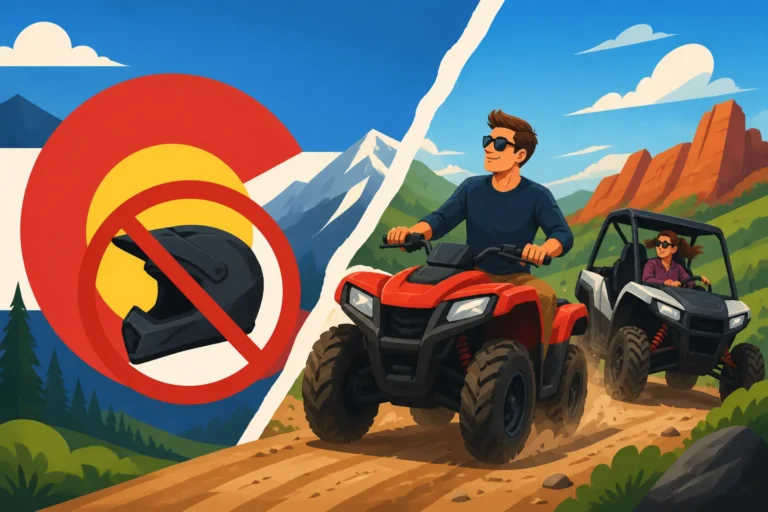
- Missing Safety Gear: While Colorado does not have a statewide helmet law for adults on trails, there are specific [Colorado Helmet and Eye Protection What Is Actually Required] rules for youth riders, and certain county roads might have their own ordinances. Always check the local rules. Beyond that, having essential safety gear like a properly installed [Mufflers and Spark Arresters in Colorado] is often a requirement on public lands to prevent wildfires.
Understanding the "Loss of Privilege"
When you receive a citation, it’s more than just a piece of paper and a fine. Depending on the severity and nature of the offense, it can directly lead to a "loss of privilege." This means that the right you previously enjoyed – the right to ride your OHV on public lands – can be temporarily or even permanently revoked. This isn't just about financial penalties; it strikes at the core of what many riders love to do.
Consider a scenario: you get caught riding in a wilderness study area, which is strictly prohibited for motorized vehicles. Not only could you face a hefty fine and a mandatory court appearance, but the agency managing that land (e.g., Forest Service or BLM) might issue a direct ban, barring you from accessing any lands they manage for a set period. This isn't unique to Colorado; federal land management agencies have regulations that apply across state lines. So, that one infraction in Colorado could impact your ability to ride in Utah or Wyoming as well.
The principle here is that trail access is a privilege, not an inherent right. When riders repeatedly or severely violate the rules, they demonstrate a disregard for the resource and the safety of others, and land managers must have the ability to protect those resources and users. It’s a tough consequence, but it underscores the importance of responsible riding.
How a Citation Can Lead to Losing Your Riding Privileges
The path from receiving a citation to losing your trail access isn't always a straight line, but it’s a very real possibility. It can manifest in direct bans from specific areas or land management agencies, or through a cascade of indirect consequences that effectively make riding impossible or illegal.
Direct Suspensions and Bans
This is the most straightforward way to lose trail access. Certain severe violations can result in immediate administrative action by the land management agency.
- Agency-Imposed Bans: If you commit a serious offense, particularly one involving resource damage (like riding off-trail in a sensitive habitat), the U.S. Forest Service or Bureau of Land Management (BLM) can issue a notice of violation that includes a ban from their managed lands. This ban could be for a specific area, or it could extend across all lands managed by that agency in a given region, or even nationwide for repeat or extremely egregious offenses. Imagine you're riding with your SuperATV winch and recovery gear, but you decide to pull a friend out of a mud hole by driving off-trail. While your intentions might be good, the act itself could be a violation, especially if it creates new ruts or damages vegetation. Such actions can lead to a ban.
- Court Orders: In cases that go to court (especially for more serious infractions like reckless endangerment, property damage, or DUI), a judge can issue a court order explicitly prohibiting you from operating an OHV on public lands for a specified duration. This legal injunction is binding and will be enforced by law enforcement.
- Suspension of OHV Registration Privileges: While less common for a first-time minor offense, repeat violations of registration or permit requirements could potentially lead to the suspension of your ability to obtain an OHV registration or permit in Colorado. Without a valid permit, you simply cannot ride on designated public lands. This is particularly relevant when considering [Penalties for an Unregistered OHV in Colorado].
Indirect Consequences: Fines, Court, and Community Impact
Even if you don't receive a direct ban, the ripple effects of a citation can make riding an unpleasant and difficult experience.
- Financial Strain: Fines for OHV violations can be substantial, sometimes ranging into hundreds or even thousands of dollars, especially for environmental damage. A significant fine can quickly eat into your riding budget, making it harder to afford gas, maintenance, or future trips. Think about it: that money could have gone towards an awesome SuperATV lift kit or new tires for your rig, but instead, it's going to pay off a ticket.
- Court Appearances and Legal Fees: Many citations require a mandatory court appearance, particularly if you decide to contest the ticket. This means taking time off work, traveling to a potentially distant mountain town courthouse, and possibly incurring legal fees if you hire an attorney. The sheer hassle and expense can be a deterrent to future riding.
- Increased Scrutiny from Law Enforcement: Once you've received a citation, especially for a moving violation or a resource-damaging offense, you might find yourself under increased scrutiny from rangers and sheriffs. This isn't about harassment, but rather that your past behavior might flag you as a higher-risk individual, leading to more frequent checks or warnings.
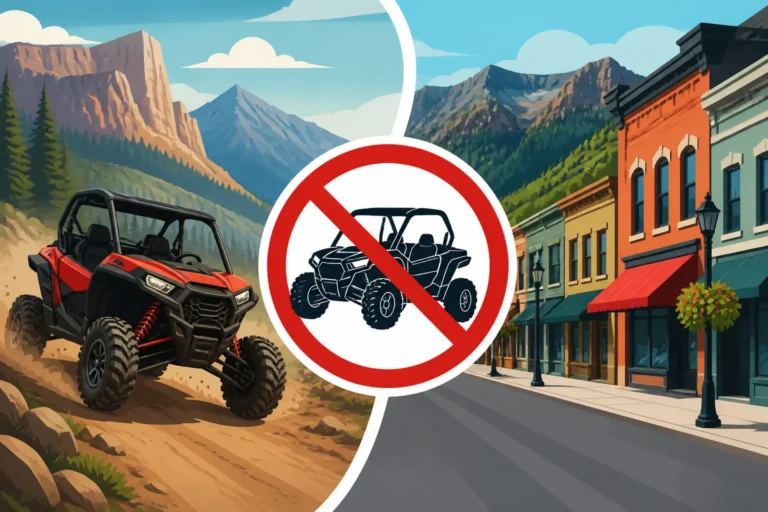
- Community and Public Perception: OHV access is often a contentious issue in Colorado mountain towns. High-profile incidents or repeat violations by riders can fuel negative public sentiment, which in turn can lead to stricter local ordinances, trail closures, or even outright bans on OHV use within certain areas, like [Silverton's Ban on OHVs in Town]. When a few riders act irresponsibly, the entire riding community suffers.
- Insurance Implications: Depending on the severity of the citation, particularly those involving reckless operation or accidents, your OHV insurance rates could go up. Some insurers might even decide not to renew your policy if you become a high-risk client. For some riders, [Insuring an ATV in Colorado] is already a significant expense, and increased premiums only add to the burden.
Here’s a simplified breakdown of potential citation outcomes:
| Violation Type | Immediate Impact | Potential Long-Term Risk |
|---|---|---|
| Missing OHV Registration/Permit | Fine, mandatory purchase of permit | Suspension of registration privileges |
| Riding Off-Trail | Large fine, court appearance | Direct agency ban, criminal record |
| Excessive Noise | Fine, order to fix exhaust | Increased scrutiny, local access bans |
| Reckless Operation | Fine, court appearance, possible impoundment | Insurance rate hike, driving privilege impact |
| DUI/D | Large fine, jail time, driver's license suspension | Loss of all driving/riding privileges |
| Youth Rule Violation | Fine to guardian, educational requirement | Future youth riding restrictions |
What to Do If You Receive a Citation (And How to Fight It)
It’s an unfortunate part of riding for some, but if you do receive a citation, knowing how to handle it can make a significant difference in the outcome and your ability to retain trail access. Panicking or being disrespectful to the officer won't help your situation; staying calm and informed is key.
Immediate Steps After a Stop
If a ranger or sheriff pulls you over, your actions in that moment can influence how the situation proceeds.
- Stay Calm and Cooperative: This is paramount. Pull over safely, turn off your engine, and keep your hands visible. Be polite and respectful, even if you disagree with the reason for the stop. Arguing or becoming agitated will rarely de-escalate the situation and could lead to additional charges, like resisting or obstruction. Provide your identification and any requested [Proof of Ownership for a Colorado OHV] or registration documents.
- Understand the Citation: Listen carefully to what the officer says about the violation. Ask clarifying questions if you don’t understand why you’re being cited. For example, "Can you explain which specific regulation I violated?" or "Where was I supposed to be riding instead?" Don't admit guilt, but seek to understand the specifics.
- Document Everything: As soon as it's safe to do so after the interaction, write down everything you remember. This includes the exact time, date, and location of the stop, the officer's name and agency, what was said by both parties, and any specific details about the alleged violation. Take photos of the area if it pertains to the citation (e.g., if you're cited for riding in a closed area, photograph the signage, or lack thereof). This documentation will be invaluable if you decide to contest the citation.
- Do Not Pay Immediately (Unless It's Minor and You Agree): Paying the fine is an admission of guilt. For anything more than a minor, clear-cut infraction, or if you believe you were wrongly cited, do not pay the ticket without first understanding your options. Consult with an attorney if the potential consequences are severe.
- Consult the Regulations: Once you have the citation in hand, look up the specific regulation you are accused of violating. Many regulations are available online through Colorado Parks and Wildlife, the Forest Service, or the BLM. Sometimes, a misunderstanding of a rule, like [Colorado Rules for a Side-by-Side With Utah Plates] on certain roads, can lead to a citation. Knowing the exact wording of the law is crucial for mounting a defense.
Contesting a Citation and Its Potential Outcomes
Deciding to fight a citation is a serious decision that requires time and effort, but it can be worthwhile, especially if the consequences could affect your trail access.
- Gather Evidence: Your immediate documentation is just the start. If you believe you have a strong case, gather all supporting evidence. This might include:
- Witness statements (if anyone was with you).
- GPS tracks from your ride showing you were on a legal trail.
- Photos or videos from your OHV (many riders use dash cams) that contradict the officer's claims.
- Maps (like a [Motor Vehicle Use Map]) to prove you were in an authorized area.
- Maintenance records if the citation was related to equipment.
- Seek Legal Counsel: For serious charges that carry the risk of losing trail access, significant fines, or even jail time (like a DUI), you absolutely should consult with an attorney specializing in traffic or outdoor recreation law. They can advise you on the strength of your case, navigate the legal system, and represent you in court.
- Negotiate or Plead Down: In some cases, your attorney might be able to negotiate with the prosecutor for a reduced charge or a lesser penalty, especially if it's your first offense. This could involve agreeing to attend a safety course or performing community service in exchange for a dismissal or reduction of the citation.
- Court Hearing: If you contest the citation, you will have a court hearing where you can present your evidence and argue your case. The judge will hear testimony from both the issuing officer and you (or your attorney). The outcome could be:
- Dismissal: The citation is thrown out, and you incur no penalties.
- Guilty Verdict: You are found guilty and face the full penalties, which could include fines, points on your driving record, and potentially a ban from specific riding areas.
- Reduced Charge: You are found guilty of a lesser offense with reduced penalties.
- Appeal: If you are found guilty and believe there was a legal error in the process, you may have the option to appeal the decision to a higher court. This is typically a complex process and should definitely involve legal counsel.
Remember, the goal in contesting a citation that could impact your trail access is not just to avoid the fine, but to prevent the more severe long-term consequences that could keep you from riding.
Proactive Measures to Safeguard Your Trail Access
The best defense against losing trail access is to prevent citations from happening in the first place. This means being a responsible, informed, and prepared rider every time you hit the dirt. It's about respecting the land, other users, and the rules that keep our incredible Colorado OHV trails open for everyone.
Knowing the Rules and Riding Responsibly
Ignorance of the law is never an excuse, and nowhere is that more true than when you’re out on public lands where rules can vary by agency, county, and even specific trail.
- Study the MVUMs (Motor Vehicle Use Maps): These maps are your bible for knowing where you can and cannot ride on Forest Service lands. They clearly delineate open roads and trails, seasonal closures, and areas where motorized use is prohibited. The BLM also provides similar maps. You can download these maps, pick them up at ranger stations, or use apps like onX Offroad which integrate MVUM data. Understanding these maps is crucial to avoid [Riding Off a Colorado Trail] inadvertently.
- Read Local Ordinances: Before heading to a new area, especially one near a town, check for local county or town ordinances regarding OHV use on roads. Many towns, like Lake City or Ouray, have specific rules for [Colorado Towns That Let OHVs Use Their Streets], while others, like Silverton, have strict bans. A quick call to the local sheriff's office or town hall can save you a lot of grief.
- Obtain Proper Registration and Permits: Make sure your OHV registration is current and correctly displayed. If you're from out of state, get your [Colorado Non-Resident OHV Permit Explained] before you even load up your trailer. Always carry your registration card and any necessary permits with you on the trail, perhaps in a waterproof bag.
- Attend a Safety Course: While Colorado does not require an OHV safety course for adults, taking one is an excellent way to learn responsible riding practices, trail etiquette, and local regulations. Many courses are available, and some even cater to youth riders.
- Practice "Leave No Trace" Principles: This goes beyond just packing out your trash. It means staying on designated trails, avoiding sensitive areas, respecting wildlife, and minimizing your impact on the environment. These actions contribute to the long-term health of our trails and help maintain positive relationships with land managers and other user groups.
- Observe Posted Signs and Gates: Pay attention to all signage, whether it’s a warning about a narrow section of trail, a seasonal closure, or a private property boundary. Never bypass a closed gate; they are there for a reason, often to protect vulnerable landscapes or wildlife during certain times of the year.
Maintaining Your Machine and Gear
A well-maintained machine is not only safer but also less likely to cause issues that lead to citations. Beyond that, having the right gear ensures you’re prepared for anything the Colorado mountains throw your way.
- Spark Arresters and Mufflers: Ensure your OHV has a U.S. Forest Service-approved spark arrester that is in good working order. This is a critical wildfire prevention measure and a common requirement on public lands. Your muffler should also meet [Muffler Noise Limits in Colorado].
- Lights and Horn: If you plan to ride on any open county roads (where permitted), ensure your OHV has working headlights, taillights, brake lights, and a horn, as these are often [Lighting Requirements for a Colorado Road Ride]. A proper signal kit, perhaps from SuperATV, is also a smart addition for road sections.
- Tires and Brakes: Regularly inspect your tires for proper inflation and wear. Ensure your brakes are in excellent working condition, especially when riding on steep mountain terrain where [Brake Fade on a Long Colorado Descent] can be a serious issue.
- Safety Gear: While not always legally mandated for adults, wearing a DOT-approved helmet, eye protection, gloves, and sturdy riding boots is always a good idea. For young riders, a helmet and eye protection are required. Being prepared with personal protective equipment reduces the severity of injuries in case of an accident and demonstrates a commitment to safety.
- Emergency Kit: Always carry a basic emergency kit, including a first-aid kit, tools for minor repairs, a tire repair kit, a map and compass (even if you have GPS, know how to use paper maps in [Cell Dead Zones in the San Juans]), water, and extra layers of clothing. For solo riders or those going into remote areas, a satellite messenger is a lifeline.
By being diligent about understanding and following the rules, maintaining your machine, and riding responsibly, you dramatically reduce your chances of receiving a citation that could jeopardize your priceless trail access in Colorado. These wild places are a privilege to enjoy, and it’s up to all of us to ensure they remain open for generations to come.
Disclaimer
This article is for general informational purposes only and does not constitute professional advice. Laws, prices and regulations vary by location and change over time. Consult a qualified professional for guidance on your specific situation.