Colorado County Roads Open to OHVs
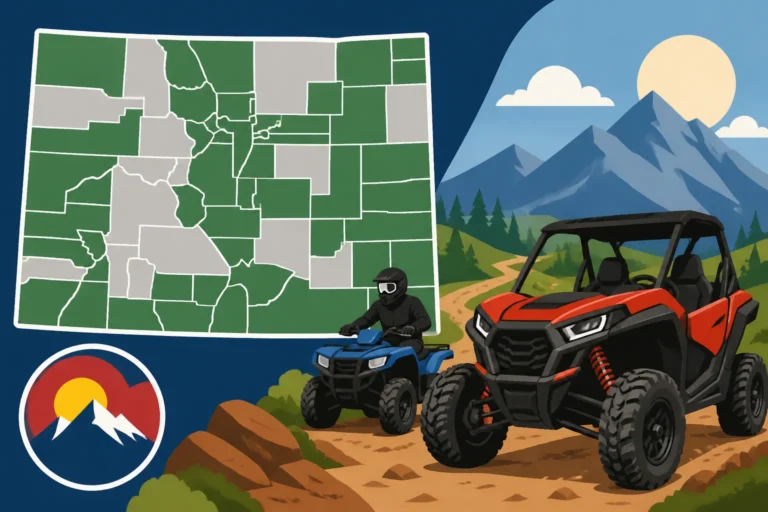
It’s a common frustration for off-highway vehicle (OHV) enthusiasts in Colorado: you love hitting the trails, but getting to them often involves navigating public roads, and the rules about where you can and can’t ride your ATV or UTV are a confusing maze. Riders frequently ask, "Can I take my side-by-side on this county road?" This guide is here to untangle the complexities of Colorado county roads and where OHVs are permitted, helping you understand the local ordinances and requirements so you can ride confidently and legally.
The Shifting Landscape of Colorado OHV Road Access
For years, it felt like a patchwork quilt of rules across Colorado, with some mountain towns and counties being outright hostile to OHV traffic on their paved or even gravel roads, while others quietly looked the other way. This created a lot of uncertainty and frustration for riders just trying to reach a trailhead or grab a bite to eat in town. The good news is that Colorado has made strides in clarifying how local jurisdictions can manage OHV access, but the responsibility still falls heavily on the rider to know the specific rules of where they are riding. It’s not a one-size-fits-all situation by any means, and what's permissible in Hinsdale County might land you a hefty fine in Silverton. This regional variation is the biggest hurdle for new riders and even seasoned veterans who explore different parts of our beautiful state.
Why Local Control Matters for OHV Access
Colorado has empowered its counties and municipalities to make their own decisions regarding OHV use on local public roads. This means that while state law provides a framework, the actual permission to ride on a specific county road or town street comes from a local ordinance. Think of it like speed limits: the state sets a general guideline, but a city can post a lower speed limit in a school zone. For OHVs, this local control is both a blessing and a curse. It allows communities to tailor rules to their specific needs, protecting quiet neighborhoods or sensitive areas, but it also means riders must diligently research each area they plan to visit. You can't just assume that because one county road is open, all of them are. It’s critical to understand that these local decisions are often the result of extensive community debate, balancing tourism, local quality of life, and environmental concerns.
The Evolution of Colorado's OHV Road Laws
Historically, OHVs were largely confined to designated trails, with road use strictly prohibited outside of limited agricultural or utility exemptions. However, as the popularity of side-by-sides and ATVs grew, and more trail systems became connected by short stretches of county roads, the demand for more comprehensive and clear rules escalated. In recent years, Colorado has enacted legislation that specifically allows counties and municipalities to open their roads to OHVs through a formal ordinance process. This was a significant shift, moving from a blanket prohibition to a system that permits local areas to opt-in. This change was a direct response to rider advocacy and the economic impact OHV tourism brings to many rural communities. It allows for the creation of integrated trail networks that enable riders to travel from a staging area or campground into a trail town, buy supplies, or access other trailheads without having to trailer their machine for short distances.
How Colorado County Roads Become Open to OHVs
It’s not magic, and it’s certainly not automatic. For an OHV to be legally ridden on a specific county road, that road must be formally designated as open by the local county government. This process involves public hearings, consideration of community input, and the eventual passing of an official ordinance. It’s a deliberate, sometimes lengthy process that aims to ensure all local concerns are addressed. Riders often feel frustrated by the slow pace or the inconsistencies, but it's important to remember that these decisions impact local residents, businesses, and the environment.
The County Ordinance Process
When a county decides to consider opening certain roads to OHV use, it typically initiates a public process. This usually starts with local officials identifying potential routes, often in collaboration with OHV clubs and land management agencies like the Forest Service or BLM. They’ll look at factors such as connection to existing trail systems, impact on residential areas, safety concerns, and potential economic benefits for local businesses. Draft ordinances are then proposed, and public meetings are held to gather feedback from residents, property owners, and OHV users. It’s during these meetings that you’ll hear strong opinions from all sides. After considering all input, the county commissioners vote on the ordinance. If passed, the ordinance will typically specify which roads are open, what the operating hours are, any specific equipment requirements beyond state law, and often, what types of OHVs are permitted (e.g., width restrictions). This legislative hurdle ensures that road openings are not arbitrary but are carefully considered public policy decisions.
Designated Routes and Signage
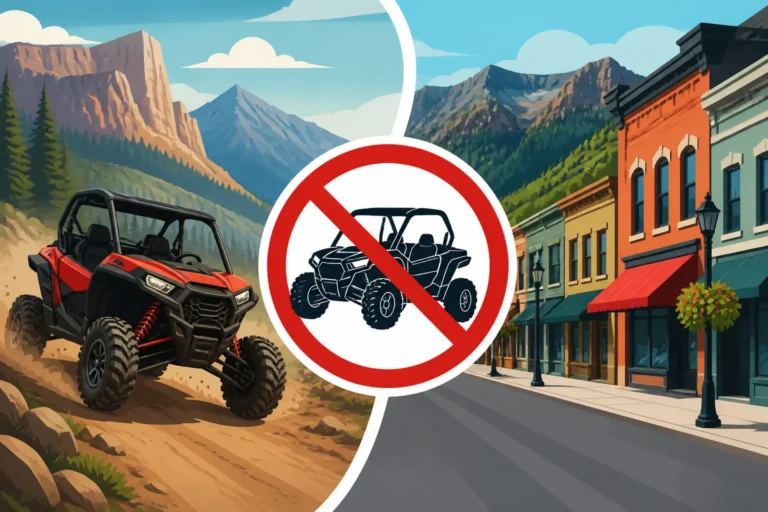
Once an ordinance is in place, the county is responsible for properly marking the roads where OHV use is allowed. This is absolutely critical for riders, as clear signage is your best friend when trying to stay legal. You'll typically see specific signs indicating "OHV Route" or "OHVs Permitted" at the entry points to these designated roads. Conversely, you might also see signs indicating "No OHVs" on roads that remain closed. It’s vital to pay attention to these signs and understand that if you don't see one specifically permitting OHV use, you should assume the road is closed to your machine. Always look for official county or state signage rather than relying on unofficial maps or hearsay. [Finding Your Colorado County's OHV Ordinance] is a great resource to help you verify what you see on the ground. Remember, a sign indicating "Open to ATVs and UTVs" isn't a license to speed or ride recklessly; it's simply permission to be there, and all other traffic laws and courtesies still apply.
Understanding "Street Legal" in Colorado (and Why It's Tricky)
This is perhaps one of the biggest points of confusion for riders coming to Colorado from other states. Many states offer a path to make an ATV or UTV "street legal" with a license plate, just like a car. In Colorado, however, that’s generally not the case for traditional OHVs. Colorado does not issue a conventional "street legal" license plate for ATVs and UTVs that allows them to roam freely on all public roads like a car or motorcycle. This is a critical distinction that can get out-of-state riders into trouble if they assume their plated machine from Arizona or Utah will be fully street legal here.
Colorado's Stance on "Street Legal" Plates
Colorado state law simply does not provide a mechanism for off-highway vehicles to be registered as "street legal" vehicles through the Department of Motor Vehicles in the same way cars and trucks are. While you can obtain an OHV registration sticker from Colorado Parks and Wildlife (CPW) for trail use, this is not a license plate and does not grant general road access. The CPW registration is for public land trail systems, not for general road use. So, if you're pulling up to the DMV expecting to get a plate for your brand-new UTV, you'll be met with a polite refusal. This is why you’ll often hear the question, [Why Colorado Will Not Plate Your UTV]. The primary purpose of an OHV in Colorado's eyes is off-highway recreation, not transportation on public roadways. This distinction is crucial and often catches visitors off guard.
The Nuance of Out-of-State Plated Machines
Now, here's where it gets even more complicated. Some riders from other states (like Utah, Arizona, or Idaho) arrive in Colorado with their OHVs legally plated as street-legal vehicles in their home state. For a period, there was considerable debate and even some conflicting enforcement regarding these machines. However, Colorado did pass legislation in 2021 to provide some clarity. This law generally allows out-of-state "street legal" OHVs to operate on certain Colorado public roads, provided those roads have been specifically designated as open to OHVs by the local jurisdiction. This means your Utah-plated side-by-side isn't automatically welcome on every paved road in Colorado. You still need to ensure you're on a county road that has a local ordinance permitting OHVs. Moreover, when riding on these designated roads, your out-of-state machine must comply with Colorado's specific equipment requirements for road use, such as proper lighting, mirrors, and mufflers. It's not just about having a plate; it's about adhering to local access and state equipment rules. You'll want to review resources like [Colorado Rules for Out-of-State Street-Legal Machines] for the most current information.
Key Requirements for OHV Road Riding in Colorado
Even when you find a county road that's designated as open to OHVs, you can't just hop on and go. There are specific requirements for both your machine and you as the operator that must be met to legally ride on these routes. These rules are in place for safety, noise abatement, and to ensure responsible use of shared public spaces. Ignoring these can not only lead to fines but also jeopardize future OHV access on these roads.
Machine Equipment Requirements
When riding on a designated county road, your OHV needs to be equipped similarly to how a street-legal vehicle would be, even if it doesn't have a street-legal plate. This typically includes:
- Headlights and Taillights: These must be operational and on, especially during dawn, dusk, or periods of reduced visibility. Many county ordinances require them to be on at all times on open roads.
- Brake Lights: Essential for signaling your intentions to other traffic.
- Turn Signals: While not always explicitly required by state law for all OHVs on open county roads, many local ordinances do mandate them for safety, especially on routes shared with cars. It's always a good idea to have them.
- Horn: A functional horn is necessary to alert other drivers or pedestrians.
- Mirrors: You’ll need at least one rearview mirror, and often two (side mirrors), to see traffic behind you.
- Muffler and Spark Arrestor: Your exhaust system must have a working muffler to keep noise within acceptable limits and a U.S. Forest Service-approved spark arrestor to prevent wildfires. Loud exhausts are a major source of conflict with residents. You can learn more about this at [Mufflers and Spark Arresters in Colorado].
- Tires: Must be in good condition, and for safety on paved or graveled roads, knobby tires designed purely for dirt may wear quickly and affect handling.
- Whip Flag: In some open riding areas or on specific roads, a whip flag might be required for visibility, especially for smaller machines that can be hidden by terrain or larger vehicles.
Many aftermarket companies, like SuperATV, offer a range of accessories that can help riders equip their machines with these necessary components, from robust mirrors to complete turn signal kits, ensuring compliance with local ordinances when riding on designated county roads. It’s always best to check the specific county ordinance you plan to ride in, as requirements can vary.
Rider and Passenger Rules
Beyond machine requirements, the operator and any passengers also have rules to follow:
- Driver's License: Any person operating an OHV on a designated county road must possess a valid driver's license. This isn't just for insurance; it’s a basic safety and responsibility measure for sharing roads with other motorists.
- Age Restrictions: While Colorado has rules for youth riders on trails, specific age limits often apply to operating OHVs on open county roads. Generally, riders must be at least 16 and have a valid driver's license. There are specific rules for younger riders, which you can read about in [Colorado OHV Road Rules for Young Riders].
- Helmets: While Colorado does not have a statewide mandatory helmet law for all adult OHV riders, many local ordinances or specific areas may require helmets when riding on their roads. Additionally, riders under 18 often have stricter helmet requirements regardless of local rules. For safety, wearing a DOT-compliant helmet is always highly recommended, especially when sharing roads with cars.
- Seat Belts/Restraints: If your OHV (like a side-by-side) is equipped with seat belts, they must be worn by all occupants while the vehicle is in motion. This is a fundamental safety measure.
- OHV Registration: Your OHV must have a valid Colorado OHV registration sticker (or a valid out-of-state equivalent if riding as a visitor) for public land use, even on these designated county roads that lead to trails.
Navigating Specific Colorado Trail Towns and Counties
While the general framework is statewide, the actual implementation and specific rules vary dramatically from one mountain community to another. Knowing these local nuances is key to a hassle-free and legal ride. This hyper-local approach means that while a county might open some roads, individual towns within that county might have their own, more restrictive rules.
Ouray, Silverton, and Lake City (Alpine Loop)
The Alpine Loop area in the San Juan Mountains is a prime example of varying OHV road access.
- Ouray: The "Switzerland of America" has strict rules. While Ouray County has opened many of its roads to OHVs, the town of Ouray itself has historically been much more restrictive about OHV travel on its main streets. Riders often have designated routes to access trails from lodging or staging areas, but generally cannot simply cruise through town. [Riding Into Ouray on a Side-by-Side] provides detailed insights.
- Silverton: Similarly, Silverton has faced ongoing debates regarding OHV access. While San Juan County provides access to incredible trails, the town of Silverton has specific restrictions on OHV use within its corporate limits, especially on its main street. Riding into Silverton without adhering to its strict ordinance can lead to fines. [Silverton's Ban on OHVs in Town] explains this in detail.
- Lake City: In contrast, Lake City and Hinsdale County are often considered more OHV-friendly. Many of the town’s streets and surrounding county roads are open to OHVs, allowing riders to easily access businesses and trailheads. This is often highlighted as a model for successful integration of OHV tourism. [Lake City and Hinsdale County Road Access] is a helpful resource for this area.
This distinct local character highlights the importance of checking each town's specific rules, not just the county's.
Gunnison County, Taylor Park, and Grand Mesa
Other areas also have their unique arrangements:
- Gunnison County / Taylor Park: The Taylor Park area, accessible from Gunnison, is a vast network of trails and roads. Gunnison County has designated many of its roads as OHV-friendly, allowing riders relatively seamless access between camping areas, staging points, and the extensive trail system. It's a popular destination precisely because of this integrated access.
- Grand Mesa: This massive flat-topped mountain, boasting hundreds of lakes, also has a system of Forest Service roads and some county roads open to OHVs, providing incredible scenic riding opportunities. Again, it’s about understanding which specific roads are designated.
- Kremmling: Located in Grand County, Kremmling has also embraced OHV tourism by opening certain town streets and county roads, creating routes that allow riders to access the surrounding trail systems and patronize local businesses. [Kremmling's OHV Street Rules] offers specifics.
These examples underscore the need for riders to consult local tourism offices, county websites, or ranger district maps for the most accurate and up-to-date information before heading out.
Safety and Etiquette for Riding Colorado County Roads
When you're riding your OHV on a county road, you're sharing the space with cars, trucks, cyclists, pedestrians, and even potentially horses and livestock. This shared environment demands a heightened sense of awareness, courtesy, and adherence to safe riding practices. Your actions directly impact how communities view OHV recreation, and a few bad actors can spoil access for everyone.
Sharing the Road Responsibly
- Yield to Other Traffic: Treat your OHV like any other vehicle on the road. Yield to oncoming traffic when appropriate, especially on narrow mountain roads. Pull over safely to allow faster vehicles to pass, and be particularly courteous to cyclists and pedestrians. [Uphill Right-of-Way on a Colorado Pass] is a good principle to remember, even on county roads.
- Maintain Safe Speeds: County roads, especially gravel ones, can have unpredictable surfaces. Dust can be a major issue, reducing visibility for you and others. Slow down, keep a safe distance from other vehicles, and be mindful of residential areas where children and pets might be present. Speed limits for OHVs on county roads are often lower than for other vehicles.
- Control Dust: This is a big one. Kicking up huge clouds of dust past homes or other users is a surefire way to generate complaints and jeopardize OHV access. Slow down dramatically when passing homes, campsites, or other recreationalists.
- Stay on the Designated Route: Do not deviate from the marked OHV route. Riding onto private property, into fields, or down unmarked tracks is trespassing and illegal. This behavior gives all OHV riders a bad name.
- Parking: When stopping in towns or at trailheads, park respectfully and legally. Don't block access, driveways, or take up excessive space.
- Be a Good Neighbor: When passing through small towns or past homes, keep engine noise to a minimum and wave to residents. A friendly approach goes a long way.
Alcohol and Drug Use
Just like operating any motor vehicle, operating an OHV on a public county road while under the influence of alcohol or drugs is strictly illegal and extremely dangerous. Colorado has clear laws regarding impaired driving on OHVs, and these are enforced by local law enforcement, including county sheriffs and state patrol. The penalties for an OHV DUI can be severe, mirroring those for a car, and can include heavy fines, loss of driving privileges, and even jail time. Your OHV is considered a motor vehicle when on public roads, and all associated laws apply. This is covered in detail under [Colorado Alcohol Limits for OHV Operators]. Always ride sober to protect yourself, your passengers, and others.
Finding and Interpreting Colorado OHV Road Maps and Resources
The sheer volume of information (and misinformation) out there can be overwhelming. The best strategy is to rely on official sources. These resources are continually updated and provide the most accurate picture of where you can legally ride your OHV on county roads and connect to trails.
Official County and Land Management Maps
- County Websites: The most authoritative source for specific county road ordinances will be the county government's official website. Look for sections on "Public Works," "Sheriff's Office," or "Recreation" to find maps and ordinances.
- Motor Vehicle Use Maps (MVUMs): For roads and trails on U.S. Forest Service and BLM lands, Motor Vehicle Use Maps (MVUMs) are the gold standard. These free maps show all legally designated routes for motorized travel, including which roads are open to OHVs. While primarily focused on trails, many county roads that connect to these systems will also be clearly marked. You can often download these directly from the Forest Service or BLM websites for the specific ranger district you plan to visit. Understanding [Reading a Colorado Motor Vehicle Use Map] is essential for responsible riding.
- Colorado Parks and Wildlife (CPW): CPW offers general information on OHV recreation in the state, including safety and registration details, but typically defers to local jurisdictions for specific road access rules.
- Local Visitor Centers: In many mountain towns, the local visitor center can be an invaluable resource. They often have printed maps, know the current local ordinances, and can point you to the best places to ride.
Using GPS and Digital Mapping Tools
Modern technology has made navigating these complex rules much easier.
- onX Offroad: Apps like onX Offroad are becoming increasingly popular. These digital mapping tools often incorporate MVUM data, private land boundaries, and even some local OHV ordinances, providing real-time navigation and legal route information right on your phone or tablet. They can be incredibly helpful for [Planning a Colorado Riding Trip] and ensuring you stay on open roads.
- GPS Devices: Dedicated GPS units can also be loaded with trail and road data. Make sure your maps are current, as trail and road statuses can change due to closures, fires, or new ordinances.
- Paper Maps: Don’t underestimate the value of a good old-fashioned paper map, especially in areas with no cell service. Always carry one as a backup, and know how to read it.
Always cross-reference digital maps with official county ordinances or MVUMs, especially for critical areas, as digital maps can sometimes be slow to update.
| Feature / Resource | Best Use Case | Details |
|---|---|---|
| County Websites | Local ordinance details, specific road lists | Provides legal texts and sometimes detailed maps of designated OHV routes within a county. Essential for understanding town-specific rules. |
| MVUMs (USFS/BLM) | Public land trail and road access | Shows official motorized routes on federal lands. Critical for knowing where you can legally ride your OHV, including connecting county roads. |
| onX Offroad / Similar Apps | Real-time navigation, integrated land data | Digital maps with GPS tracking, often overlays MVUM data, private land, and can highlight open/closed roads. Great for dynamic route planning and staying legal on the fly. |
| Local Visitor Centers | Current local advice, printed maps, local intel | Excellent for up-to-the-minute local conditions, recent closures, and nuances not always found on official maps. Often have physical maps you can pick up. |
| Colorado Parks & Wildlife | State-level regulations, general safety, registration | While not providing specific road access maps, CPW is the authority for state OHV registration, safety courses, and general regulations that apply to all OHV use in Colorado. |
Penalties for Illegal OHV Road Use in Colorado
It's easy to think that a quick hop onto a closed road won't hurt, but the consequences of illegal OHV use on Colorado county roads can be significant. From hefty fines to impoundment of your machine, and even the potential loss of access for all riders, the risks far outweigh any perceived convenience. Law enforcement in many of our mountain communities is well aware of OHV rules and actively patrols for violations.
Fines and Citations
The most immediate consequence of riding an OHV on a closed county road or violating an ordinance is a citation and fine. These fines can vary widely depending on the specific violation and the county, but they are often substantial. For example, some towns have implemented fines upwards of $300 for riding an OHV where it's prohibited. This can be a real shock to riders who are used to less stringent enforcement in other areas. Violations can include:
- Riding on a clearly marked "No OHVs" road.
- Failing to have required equipment (e.g., lights, mirrors, spark arrestor).
- Operating without a valid driver's license.
- Excessive speed or reckless operation.
- Operating under the influence.
- Riding during prohibited hours or in prohibited zones.
You can find more specific information about penalties in articles like [Fines for an Unregistered OHV in Colorado] and [Colorado Fines for Illegal Road Riding]. It's not just about the monetary cost; a citation can put a damper on your entire trip and create a lasting negative impression of OHV users for local residents.
Impoundment and Loss of Privileges
In more serious cases, especially for repeat offenders or significant safety violations, your OHV could be impounded. This means your machine is towed away and you'll incur impound fees, storage costs, and potentially legal fees to get it back, on top of any fines. For out-of-state visitors, this can be an absolute nightmare, as getting your machine out of impound from hundreds or thousands of miles away is incredibly difficult and expensive. Furthermore, severe violations, particularly those involving reckless driving or operating under the influence, could lead to the suspension or revocation of your driver's license or OHV operating privileges. The legal system takes public road safety seriously, regardless of whether you're in a car or an OHV.
Impact on Future Access
Perhaps the most far-reaching consequence of illegal OHV road use is the negative impact it has on the entire OHV community. When a few riders disregard the rules, it fuels opposition from local residents, environmental groups, and property owners. This can lead to:
- Increased Restrictions: Counties and towns may respond to public complaints by enacting even stricter ordinances, closing previously open roads, or reducing operating hours.
- Loss of Public Support: Illegal riding makes it harder for OHV advocates to gain support for new trail development or expanded road access.
- Negative Public Perception: It perpetuates the stereotype of OHV riders as irresponsible and destructive, which is unfair to the vast majority of riders who follow the rules.
Every time you choose to ride responsibly and legally on a designated county road, you're not just protecting yourself; you're helping to preserve and expand access for the entire OHV community in Colorado. This collective responsibility is paramount in maintaining the incredible riding opportunities our state offers.
Disclaimer
This article is for general informational purposes only and does not constitute professional advice. Laws, prices and regulations vary by location and change over time. Consult a qualified professional for guidance on your specific situation.