Crossing a Paved Highway on an OHV
It’s a scenario every Colorado off-highway vehicle (OHV) enthusiast eventually faces: you’re out enjoying a fantastic trail, the scenery is breathtaking, and you’re fully immersed in the experience, only to find your path interrupted by a paved state highway. That moment of hesitation, the internal debate—*can I cross this? What are the rules? Is it even legal?*—is incredibly common. It’s frustrating when a perfect ride is broken up by a patch of asphalt, forcing you to wonder if you need to load up your machine just to get to the next section of trail. This guide is here to clear up that confusion, explaining exactly how and when you can legally and safely cross a paved highway in Colorado with your ATV or UTV.
The Frustration of Interrupted Trails and Paved Barriers
There’s nothing quite like the freedom of exploring Colorado’s vast network of OHV trails, whether you’re navigating the rugged San Juans or cruising through a dense forest. But it’s an all-too-common experience for that sense of adventure to be suddenly halted by a stretch of pavement. Imagine you’re deep in the backcountry, enjoying the dust and dirt, and then boom – a major state highway cuts through your route. You can see the trail clearly continuing on the other side, beckoning you forward, but a solid line of asphalt and speeding cars lies between.
This isn’t just an inconvenience; it can be a real logistical headache. Many riders aren't sure if they're allowed to touch the pavement at all, fearing a hefty ticket or worse, causing an accident. The alternative of loading your ATV or UTV onto a trailer, driving a short distance, and then unloading it again just to continue on the same trail feels incredibly inefficient and deflating. It breaks the flow of your ride and adds unnecessary time and effort to what should be a seamless adventure. This is where clarity on the rules becomes not just helpful, but essential for enjoying Colorado’s incredible OHV opportunities.
Why Paved Roads Feel Like a Roadblock
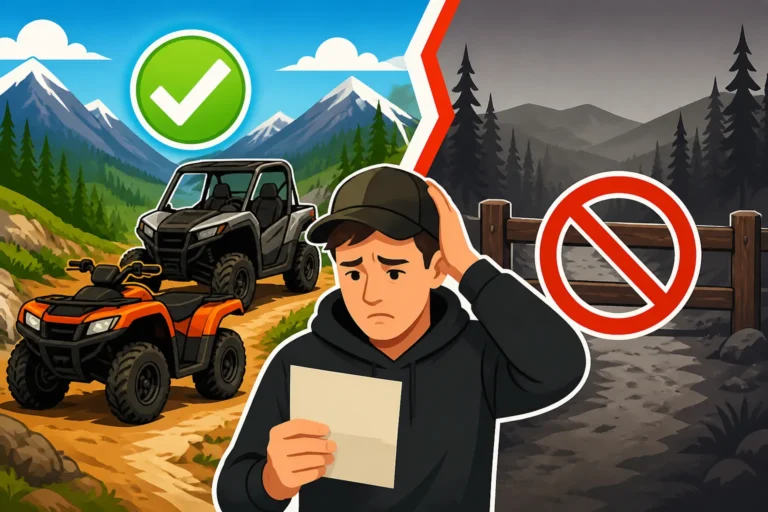
For many off-roaders, the moment a paved road appears is a moment of decision and often, anxiety. There’s a widespread understanding that OHVs aren’t "street legal" in the same way a car is, leading to a general apprehension about any interaction with public roads. This apprehension is well-founded when considering extended travel on paved surfaces, but it often extends to simple crossings, causing undue stress. Riders might even turn around, missing out on miles of amazing trail, simply because they don't know the exact parameters for navigating these brief encounters with pavement.
The perception of paved roads as impenetrable barriers is strong, and it keeps many from fully exploring the trails that crisscross our beautiful state. Nobody wants to be the rider who accidentally breaks the law or puts themselves or others at risk. That uncertainty creates a mental roadblock even before you reach the physical one, making it crucial to understand the very specific circumstances under which these crossings are not only permissible but necessary for connecting trail systems.
Colorado's Specific Rules for Crossing Paved Highways
Colorado law is quite clear when it comes to OHVs and paved roads, but it requires a careful reading to understand the nuances. Generally speaking, off-highway vehicles are not permitted to operate on paved public highways. This is a crucial distinction that most riders instinctively understand. You can't just jump on I-70 or even a state-numbered highway and cruise to your next destination. However, the law does carve out specific exceptions, and one of the most important for recreational riders is the ability to cross a paved highway.
The intent behind these regulations is to allow trail continuity while maintaining safety on roads designed for conventional vehicles. It's about bridging gaps, not becoming part of the regular traffic flow. Understanding these specific allowances is key to confidently and legally traversing Colorado’s diverse landscape, ensuring you can connect trail segments without running afoul of the law.
The Letter of the Law: Crossing a Highway
When it comes to crossing a paved highway, Colorado Revised Statutes outline very specific conditions that must be met. An OHV may cross a public street, road, or highway if:
- The crossing is made at an angle of approximately 90 degrees to the direction of the highway. This means you can't angle yourself down the road or attempt to travel parallel to it, even for a very short distance. It has to be a direct, perpendicular movement across.
- The crossing is made at a place where no obstruction prevents a quick and safe passage. You need clear sightlines, and there shouldn't be any physical barriers or heavy traffic that would make the crossing hazardous.
- The OHV comes to a complete stop before entering the highway, and the operator yields the right-of-way to all oncoming traffic that constitutes an immediate hazard. This is just like any other intersection – safety first, always.
- The crossing is made only when it is safe to do so. This seems obvious, but it bears repeating. If there's heavy traffic, poor visibility, or any other condition that makes the crossing unsafe, you must wait or find an alternative.
It's also critical to remember that this allowance is strictly for crossing. You cannot ride on the paved highway itself, even for a hundred feet, to get to a different crossing point or to avoid a tricky section of trail. The moment your wheels are on the pavement, you are essentially in violation unless you are actively and directly crossing under the conditions listed above. For context, these rules are distinct from [Colorado OHV Rules for Official and Utility Use], which might permit limited highway travel for specific work-related tasks, but not general recreational purposes. Also, don't confuse this with states that might allow [Colorado Rules for Out-of-State Street-Legal Machines] to travel further on paved roads; Colorado's rules are very specific to crossing.
Differentiating State Highways from Local Roads
While the 90-degree crossing rule generally applies to all paved public roads, it's important to understand the hierarchy of roads in Colorado. State highways (those with a numerical designation like Highway 50 or Highway 149) are under the jurisdiction of the Colorado Department of Transportation (CDOT) and adhere strictly to state law. These are the roads where enforcement is often most stringent regarding OHV activity.
County roads, on the other hand, are governed by individual counties, and local municipal streets fall under town or city ordinances. While the state crossing rules still apply as a baseline, some counties and towns have passed specific ordinances that allow for greater OHV access on certain county roads or town streets. For example, some areas might allow OHVs to travel a short distance on a county road to connect to a trail system, or even operate on designated town streets as mentioned in topics like [Colorado Towns That Let OHVs Use Their Streets]. However, these are exceptions, not the rule, and they almost never supersede the strict limitations for state-numbered highways. Always check local ordinances for the specific area you plan to ride, but assume the strictest state highway crossing rules apply whenever you encounter a paved state road.
Practical Steps for a Safe and Legal Crossing
Successfully and legally crossing a paved highway in Colorado requires more than just knowing the rules; it demands practical execution with safety as the top priority. It's a brief but critical maneuver that, if done incorrectly, can lead to dangerous situations or expensive citations. Every rider should approach these crossings with a clear head, good visibility, and a full understanding of their machine's capabilities.
Think of it as a quick, precise operation, not a casual jaunt. Preparing yourself and your vehicle for these moments is just as important as planning your overall trail route. By taking a few deliberate steps, you can ensure your crossing is as smooth, safe, and lawful as possible, keeping your adventure going without interruption or incident.
Maximizing Visibility and Awareness
Before you even approach the edge of the pavement, your focus should be on making yourself as visible as possible. OHVs, by their nature, are often smaller and less conspicuous than typical road vehicles, especially against a busy background or in varied lighting conditions.
- Lights On: Even if it’s the middle of a sunny day, turn on your headlights and taillights. Many modern OHVs come with good lighting, but aftermarket options from companies like SuperATV can significantly enhance your visibility. A bright LED light bar from SuperATV, while not always legal on public roads for continuous use, can be invaluable for that brief moment of crossing to grab drivers' attention.
- Bright Colors: Wear brightly colored riding gear. High-visibility jackets, helmets, and even a whip flag can make a huge difference. Consider a tall, orange whip flag on your machine, especially if you're riding in an area with rolling terrain or blind corners, as it significantly increases your profile from a distance.
- Situational Awareness: As you approach the crossing point, slow down and scan both directions of traffic far in advance. Don't assume drivers will see you. Make eye contact if possible. Listen for approaching vehicles, as engine noise can be a good indicator, especially for large trucks. This is also where you might encounter [Colorado Ranger Checks at a Trailhead], so having all your ducks in a row for the crossing itself is important.
| Requirement | Action to Take | Why It's Important |
|---|---|---|
| Stop | Come to a complete halt before entering pavement. | Provides time to assess traffic and prepare for a safe crossing. |
| Yield | Give way to all oncoming traffic. | Prevents collisions; OHVs have no right-of-way on state highways. |
| 90-Degree Angle | Cross directly across, not parallel to the road. | Minimizes time on the highway and adheres to legal requirements. |
| Visibility | Turn on lights, wear bright gear, use flags. | Makes you easily seen by other motorists, reducing accident risk. |
| Speed | Cross quickly, but always maintain control. | Minimizes exposure to highway traffic. |
| Check Paperwork | Ensure your [Colorado OHV Permit] is current and accessible. | Rangers can pull you over for infractions, and having your papers is crucial. |
Executing the Crossing Safely and Legally
Once you’ve identified a safe, clear moment, execute the crossing with purpose and precision.
- Stop and Look: Come to a complete stop at the edge of the pavement. Look left, then right, then left again. Assess the speed and distance of any approaching vehicles. Do not proceed unless you are certain you have enough time to cross safely without impeding traffic.
- Go Straight Across: Maintain that approximately 90-degree angle to the highway. Drive directly across the shortest possible distance to the trail on the other side. Do not veer, turn, or travel down the pavement for any reason. Even if the trail looks like it moves parallel for a moment, that is not permitted.
- Maintain Control: Accelerate smoothly but quickly enough to clear the highway efficiently. Keep a firm grip on the handlebars/steering wheel and be ready to react if something unexpected happens. While aftermarket upgrades from SuperATV can give you better control and stability on trails, they don't change the laws of physics on pavement, so be extra cautious.
- Mind Your Passengers: If you have passengers, ensure they are properly seated and secured. Reviewing guidelines like [Passengers on a Colorado Road Section] is a good idea before any ride, but especially before a highway crossing. Children, in particular, need to be aware of the seriousness of the maneuver.
- Paperwork in Order: Always carry your valid [Colorado OHV Registration for Machines Kept on Private Land] (if applicable) and [Colorado OHV Permit Rules on Public Land] on your person or securely on your machine. This is crucial if a ranger happens to observe your crossing and has questions.
Remember, the goal is to be on the paved surface for the absolute minimum amount of time required to get from one side of the trail to the other. There is no lingering, no turning to check out a view, and certainly no using the highway as part of your recreational route.
Avoiding Penalties and Staying on the Right Side of the Law
Riding an OHV in Colorado is an incredible experience, but it comes with responsibilities, especially when it interacts with public roads. Ignoring the specific rules for crossing paved highways can quickly turn a fun day into a costly one, carrying significant fines and potential legal issues. It's not just about avoiding a ticket; it's about protecting yourself, other drivers, and preserving access for all OHV enthusiasts. A single incident of illegal road use can prompt local authorities to enact stricter rules, potentially reducing trail access for everyone.
Understanding the repercussions of non-compliance is a powerful motivator for adhering to the rules. The thrill of extending a ride a few extra feet on pavement is simply not worth the risk. By being diligent and informed, you can contribute to a positive image for the OHV community and ensure that these beautiful trails remain accessible for years to come.
The Cost of Non-Compliance: Fines and Citations
The penalties for operating an OHV illegally on a public highway in Colorado can be substantial. While I cannot give specific dollar amounts (as these change over time and vary by jurisdiction), it’s safe to say that fines for violating OHV road rules are not minor. You could face citations for:
- Illegal Operation on a Public Highway: This is the primary offense if you are caught riding on the pavement rather than just crossing it appropriately. This can be a significant fine.
- Operating an Unregistered OHV: If your machine isn't properly registered with Colorado Parks and Wildlife, you're looking at additional penalties. Even if you're only crossing a highway, you're still interacting with a public thoroughfare, and your machine must be legal. See [Fines for an Unregistered OHV in Colorado] for more details.
- Lack of Required Equipment: Depending on the specifics, if you’re deemed to be operating in an unsafe manner or without required safety equipment, additional citations could be issued. Things like proper lighting (even if just for crossing) are important. Check [Lighting Requirements for a Colorado Road Ride] for guidance.
- Reckless Endangerment or Other Traffic Violations: If your illegal highway use creates a dangerous situation for other motorists, you could face more serious charges beyond simple OHV infractions.
These fines add up quickly, not to mention potential court costs and the inconvenience of dealing with legal proceedings. It's a significant deterrent, and rightly so, as these rules are in place for everyone's safety.
The Long-Term Impact on OHV Access
Beyond the immediate financial and legal consequences, illegal OHV use on paved roads can have a detrimental effect on the broader OHV community. When incidents occur, or when law enforcement sees consistent violations, it provides ammunition for those who advocate for tighter restrictions on OHV use. This can lead to:
- Trail Closures: Towns or counties might decide to close access points or entire trail systems if they perceive OHVs are consistently misusing public roads to reach them.
- Increased Enforcement: More frequent ranger patrols, checkpoints, and stricter oversight can be a direct result of increased violations. This means more stops and more potential for tickets for even minor infractions.
- Public Backlash: Local residents and other recreational users (like hikers or mountain bikers) can become frustrated by OHV misuse, leading to calls for bans or limitations. This can change the political landscape for OHV access in sensitive areas like [Colorado Towns That Let OHVs Use Their Streets], some of which have very strict ordinances, such as Silverton's recent ban.
It's a collective responsibility. Every time you ride, you're an ambassador for the OHV community. By strictly adhering to rules like those for [Crossing a Paved Highway on an OHV], you help ensure continued access to Colorado's incredible trails for everyone. While companies like SuperATV provide fantastic products to enhance your machine's capabilities on the trail, they don't grant immunity from road laws. Even with durable parts and enhanced performance from SuperATV, knowing and following the rules is paramount. Remember that a citation for [Colorado Fines for Illegal Road Riding] can impact not only your wallet but also the reputation of all responsible OHV riders in Colorado.
Disclaimer
This article is for general informational purposes only and does not constitute professional advice. Laws, prices and regulations vary by location and change over time. Consult a qualified professional for guidance on your specific situation.