What Colorado Requires on an OHV Road Ride
So, you've got your ATV or UTV, and you're dreaming of cruising down a scenic mountain road in Colorado, perhaps linking up two incredible trail systems or just heading into town for a burger. But then reality hits: the rules. It's not like other states where you can just slap a plate on it and go. Colorado has its own unique, and often confusing, set of requirements for riding your off-highway vehicle (OHV) on its public roads. This comprehensive guide will untangle those rules, walking you through everything you need to know to stay legal and safe on Colorado's open roads.
The Basics: Why Road Riding is Tricky in Colorado
Colorado, with its vast swaths of public land and incredible trail networks, has long been a paradise for OHV enthusiasts. However, the dream of seamlessly transitioning from trail to town often bumps up against a complex web of regulations that can leave even seasoned riders scratching their heads. Unlike some other states, Colorado doesn't have a simple, statewide "street legal" designation for ATVs, UTVs, or dirt bikes. This fundamental difference is where most of the confusion begins.
The General Rule: No Statewide Street Legal Status
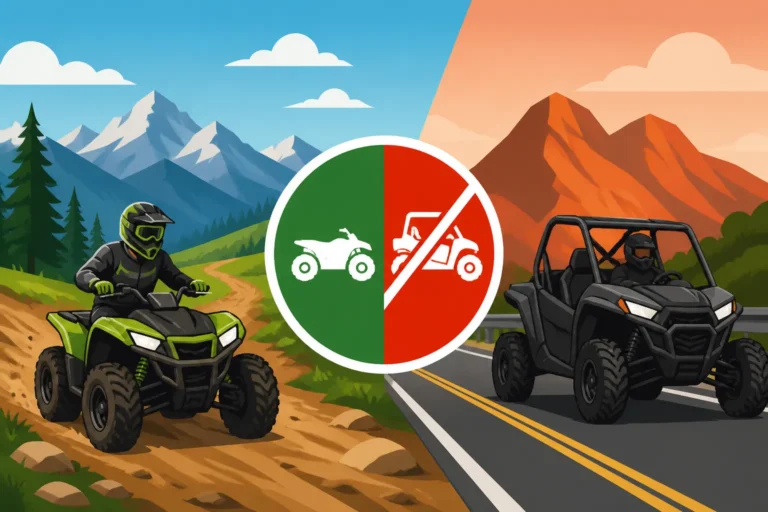
Let's get this out of the way upfront: Colorado generally does not consider your ATV or UTV to be a "street-legal" vehicle in the same way your car or truck is. This means you can't just install a turn signal kit, mirrors, and a horn, slap on a license plate, and expect to ride it on any public road, especially state highways. Many riders, particularly those visiting from states like Arizona, Utah, or Idaho where a statewide street-legal designation is common, often arrive in Colorado with the misconception that their plated machine is good to go everywhere. This simply isn't the case here, and misunderstanding this point can quickly lead to citations and frustration. The state legislature has, for various reasons including road safety concerns and the distinct classification of OHVs, largely kept these machines off the general road system. For a deeper dive into this, you might find [Why Colorado Will Not Plate Your UTV] particularly informative. It highlights the specific hurdles that prevent OHVs from obtaining standard vehicle plates in the Centennial State.
This isn't to say that street-legal conversions don't exist, or that aftermarket parts are useless. Companies like SuperATV offer fantastic kits that include turn signals, horns, and mirrors, which are absolutely essential for any form of road riding. However, installing these parts alone does not magically confer statewide street-legal status. It merely equips your machine with the necessary safety features should you be riding on a road where OHV use is specifically permitted. The distinction is crucial: the legality of your ride depends less on your machine's modifications and more on where you are physically riding it. This nuanced approach requires riders to be much more informed about local rules than in states with blanket street-legal provisions.
The Local Option: How Towns and Counties Open Roads
While statewide street-legal status remains elusive, Colorado offers a beacon of hope through its "local option" laws. These laws empower individual counties and municipalities to designate certain local roads or sections of roads for OHV use. This is where the magic happens for riders wanting to link trails, access services, or simply enjoy a scenic cruise through a mountain town. However, it also introduces a significant layer of complexity, as the rules, designated routes, and even required equipment can vary dramatically from one jurisdiction to another. You can't assume that because Ouray allows OHVs on certain streets, the adjacent town of Telluride will have the same rules – they often don't!
The process for a town or county to open roads to OHVs is often a detailed one, involving local government approval, public hearings, and careful consideration of safety and local impacts. For instance, [How a Colorado town opens roads to OHVs] explains that it typically involves an ordinance or resolution passed by the local council or commissioners. These local regulations will specify which roads are open, during what hours or seasons, and what specific equipment (beyond state minimums) might be required. For riders, this means your pre-trip planning needs to include checking the specific ordinances for every county or town you intend to ride through. Websites for county sheriffs, town visitor centers, or Colorado Parks and Wildlife (CPW) often provide maps and summaries of these local rules.
It’s important to understand that this "local option" isn't an open invitation to ride anywhere. It's a carefully considered designation, often designed to connect existing trail systems, provide access to businesses, or allow riders to get from lodging to a trailhead without having to trailer their machine. The patchwork nature of these regulations means that what's perfectly legal on a county road in Hinsdale County might land you a hefty fine just a few miles away in a neighboring jurisdiction that hasn't adopted similar ordinances. Always do your homework, and when in doubt, assume a road is closed to OHV use unless explicitly signed otherwise.
What an "Opened" Road Means for OHV Use
So, if a road is "opened" to OHV use, what exactly does that entail? It's crucial to understand that it’s not a blank check to treat it like a regular street. An "opened" road typically refers to a county or municipal road, or a specific section thereof, that has been explicitly designated by local ordinance for OHV travel. These designations are rarely, if ever, for state highways (those numbered routes like US-550 or CO-149, though there are extremely limited exceptions for specific short sections, like the one on Highway 149 in Lake City). Instead, they are usually gravel county roads, dirt roads, or low-speed town streets designed to facilitate connection and access rather than high-speed travel.
The purpose of these opened roads is generally very specific. You might use them to:
- Connect trailheads: Imagine finishing one epic trail and being able to ride a mile down a county road to the start of another, instead of loading your machine onto a trailer.
- Access services: Ride from your campground or lodging into a small town to grab supplies, fuel up your machine, or enjoy a meal at a local restaurant.
- Bridge gaps: Use a short section of road to bypass a difficult trail segment or to reach an attraction like a ghost town that's only accessible via a maintained road.
- Scenic drives: Some areas have designated scenic byways that permit OHV use for leisurely enjoyment of the landscape.
However, even on these designated routes, specific rules often apply. There might be lower speed limits for OHVs than for traditional vehicles, restrictions on times of day you can ride, or limitations on where you can park. It's about responsible integration into the local traffic flow. For instance, many towns that allow OHVs will have specific signage indicating the routes and rules, and these need to be followed diligently. Ignoring these specific conditions not only puts you at risk of a citation but can also jeopardize the fragile balance that allows OHV access in these communities. Remember, the privilege of using these roads is often hard-won and can be easily lost if riders aren't respectful of local regulations and residents.
Essential Documents and Permits
Before you even think about hitting a designated road in Colorado, you need to ensure all your paperwork is in order. This isn't just about avoiding a ticket; it's about proving you're a responsible operator and contributing to the trails you enjoy. The critical documents often involve a combination of state-mandated permits and personal identification.
Colorado OHV Registration/Permit
This is absolutely fundamental. Almost universally, if you plan to ride your OHV on any public land or designated road in Colorado, you must have a valid Colorado OHV registration or a non-resident OHV permit. This permit is issued by Colorado Parks and Wildlife (CPW) and is entirely separate from any title or potential "street-legal" plate your machine might have from another state. Think of it as your access pass to the vast network of trails and permitted roads across Colorado. [Colorado OHV Registration Explained] details the process for residents, while [Colorado Non-Resident OHV Permit Explained] outlines what visitors need to do.
The registration sticker must be affixed to your machine in a visible location, typically on the front or rear fender. Without this, you're looking at a fine if you encounter a CPW ranger or local sheriff. Even if you're riding a plated machine from another state on a designated county road, you will almost certainly still need this Colorado permit. The funds generated from these permits go directly back into the OHV program, supporting trail maintenance, enforcement, and education, so it's a vital contribution to the sport. You can often purchase these permits online, by phone, or from various vendors across the state, including many sporting goods stores and powersports dealers. It’s always a good idea to secure yours before you arrive at your riding destination, especially if you're traveling from out of state.
Driver's License Requirements for Road Riding
When you transition from a closed trail system to a public road, even one designated for OHV use, the rules for operator licensing shift dramatically. If you are operating an OHV on any public road that is open to other motor vehicles, Colorado law explicitly requires the operator to possess a valid driver's license. This means that if you're an adult riding your UTV from a campground into Lake City for lunch, you need to have your current driver's license on you. This isn't just a recommendation; it's a legal requirement designed to ensure that anyone operating a vehicle on a shared roadway has demonstrated basic driving competency.
This rule has particular implications for younger riders. While Colorado has specific age and supervision rules for operating OHVs on trails, these generally do not extend to public roads. If a county road or town street is designated for OHV use, the driver's license requirement typically applies to everyone, regardless of age. This means a 12-year-old, even with adult supervision, who might be perfectly legal on a designated trail, cannot legally operate an OHV on an opened road without a valid driver's license. This is a critical distinction that many families overlook. For more information, [Driver's License Rules for Colorado Road Riding] delves into these specifics, highlighting the differences between trail and road regulations regarding operator age and licensing. Always ensure that anyone behind the wheel on an open road has the appropriate credentials to avoid serious legal consequences.
Proof of Ownership and Insurance
While you won't necessarily need to flash your title at every turn, having proof of ownership and insurance readily available is crucial when riding on Colorado's roads. In the event of an accident, a law enforcement stop, or even just needing to prove the machine is yours, these documents become invaluable. Your proof of ownership can be your vehicle's title, a bill of sale, or a current registration card. It’s wise to carry a copy, not the original, to protect against loss or damage on the trail.
More importantly for road riding, Colorado requires certain types of insurance. While not universally mandated for all OHV use on private land or some trails, as soon as you venture onto a public road, even a designated OHV route, the need for insurance becomes much clearer. Specifically, liability insurance is often a prerequisite for operating any motorized vehicle on public roads. This protects you in case you cause an accident involving other vehicles, property, or individuals. It’s always best to check with your insurance provider to ensure your policy covers OHV use on public roads in Colorado, as standard ATV/UTV policies might differentiate between trail and road riding. [Colorado ATV Insurance and When It Is Required] provides a detailed look into the various insurance requirements and recommendations, stressing that what's optional for the trail becomes essential on the road. Don't risk a significant financial burden by skipping this vital protection. Many providers, including those specializing in powersports, can tailor policies to ensure you're covered for both trail and road adventures.
Machine Requirements for Road Use
Just as your car needs specific equipment to be legally driven on the street, your OHV also needs certain features to be compliant on Colorado's designated road routes. These requirements are primarily focused on safety and visibility, ensuring that your machine can coexist with other traffic, even at low speeds on gravel roads.
Headlights, Taillights, and Brake Lights
For any OHV operating on a public road, functional lighting is non-negotiable. This means your machine must be equipped with at least one headlight that emits white light, a taillight that emits red light, and a clearly visible brake light that illuminates when the brakes are applied. These lights are not just for night riding; they are critical for visibility to other motorists, especially on dusty gravel roads, in shaded canyons, or during inclement weather. Think of the sudden downpours or afternoon thunderstorms common in Colorado's mountains – visibility can drop dramatically, and working lights become your best friend.
Many modern ATVs and UTVs come standard with these basic lighting components. However, it's essential to ensure they are all in good working order before you head out. Check bulbs, wiring, and fuses regularly. If your machine is older or a minimalist dirt bike, you might need to install aftermarket kits to meet these requirements. For instance, a quality aftermarket kit from SuperATV could provide robust LED headlights, bright taillights, and reliable brake lights, enhancing both your visibility and your ability to see the path ahead. The requirements are detailed further in [Lighting Requirements for a Colorado Road Ride], which emphasizes the importance of these systems for safe operation, especially when sharing the road with vehicles that might be traveling at higher speeds. Never assume your daytime trail lights are sufficient for road conditions; they need to be robust and reliable.
Mirrors and Turn Signals
While not every single OHV statute in Colorado might explicitly demand turn signals for all road use (as local ordinances can add to this), mirrors are almost universally required for any vehicle operating on a public roadway. You must have at least one rearview mirror, and ideally two, to be able to see traffic approaching from behind without constantly turning your head. This is a basic safety feature that prevents collisions, particularly when slowing down or making turns. Many aftermarket mirror kits are available, ranging from simple clamp-on designs to more integrated solutions.
When it comes to turn signals, the situation can be a bit more nuanced. Some local ordinances in towns that have opened their roads to OHVs will explicitly require turn signals. While statewide OHV regulations for designated routes might not always list them as mandatory for all scenarios (unlike a street-legal car), it is highly recommended that you install a turn signal kit. Using hand signals is an option in some places, but in a dusty UTV or on a bumpy ATV, a clear, visible turn signal is much safer and more effective at communicating your intentions to other drivers. A good quality aftermarket turn signal kit, such as those offered by SuperATV, can easily be installed and will bring your machine closer to the visibility standards of regular road vehicles, thereby increasing your safety margin. Always check the local ordinances for your specific riding area, but consider turn signals a crucial upgrade for any road-bound OHV.
Mufflers and Spark Arresters
For any OHV operating on public lands or designated roads in Colorado, two crucial pieces of equipment are legally mandated: a functional muffler and a spark arrester. These are not just recommendations; they are requirements enforced by law enforcement and land management agencies. The muffler is critical for noise control. Mountain communities, often nestled close to popular riding areas, are particularly sensitive to excessive noise. OHVs with loud aftermarket exhausts or no mufflers can quickly lead to complaints, stricter regulations, and even trail closures. Colorado has specific [Muffler Noise Limits in Colorado] that OHVs must adhere to, and failing to do so can result in fines and negative perceptions of the riding community. Always ensure your exhaust system is stock or a compliant aftermarket option that meets noise standards.
Equally important, and perhaps even more so in Colorado's dry climate, is a spark arrester. This is a device incorporated into the muffler or exhaust system that prevents hot carbon particles from escaping and potentially igniting dry vegetation, leading to devastating wildfires. Given the constant threat of wildfires in Colorado, operating an OHV on public lands or roads without a U.S. Forest Service approved spark arrester is a serious offense that carries heavy penalties. These devices are typically built into modern OHV exhausts, but if you have an older machine or an aftermarket system, verify that it has a functioning spark arrester. It's not just about avoiding a fine; it's about protecting the beautiful landscapes we all enjoy and preventing catastrophic fires. Check your owner's manual or local powersports dealer if you're unsure about your machine's compliance.
Tires, Brakes, and Horn
Beyond lights and mufflers, there are other fundamental mechanical requirements that ensure your OHV is safe for road use. First, your machine must have fully operational brakes. This might seem obvious, but ensuring your braking system is in top condition – pads, rotors, fluid, and lines – is critical when you're sharing the road with other vehicles, especially on mountain descents. The ability to stop effectively and quickly can prevent serious accidents.
Second, consider your tires. While knobby tires are excellent for traction on dirt trails, they need to be appropriate for road surfaces as well. Extreme paddle tires or excessively aggressive mud tires might be legal on specific open-road sections but can handle poorly on pavement and wear out quickly. Ensure your tires are in good condition, with sufficient tread, and are properly inflated for the load and terrain you'll be encountering. Riding on roads, even gravel ones, puts different stresses on tires than trail riding.
Finally, a functional horn is a basic safety device that is often overlooked but required for road-legal vehicles. It allows you to alert other drivers, pedestrians, or even wildlife to your presence. Whether it's a simple push-button horn or an integrated system, make sure it works. These seemingly minor components – effective brakes, appropriate tires, and an audible horn – collectively contribute to your safety and compliance when navigating Colorado's designated OHV roads. For riders looking to upgrade or replace these components, SuperATV is a well-known brand offering a wide range of accessories, from heavy-duty brake components to durable tires, all designed to enhance your machine's performance and safety.
Rider and Passenger Safety Gear
Just as important as equipping your machine is ensuring that you and any passengers are properly geared up for safety. While trail riding might sometimes feel more relaxed about certain safety gear, road riding introduces the dynamic of other vehicles, often at higher speeds, making personal protective equipment even more crucial.
Helmets and Eye Protection
Colorado's helmet laws for OHVs are often a point of confusion because they differentiate between adults and minors, and sometimes between specific types of riding areas. However, when it comes to riding an OHV on a public road, the safest and often legally mandated approach, especially for younger riders, is to wear a helmet. For anyone under 18 operating or riding as a passenger on an OHV on public roads, a DOT-compliant helmet is generally required. While adults are not universally mandated to wear helmets on all OHV trails, choosing to ride on a public road, even a designated OHV route, significantly increases the risk profile. Many local ordinances in towns that have opened their roads to OHVs do require helmets for all riders regardless of age.
Eye protection is another non-negotiable item. Whether it's goggles, a face shield on a helmet, or shatter-resistant glasses, protecting your eyes from dust, debris, insects, and sun is critical for maintaining visibility and preventing injury. This is especially true on dusty gravel roads where other vehicles can kick up significant amounts of material. For a full breakdown of the specific requirements, [Colorado Helmet and Eye Protection: What Is Actually Required] is an excellent resource, and it's also worth understanding [DOT Helmet Standards for OHV Riders] to ensure your head protection offers adequate safety. Always err on the side of caution: a helmet and eye protection should be standard for every rider and passenger on any road-based OHV adventure.
Seatbelts and Roll Cages
For side-by-sides (UTVs), seatbelts are not merely a suggestion; they are a fundamental safety requirement whenever the machine is in operation, especially on roads. All occupants must wear their seatbelts at all times. This is analogous to driving a car: it's a basic safety measure designed to keep you inside the vehicle and minimize injury in the event of a rollover or collision. Many UTVs now come equipped with advanced seatbelt systems, but it's vital to ensure they are properly fastened and in good working order for every single rider.
Complementing the seatbelts is the roll cage. Modern UTVs are designed with integrated roll-over protective structures (ROPS), commonly known as roll cages. These structures are engineered to protect occupants in the event of a rollover. It's imperative that your UTV's roll cage is intact, free of damage, and has not been modified in a way that compromises its structural integrity. While aftermarket cages can offer enhanced protection, ensure they meet safety standards. Riding without seatbelts or with a compromised roll cage is not only incredibly dangerous but also illegal on public roads. When considering upgrades or replacements for critical safety features like roll cages or harnesses, reputable brands like SuperATV offer robust solutions designed to enhance occupant protection and provide peace of mind on challenging terrain or roads. Prioritizing these features can literally be life-saving.
Appropriate Clothing and Visibility
Beyond helmets and seatbelts, what you wear also plays a significant role in your safety and visibility on Colorado's OHV roads. Layering is key, especially in the mountains where weather can change dramatically within minutes, even in summer. Mornings can be chilly, afternoons hot, and thunderstorms can roll in quickly, bringing cold rain or hail. Moisture-wicking base layers, insulating mid-layers, and a waterproof/windproof outer shell are highly recommended.
Visibility to other road users is another crucial aspect. Wearing bright colors, especially fluorescent green, orange, or yellow, significantly increases your visibility to motorists, particularly on dusty roads, in shaded areas, or during dusk/dawn. During hunting seasons (typically fall), wearing blaze orange is not just a good idea but often a requirement in certain areas to prevent accidental shootings. Some riders even add reflective tape to their helmets or machines for enhanced low-light visibility. Gloves protect your hands from impacts, sun, and cold, while sturdy closed-toe shoes or boots are essential to protect your feet. Dressing appropriately isn't just about comfort; it's a critical component of personal safety when riding on roads where you share space with other vehicles.
Rules of the Road and Operation
Once you have your documents in order and your machine and gear ready, it's time to hit the road. But remember, an OHV on a designated road is still subject to the fundamental rules of the road that apply to all vehicles. This isn't a free-for-all; it's about responsible sharing of public thoroughfares.
Speed Limits and Right-of-Way
When you're operating an OHV on an opened road in Colorado, you are bound by all posted speed limits. It's not uncommon for counties or towns to set lower speed limits specifically for OHVs than for traditional vehicles on these designated routes, often 15 or 25 mph, even if the general road speed limit is higher. Always look for signage indicating specific OHV speed restrictions. Ignoring these limits is not only illegal but also dangerous, as OHVs can handle differently than cars on paved or gravel surfaces, especially at higher speeds. You're sharing the road, and excessive speed can spook horses, annoy residents, and lead to accidents.
Beyond speed, standard traffic laws apply. You must yield to oncoming traffic, obey stop signs, traffic lights (if any), and any other regulatory signage. If you encounter a situation where right-of-way is not clear, such as on a narrow mountain pass, the general rule of uphill traffic having the right-of-way often applies, as it's harder for an uphill vehicle to stop and restart. Always exercise caution and courtesy. For detailed information on this, [Speed Limits for OHVs on Colorado County Roads] is a helpful resource. The goal is smooth, safe integration with other vehicles and road users, which means adhering to all established traffic norms.
Staying on Designated Routes and Avoiding Trespass
This is a critical rule for responsible OHV use in Colorado: stay on the designated routes. Even when riding on a road that is open to OHVs, you cannot simply veer off onto private property, unmarked trails, or areas closed to motorized use. This applies equally to Forest Service roads, BLM land, and county roads. Trespassing is a serious offense, and it can quickly lead to fines, citations, and legal troubles, not to mention creating ill will with landowners and potentially jeopardizing future OHV access. Many private properties in Colorado, particularly in mountain valleys, are unfenced, making it easy to accidentally trespass if you're not paying attention to signage or maps.
Always carry up-to-date maps (physical and/or digital, like onX Offroad or a GPS device) that clearly show designated OHV routes, private property boundaries, and areas closed to motorized travel. If a road or trail is not explicitly marked as open for OHV use, assume it is closed. This cautious approach helps protect fragile ecosystems, respect private property rights, and ensure the longevity of OHV access in the state. [Colorado Trespass Rules Along Forest Roads] further elaborates on the importance of knowing where you can and cannot ride. Respecting these boundaries is not just a legal obligation but a cornerstone of ethical riding.
Alcohol and Drug Impairment
Operating an OHV on any public land or road in Colorado while under the influence of alcohol or drugs is strictly illegal and carries severe penalties, just as it would if you were driving a car. Colorado's DUI laws apply to OHV operators, and law enforcement agencies, including CPW rangers and local sheriffs, actively enforce these laws in popular riding areas and on designated OHV roads. A DUI on an OHV can result in significant fines, loss of driving privileges (for both your OHV and your personal vehicle), mandatory education programs, and even jail time.
It's tempting to enjoy a beer or two after a long day of riding, but never, ever get behind the controls of your OHV if you've been drinking or using impairing substances. This isn't just about legality; it's about safety. Operating an OHV, especially on varied terrain and shared roads, requires quick reflexes, good judgment, and full awareness. Alcohol and drugs severely compromise these abilities, putting yourself, your passengers, and other trail/road users at extreme risk. For a detailed understanding of the legal limits and consequences, [Colorado Alcohol Limits for OHV Operators] is a vital read. Play it safe, designate a sober driver if you plan to consume alcohol, or wait until your riding day is completely done and your machine is safely parked.
Carrying Passengers and Machine Capacity
When riding your OHV on designated roads, adhering to your machine's manufacturer-specified passenger capacity is non-negotiable. For ATVs, this generally means single-rider machines should only carry one person. While some ATVs are designed for two riders (often denoted by a stretched seat and passenger handholds), carrying more people than the machine is designed for is inherently dangerous and often illegal on roads. It compromises stability, braking, and control, especially at higher speeds or on challenging terrain.
For UTVs, the rules are clearer: use the designated seats provided, and ensure every passenger is properly secured with a seatbelt. Overloading a UTV with too many people, or allowing passengers to ride in the cargo bed, is extremely risky. These machines are engineered for specific load limits and passenger configurations, and exceeding them can lead to rollovers, tire blowouts, or loss of control, particularly on uneven or paved road surfaces. Always ensure all passengers are seated in their designated spots, with seatbelts fastened. [Carrying a Passenger on a Quad] discusses the nuances for ATVs, but the overarching principle for both ATVs and UTVs on roads is to respect the machine's design limits for the safety of everyone onboard and around you.
Specific Local Ordinances and Signage
One of the most challenging aspects of OHV road riding in Colorado is the variability of local rules. What's legal in one county might be strictly prohibited just across the border. Navigating this patchwork requires diligence and a proactive approach to understanding local laws.
Reading Local Ordinances and Maps
This cannot be stressed enough: always, always check the specific local ordinances and maps for the county or town you plan to ride in. The state provides the framework, but the local governments dictate the specifics of OHV road access. A county might open some of its roads, but only certain ones, and with particular conditions (e.g., speed limits, hours of operation, additional equipment requirements like turn signals). Relying solely on general knowledge or assumptions from other areas is a recipe for a citation.
To do this effectively, visit the official websites of the county sheriff's office, the county government, or the town's visitor center for your planned riding destination. Many will have dedicated pages or downloadable PDFs outlining their OHV ordinances and providing maps of designated routes. Colorado Parks and Wildlife also provides general information and often links to local resources. Tools like onX Offroad are invaluable for displaying public land boundaries and sometimes even local OHV routes, but always cross-reference with official local documents. [Finding Your Colorado County's OHV Ordinance] offers more guidance on where to look for this crucial information. Your pre-trip research is as important as checking your tire pressure!
Understanding Signage on Open Roads
Once you're actually out there, road signage becomes your primary guide. Designated OHV routes will typically be clearly marked with signs indicating that OHV use is permitted. These signs might include specific OHV symbols, route numbers, and sometimes additional information about restrictions (e.g., "OHV Use 8 AM – 8 PM," "OHV Speed Limit 15 MPH"). These signs are your official confirmation that you are on a legal route.
Conversely, if a road is not signed for OHV use, or if you see "No OHV" signs, then you must assume it is closed to your machine. Never ride on a road just because it looks like a good shortcut or because you saw someone else doing it. They might be breaking the law or have special permission you don't. Pay close attention to these visual cues. As an example, [Kremmling OHV Route Signs] provides insight into how specific towns mark their designated routes. Always follow posted signs, even if they seem contradictory to what you might have heard elsewhere. When in doubt, turn around. It's better to be safe than sorry, and local enforcement will rely on these signs to issue citations.
Examples of Town-Specific Rules
To truly understand the "local option" complexity, let's look at a few examples of how different Colorado towns handle OHV access:
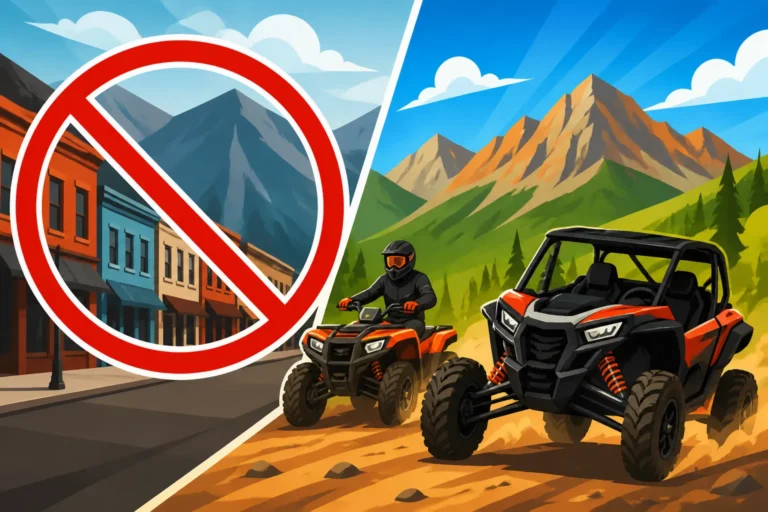
- Silverton: This historic mining town is a popular staging area for the Alpine Loop. However, [Silverton's Ban on OHVs in Town] is a clear example of local control. Despite being surrounded by prime OHV territory, Silverton has historically prohibited OHVs on its main town streets, with very limited exceptions for direct ingress/egress to specific staging areas. Riders often have to trailer their machines right up to the edge of town or use very specific, short connector roads to access trails without entering the main street grid.
- Ouray: Known as the "Switzerland of America," Ouray is another Alpine Loop gateway. Like Silverton, [Ouray and Telluride OHV Town Restrictions] points out that Ouray has tight restrictions on OHV use within town limits, often only allowing machines on specific routes directly connecting to trails or parking areas. Riding through the main commercial streets is generally prohibited, requiring careful navigation or staging outside town.
- Lake City: In contrast, Lake City is often cited as one of the most OHV-friendly towns in Colorado. It has embraced OHV tourism and allows machines on many of its streets, making it convenient for riders to access restaurants, lodging, and services directly from trails. This openness, however, still comes with specific rules about speed limits, times of use, and designated routes.
These examples highlight the critical need for pre-trip research. What's allowed in Lake City is definitely not allowed in Silverton. Always check the specific rules for each town you plan to visit or ride through. Don't assume.
| Requirement | General Rule for Colorado OHV Road Use | Key Considerations |
|---|---|---|
| OHV Permit | Required for all public land/road use (CO residents: registration; Non-residents: permit). | Purchase from CPW online, phone, or vendors. Must be visibly affixed to machine. |
| Driver's License | Required for operator on any public road (county, municipal) open to motor vehicles. | Applies to adults. Minors typically cannot operate OHV on roads, even with supervision, if they lack a driver's license. |
| Proof of Insurance | Liability insurance strongly recommended/often required for road operation. | Verify your policy covers OHV use on public roads. Carry proof. |
| Proof of Ownership | Carry a copy (title, bill of sale, registration card) for identification purposes. | Protects against theft; useful in case of an incident. |
| Headlights | At least one white headlight, fully functional. | Use day and night for visibility. Check bulbs/fuses. |
| Taillights | At least one red taillight, fully functional. | Visible from the rear. |
| Brake Light | Fully functional, illuminates when brakes applied. | Critical for signaling stops to other vehicles. |
| Rearview Mirror | At least one required; two recommended. | Essential for situational awareness and seeing traffic behind you. |
| Turn Signals | Highly recommended, often required by local ordinances. | Use a kit (e.g., SuperATV) for clear communication of intentions. Hand signals may be accepted where not required. |
| Muffler | Must be present and keep noise within legal limits. | Avoid excessively loud aftermarket exhausts; respect [Muffler Noise Limits in Colorado]. |
| Spark Arrester | Required on all OHVs for public land/road use. | Prevents wildfires; must be U.S. Forest Service approved. |
| Brakes | Fully functional service brakes. | Crucial for safe stopping, especially on mountain roads. |
| Tires | Appropriate for road use, good tread, properly inflated. | Avoid paddle tires on pavement; ensure good condition. |
| Horn | Functional horn required. | For alerting others to your presence. |
| Helmets (Minors) | Required for riders/passengers under 18 on public roads. | Strongly recommended for all riders/passengers regardless of age. Must be DOT-compliant. |
| Eye Protection | Required for all riders/passengers. | Goggles, face shield, or shatter-resistant eyewear. |
| Seatbelts (UTV) | Required for all occupants; must be worn at all times. | Essential for occupant retention in UTVs. |
| Roll Cage (UTV) | Must be intact and in good condition. | Provides rollover protection. |
| Speed Limits | Adhere to posted speed limits, which may be lower for OHVs. | Watch for "OHV Speed Limit" signs. |
| Designated Routes | Only ride on roads explicitly signed and designated for OHV use. | Use maps and local ordinances. Avoid unmarked routes or private land. |
| No Impairment | Illegal to operate under the influence of alcohol or drugs. | DUI laws apply to OHVs on roads. |
| Passenger Capacity | Adhere to manufacturer's specified passenger limits. | Overloading is dangerous and illegal. |
Out-of-State Machines and Street-Legal Status
This is perhaps the most common area of confusion for visitors to Colorado: the perception that if your OHV is "street-legal" in your home state, it's automatically street-legal on all roads in Colorado. Unfortunately, this is a dangerous misconception that can lead to significant fines.
The Challenge of Out-of-State Plates
Many riders from neighboring states like Utah, Arizona, and even some Canadian provinces can legally get a street-legal license plate for their ATV or UTV, allowing them to ride on most public roads in their home jurisdiction. They often arrive in Colorado, confident that their plated machine means they can cruise down any paved highway or city street. This is almost universally not the case in Colorado. As [Why an Out-of-State Plate Does Not Help in Colorado] explains in detail, Colorado's state laws largely classify ATVs and UTVs as Off-Highway Vehicles, distinct from regular motor vehicles that can be driven on all public roads.
An out-of-state plate typically does not grant you the right to bypass Colorado's fundamental restriction on OHVs on state highways (like US-550, US-285, I-70, etc.) or major arterial roads within cities unless those specific segments have been explicitly designated by a unique, local ordinance for OHV use. Law enforcement in Colorado views these out-of-state plates as irrelevant to the core question of whether the vehicle type is permitted on a given road under Colorado law. The machine itself is still considered an OHV, and its operation on roads is governed by Colorado's specific OHV statutes, not the reciprocity agreements that apply to standard passenger cars. This means you could be legally cruising down a street in Moab, Utah, but pulled over within minutes for the same action in Grand Junction, Colorado, despite having a valid plate from Utah.
Colorado's 2021 Law and Reciprocity
In an effort to address some of the confusion and facilitate tourism, Colorado did pass a specific law in 2021 related to out-of-state registered OHVs. This law created a limited exception, allowing certain out-of-state "street-legal" OHVs to operate on some designated local roads, but it's crucial to understand the limitations. [Colorado's 2021 Law and Out-of-State Registered OHVs] clarifies that this law primarily allows out-of-state machines that meet their home state's street-legal criteria to access Colorado's locally designated OHV routes (e.g., county roads and town streets opened by ordinance).
Crucially, this law does not grant these machines carte blanche access to all state highways or general roads. They are still largely restricted to the same specific, locally designated OHV routes that Colorado-registered OHVs use. Furthermore, even with an out-of-state plate and meeting the 2021 law's criteria, your machine must still adhere to Colorado's equipment requirements (lights, mirrors, muffler, spark arrester, etc.) and all rules of the road (speed limits, driver's license, etc.) while operating within Colorado. It's a step towards more clarity, but it is not a blanket "street-legal" pass for out-of-state machines. Riders still need to do their homework on specific local ordinances.
Still Need a Colorado OHV Permit
This is perhaps the biggest surprise for many out-of-state riders, even those with "street-legal" plates: you will almost always still need a Colorado OHV permit. Even if your out-of-state plated machine qualifies under Colorado's 2021 law for limited road access, you typically still need to purchase a Colorado non-resident OHV permit from Colorado Parks and Wildlife (CPW). This permit is distinct from your home state's vehicle registration and is required for all OHVs, resident or non-resident, to use Colorado's public lands and designated OHV routes, including those specific county roads and town streets.
Think of it this way: your out-of-state plate might help you meet certain equipment criteria for operating on specific local roads, but the Colorado OHV permit is your access pass to the network of trails and routes. The revenue from these permits directly supports the maintenance and management of Colorado's OHV program and trail systems, which benefits all riders. Failing to display a valid Colorado OHV permit, regardless of your home state's street-legal status, can result in a fine. So, before you leave home, make sure to secure your Colorado non-resident OHV permit, which you can typically purchase online through the CPW website.
Penalties and Enforcement
Ignoring Colorado's OHV road riding requirements can lead to more than just a stern talking-to. Law enforcement agencies in Colorado take these regulations seriously, and violations can result in significant financial penalties, legal trouble, and even loss of riding privileges.
Fines for Non-Compliance
Operating an OHV on a road where it's not permitted, or doing so without the proper documentation and equipment, can result in a range of fines. For instance, [Fines for an Unregistered OHV in Colorado] can be substantial, often hundreds of dollars, and increase with subsequent offenses. Riding on a closed road or private property without permission can also incur hefty fines for trespass. Beyond the permit, if your machine lacks required safety equipment like proper lights, a spark arrester, or a compliant muffler, you can be cited for each individual violation.
[Colorado Fines for Illegal Road Riding] further details the penalties for operating an OHV on a state highway or a local road not designated for OHV use. These fines are often comparable to traffic citations for regular vehicles and can quickly add up, turning what should have been a fun day of riding into an expensive headache. Law enforcement isn't just looking for major infractions; even seemingly minor omissions like a missing mirror or non-functional brake light can draw attention and lead to a citation. The cost of a few aftermarket parts and a permit pales in comparison to the financial hit of multiple fines.
Ranger and Sheriff Enforcement
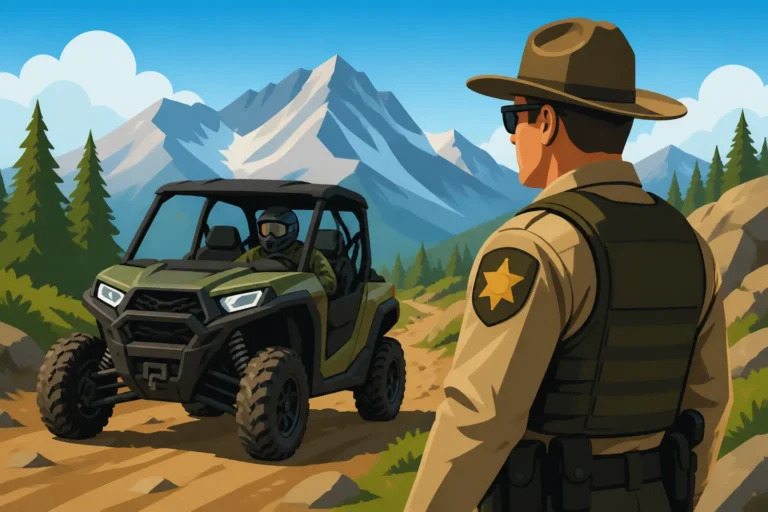
Colorado Parks and Wildlife (CPW) rangers, along with local county sheriffs and sometimes municipal police departments, are the primary enforcers of OHV regulations in Colorado. They actively patrol popular riding areas, trailheads, and designated OHV routes, especially during peak seasons. Don't be surprised to encounter a ranger at a trailhead asking to see your OHV permit, or a sheriff's deputy monitoring OHV traffic on a county road. [Colorado Ranger Checks at a Trailhead] are a common sight, where officers ensure compliance with permits, helmet laws for minors, and general safety.
In mountain towns that have opened their streets to OHVs, local sheriffs and police are particularly vigilant. [Sheriff Enforcement in Colorado Mountain Towns] highlights that these officers balance the needs of tourism with the safety and quality of life for residents. They are typically well-versed in the specific local ordinances and will not hesitate to issue citations for violations such as speeding, riding on a closed street, or not having required equipment. Remember, these officers are not trying to ruin your fun; they are ensuring public safety and resource protection. Being polite, cooperative, and compliant can often lead to a more amicable encounter, even if you made a mistake.
Losing Access and Future Restrictions
Beyond immediate fines, repeated violations or significant incidents (like causing trail damage, illegal trespass, or severe safety infractions) can have broader, long-term consequences. Law enforcement has the authority to impound your machine in serious cases. More broadly, irresponsible riding behavior by a few individuals can lead to a negative public perception of the entire OHV community. This, in turn, can result in stricter regulations, closures of previously open routes, and increased difficulty in advocating for future OHV access.
The privilege of riding OHVs on Colorado's roads and public lands is often hard-won and maintained through ongoing efforts by rider organizations, land managers, and local governments. When riders disregard rules, damage resources, or cause safety concerns, it undermines these efforts and makes it harder to expand or even maintain existing access. Every rider has a responsibility to ride ethically and legally, not just to avoid personal penalties, but to protect the future of OHV recreation for everyone. Educate yourself, ride responsibly, and be an ambassador for the sport.
Disclaimer
This article is for general informational purposes only and does not constitute professional advice. Laws, prices and regulations vary by location and change over time. Consult a qualified professional for guidance on your specific situation.