Riders Under 10 on Colorado Public Roads
It's incredibly exciting to introduce your children to the joy of off-highway vehicle (OHV) riding, but when it comes to taking those machines onto public roads, especially with young kids, the rules can feel like a labyrinth. Many parents assume that if an OHV is "street legal" or allowed on certain county roads, their child can ride it there too, leading to confusion and potential legal headaches. This guide will meticulously break down Colorado's regulations regarding riders under 10 on public roads, helping you understand where and how your youngest riders can safely enjoy their machines without breaking the law.
Understanding Colorado's Stance on Youth Riders and Public Roads
Colorado takes the safety of OHV riders very seriously, and that's especially true for children. While the state has made strides in opening up certain county and municipal roads to OHV access, these permissions come with strict guidelines, particularly concerning age. It's not a free-for-all, and understanding the core principles behind these rules is the first step to staying compliant and safe. The state draws a very clear line when it comes to who can operate an OHV on designated public routes.
The "Opened Road" Distinction for OHVs
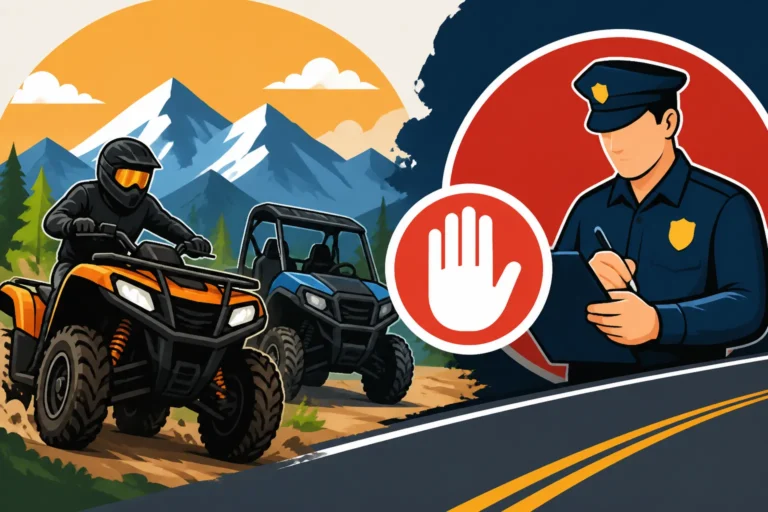
When we talk about "public roads" in the context of OHVs in Colorado, we're not talking about interstates or state highways in the traditional sense. We're referring to specific county and municipal roads that have been explicitly opened by local ordinance for OHV use. This means a town council or county commission has passed a law allowing OHVs on certain roads within their jurisdiction. These roads are often marked with specific signage indicating that OHVs are permitted. Without this specific local ordinance and signage, OHVs are generally not allowed on public roads. It's a critical distinction, because simply having a Colorado OHV registration sticker doesn't grant you universal road access. Even if you're riding a side-by-side equipped with turn signals and a horn, which might make it seem "street legal," the state itself does not issue a street-legal plate for these vehicles. The authority rests with local governments to permit OHV use on their roads.
These "opened roads" are still considered public thoroughfares, and as such, they fall under specific state regulations regarding who can operate vehicles on them. This is where age limits become paramount. While it's fantastic that more communities are embracing OHV tourism and access, the privilege comes with the responsibility of knowing and following all applicable rules, especially when children are involved. For more on this, you might find [Colorado County Roads Open to OHVs] particularly helpful.
Why Age Matters for Road Access
The simple truth is that operating any vehicle on a public road, even one specifically opened for OHV use, requires a certain level of maturity, judgment, and physical capability. Colorado's laws reflect this understanding by setting minimum age requirements for operating OHVs on these public routes. These age limits are designed to protect not only the young rider but also other motorists, pedestrians, and the general public. They consider factors like a child's ability to understand and react to traffic situations, their physical strength to control a machine, and their comprehension of road signs and rules of the road.
For instance, a child under the age of 10, while perhaps capable of riding an ATV on private property, simply lacks the cognitive development and experience to safely navigate shared public spaces. The risks associated with unexpected vehicle traffic, blind intersections, and varying road surfaces are significantly higher on public roads compared to a controlled off-road environment. The state prioritizes public safety, and these age restrictions are a direct manifestation of that priority.
Specific Rules for Riders Under 10 on Colorado's Public Roads
Let's cut right to the chase for those eager young riders and their parents. Colorado's rules are very clear, and they might be stricter than some expect. When it comes to operating an OHV on any public road that has been opened for OHV use, there's a definitive age cutoff.
The Absolute "No" for Under-10s on Designated OHV Routes
In Colorado, a person under 10 years of age is absolutely prohibited from operating an OHV on any public road that has been designated or opened for OHV use. This is not a gray area; it's a hard and fast rule. Even if that county road is barely traveled, even if you're supervising them closely, and even if they're the most experienced 8-year-old rider in the state, the law states they cannot be on those public roads. This means no riding from your campground to the trailhead, no short jaunts to the local store in a mountain town that allows OHVs, and no connecting trails via a county road if a rider under 10 is at the controls.
This rule is in place for several crucial reasons. Public roads, even those with limited traffic, present unpredictable hazards that are simply too complex for a child under 10 to manage safely. These can include:
- Encountering cars, trucks, or other OHVs unexpectedly.
- Navigating intersections, even if unmarked.
- Reacting to changing road conditions like potholes, gravel, or sudden turns.
- Understanding and complying with traffic signs and signals.
- The potential for distracted or inattentive drivers sharing the road.
Violating this rule can lead to citations for the supervising adult, and in serious cases, could result in more severe consequences if an accident were to occur. It's a situation you absolutely want to avoid to ensure both safety and legal compliance. For further clarity, refer to [Colorado's Age Ten Rule for Riding an Opened Road].
Explaining the Supervision Requirement
While riders under 10 are outright banned from public roads, it's worth understanding the supervision requirements for slightly older youth, as this often causes confusion. For riders between the ages of 10 and 16, Colorado law generally states that they can operate an OHV on an "opened road" only if they are under the immediate supervision of a person 18 years of age or older. "Immediate supervision" usually means the adult is physically present, within sight, and able to provide direct guidance or intervention. This often implies the adult is on their own OHV, riding either alongside or directly behind the youth.
However, it's crucial to reiterate: this supervision rule does NOT apply to riders under 10 on public roads because they are simply not permitted to be there at all. The supervision requirement is for older children who are legally allowed to operate an OHV on these specific public routes. It's a common misconception that if an adult is present, any child can ride. That's not the case for the under-10 age group on public roads. Understanding the distinction is vital to ensure you're not inadvertently putting your younger children at risk or in violation of state law. If you have older kids, you'll want to check out [Colorado Supervision Rules for Riders 10 to 16] for their specific requirements.
Private Land vs. Public Roads: A Crucial Difference for Young Riders
The distinction between private and public land is perhaps the most critical concept for parents of young OHV riders to grasp in Colorado. What's perfectly legal and safe on your own property might be strictly forbidden on public access routes. This misunderstanding often leads to problems, as families assume uniform rules apply everywhere. They do not.
Riding on Your Own Property or Leased Land
Here's the good news: On private property that you own, or on land that you have legally leased or rented, Colorado generally does not impose age restrictions on OHV operation. This means if you have a sprawling ranch, a large backyard, or a friend with acreage, your child under 10 can absolutely ride their ATV or dirt bike there. This is the designated safe space for them to learn, practice, and enjoy their machines without the complexities of public road laws.
This freedom on private land allows parents to teach their children riding skills in a controlled environment, free from traffic and external regulations. It's an ideal setting for them to gain confidence, understand machine control, and learn responsible riding habits. You can set your own rules for helmets, speed, and supervision, tailoring the experience to your child's skill level and the specific terrain. This is where countless young riders get their start, developing a passion for the sport in a secure setting. Just be sure to think about [Colorado OHV Registration for Machines Kept on Private Land] if your machine will only ever be used on private property, as that can sometimes exempt you from state registration requirements.
The Need for Written Permission on Other Private Land
What if you don't own the land, but you want to ride on a friend's farm or a large private parcel owned by a relative? This still falls under the "private land" category, which is good news for your young rider. However, Colorado law states that you must have written permission from the landowner to operate an OHV on any private land that you do not own. This isn't just a suggestion; it's a legal requirement. Verbal permission, while friendly, won't hold up if you're ever questioned by law enforcement or a Colorado Parks and Wildlife (CPW) ranger.
Why is this important? It protects both you and the landowner. It proves you have legal access and aren't trespassing, and it clarifies the terms of your use. A simple signed and dated note stating you have permission to ride your OHV (and your child's) on their property, including dates or duration, is usually sufficient. This written permission ensures that you're operating within legal boundaries, providing a clear defense against any claims of illegal entry. This documentation is crucial for anyone riding on land they don't own, and it ensures that your child's riding experiences remain positive and legal. Make sure you read up on [Written Permission Before Riding Private Land] for all the details.
| Age Group | Colorado Public Roads (Designated OHV Routes) | Private Land (Owned/Leased) | Private Land (Other's Property) |
|---|---|---|---|
| Under 10 | Absolutely Prohibited | Permitted (Parental rules apply) | Permitted (With written landowner consent) |
| 10 to 15 | Permitted (Under immediate adult supervision) | Permitted (Parental rules apply) | Permitted (With written landowner consent) |
| 16 and Older | Permitted (No supervision required) | Permitted | Permitted (With written landowner consent) |
Safety Considerations and Best Practices for Young Riders
Even though riders under 10 cannot be on public roads in Colorado, safety remains paramount when they're riding off-road on private land or designated public trails (which have their own, different rules regarding youth). Teaching good habits from a young age is crucial for a lifetime of safe and enjoyable riding.
Gear Up: Helmets, Eye Protection, and Proper Apparel
Safety gear isn't optional; it's essential for young riders. A proper helmet is the absolute foundation of ATV safety, protecting the most vital part of the body. For children, it's critical to ensure the helmet fits snugly and is DOT-approved. An ill-fitting helmet can shift during a fall, offering little protection. Combine this with appropriate eye protection, like goggles, to shield against dust, debris, and branches. You'd be surprised how much flying particulate can get kicked up by a machine, even at slow speeds.
Beyond the head, proper apparel plays a huge role. Long sleeves and pants, preferably made of durable material, can prevent scrapes and cuts from brush or minor tumbles. Sturdy over-the-ankle boots protect feet and ankles from impacts and keep them from slipping off footrests. Gloves help with grip and protect hands. Think of it as investing in their safety and comfort, which in turn helps them focus on riding rather than discomfort or potential injury. After all, a quick visit to a place like SuperATV online can show you just how many options there are for protective gear that fits kids, ensuring they're as safe as possible while tearing up the trails. For a deep dive, check out [Colorado Helmet and Eye Protection: What Is Actually Required].
Choosing the Right Machine Size for Youth
This is where many parents make crucial mistakes. Giving a child a machine that's too big, too powerful, or too heavy for their age and skill level is a recipe for disaster. Youth ATVs and UTVs are specifically designed with smaller engines, lighter frames, and often features like throttle limiters to help young riders learn safely. The key is finding a machine where the child can comfortably reach the controls (handlebars, brakes, footrests) and can shift their weight effectively to steer and maintain balance.
The manufacturer's age recommendations are a good starting point, but always consider your child's individual size, strength, and maturity. A smaller, less powerful machine allows a child to develop fundamental riding skills without being overwhelmed. As they grow and gain experience, they can gradually move up to larger, more capable machines. It's a progression, not a jump. Putting a child on a machine they can't control fully is not only dangerous but also frustrating for them, potentially turning them off the sport entirely. When you're looking for parts or accessories for youth machines, it's worth checking out resources like SuperATV for durable components that can withstand the learning curve. You can learn more about recommended sizes in [Youth Machine Engine Sizes Colorado Families Choose].
Supervising Young Riders Safely Off-Road
Even on private land, supervision is non-negotiable for young riders. It's not about hovering, but about being present and attentive. This means actively watching your child, providing instruction, and being ready to intervene if needed. Set clear boundaries for their riding area and establish rules about speed, riding behavior, and avoiding obstacles.
Walk the terrain with them first to identify potential hazards like rocks, ditches, or steep inclines. Teach them about shifting weight, proper braking techniques, and how to handle different surfaces. Encourage them to ride within their comfort zone, not to push beyond their limits. Riding with them, perhaps on your own machine, can also be a great way to lead by example and provide real-time coaching. Remember, the goal is to foster a love for riding in a safe and responsible manner, building their skills and confidence incrementally. It's not just about letting them loose; it's about guiding them.
Common Misconceptions and Parental Concerns
It's easy to get confused by the myriad of rules and the differing regulations across states or even within Colorado itself. Many parents harbor certain assumptions or worries that, if not clarified, can lead to compliance issues or safety risks. Let's address some of these head-on.
The Illusion of "Street Legal" for Kids' Machines
One of the biggest misconceptions is that a child's small ATV or dirt bike, especially if it has a headlight or taillight, can be considered "street legal" in the same way an adult machine might be on certain roads. This is simply not the case in Colorado. While some aftermarket parts from companies like SuperATV might enhance a youth machine's visibility or durability, they don't magically confer road legality. The concept of "street legal" for OHVs in Colorado is complex enough for adult machines, which generally involves local ordinances for specific county roads, not state-wide blanket permission. For youth machines, the outright prohibition for riders under 10 on public roads bypasses any discussion of "street legality."
Even for older youth (10-15) who are permitted on certain opened roads under supervision, their machine isn't "street legal" in the traditional sense. It's an OHV operating under specific exceptions to general traffic law. There's no separate "street legal" registration or plating process for youth-sized ATVs. Trying to ride a youth machine, especially with a child under 10, on any public road based on this misunderstanding could lead to a fine, a stern lecture from a ranger, or worse, an accident. Always remember, if your child is under 10, the answer for public roads is unequivocally "no," regardless of how the machine is equipped.
What Happens if a Child Under 10 is Caught on a Road?
It's a scary thought, and it's precisely why understanding and following the rules is so important. If a child under 10 is found operating an OHV on a public road in Colorado that's open to OHVs, the consequences will primarily fall on the supervising adult. This isn't just a slap on the wrist. Law enforcement or a Colorado Parks and Wildlife officer could issue a citation to the adult responsible for supervising the child. These citations can carry fines, and repeated offenses could potentially lead to more serious legal repercussions.
Beyond the legal penalties, there's the much more critical issue of safety. Being caught usually implies that an officer has observed an unsafe situation or that the child has been involved in some kind of incident. This puts the child, the adult, and potentially other members of the public at risk. Imagine the liability and emotional toll if a child were to be involved in an accident with a car. The goal of these laws isn't to punish parents, but to prevent dangerous situations. It's far better to err on the side of caution and keep young riders strictly on private land or appropriately designated OHV trails where they meet age requirements. For details on potential legal actions, you can research [Penalties for an Unregistered OHV in Colorado] as an example of what can happen when rules are not followed, though this specific scenario is about age and road access.
Where to Find Reliable Information and Local Ordinances
The best defense against confusion is accurate information. Colorado's OHV laws and regulations are primarily managed by Colorado Parks and Wildlife (CPW) and the Colorado Department of Revenue (for titling). Their official websites are invaluable resources. They publish comprehensive guides, FAQs, and updates on regulations. Additionally, when it comes to specific road access, you must check with the local county sheriff's office or municipal police department of the area you plan to ride in. Many mountain towns and counties have their own specific ordinances regarding OHV use on their roads, including maps of designated routes, hours of operation, and additional safety requirements.
Don't rely solely on word-of-mouth or outdated information from online forums. Laws can change, and what was allowed last year might not be this year. A quick phone call or visit to the relevant local government website can save you a lot of grief. Remember, while a state OHV registration covers your machine for trail use, local road access is a separate layer of regulation. Being proactive in gathering this information ensures that your OHV adventures, especially with young family members, are always safe, legal, and enjoyable. You might also find [Colorado Ranger Checks at a Trailhead] useful for understanding how enforcement happens on the ground.
Disclaimer
This article is for general informational purposes only and does not constitute professional advice. Laws, prices and regulations vary by location and change over time. Consult a qualified professional for guidance on your specific situation.