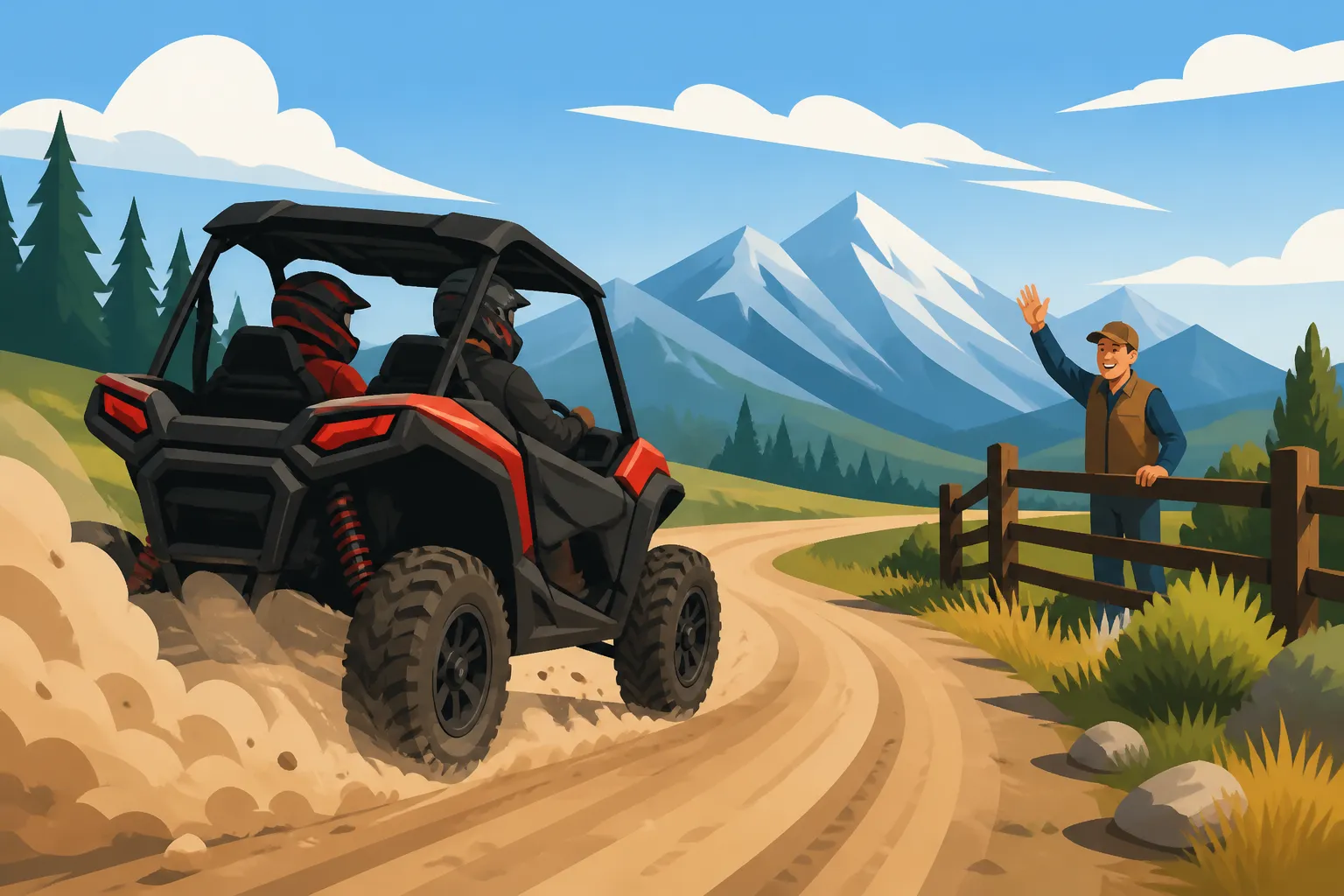
Dust and Neighbors on a County Road
There’s nothing quite like hitting a Colorado county road on your ATV or UTV, especially when you're headed to some incredible trails. But let’s be real, the joy of kicking up dust can quickly turn into a headache when you pass by homes, leaving a thick cloud of dirt in your wake. This guide is all about tackling that common problem: understanding why dust is such an issue, how you can minimize it, and most importantly, how to maintain those good neighborly vibes on Colorado's roads.
Understanding the Problem: Why Dust is Such a Big Deal in Colorado's Backcountry
When you’re out on a dirt or gravel county road, especially during Colorado’s drier months, dust isn't just a minor annoyance; it's a significant concern for residents, the environment, and even your own riding experience. It might seem like a natural part of riding, but its effects can be far-reaching and quite impactful. We all love the freedom of the trails, but we also share these beautiful landscapes with others, and understanding the ripple effect of our actions is the first step toward responsible riding.
The Environmental Impact and Health Concerns
That billowing cloud of dust isn't just dirt; it's made up of fine particulate matter, tiny airborne particles that can travel surprisingly far. Environmentally, this dust settles on vegetation, potentially affecting plant health and natural ecosystems. Imagine a delicate wildflower or a young aspen sapling constantly coated in a layer of road grit—it can hinder growth and change the natural balance over time. It’s a subtle change, but one that adds up with every passing machine.
From a health perspective, inhaling these fine particles can be problematic, especially for individuals with respiratory conditions. Local residents, who might live near these frequently used county roads, are particularly susceptible. The dust can irritate eyes, noses, and throats, and prolonged exposure can contribute to more serious health issues. Even for riders, being constantly enveloped in your own dust cloud, or someone else's, isn't ideal for a clear view or healthy lungs. It's a reminder that what we kick up doesn't just disappear; it becomes part of the air we all breathe.
The Neighborly Nuisance Factor
This is where the rubber meets the road, quite literally. For homeowners whose properties line these county roads, excessive dust is a constant source of frustration and a genuine quality-of-life issue. Imagine having to constantly clean your home’s exterior, your windows, your vehicles, and even your garden furniture, all because of dust from passing vehicles. It coats everything in a gritty film, turning outdoor living spaces into maintenance nightmares.
Beyond the cleaning, there's the aesthetic impact. A beautiful Colorado home can quickly lose its curb appeal when it's perpetually dusty. This can even affect property values in some areas, which is a real concern for residents who have invested their lives and savings into their homes. It's not just about an individual inconvenience; it's about the collective impact on a community. When we ride, we're not just visitors; we're temporary residents on that stretch of road, and our actions directly influence the daily lives of the permanent residents. Showing respect for their property and peace is fundamental to responsible OHV use. It's a delicate balance, and ignoring the dust problem can lead to friction and, in some cases, calls to the local sheriff. [Riding Slowly Past Homes on a Route] is a simple but incredibly effective way to minimize this nuisance.
Practical Strategies for Minimizing Dust Production
While you can't eliminate dust entirely on a dry dirt road, there are definitely steps you can take to significantly reduce it. These strategies range from simple adjustments in how you operate your machine to considering specific modifications that can help keep the dust in check. It's about being proactive and mindful, showing that you’re a considerate rider who cares about the environment and the communities you pass through.
Adjusting Your Riding Habits
The most immediate and impactful way to reduce dust is by modifying your driving style. It’s not about losing the fun, but about smart riding.
First and foremost, speed reduction is key. The faster you go, the more air you displace, and the more dust you kick up. Slowing down, especially when passing homes or other trail users, dramatically lessens the dust cloud. Think about it: a slow, steady roll barely stirs the ground, while a quick burst of speed can create a literal whiteout behind you. When you see a house or another group of people, ease off the throttle. Not only does it reduce dust, but it also sends a clear signal of respect to those around you. You'll find that many locals appreciate this small gesture more than you might realize. This is crucial for maintaining access to [Colorado County Roads Open to OHVs].
Secondly, smooth acceleration and deceleration make a huge difference. Rapid starts and sudden braking tend to churn up the surface more than gradual movements. Imagine a bulldozer versus a smooth-rolling compact car – the latter creates far less disturbance. Try to anticipate your stops and turns, allowing for gentle application of the throttle and brakes. This smooth approach also happens to be better for your machine and makes for a more comfortable ride. Avoid quick, jerky movements that can upset the terrain and create unnecessary dust plumes.
Finally, avoiding unnecessary wheel spin is vital. When your tires lose traction and spin freely, they act like mini-tillers, digging into the road surface and launching dirt high into the air. This is particularly common when accelerating aggressively, especially from a standstill or out of a turn. Focus on maintaining traction and using controlled power to move forward. If you find your wheels spinning, ease off the throttle slightly until they grip, then apply power smoothly. Not only will you reduce dust, but you'll also be more efficient with your fuel and cause less wear and tear on your tires and drivetrain. Keeping your speed in check is especially important on a narrow, dusty road; check out [Colorado OHV Speed on a County Road] for more insights.
Machine Modifications and Accessories
Sometimes, your riding style isn't the only factor. Certain modifications or additions to your ATV or UTV can also help manage dust and debris.
When it comes to tire choice, consider less aggressive treads for machines you frequently ride on county roads. While super-aggressive mud tires are fantastic for deep mud, their deep lugs can really dig into and throw gravel and dirt on dry surfaces, acting like mini dust-flingers. If a significant portion of your riding involves county roads, a more all-terrain-style tire with a less aggressive tread pattern can reduce the amount of material flung off the tires, keeping the dust closer to the ground. This not only minimizes dust but can also provide a smoother, quieter ride on harder surfaces.
Fender flares and mud guards are incredibly effective additions. Many stock machines offer decent coverage, but aftermarket options, often available from brands like SuperATV, can extend the coverage significantly. These flares act as barriers, catching the dirt, gravel, and dust thrown up by your tires and deflecting it downwards or inwards, rather than outwards into the air or onto your passengers. This is especially helpful for side-by-sides, where passengers are often subjected to a constant shower of dust. Installing wider flares can make a noticeable difference in how much debris is tossed up, keeping it contained within the wheel wells.
While less common for individual riders, it's worth noting that on a larger scale, some community efforts involve sprinkling roads with water or dust suppressants. If you’re part of a club that maintains a private access road, or if you live in a community with dedicated OHV routes, this might be a solution discussed. For individual riders, carrying a small sprayer for extremely localized, dusty spots near your campsite, for instance, could be an option, but it's generally not practical for long stretches of county road. When you're thinking about machine performance, keeping an eye on [Muffler Noise Limits in Colorado] is also crucial for being a good neighbor, as excessive noise often accompanies excessive speed and dust.
Proactive Road Management
Sometimes, minimizing dust isn't just about how we ride, but about being part of the solution when opportunities arise. While we can’t all pave every dusty road, there are community-level actions that can help.
Community efforts, such as organized road watering or applying dust suppressants like magnesium chloride, can be incredibly effective. These initiatives are usually undertaken by local residents, homeowner associations, or OHV clubs, sometimes in partnership with county road and bridge departments. If you’re a resident or a frequent rider in an area prone to dust complaints, consider inquiring about or even helping to organize such efforts. A little collective action can go a long way in preserving access and improving the experience for everyone.
It's also important to be aware of local ordinances related to road conditions and nuisance. While few counties have specific "dust laws" aimed solely at OHVs, general public nuisance ordinances or even traffic codes related to reckless driving can come into play if dust is extreme and causing significant issues. Knowing the local rules in areas like Lake City, Ouray, or Silverton is vital. [Finding Your Colorado County's OHV Ordinance] will give you specific details on what applies where you plan to ride. Staying informed helps you avoid unintentionally breaking rules and contributes to a better understanding between riders and residents. [Colorado Sheriff Patrols on OHV Routes] also means they’re out there observing, and excessive dust can certainly draw their attention.
Maintaining Good Relations with Your Neighbors and Local Communities
Being a responsible OHV user in Colorado extends beyond just following the rules; it’s about being a good neighbor and ambassador for the sport. The vast majority of Coloradans are welcoming, but friction can arise when residents feel their peace or property is being disrespected. Positive interactions are essential for ensuring continued access to the incredible riding opportunities Colorado offers.
Communication and Courtesy are Key
This is perhaps the simplest, yet most powerful tool in your arsenal for building good relationships. When you’re riding on a county road, particularly near homes, slowing down is paramount. Make it a habit to significantly reduce your speed when you see houses, driveways, or people. This not only cuts down on dust but also shows that you acknowledge their presence and respect their space. A slow, steady pace demonstrates thoughtfulness, unlike a high-speed blur that can feel dismissive.
Beyond slowing down, a friendly wave can go a long way. A simple nod or a wave to homeowners, pedestrians, or other road users changes the dynamic from an anonymous machine zooming past to a friendly individual enjoying the outdoors. It humanizes the interaction and can defuse potential tension before it even starts. Remember, you’re representing the entire OHV community with every interaction.
Finally, be mindful of noise, especially during early mornings or late evenings. While we’re focusing on dust, noise pollution is another common complaint from residents. If you have an aftermarket exhaust, ensure it meets legal sound limits. Try to avoid idling your machine unnecessarily or revving the engine in residential areas. Combining reduced speed and mindful noise levels shows a holistic respect for the community. Sometimes just a little bit of effort goes a long way to ensure you're not riding into trouble and ending up with [Colorado Citations for Road Riding].
Understanding and Respecting Local Ordinances
Colorado's approach to OHV road access is often decentralized, meaning that specific rules can vary significantly from one county to another, and even from one town to the next. What's perfectly fine in Hinsdale County might be strictly regulated in Silverton. This patchwork of regulations can be confusing, but it’s crucial for riders to do their homework.
Checking county websites or local signage before you ride is non-negotiable. Many counties now have clear maps and ordinances posted online outlining which roads are open, which are closed, and any specific requirements or restrictions. You might find rules about time of day access, speed limits, or even special permits needed for certain areas. Some towns, like Ouray or Lake City, have embraced OHV tourism and created specific routes and rules for in-town travel, while others, like Silverton, have strict bans in certain areas, sometimes with hefty fines. When planning your ride on [Riding an OHV on the Road in Colorado], understanding these nuances is essential.
Respecting these local rules isn't just about avoiding a ticket; it's about honoring the decisions made by local communities for the well-being of their residents. Ignoring them can lead to resentment, stricter enforcement, and ultimately, the loss of riding privileges for everyone. We want to be welcomed, not just tolerated, in these beautiful mountain towns.
Participating in Community Solutions
If you really want to make a positive impact and ensure continued access for OHVs, consider getting involved in the community. This goes beyond simply riding respectfully; it’s about active participation and showing you care about the long-term health of the trails and the relationships with local residents.
Joining local OHV clubs is an excellent way to connect with like-minded riders and contribute to the sport. Many clubs actively work on trail maintenance, signage, and even advocating for rider access. They often have established relationships with local land managers (like the Forest Service or BLM) and county governments, making them powerful voices for responsible riding. These clubs frequently organize workdays where volunteers help repair trails, clear brush, or install new signage – efforts that directly benefit all riders and minimize environmental impact. The Colorado OHV Grant Program often funds these types of projects, and clubs are key to making them happen. More information on this can be found at [Colorado OHV Clubs and Trail Adoption].
Furthermore, volunteering for clean-up days or participating in other community events demonstrates a commitment to the areas you ride. Picking up trash, even if it's not yours, reflects positively on the entire OHV community. These actions show residents that riders are not just passing through, but are invested in preserving the beauty and health of the local environment. When residents see OHV users actively contributing, it fosters goodwill and creates a more positive image for the sport, which is vital for maintaining access to [Losing Trail Access After a Colorado Citation].
Legal Considerations and Potential Consequences
While Colorado embraces its off-highway vehicle culture, riding comes with responsibilities, especially when you're on public roads where private residences are present. Excessive dust, noise, or reckless behavior isn't just a social faux pas; it can have legal ramifications. It's important to understand the line between enjoying the trails and infringing on the rights of others.
What Colorado Law Says About Nuisance and Property Rights
Colorado doesn't have a specific statute that says, "Thou shalt not create too much OHV dust." However, there are broader legal principles that can apply. Generally, nuisance laws allow individuals to seek legal recourse if someone else's actions unreasonably interfere with their use and enjoyment of their property. While dust from a passing vehicle might seem minor, if it's persistent, excessive, and demonstrably impacting a homeowner's ability to use their property (e.g., covering everything, making outdoor living impossible, causing health issues), it could theoretically fall under a public or private nuisance claim.
Local governments, through their county commissioners or town councils, also have the authority to create ordinances to protect their citizens' property rights and quality of life. This is why you see varying rules about OHV access on roads. These ordinances are often a direct response to resident complaints about things like dust, noise, and safety. If a specific county road is constantly generating complaints due to excessive dust from OHVs, the county could, in extreme cases, decide to restrict access or impose stricter rules. This is why being a good steward of the trails and roads is so important – it protects everyone's future access.
Penalties and Enforcement
Local law enforcement, primarily the county sheriff's office, is responsible for enforcing road use regulations. While a deputy might not pull you over solely for a dust cloud, it often accompanies other infractions or draws attention to your driving.
Sheriff discretion plays a big role here. A deputy observing an OHV speeding through a residential area, kicking up a massive dust cloud, might choose to issue a warning or a citation for reckless driving, disturbing the peace, or violating a local speed ordinance. These tickets can carry significant fines, similar to those for other vehicle infractions. While a direct "dust ticket" is unlikely, the behavior that causes excessive dust often goes hand-in-hand with other enforceable violations. For context on other types of penalties, you might want to look into [Fines for an Unregistered OHV in Colorado].
The more complaints law enforcement receives from residents about dust and related issues, the more likely they are to increase patrols in those areas. This means more checkpoints, more watchful eyes, and a higher chance of being stopped. Beyond fines, repeated incidents or severe violations can lead to further consequences, including potentially losing your driving privileges on certain roads or in certain areas. It’s always better to avoid these situations by riding courteously and within the established rules. Understanding potential [Colorado Citations for Road Riding] is key to avoiding problems.
The Bigger Picture: Protecting OHV Access
Ultimately, every time we ride an ATV or UTV on a Colorado county road, we are either reinforcing positive perceptions of OHV users or contributing to negative ones. The decisions made by local communities regarding OHV access are heavily influenced by the behavior of riders.
Irresponsible riding – including creating excessive dust, speeding, or being loud in residential areas – can lead to public outcry and pressure on local officials. This pressure can manifest in several ways: new restrictions on routes, reduced hours of access, increased enforcement, or even complete closures of roads that were once open to OHVs. We’ve seen this happen in various towns and counties across Colorado, where a few bad actors have jeopardized access for the many responsible riders.
This is why adhering to "Stay the Trail" ethics and being incredibly mindful of your impact is so important. It’s not just about your personal ride; it’s about the collective future of OHV recreation in Colorado. By being a courteous, responsible rider who minimizes dust and respects residents, you become an advocate for the sport, helping to ensure that future generations can continue to enjoy the incredible roads and trails our state has to offer. Every single interaction contributes to the narrative, and we want that narrative to be a positive one that maintains, rather than diminishes, our access.
| Dust Reduction Strategy | Description | Primary Impact | Effort Level |
|---|---|---|---|
| Reduce Speed | Drive slower, especially near homes and other road users. | Significantly less dust, lower noise, safer. | Low |
| Smooth Acceleration/Braking | Avoid sudden starts and stops. | Reduces churning of road surface, less dust. | Low |
| Avoid Wheel Spin | Maintain traction; don't gun the throttle unnecessarily. | Prevents digging into road surface, less flung debris. | Low |
| Appropriate Tires | Consider less aggressive treads for frequent road use. | Less material thrown from tires. | Medium |
| Fender Flares/Mud Guards | Install aftermarket extensions to contain debris. | Deflects dust/gravel down and inwards, not outwards. | Medium |
| Community Road Treatment | Support or participate in watering/dust suppressant efforts. | Direct reduction of airborne dust particles. | High (Collective) |
| Respect Ordinances | Know and follow local rules for OHV road use. | Prevents complaints, maintains access. | Low |
Disclaimer
This article is for general informational purposes only and does not constitute professional advice. Laws, prices and regulations vary by location and change over time. Consult a qualified professional for guidance on your specific situation.