Yielding Where a Road Crosses a Trail
There's a unique challenge we face when enjoying Colorado's incredible OHV trails: those moments when a well-worn dirt path suddenly meets a public road. It can be a jarring transition, full of uncertainty about who has the right-of-way and what safety precautions you absolutely need to take. This guide will help you understand the rules, navigate these intersections safely, and ensure your adventures in the Centennial State remain smooth and worry-free.
The Basics of Yielding in Colorado: Who Has the Right-of-Way?
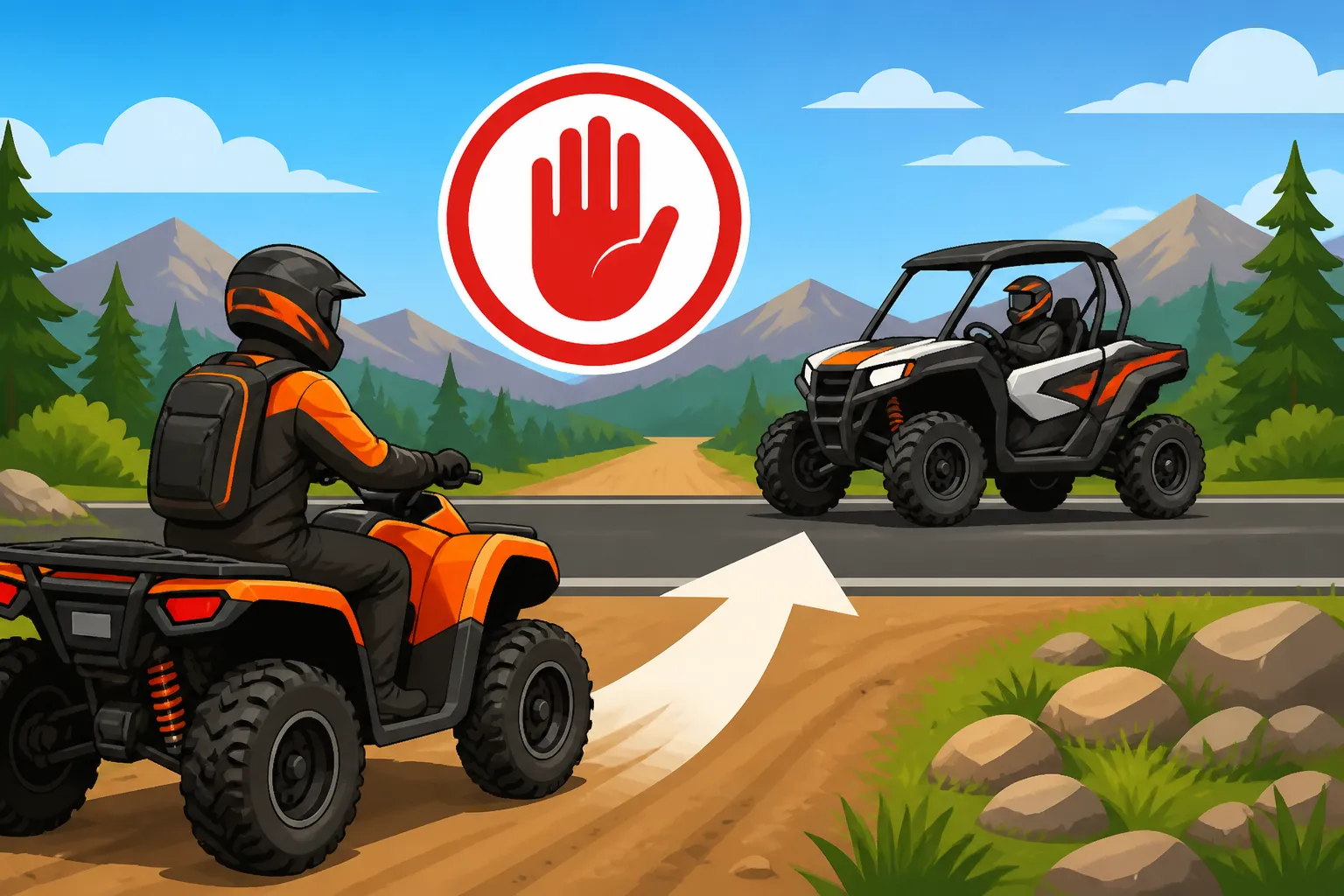
Let's cut right to the chase: when an off-highway vehicle (OHV) trail intersects with a public road in Colorado, the overwhelming expectation is that the OHV operator will yield to traffic already on the public road. This isn't just about common courtesy; it's a fundamental principle of road safety and legal compliance. Ignoring this rule can lead to dangerous situations, accidents, and penalties that no one wants. Understanding the subtle (and sometimes not-so-subtle) differences between these pathways is your first line of defense.
The Legal Distinction: Public Road Versus Designated Trail
In Colorado, the distinction between a "public road" and a "designated OHV trail" is critical. Public roads encompass paved state highways, U.S. highways, county roads (which can be paved or gravel), and many Forest Service or Bureau of Land Management (BLM) roads that are explicitly designated for full-size vehicle traffic. These roads are governed by traditional traffic laws that apply to cars, trucks, and motorcycles, even if they're unpaved and deep in the backcountry. Think of them as the established arteries of travel.
On the flip side, designated OHV trails are typically narrower, often unpaved paths managed by agencies like Colorado Parks and Wildlife (CPW), the Forest Service, or the BLM, specifically for off-highway recreational use. While some of these trails might be shared with mountain bikes, hikers, or equestrians, they generally don't carry the same legal weight or traffic volume as public roads. When your trail riding brings you to a juncture with one of these public roads, you are effectively entering a different legal domain, one where you, as the OHV operator, are almost always expected to yield. This hierarchy is in place to protect everyone and maintain a clear order of movement, especially given the speed and size differences between various vehicles.
General Principles of Safe Intersections and Yielding
The universal principle at any intersection is that traffic entering a thoroughfare must yield to traffic already present on it. For OHVs, this almost always means yielding when you emerge from a trail onto any public road. This isn't just a suggestion; it's a legal requirement designed to prevent collisions. You might be accustomed to the slower pace and less structured environment of the trails, but a public road, even a quiet gravel county road, operates under a different set of expectations. Drivers on these roads generally aren't expecting a side-by-side or ATV to suddenly appear from a dusty trail entrance.
This means you need to adopt a defensive riding posture as you approach any potential crossing. Slow down well in advance, scan your surroundings, and be prepared to come to a complete stop. Even if you think the road is clear, a momentary pause to confirm can make all the difference. The burden of proving the intersection is safe often rests squarely on the OHV operator.
Here’s a simple table to help visualize typical right-of-way scenarios at road-trail crossings:
| Scenario | OHV Coming From | Other Vehicle Coming From | Who Typically Yields | Notes |
|---|---|---|---|---|
| Paved Highway Crossing | Designated OHV Trail | Paved Highway Traffic | OHV | OHVs generally not allowed on state highways; crossings only at specific, marked locations. Extreme caution required. [Crossing a Paved Highway on an OHV] |
| County Road Intersection | Designated OHV Trail | County Road Traffic | OHV | Even if the county road is part of an OHV route, traffic on the road has priority. Watch for full-size vehicles, bikes, horses. |
| Forest Service Road Merge | Singletrack or ATV Trail | Forest Service Road | OHV | Many Forest Service roads are considered public roads. Yield to vehicles, including trucks, Jeeps, and even other OHVs already on the main road. [Are Forest Roads Public Roads in Colorado?] |
| Private Driveway/Access | Private Property | Public Road Traffic | Vehicle Exiting Private | If you're using a private access road to reach a public road, you must yield to public road traffic. |
Navigating Common Road and Trail Crossing Scenarios
Colorado's diverse terrain means you'll encounter various types of road and trail crossings, each with its own set of considerations. Being prepared for these specific scenarios can dramatically improve your safety and reduce stress during your ride. It’s not just about knowing the rules; it’s about applying them effectively in real-world, often unpredictable, mountain environments.
Crossing Paved State or US Highways
This is perhaps the most critical type of crossing and one that demands your absolute, undivided attention. Generally speaking, OHVs are not permitted to travel on Colorado's paved state highways, like Highway 550 through the San Juans or Highway 285 in the central mountains. There are very few exceptions where a designated OHV route explicitly allows for a highway crossing, and these will be clearly signed. If you find yourself needing to cross such a road, treat it with the utmost respect. These are high-speed thoroughfares, and the drivers of cars and trucks are simply not expecting an OHV to suddenly appear.
The protocol here is simple but absolute: stop, look, listen, and wait. Come to a complete stop at the very edge of the pavement, even if it feels like you're holding up your group. Look both ways multiple times, listening for the sound of approaching vehicles. If your machine is noisy, shut it off or idle down to hear better. Wait for a completely clear gap in traffic – one that allows you ample time to cross without rushing or forcing another driver to brake. Never assume a driver sees you or will slow down. These crossings are inherently high-risk, and patience is your best friend. Remember, you might only be crossing a few feet of pavement, but those few feet are where significant danger lies if you're not careful. [Colorado OHV Rules on State Highways] offers more context on the limitations of OHV use on these roads.
Intersecting with County Roads and Main Forest Service Roads
These are the most common types of intersections you’ll encounter while riding in Colorado’s backcountry. Many of our incredible trail networks utilize county roads, often gravel or dirt, as connectors or even as part of the official OHV route within or between mountain towns. [Colorado County Roads Open to OHVs] explains how these roads fit into the larger network. While it might feel like you're "on the trail" because the road is unpaved, the moment you transition from a narrow, single-track trail onto a wider county or Forest Service road, you are entering a public right-of-way.
Even if you know the road is part of an OHV-friendly system, traffic already on that road, whether it's a rancher in a pickup, another OHV, a mountain biker, or even an equestrian, has the right-of-way. Always slow down significantly as you approach the intersection, looking carefully for traffic from both directions. These roads can have blind corners, crests, or heavy dust, making visibility challenging. Be ready to yield to all other users. If you're merging onto a main Forest Service road, remember that logging trucks, campers, or even commercial vehicles might be using it, and they definitely won't be expecting an OHV to suddenly enter their path. Your job is to make a smooth, predictable entry only when it is safe to do so.
Emerging from a Trail onto Any Public Road
This scenario is where the onus to yield almost exclusively falls on the OHV operator. When you're coming off a trail, whether it’s a tight, technical singletrack or a wider ATV trail, and you’re about to join any public road – be it paved, gravel, or even a well-maintained dirt Forest Service road – you must yield to all traffic on that road. The challenge here often comes down to visibility. Trails frequently emerge from dense tree cover, around blind corners, or over small rises, making it incredibly difficult to see oncoming traffic.
Your approach should be extremely cautious. Creep forward slowly, perhaps even stopping a few feet back from the road's edge, and use every possible angle to scan for approaching vehicles. If you're riding with a group, a designated spotter can be invaluable, especially at tricky intersections. Having effective mirrors on your side-by-side or ATV can significantly aid in this process. Aftermarket mirrors, like those robust options from SuperATV, can give you wider fields of vision and help you spot approaching vehicles that might otherwise be hidden by brush or topography. Never pull out quickly, even if you think the coast is clear, as a vehicle could suddenly appear over a crest or around a bend.
Strategies for Enhanced Safety and Trail Etiquette
Beyond just knowing the rules, actively implementing strategies to enhance your safety and demonstrate good trail etiquette at road crossings is paramount. This isn't just about protecting yourself and your passengers; it's about maintaining a positive image for the entire OHV community and ensuring continued access to our beloved Colorado trails. Every interaction, especially at a shared crossing, contributes to how locals, other outdoor enthusiasts, and land managers view OHV recreation.
Situational Awareness and Maximizing Visibility
Being constantly aware of your surroundings is the cornerstone of safe OHV operation, particularly when approaching road intersections. This means more than just looking left and right; it means continually scanning ahead for potential hazards, listening for approaching vehicles (even if you can't see them), and anticipating what might happen next. Are there blind corners ahead? Is there heavy dust limiting visibility for others? Is the sun directly in someone's eyes? These are all factors that can turn a routine crossing into a dangerous encounter.
Maximizing your visibility to others is equally important. Think like a driver: what would make an OHV easier to spot? Brightly colored riding gear, powerful headlights (even during the day), and a whip flag, especially in open riding areas or where dust is prevalent, all contribute to making you more conspicuous. For robust and reliable accessories that enhance visibility and protection, many riders trust brands like SuperATV. Their mirrors, for instance, can provide the wide-angle view you need to safely assess traffic before entering a road. Always consider how you appear to others on the road. A small ATV or side-by-side can be easily missed by a fast-moving vehicle, especially in an environment where they aren't expecting you. [What Colorado Requires on an OHV Road Ride] gives more details on lighting and other equipment.
Group Riding Protocols at Crossings
When riding with a group, road and trail crossings require an extra layer of coordination to ensure everyone’s safety. It's not enough for the lead rider to cross safely; the entire group needs to follow a protocol to avoid confusion and potential accidents.
Here are a few tips for group crossings:
- Designate a Leader and Tail Rider: The leader is responsible for assessing the crossing and signaling when it's clear. The tail rider ensures no one gets left behind or attempts a dangerous crossing.
- Clear Communication: Use hand signals, helmet communicators, or two-way radios to confirm when it's safe to proceed. A simple thumbs-up from the leader indicating "clear" or a pointed finger for "wait" can prevent mishaps.
- Maintain Spacing: Avoid following the rider in front of you too closely. If the lead rider crosses, and you immediately follow without checking for yourself, you could be pulling into the path of an unseen vehicle. Give yourself enough space to stop and re-evaluate the road conditions.
- Patience is Key: It's far better for the group to wait a few extra minutes for a clear opening than to rush an intersection. Breaking up the group into smaller units if traffic is heavy is also a wise strategy. Never assume that because one rider made it across, the coast is clear for everyone else.
Respecting the Shared Landscape and Community
Every time your OHV crosses a public road, you are interacting with other members of the community and sharing the landscape. How you conduct yourself during these moments can have a lasting impact. Kicking up excessive dust when entering or exiting a road, making unnecessary noise with an aftermarket exhaust, or failing to yield courteously can create negative perceptions.
Many Colorado mountain towns and rural areas are striving to balance recreational access with resident quality of life. Being respectful means minimizing your impact: slowing down, keeping noise levels appropriate, and avoiding sudden, aggressive maneuvers. Remember that homes, businesses, and other outdoor enthusiasts (hikers, cyclists, equestrians) might be nearby. Demonstrating respect and common sense helps foster a positive relationship between the OHV community and the broader public, which is crucial for preserving our riding access. This simple courtesy goes a long way in ensuring that OHV recreation is seen as a welcome and responsible activity.
Understanding the Risks and Staying Informed
Ignoring right-of-way rules at road and trail crossings isn't just a minor infraction; it carries significant risks, both legally and physically. As responsible OHV riders, understanding these consequences and actively seeking out local information is crucial for safe and enjoyable adventures in Colorado. The rules aren't designed to hinder your fun, but to protect everyone.
The Consequences of Failing to Yield
The immediate risk of failing to yield at a road or trail crossing is, of course, a collision. Such accidents can result in serious injuries, extensive property damage to your OHV and other vehicles, and even fatalities. Beyond the physical and financial toll of an accident, there are significant legal ramifications. Failing to yield can lead to traffic citations, hefty fines, and potentially points on your driver's license, especially if the incident involves a public road and is witnessed by law enforcement. [Colorado Citations for Road Riding] can explain the types of penalties you might face for various infractions on public roadways.
In addition to direct penalties, repeated instances of OHV operators disregarding road rules can erode public trust and potentially lead to stricter regulations or even the closure of certain trails or road sections to OHVs. Law enforcement agencies, like the [Colorado Sheriff Patrols on OHV Routes], are actively monitoring these areas, and a single careless act can reflect poorly on the entire OHV community, jeopardizing future access for everyone.
Local Ordinances and Continual Education
While Colorado state laws provide a framework for OHV use, individual counties and towns often implement their own specific ordinances regarding OHV access on local roads. This means that rules can vary significantly from one mountain community to another. For instance, a county road that allows OHV travel in one area might be restricted in an adjacent county, or a town might have specific speed limits or hours for OHV operation on its streets.
It's your responsibility to stay informed about these local variations. Before riding in a new area, actively seek out information.
- Motor Vehicle Use Maps (MVUMs): For riding on Forest Service and BLM lands, these maps are indispensable. They clearly delineate which roads and trails are open to which types of vehicles, along with any seasonal restrictions. Always download or carry the most current MVUM for your riding area. [Reading a Colorado Motor Vehicle Use Map] provides a comprehensive guide on how to interpret these critical resources.
- County and Town Websites: Many mountain counties and towns publish their OHV ordinances online. A quick search for "[Finding Your Colorado County's OHV Ordinance]" or "OHV rules [town name]" can save you a lot of trouble.
- Colorado Parks and Wildlife (CPW): The CPW website is an excellent resource for statewide regulations and links to other land management agencies.
- Local Trailhead Signage: Always read signs at trailheads and along your route. These can provide vital, up-to-the-minute information about local rules, closures, or temporary conditions.
Staying proactively informed and riding with caution and respect at all road-trail crossings ensures not only your safety but also the continued privilege of enjoying Colorado's stunning backcountry on your OHV.
Disclaimer
This article is for general informational purposes only and does not constitute professional advice. Laws, prices and regulations vary by location and change over time. Consult a qualified professional for guidance on your specific situation.