Riding an OHV to Work in a Trail Town
Picture this: You wake up in your charming mountain home in a Colorado trail town, the crisp air blowing through your window. You've got to get to work, and your trusty side-by-side is sitting right there, practically begging to be ridden. It seems like the perfect solution – avoid traffic, save on gas, and enjoy the scenery. But before you fire up that engine and head to Main Street, there's a tangled web of state regulations and local ordinances to navigate, making that simple commute anything but straightforward. This guide will help you understand the nuances of using your off-highway vehicle (OHV) for daily errands and work commutes in Colorado's unique trail towns, so you can make informed decisions and avoid unexpected citations.
The Appeal of OHVs for Local Errands in Colorado Trail Towns
There's a reason why so many of us dream of swapping our cars for our OHVs when it comes to getting around our mountain communities. These machines are a part of the fabric of these towns, deeply integrated into the local culture and economy. It’s not just about recreation; for many, it's about practicality.
Why Locals Want to Ditch the Truck for Their OHV
Living in a Colorado trail town means embracing a certain lifestyle, and often, that lifestyle includes an ATV or UTV. The desire to use these machines for everyday tasks, like a quick run to the grocery store or dropping off mail, is completely understandable. For starters, there’s the sheer convenience. Your side-by-side might be parked closer than your truck, already warmed up from a weekend ride, and ready to go. The thought of hopping in, enjoying the open air, and making a short trip often feels more appealing than wrestling a larger vehicle into a tight parking spot.
Then there’s the undeniable cost-saving aspect. While fuel prices fluctuate, using a smaller, often more efficient OHV for short, local trips can sometimes feel like it's saving you a few bucks at the pump compared to a full-size pickup. Plus, in many of these smaller towns, parking for larger vehicles can be a pain, especially during peak tourist season. An OHV can often squeeze into spots that a truck simply can't, making errands quicker and less stressful. It truly embodies that laid-back, community-centric vibe that draws so many of us to these towns in the first place. You see your neighbors out and about, everyone enjoying the same mode of transport, and it just feels right.
The Specific Needs of Commuting to Work by OHV
Commuting to work, however, adds a few extra layers of complexity beyond a casual errand. When you're heading to your job, you often have specific items you need to carry – a lunch bag, work tools, perhaps a laptop, or other specialized gear for your profession. Many OHVs aren't designed with secure, weather-proof storage for these kinds of items, which can be a significant hurdle. You might need to consider aftermarket storage solutions, like secure cargo boxes or dry bags, to protect your belongings from dust, moisture, and even potential theft.
Beyond what you're carrying, there are also considerations for the route itself. Is your workplace on a main thoroughfare that might be off-limits to OHVs, or is it tucked away on a county road that allows them? What about safety during rush hour, even in a small town? The typical road conditions, potential for unexpected traffic, and the need to arrive on time and presentable all contribute to making an OHV commute a different beast than a leisurely trail ride. It's not just about getting there; it's about getting there safely, legally, and with everything you need for your workday intact. [Riding an OHV on the Road in Colorado] goes into more detail on general road use.
Navigating Colorado's Diverse OHV Road Rules for Commuting
This is where things get really tricky, and unfortunately, there's no single, easy answer across all of Colorado. The state has made some strides in allowing OHV access on public roads, but it’s a patchwork quilt of rules that demands your careful attention. It's not just about what Colorado Parks and Wildlife (CPW) says; it's also about what the local city council decided last year.
State vs. Local Laws: Why It's Not a Simple Yes or No
Colorado's approach to OHV road use is a perfect example of local control. While the state provides a framework, it largely empowers individual counties and municipalities to make their own decisions about whether and how OHVs can use local roads. This means that driving your side-by-side on a county road outside of town might be perfectly legal, but the moment you cross into the town limits, you could suddenly be breaking the law. It’s enough to make your head spin!
The Colorado law passed in 2021 was a big step, allowing cities and counties to open some public roads to OHVs, but it didn't create a blanket "street legal" status for OHVs statewide. Instead, it set the stage for local governments to pass their own ordinances. So, while you might hear that Colorado is now "OHV friendly" on roads, that friendliness is often restricted to specific areas, specific types of roads, and with specific stipulations. You can't just assume that because one town allows it, every town does. This is why doing your homework on the specific town you're commuting in is absolutely critical. [Colorado's 2021 Law and Out-of-State Registered OHVs] covers this in more detail.
Key Requirements for OHVs on Any Public Road in Colorado
Even in areas where OHV road use is permitted, your machine needs to meet certain requirements. These aren't just suggestions; they are legal necessities to ensure safety for everyone on the road. First and foremost, you absolutely need a current Colorado OHV registration sticker. This is non-negotiable for public land and public road use. [Colorado Parks and Wildlife OHV Registration Explained] clarifies this process.
Beyond registration, your machine must be equipped for road safety. This typically means:
- Headlights and Taillights: These aren't just for looking cool; they're essential for visibility, especially if you're commuting early in the morning or late in the afternoon.
- Brakes: Your braking system must be in good working order, capable of bringing your machine to a safe stop.
- Mufflers and Spark Arresters: These are crucial for noise control and fire prevention, particularly in our dry mountain environment. You'll want to ensure your muffler isn't excessively loud, as noise complaints can lead to towns reconsidering their OHV policies.
- Mirrors: Side mirrors and a rearview mirror are vital for situational awareness in traffic. Many riders upgrade their machines with products from companies like SuperATV that offer robust, trail-ready mirrors designed to withstand the rigors of off-road use while still providing excellent visibility on the pavement.
- Horn: A working horn is necessary to alert pedestrians or other drivers to your presence.
- Driver's License: The operator must hold a valid driver's license. [Driver's License Rules for Colorado Road Riding] is an important read.
- Insurance: While Colorado doesn't universally require OHV insurance for all riding, some local ordinances may require liability coverage for road use. It's always a good idea to have it. [Insuring an ATV in Colorado] offers more on this topic.
The Importance of Checking Local Town Ordinances
This cannot be stressed enough: always check the specific ordinance for the town you plan to commute in. What's allowed in Lake City might be strictly forbidden in Silverton, or vice-versa. Towns like Lake City and Ouray have embraced OHV access on many of their streets, understanding the economic and practical benefits for residents and visitors alike. You might be able to ride right into town, park your side-by-side, and grab a coffee before work. [Lake City and Hinsdale County Road Access] and [Riding Into Ouray on a Side-by-Side] shed more light on these towns.
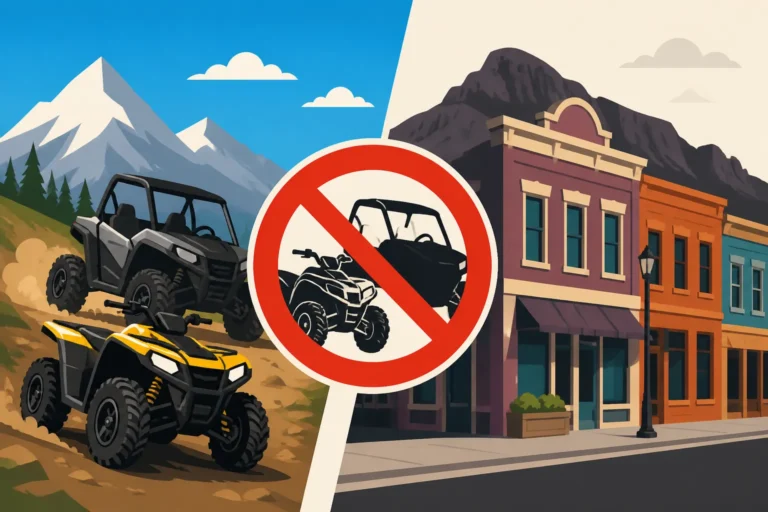
However, other towns have chosen to restrict or even ban OHVs on their streets, or only allow them on specific designated routes. Silverton, for example, has had a long-standing ban on OHVs within its town limits, which they upheld in a 2021 vote. Trying to commute through Silverton on your OHV, even for a short distance, could easily result in a citation. Kremmling is another town that has specific designated routes. So, just because your commute involves traveling through a "trail town" doesn't automatically mean your OHV is welcome on every street. Always look up the town's official website or call their local law enforcement or municipal office to get the most accurate and up-to-date information for your specific route.
Practicalities and Pitfalls of OHV Commuting in Colorado
Beyond the legalities, there are practical considerations and potential downsides to using your OHV for your daily work commute. It’s not just about whether you can do it, but whether it’s truly the best and safest option for your specific situation.
Safety Considerations for Daily Road Use
Riding an OHV on public roads, even in a quiet mountain town, introduces a different set of safety challenges compared to hitting the trails. Your machine is smaller, often less visible, and handles differently than a car. When you're sharing the road with passenger vehicles, trucks, and even large RVs, visibility becomes paramount. Consider adding bright flags, extra lighting, or even a brightly colored whip flag to make yourself more noticeable. Some riders even add aftermarket safety lighting, such as those from SuperATV, to increase their visibility on paved roads.
Speed is another factor. While your OHV might be capable of higher speeds, many local ordinances restrict OHV speeds on town roads to 15-25 mph. Sticking to these limits is not only a legal requirement but a safety measure, giving you more time to react to unexpected situations. Interactions with other traffic also change. Cars might not anticipate an OHV on the road, and you need to be extra vigilant for drivers who might not see you, especially when turning or pulling out of driveways. While Colorado has no statewide helmet law for adults on OHV trails, some local ordinances may require helmets for all riders on public roads, and it’s always a good idea for youth. [Colorado Helmet and Eye Protection: What Is Actually Required] details helmet regulations.
Potential Fines and Enforcement Realities
Ignoring the rules can lead to some costly consequences. Fines for operating an unregistered OHV on a public road or an OHV on a prohibited street can quickly add up. These aren't just minor inconveniences; they can significantly impact your wallet and even lead to your machine being impounded in some cases. Imagine trying to explain to your boss why you're late for work because your side-by-side was just towed!
Enforcement is usually handled by local law enforcement, like the county sheriff's office or town police department. They are typically well-versed in their local ordinances and the state regulations. While they often aim to educate first, repeat offenses or blatant disregard for safety rules can result in citations. It’s far better to know the rules beforehand and comply than to risk a run-in with law enforcement on your way to work. [Fines for an Unregistered OHV in Colorado] elaborates on the penalties you might face.
Gear and Machine Modifications for Road Worthiness
To make your OHV more suitable for a daily commute, you'll likely need to consider some modifications. As mentioned earlier, mirrors and a horn are often mandatory. Adding a full or half windshield can make a huge difference in comfort, especially in dusty conditions or inclement weather, protecting you from road debris, bugs, and the elements. Companies like SuperATV offer a wide range of windshield options, from scratch-resistant polycarbonates to glass, that can significantly improve your riding experience on paved surfaces.
Turn signals, while not universally required by all Colorado ordinances for OHVs, are a smart addition for safety, making your intentions clear to other drivers. Mud flaps can also be a good idea to prevent throwing rocks or mud onto other vehicles or pedestrians. Remember, these modifications are about making your machine safer and more compliant with potential road-use requirements; they don't magically make your OHV a street-legal vehicle that can cruise down I-70. It’s about equipping it appropriately for the specific, limited road access that some towns permit.
Real-World Scenarios: Is Your Commute Feasible?
So, you've checked the local ordinances, equipped your machine, and you're ready to roll. But let's think about the practical aspects of your actual daily commute. It's not just about the rules; it's about the reality.
From Home to Main Street: What to Consider
Consider your specific route from your home to your workplace. How far is it? What types of roads does it involve – paved county roads, gravel roads, or main town streets? If your route involves crossing a state highway, even for a short distance, that might be a complete no-go for an OHV, regardless of local town rules. Colorado state highways generally do not allow OHV traffic, except for very specific designated crossings or corridors, like the [The 3.26-Mile Highway 149 OHV Stretch] near Lake City.
Traffic patterns are another consideration. Even in small towns, there can be busy times of day, especially during tourist season. Will you feel safe and comfortable sharing the road with increased vehicle and pedestrian traffic? Your comfort level and the specific layout of your town will play a big role in whether an OHV commute is genuinely feasible and enjoyable for you.
The "Last Mile" Challenge: Parking and Secure Storage
You've made it to work! Now what? Parking is often an overlooked aspect of OHV commuting. Is there a designated parking area for OHVs at your workplace? Can you legally park your machine on the street near your office? Many towns have specific rules about where OHVs can and cannot park, similar to cars.
Beyond legality, there's the critical issue of security. Leaving your valuable OHV parked on a street or in an open lot for several hours while you're at work poses a theft risk. Unlike a car that can be locked up tight, an OHV is often more exposed. Do you have a secure location where you can park it, perhaps a fenced area, a garage, or a spot within view of security cameras? If not, the convenience of the OHV commute might be outweighed by the constant worry about its safety. Considering a robust lock, an alarm, or even a GPS tracker can provide some peace of mind, but it’s a factor you absolutely need to address.
Here’s a quick overview of how some Colorado trail towns approach OHV road access:
| Town/County | OHV Road Access Status | Key Considerations |
|---|---|---|
| Lake City | Generally open, with designated routes on town streets. | Embrace OHV tourism, good for local commuting on many streets. Still check specific routes. |
| Ouray | Generally open on designated routes within city limits. | Popular hub for Alpine Loop access, many streets open. Respect speed limits and parking rules. |
| Silverton | Generally closed to OHVs within town limits. | Strict ban on OHVs on town streets; significant fines for violations. Plan to trailer in/out of town. |
| Kremmling | Designated routes on certain streets. | Specific routes outlined for OHV use; not all town streets are open. [Kremmling OHV Route Signs] are important to follow. |
| Hinsdale County | Many county roads open, particularly connecting to trails. | Excellent for connecting properties to trailheads; always verify town ordinances if entering a municipality. |
| San Juan County | Many county roads open outside of Silverton. | Similar to Hinsdale, good for accessing trails. Be mindful of areas bordering Silverton town limits. |
Disclaimer
This article is for general informational purposes only and does not constitute professional advice. Laws, prices and regulations vary by location and change over time. Consult a qualified professional for guidance on your specific situation.