Gunnison County OHV Road Rules
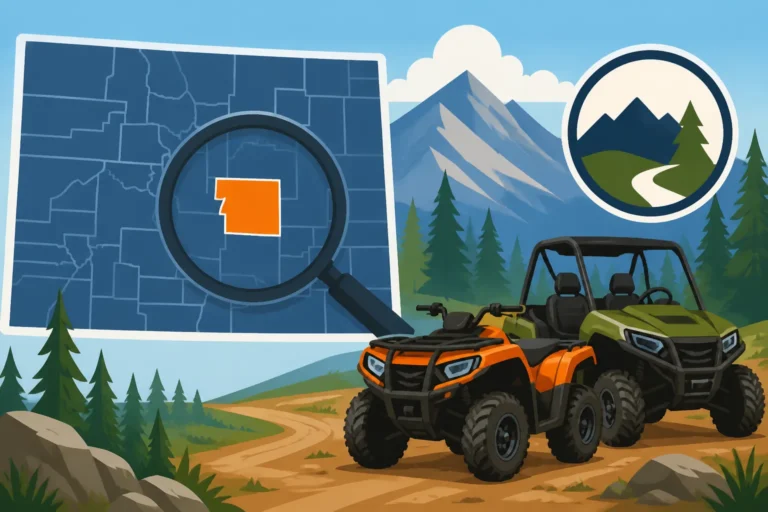
It's no secret that the rules for riding off-highway vehicles (OHVs) on public roads in Colorado can feel like a tangled web, leaving many riders scratching their heads and wondering if they're even allowed to take their machine from the campground to the trailhead. This confusion often peaks when you look at different counties, and Gunnison County, with its vast network of trails and roads, has its own specific approach that can be a real head-scratcher if you're not familiar with it. This guide will untangle the specifics of Gunnison County's OHV road rules, helping you understand where you can ride, what your machine needs, and how to stay on the right side of the law while enjoying some of the most spectacular scenery Colorado has to offer.
Understanding Gunnison County's Unique Approach to OHV Road Access
Gunnison County is a prime destination for OHV enthusiasts, and for good reason. It’s home to an incredible array of trails, from challenging mountain passes to scenic forest roads, and includes popular areas like Taylor Park and parts of the Grand Mesa. Because of this rich history of outdoor recreation and the sheer amount of public land, Gunnison County has long worked to create a more integrated system for OHV access, aiming to connect trail networks and allow riders to use specific county roads to move between them. This approach recognizes the economic and recreational value that OHV tourism brings to the area, but it's important to remember that this isn't a blanket permission to ride anywhere.
Why Gunnison County is Different
Unlike some other Colorado counties where OHV road access is highly restricted or non-existent, Gunnison County has proactively developed ordinances to permit OHVs on certain designated county roads. This isn't just a casual decision; it's a careful balance between promoting recreation and protecting public safety and environmental resources. The county's geography, with its dispersed trail systems and numerous small communities, lends itself to a more connected network, allowing riders to responsibly travel short distances on county roads to access major trail systems without having to trailer their machines every single time. It's a pragmatic solution born from the local culture and the realities of backcountry travel.
This integrated system requires careful planning and collaboration between local county commissioners, the U.S. Forest Service, the Bureau of Land Management (BLM), and Colorado Parks and Wildlife (CPW). The goal is to make the experience seamless for riders while ensuring all legal and safety requirements are met. It’s a testament to the community's dedication to outdoor recreation, but it also means that riders need to be diligent about understanding the specific regulations in place. Simply assuming that because you're in an "OHV-friendly" county, all roads are fair game, would be a mistake with potential legal consequences.
The Legal Framework: County Ordinances vs. State Law
At the core of Gunnison County's OHV road access lies its adoption of specific county ordinances that allow for the use of OHVs on designated county roads. This is a crucial distinction, as state law generally prohibits OHV use on public roads unless a local government, like a county, specifically opens them. The State of Colorado recognizes that local jurisdictions are best equipped to determine what makes sense for their unique communities and road networks. Therefore, while state law sets the baseline, Gunnison County's ordinances provide the specific green light for certain roads within its borders.
These local ordinances typically outline the specific roads or sections of roads that are open to OHV use, the dates or seasons when they are open, and any additional requirements beyond state OHV registration. It’s not simply a matter of a general permission; each open road is usually listed or clearly marked. This means that staying informed about the latest county maps and ordinances is absolutely essential. Riders must also ensure their machine is properly registered with Colorado Parks and Wildlife, as this state registration is a prerequisite for legal operation on any public land, including county roads that have been opened for OHV use. [Colorado Parks and Wildlife OHV Registration Explained] details this process.
Specific Road Rules and Restrictions in Gunnison County
Riding your OHV on designated county roads in Gunnison County offers incredible convenience and enhances your overall riding experience. However, this privilege comes with specific responsibilities and requirements that are designed to keep everyone safe and preserve the environment. It’s not just about having a registered machine; it’s also about ensuring your vehicle is equipped for road travel and that you, as the operator, understand and follow the rules of the road, just as you would in a conventional vehicle.
Designated Routes and Maps
The cornerstone of responsible OHV road riding in Gunnison County is knowing exactly where you are allowed to be. Not all county roads are open to OHVs. The county, in conjunction with land management agencies like the Forest Service and BLM, designates specific roads as open. These designated routes are typically marked with signage, and official maps are available that clearly show which roads are open to OHVs. Relying on memory or informal advice is risky; always consult the latest official maps before heading out.
These maps, often referred to as Motor Vehicle Use Maps (MVUMs) for federal lands or county-specific OHV maps, are your best friend. They show not only open trails but also the specific county roads that connect them. Understanding how to read these maps is vital to ensuring you stay on legal routes and avoid inadvertently trespassing or entering areas closed to motorized use. [Reading a Colorado Motor Vehicle Use Map] can provide further guidance on this. Always carry an up-to-date map, whether it’s a physical copy, a GPS device, or a reliable app on your phone, to navigate the complex network of roads and trails, especially in areas like Taylor Park or the Grand Mesa, where routes can change or be seasonally restricted.
Vehicle Requirements for Road Travel
Even on designated county roads, your OHV isn't a car, and it won't be treated exactly like one. However, the county ordinances often impose certain equipment requirements to ensure your machine is reasonably safe and visible to other traffic. While Colorado generally does not issue street-legal plates for OHVs, county ordinances enabling road access often require specific modifications. For example, your machine will need working headlights and taillights that are on at all times, brake lights, and at least one mirror that shows a view of the highway to the rear.
Beyond these basics, a spark arrester is absolutely mandatory for any OHV operating on public lands in Colorado, including county roads, to prevent wildfires. Many riders also choose to install turn signals, a horn, and even a windshield wiper (especially on side-by-sides) to enhance safety and convenience when traveling on roads. Companies like SuperATV offer a wide range of aftermarket parts specifically designed to help OHV owners meet these types of requirements, from mirrors and lights to complete street-legal kits. While these kits help with compliance, remember that "street legal" in Colorado is a nuanced term, and your OHV will still not receive a standard vehicle license plate. [Why Colorado Will Not Plate Your UTV] explains why this is the case. Ensuring your machine is properly equipped not only keeps you legal but also makes you more visible and safer for everyone sharing the road.
Operator Requirements and Passenger Rules
Operating an OHV on an open county road in Gunnison County comes with operator requirements similar to those for driving a car, but with some key differences. First and foremost, anyone operating an OHV on an open public road or connecting county road must possess a valid driver's license. This is a critical distinction from trail riding, where a license is often not required for adults. For young riders, the rules become even more specific. Generally, riders must be at least 10 years old to operate an OHV on an open public road and, if under 16, must be under the immediate supervision of a licensed adult.
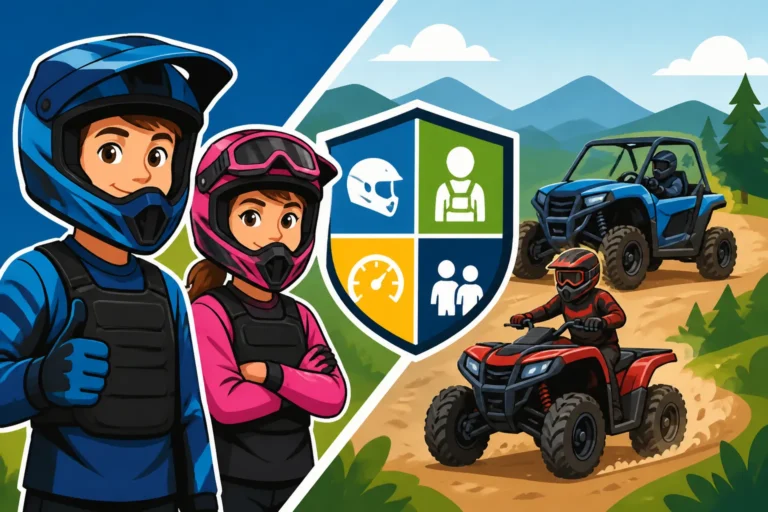
Passengers also have rules to follow. Side-by-sides are designed to carry passengers, but everyone must have a designated seating position and wear a seatbelt if the vehicle is so equipped. For ATVs, carrying a passenger is often restricted to machines specifically designed for two riders. Helmets are not universally mandated for adults on all Colorado OHV trails, but they are highly recommended for all riders, especially youth. For riders under 18, eye protection is always a must. Always check the latest county and state regulations regarding helmet and eye protection requirements, as these can sometimes vary depending on age and the specific type of road or trail. [Colorado Helmet and Eye Protection: What Is Actually Required] provides more detail on these essential safety measures.
Navigating Gunnison County Roads and Trailheads
Once you understand the rules, riding in Gunnison County becomes a true pleasure. The ability to connect trails via county roads means less time trailering and more time exploring. However, knowing how to navigate these roads responsibly is just as important as knowing that you can ride them. It's about blending in with other traffic, respecting the local environment, and ensuring the continued privilege of OHV access for everyone.
Speed Limits and Right-of-Way
When you're traveling on a designated county road in your OHV, you are expected to obey all standard traffic laws, including posted speed limits. While many county roads might seem remote, they are still public thoroughfares, and other vehicles – cars, trucks, bicycles, and even pedestrians – might be using them. This means maintaining safe speeds, especially around blind corners, crests of hills, and when passing residences or livestock. Dust can be a significant issue on gravel roads, so slowing down when passing other users or homes is a common courtesy that helps maintain good relations within the community.
Just like with any vehicle, you must respect the right-of-way. Yield to oncoming traffic, especially on narrow sections of road, and be mindful of slower-moving vehicles or those pulling trailers. Mountain roads can often have sections where one side has a steep drop-off; common etiquette usually dictates that the vehicle going uphill has the right-of-way, or that the larger, more stable vehicle should consider pulling over for smaller machines when safe to do so. Being a predictable and courteous driver goes a long way in ensuring a positive experience for everyone and preventing accidents.
Accessing Trailheads and Staging Areas
One of the greatest advantages of Gunnison County's OHV road access is the ability to ride directly from your lodging or campground to a trailhead without having to load and unload your machine from a trailer. This makes planning your day much easier and allows for more spontaneous adventures. Many trailheads are located directly off these designated county roads, offering ample parking for vehicles and trailers (if you did opt to trailer partway).
When you arrive at a trailhead, pay attention to any specific parking regulations. Some popular trailheads, especially during peak season, can fill up quickly. Always park in designated areas and avoid blocking access roads or creating hazards for other users. Remember, these areas are often shared with hikers, mountain bikers, and equestrians, so mutual respect is key. Unloading your gear, preparing your machine, and getting ready for the trail should be done efficiently and without causing undue congestion.
Avoiding Closed Areas and Protecting the Environment
The privilege of riding OHVs on designated county roads and trails relies heavily on responsible use and environmental stewardship. It is absolutely critical to stay on marked roads and trails and never venture into closed areas. These closures might be seasonal (e.g., mud season, wildlife protection), permanent (e.g., wilderness areas, private property), or temporary due to environmental concerns like fire danger or trail damage. Riding off-route can lead to significant fines, environmental damage, and loss of future access.
Always look for signs indicating closures, or check official maps and local ranger district information before your ride. Remember that the delicate high-alpine environment, common in much of Gunnison County, is particularly susceptible to damage from off-trail riding. Every rider has a responsibility to minimize their impact, pack out what they pack in, and adhere to "Leave No Trace" principles. Companies like SuperATV also promote responsible riding by offering products like winches and recovery gear, allowing riders to self-extract without damaging the surrounding environment if they get stuck on a designated trail.
Common Misconceptions and Local Etiquette
Even with clear rules, misconceptions about OHV road use in Colorado, and particularly in counties like Gunnison, can persist. Understanding these common misunderstandings and embracing local etiquette will not only keep you out of trouble but also enhance your experience and contribute positively to the OHV community's reputation.
"Street Legal" in Gunnison County vs. State-Wide
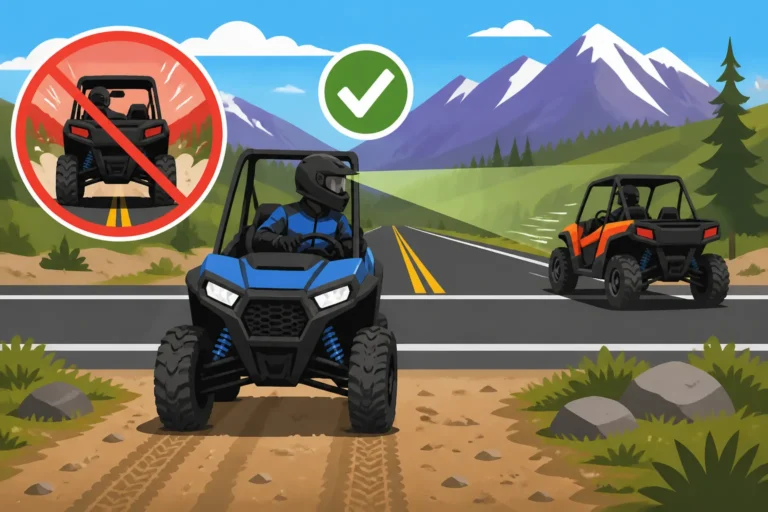
This is perhaps the biggest point of confusion for many riders. When Gunnison County opens certain roads to OHV use, it essentially creates specific exceptions to the general state rule that prohibits OHVs from being operated on public roads. However, this does not make your OHV "street legal" in the same way a car or motorcycle is. Your OHV will still not be titled or plated as a regular on-highway vehicle by the Colorado Department of Revenue. This means you cannot legally drive it on state highways (like US-50 or CO-135) or in areas of other counties that do not have their own specific OHV road ordinances.
Think of it as having "limited road access" rather than being "street legal." You are permitted on designated county roads within Gunnison County, but this permission does not extend to broader state or federal highways, except for specifically signed crossing points or short connection sections approved by the state. Attempting to ride a state highway, even briefly, without explicit signage allowing OHVs, can result in significant fines. It's crucial to understand these distinctions to avoid legal trouble and ensure you’re adhering to the spirit of the local ordinances. For broader context on Colorado's stance on this, check out [Riding an OHV on the Road in Colorado].
Respecting Locals and Private Property
Gunnison County is a welcoming place for OHV enthusiasts, but continued access depends heavily on riders being good neighbors. When riding on county roads, especially those that pass through or near residential areas, remember that you are in someone's community. This means minimizing noise and dust, especially when passing homes or businesses. Keep your speeds down, avoid aggressive driving, and be mindful of your exhaust noise. While aftermarket exhausts from companies like SuperATV can enhance performance, ensure they still comply with noise regulations to avoid disturbing residents and other visitors.
It's also imperative to respect private property. Even if a county road passes through private land, you are only permitted on the road itself. Do not stray onto private property, stop for extended periods, or assume that land adjacent to a public road is open for parking or recreation. Always look for "No Trespassing" signs and err on the side of caution. Obtaining [Written Permission Before Riding Private Land] is the only way to legally access private property. A positive relationship between riders and residents is crucial for maintaining the current level of OHV access and ensures that the scenic beauty and quiet charm of Gunnison County are preserved for everyone.
Here's a quick summary of key Gunnison County OHV Road Rules:
| Feature | Requirement | Notes |
|---|---|---|
| Registration | Colorado OHV registration sticker from CPW. | Mandatory for any public land use, including county roads. [Colorado OHV Registration for Seasonal Residents] apply if you're visiting. |
| Driver's License | Valid driver's license required for operator on county roads. | This differs from trail-only riding where a license isn't always needed for adults. |
| Age & Supervision | Operators 10-15 must be under immediate supervision of a licensed adult on county roads. | Specific engine size limits apply to youth machines; see [Youth Machine Engine Sizes Colorado Families Choose]. |
| Designated Roads | Only permitted on county roads specifically opened and signed for OHV use. | Consult official county/MVUM maps. State highways (US, CO routes) are generally not open to OHVs unless explicitly signed for short crossing segments. |
| Vehicle Equipment | Headlights (on at all times), taillights, brake lights, at least one rear-view mirror, spark arrester. | Aftermarket accessories from companies like SuperATV can help meet these requirements. |
| Speed Limits | Obey all posted speed limits. | Drive safely and courteously, especially near residences, other vehicles, and pedestrians. |
| Passengers | Must have designated seating position and wear seatbelts (if equipped). ATVs typically single-rider. | Refer to your machine's manufacturer guidelines. |
| Helmets/Eye Protection | Eye protection required for riders under 18. Helmets highly recommended for all. | Check local ordinances for any specific helmet mandates on county roads. |
| Environmental | Stay on designated roads/trails. Respect private property. Pack it in, pack it out. | Penalties for [Penalties for an Unregistered OHV in Colorado] or riding off-trail can be severe, including fines and potential loss of trail access. |
Disclaimer
This article is for general informational purposes only and does not constitute professional advice. Laws, prices and regulations vary by location and change over time. Consult a qualified professional for guidance on your specific situation.