Finding Your Colorado County’s OHV Ordinance
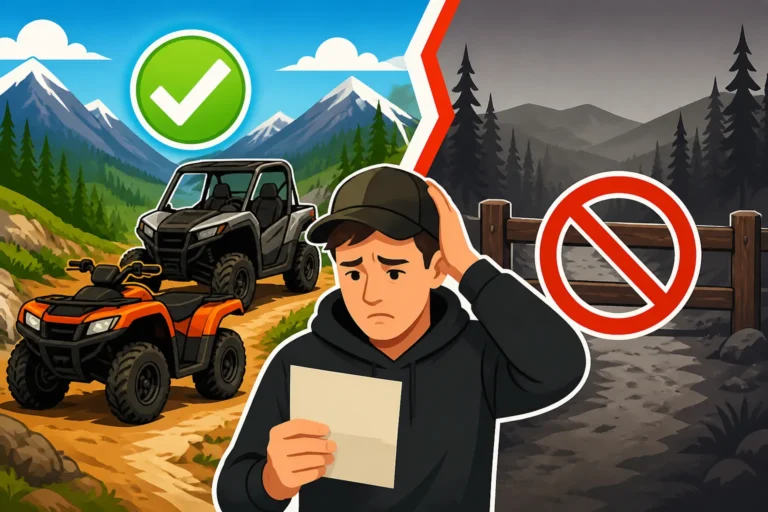
Oh, the joy of hitting a beautiful Colorado trail on your ATV or UTV! There’s nothing quite like the crisp mountain air and the stunning vistas. But let's be honest, the moment those trails meet a paved road, things can get confusing fast. You might be cruising along feeling great, then suddenly find yourself wondering, "Can I actually be on this road? What are the rules here?" It's a common headache for riders, and that frustration of not knowing exactly where you stand can really take the fun out of a ride. This guide is here to cut through the confusion and show you exactly how to navigate the maze of local regulations so you can find your Colorado county's OHV ordinance and ride with confidence.
The Frustration of Patchwork Rules: Why Local Ordinances Matter
Colorado is absolutely incredible for off-highway vehicle enthusiasts, offering everything from challenging mountain passes to wide-open plains. But unlike some states that have a uniform statewide rule for OHV use on public roads, Colorado allows individual counties and even smaller municipalities to set their own regulations. This creates a complex tapestry of rules, where what’s legal in Hinsdale County might land you a ticket just across the border in Ouray County. It’s enough to make even the most seasoned rider scratch their head and feel a surge of anxiety every time they approach a new town limit sign.
Understanding the "Patchwork Quilt" of Colorado OHV Laws
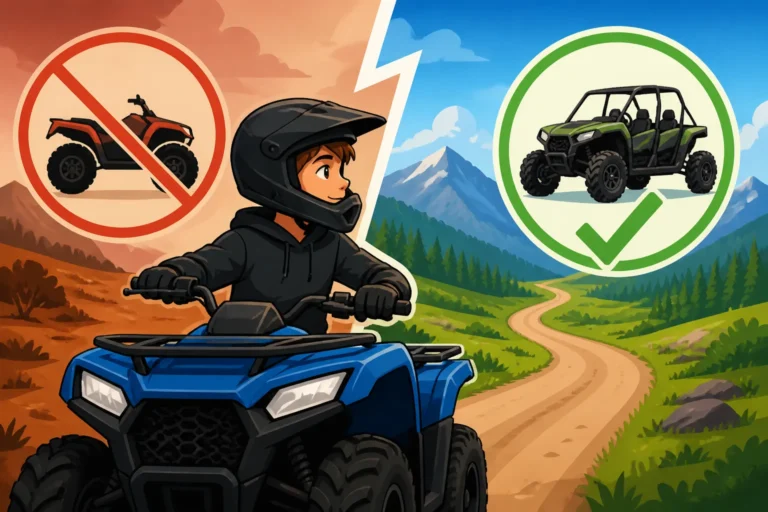
Imagine trying to sew a quilt where every single square has different rules for how it should be stitched. That’s a bit like navigating Colorado's OHV road access laws. While the state provides a general framework, it empowers local governments – counties, cities, and towns – to create specific ordinances that dictate where, when, and how OHVs can operate on their public roads. This means you can't just assume that because a county road allows OHVs on one side of a mountain pass, the county road on the other side will have the same rules. It's truly a county-by-county, and sometimes town-by-town, decision. This local control is meant to allow communities to manage traffic, noise, and safety concerns unique to their area, but for riders, it can feel like a constant game of guesswork.
The critical takeaway here is that your adventure might take you through several different jurisdictions in a single day, each with its own set of dos and don'ts. Knowing this upfront is the first step in protecting yourself and your riding privileges. Ignoring these local variations can not only lead to fines but can also create friction between the riding community and local residents, potentially jeopardizing future access for everyone. It's why taking the time to understand [Colorado County Roads Open to OHVs] and the specific local rules is so important for responsible riding.
The Real-World Impact of Unknowing: Fines and Frustration
Picture this: You’ve just finished an epic ride on a high-alpine trail, feeling on top of the world. You descend into a charming mountain town, maybe hoping to grab a burger or fuel up. But as you roll down the main street, a local sheriff pulls you over. You’re informed that OHVs are strictly prohibited on any paved roads within city limits, or perhaps that you needed specific equipment you don’t have, or that you’re simply outside the permitted hours. Suddenly, that post-ride glow vanishes, replaced by the sinking feeling of a hefty fine and the embarrassment of being caught unaware. It’s a scenario that plays out for riders who haven’t done their homework on local ordinances.
The financial penalty can sting, with [Fines for an Unregistered OHV in Colorado] or for illegal road use potentially running into the hundreds of dollars. But beyond the money, there's the frustration, the lost time, and the potential for a negative interaction with law enforcement. More severely, repeated violations or flagrant disregard for local rules can lead to broader crackdowns, reducing OHV access for everyone in the future. Nobody wants to be that rider who causes a local backlash against the sport. Taking a few moments to research before you hit the road can save you a world of trouble and ensure your adventure remains a positive one.
Your Toolkit for Finding County OHV Ordinances
So, how do you actually find these elusive local rules? It might seem like a daunting task, especially when you're planning a trip to an unfamiliar area. But with a bit of systematic effort, you can quickly gather the information you need. Think of it like a treasure hunt, and your treasure is the peace of mind that comes from knowing you’re riding legally. There are several reliable avenues to explore, from official government sources to community knowledge.
Starting with the County Clerk and Recorder's Office
When it comes to official local laws, the County Clerk and Recorder's office (sometimes simply called the County Clerk) is your first and best resource. This office is the official repository for all county-level legislative documents, including ordinances related to OHV use. Their websites are designed to provide public access to these records, though navigating them can sometimes feel a bit like searching for a needle in a haystack if you don't know what you're looking for.
Start by visiting the official website for the specific county you plan to ride in. Look for sections labeled "Ordinances," "Resolutions," "County Code," or "Clerk and Recorder." Once you're in the right section, use search terms like "off-highway vehicle," "OHV," "ATV," "UTV," "motorized vehicle," or even "traffic code" to narrow down your results. You might find a single, comprehensive OHV ordinance, or you might find references within a broader traffic or public safety code. Don't be afraid to scroll through results; the exact title might not jump out at you. If the online search proves frustrating, a polite phone call to the Clerk and Recorder's office can often yield quick results. Explain what you're looking for, and they can often direct you to the exact document or relevant section of their website. Sometimes, just asking, "Do you have an ordinance regulating OHV use on county roads?" is enough to get pointed in the right direction.
Online Resources: CPW, Local Government Websites, and OHV Groups
Beyond the County Clerk, there are other invaluable online resources at your fingertips. The Colorado Parks and Wildlife (CPW) website, while primarily focused on [Colorado Parks and Wildlife OHV Registration Explained] and state-level regulations, often has links or references to county-level information or general guidance on accessing local roads. They might not host the ordinances themselves, but they can be a great starting point to find who to contact.
Most counties and towns will have their own dedicated government websites. Look for pages related to public works, the sheriff's department, or even parks and recreation. These departments often have more user-friendly summaries or FAQs about local OHV rules, even if the full legal text resides with the County Clerk. However, always try to cross-reference summaries with the official ordinance if possible, as summaries can sometimes omit critical details.
Finally, don't underestimate the power of the riding community! Online forums, Facebook groups for Colorado OHV riders, and local OHV clubs are fantastic places to ask questions. While anecdotal information from other riders should always be verified with an official source, these communities can often tell you where to find the ordinances, what the general vibe is in a particular area, or specific towns to watch out for. They can also provide insights into specific local businesses like SuperATV that cater to equipping your machine for compliance with various local requirements, from turn signals to mirrors. Just be sure to filter information and prioritize official government sources.
Contacting the Local Sheriff or Forest Service Office
Sometimes, the quickest and most direct way to get an answer about a specific road or area is to go straight to the source of enforcement or land management. This might seem a bit intimidating, but local law enforcement and federal land agencies are typically very helpful when you’re genuinely trying to understand and follow the rules.
If you’re wondering about county roads or town streets, a call to the local Sheriff’s Department or the town’s Police Department is a great option. They are the ones who will be enforcing the rules, so they know them inside and out. Be specific with your questions: "I'm planning to ride my UTV from this trailhead into the town of [Town Name] to get gas. Are OHVs allowed on Main Street, and if so, are there specific hours or equipment requirements?" They can often provide a clear, concise answer, or at least direct you to the correct department or ordinance.
For riding on federal lands, such as National Forests or BLM areas, within a county, you’ll also want to consult the local Forest Service office or BLM field office. While county ordinances govern county roads, federal agencies have their own travel management plans and regulations for their roads and trails. They can clarify whether a specific Forest Service road allows OHVs and if any special permits or rules apply, particularly for trails that might merge with county roads. Often, these offices are where you can pick up a [Reading a Colorado Motor Vehicle Use Map], which clearly delineates open and closed routes on federal lands.
| Resource Type | Best For | What to Look For | How to Access |
|---|---|---|---|
| County Clerk/Recorder | Official legal text of ordinances | Full text of OHV, traffic, or public safety ordinances | County website "Ordinances" section, phone call |
| County/Town Websites | Summaries, FAQs, general guidance | OHV FAQs, Public Works, Sheriff pages, Parks & Rec | Department-specific pages on official websites |
| Colorado Parks & Wildlife | State-level overview, links to county info | General OHV guidelines, state registration, links | CPW website OHV section |
| OHV Clubs/Forums | Local insights, tips, community knowledge | Rider experiences, known trouble spots, accessory advice | Online forums, social media groups, club websites |
| Sheriff/Police Dept. | Direct answers on specific roads/towns | Enforcement details, quick confirmation | Non-emergency phone line |
| Forest Service/BLM Office | Federal land rules, MVUMs, seasonal closures | Travel Management Plans, MVUMs, trail conditions | Local office phone, website, physical visit (if open) |
Decoding the Ordinance: What to Look For
Once you've managed to track down the relevant county or town ordinance, the next step is to actually read and understand what it says. Legal language can sometimes be a bit dry and convoluted, but it's crucial to pull out the key details that will affect your ride. Don't just skim it; take the time to really digest the information.
Key Elements of an OHV Ordinance
Every ordinance is unique, but there are common themes and elements you should always look for. These are the critical pieces of information that will dictate whether your OHV is permitted, and if so, under what conditions.
First and foremost, identify the specific roads that are open or closed to OHVs. Some ordinances will list all roads that are open, while others might list roads that are closed, implying all others are open. Pay very close attention to whether the ordinance differentiates between county roads, state highways, and town streets. For instance, [Colorado OHV Rules on State Highways] are very strict, but a county might open its roads. You'll also want to note any hours of operation. Many towns will restrict OHV use to daylight hours, or specific windows, to mitigate noise complaints from residents. Don't assume you can ride at any time just because the road is open.
Next, focus on required equipment. Does the ordinance demand turn signals, brake lights, mirrors, a horn, or even specific reflective elements? While your off-road machine might not come standard with all these, reputable accessory providers like SuperATV offer a wide range of street-legal kits and individual components designed to help you meet these requirements. This is where you might need to invest a little in making your machine compliant for road sections. Speed limits are another big one – often, OHVs will be subject to lower speed limits on county roads than traditional vehicles, or the posted speed limit might apply only to street-legal vehicles. Finally, look for age restrictions for drivers on roads, and any local permit requirements beyond the state's [Colorado Parks and Wildlife OHV Registration Explained]. Some localities might require a specific local permit or fee, although this is less common than equipment or road-specific rules.
Common Restrictions and How to Prepare
Beyond the basic permissions and equipment, many ordinances include specific restrictions aimed at maintaining safety and quality of life for residents. Being aware of these will help you avoid accidental violations.
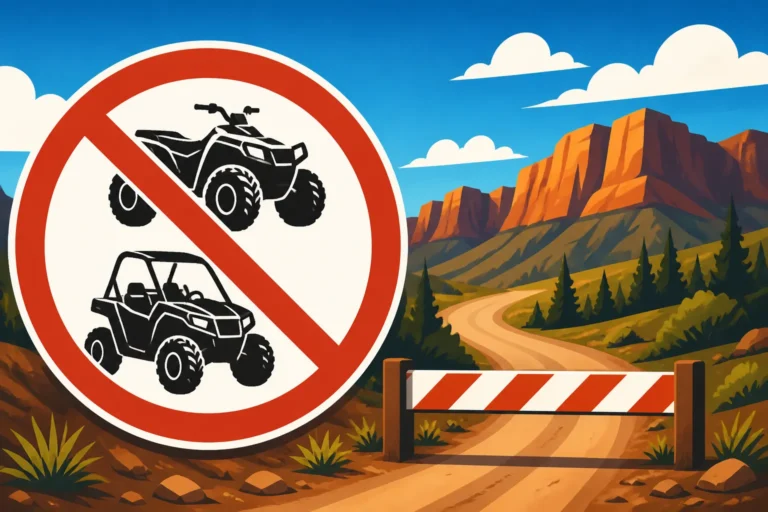
One of the most frequent restrictions you'll encounter is a complete ban on OHVs within specific town limits or on certain main streets. This is often the case in larger, busier towns or those with a strong desire to maintain a quiet atmosphere. For example, you'll want to be very aware of [Ouray and Telluride OHV Town Restrictions] or [Silverton's Ban on OHVs in Town] if you're riding in those areas. These bans are usually clearly posted, but it’s always best to know ahead of time.
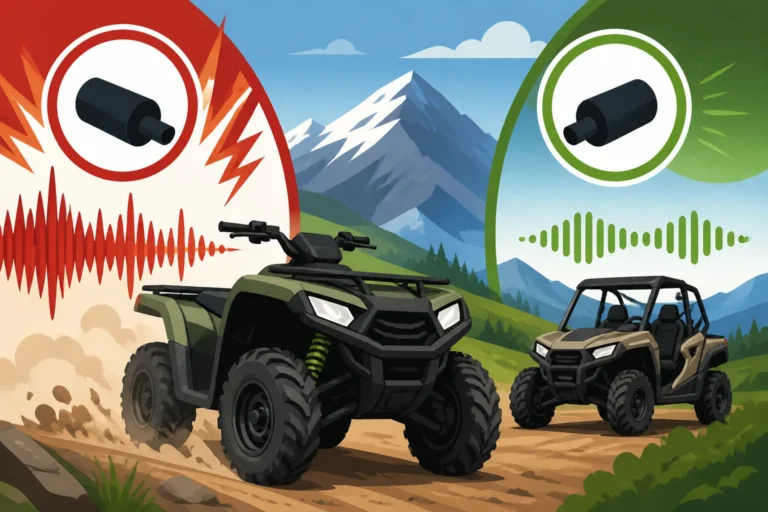
Noise restrictions are also common, particularly in residential areas. While your machine might have an aftermarket exhaust that sounds fantastic on the trail, it could be a violation on a quiet county road. Check if the ordinance specifies decibel limits or "quiet hours." Parking rules are another often-overlooked detail. Can you park your OHV on a main street to grab lunch, or are there designated OHV parking areas? Lastly, keep an eye out for seasonal closures or exceptions. Some roads might only be open to OHVs during specific months, or certain uses (like snowplowing a private road with your UTV) might have different rules. Knowing these nuances will keep your ride smooth and trouble-free.
Real-World Examples: A Glimpse at Colorado's Diverse Rules
Because Colorado's OHV rules are so localized, understanding what you might encounter is best illustrated with real-world examples. The state's diverse geography and communities mean that a one-size-fits-all approach simply doesn't work. What’s welcomed in one small mountain town might be strictly prohibited in its neighbor.
Mountain Towns and Their Unique Approaches
Colorado's mountain towns are a prime example of the variability in OHV ordinances. Many of these communities have embraced OHV tourism as a vital part of their economy, while others prioritize preserving a quieter, more traditional atmosphere. This leads to a fascinating blend of regulations.
Take Lake City and Hinsdale County, for instance. This area is often cited as very OHV-friendly. Hinsdale County has actively worked to create a seamless experience for riders, opening many of its county roads to OHVs, often allowing riders to travel directly from campgrounds to trails and into town for services. [Lake City and Hinsdale County Road Access] is a great example of how a community can successfully integrate OHVs. They recognize the economic benefit and have put clear rules in place. In such areas, you might find specific routes designated for OHV travel through town, connecting you to gas stations, restaurants, and lodging.
On the flip side, consider Silverton. While the surrounding San Juan County has many open roads and trails, the town of Silverton itself has historically maintained strict prohibitions on OHVs within its town limits. [Silverton's Ban on OHVs in Town] means you cannot simply ride your side-by-side down their historic main street. You would need to trailer your machine or park at designated staging areas outside of town. Similarly, [Ouray and Telluride OHV Town Restrictions] mean you need to be very aware of where you can and cannot ride in those popular destinations. Ouray, for example, has designated routes for OHVs to access trails, but navigating the core downtown area requires careful attention to signage and local rules. In these towns, equipment from SuperATV designed for road use, like full windshields or street-legal kits, while useful, won't override a complete town ban. Each town has made its own choice, and as riders, it's our responsibility to respect those decisions.
Agricultural Areas and Specific Exemptions
Beyond the tourist-heavy mountain towns, Colorado also has vast agricultural lands where OHVs are an indispensable tool for work. These areas often have different considerations and, sometimes, specific exemptions within their county ordinances.
In counties with significant farming and ranching operations, you might find provisions that allow OHVs to operate on county roads for agricultural purposes. This often falls under [Agricultural Exemptions From Colorado OHV Rules]. For example, a rancher might be permitted to drive their ATV a short distance on a county road to move between pastures, inspect fencing, or haul equipment, even if recreational OHV use on that same road is generally restricted. These exemptions are typically tied to the machine being actively used for farm or ranch work, not for casual riding.
It’s crucial to understand that these exemptions usually have specific conditions. They might require the OHV to be equipped with certain safety features, be operated only during daylight hours, or be limited to very short distances. They are not a blanket pass for recreational riders. If you are riding in an agricultural area, always assume that standard recreational OHV rules apply to you unless you are specifically operating under a defined agricultural exemption. When in doubt, call the county sheriff's office for clarification. It's better to ask than to guess and potentially incur a fine or cause a misunderstanding with local landowners.
Disclaimer
This article is for general informational purposes only and does not constitute professional advice. Laws, prices and regulations vary by location and change over time. Consult a qualified professional for guidance on your specific situation.