San Juan County Roads Closed to OHVs
It can be incredibly frustrating to plan an exhilarating OHV adventure through the breathtaking San Juan Mountains of Colorado, only to arrive and discover that some of the county roads you thought were open are, in fact, off-limits to your ATV or side-by-side. Many riders assume that if a road isn't a single-track trail, it's fair game, but that's simply not the case in every jurisdiction, and San Juan County has its own specific regulations. This guide is here to shed light on which San Juan County roads are closed to OHVs, explain why these restrictions are in place, and help you navigate the stunning terrain legally and respectfully, avoiding unwelcome surprises and potential citations.
The Evolving Landscape of OHV Access in San Juan County
Imagine you've been dreaming of riding the high passes around Silverton, perhaps tackling a portion of the [Alpine Loop Over Engineer and Cinnamon]. You've researched trails, packed your gear, maybe even added some robust aftermarket parts from a company like SuperATV to your machine for those challenging climbs. But then you encounter a sign on what looks like a perfectly rideable gravel county road, stating "OHVs Prohibited." It's a common scenario and one that can instantly deflate your adventurous spirit. The reality is that the lines between what's considered an "open trail" and a "restricted county road" are not always clear-cut, and they're constantly evolving based on local decisions and community feedback.
Understanding the San Juan County Commissioner's Role
Unlike federally managed Forest Service or BLM roads, which often fall under broader statewide or regional OHV travel management plans, county roads are governed by local county commissioners. These elected officials have the power to create ordinances that dictate where and when OHVs can operate on roads within their jurisdiction. Their decisions are influenced by a myriad of factors: public safety concerns from residents, noise complaints in quiet neighborhoods, environmental impact, infrastructure wear and tear, and even economic considerations from businesses. A road that might seem like a natural extension of a trail system could be a critical access point for homes, a school bus route, or simply deemed inappropriate for OHV traffic due to its character or location. This means that while some counties actively seek to open more roads to OHVs to boost tourism, others prioritize resident quality of life or specific safety concerns, leading to restrictions.
Common Misconceptions About "Public" Roads
It’s easy to look at a map and see a network of "public roads" and assume that means public access for all vehicles, including OHVs. However, "public" in this context often refers to public ownership and maintenance, not necessarily unrestricted vehicle use. Many riders mistakenly believe that if a road isn't paved and doesn't explicitly state "private property," it's automatically open. This is particularly true for less-maintained gravel or dirt roads that feel like trails. Yet, a county road, even a rugged one, is still distinct from a designated OHV trail. Furthermore, a road's status can change. What was open five years ago might be closed today due to new ordinances, increased traffic, or safety incidents. Relying on outdated information or assumptions passed down through word-of-mouth can lead you right into a citation. It’s crucial to understand that even the most well-equipped side-by-side, perhaps enhanced with heavy-duty A-arms or suspension components, won't exempt you from these local rules.
Specific Road Closures and Restrictions in San Juan County
San Juan County, like many other mountain communities in Colorado, grapples with balancing the immense popularity of OHV recreation with the needs and desires of its residents and the preservation of its unique environment. While the high country offers incredible riding on designated trails and Forest Service roads, certain county roads, particularly those within or directly adjacent to population centers, often face restrictions. The most prominent example, and one that causes frequent confusion and frustration for visitors, is the town of Silverton itself.
Silverton's Strict OHV Ordinances and Their Impact
Silverton, a historic mining town nestled in the heart of San Juan County, has some of the strictest OHV ordinances in Colorado. Despite being a gateway to some of the state's most iconic OHV trails, the town has explicitly closed most of its municipal streets to OHV traffic. This means you cannot simply ride your ATV or side-by-side through town, park on Main Street, or even ride from your lodging to a local restaurant. The rationale behind these rules stems from concerns over noise, dust, safety for pedestrians, and maintaining the town's historic ambiance. Many residents and town officials felt the quality of life was being negatively impacted by the sheer volume of OHVs traversing their streets.
This can be a massive point of frustration for riders who have traveled long distances. You might pull into Silverton, fresh off [Engineer Pass From Ouray and Lake City], thinking you can grab a bite to eat or fuel up, only to find yourself facing a warning or even a fine. The reality is, if you want to experience Silverton, you'll need to trailer your machine to designated parking areas outside of town, or stage your ride from a different starting point where you can access trails directly without entering Silverton's restricted zones. It’s a hard pill to swallow for many, but the rules are enforced. If you're caught riding your OHV on a closed street in Silverton, you could face [The $300 Fine for Riding Into Silverton], a penalty that can quickly sour an otherwise fantastic trip.
Beyond Silverton: Other Restricted County Roads
While Silverton often takes center stage in discussions about OHV restrictions in San Juan County, it's important to remember that other county roads, even outside of town limits, can also be closed or have specific rules. These might include roads primarily serving residential areas, new subdivisions, or sections that are maintained to a higher standard for non-OHV traffic. Sometimes, a county road may connect two open trail segments, but that connecting section itself could be prohibited. This creates a "gap" in an otherwise continuous route, forcing riders to reroute or trailer.
For example, a gravel road leading to a popular trailhead might be open for a portion, but then turn into a restricted county road once it approaches a cluster of cabins or a private ranch entrance. These nuances are why relying solely on a general sense of direction or outdated maps can get you into trouble. The key is to look for official signage, which should always be respected, and to do your homework before you head out. Understanding [Finding Your Colorado County's OHV Ordinance] is crucial for any responsible rider exploring the region. Even if you've got a robust lighting system from SuperATV that helps you see clearly, if the road's closed, it's closed.
Navigating San Juan County: How to Ride Legally and Respectfully
Given the complexities of OHV access in San Juan County, taking a proactive approach to planning your ride is not just recommended, it's absolutely essential. You want to spend your time enjoying the majestic scenery and challenging trails, not dealing with rangers or looking for ways around unexpected closures. A little preparation goes a long way in ensuring a smooth and enjoyable experience.
Essential Pre-Ride Planning and Resource Checking
Before you even load your machine onto the trailer, make it a habit to check the most current information available. Start with the official San Juan County government website for any posted OHV ordinances or maps. Next, consult the U.S. Forest Service (USFS) and Bureau of Land Management (BLM) for their Motor Vehicle Use Maps (MVUMs) that cover the area. These maps are the definitive guide for where motorized vehicles are permitted on federal lands and will clearly mark open roads and trails, as well as those with restrictions. You can download [Downloading a Motor Vehicle Use Map] directly from the USFS website. Many riders also find digital mapping applications invaluable. Platforms like [onX Offroad for Colorado Trails] provide real-time GPS tracking and often incorporate MVUM data, allowing you to see your exact location relative to open and closed routes. While these apps are fantastic, always cross-reference with official sources and look for on-the-ground signage. Don't be shy about calling the local Forest Service or BLM office, or even the San Juan County Sheriff's Department, for clarification if you have specific questions about a particular road. Local visitor centers in towns like Silverton or Lake City are also excellent resources for up-to-date information and printed maps.
The Role of Signage and Public Etiquette
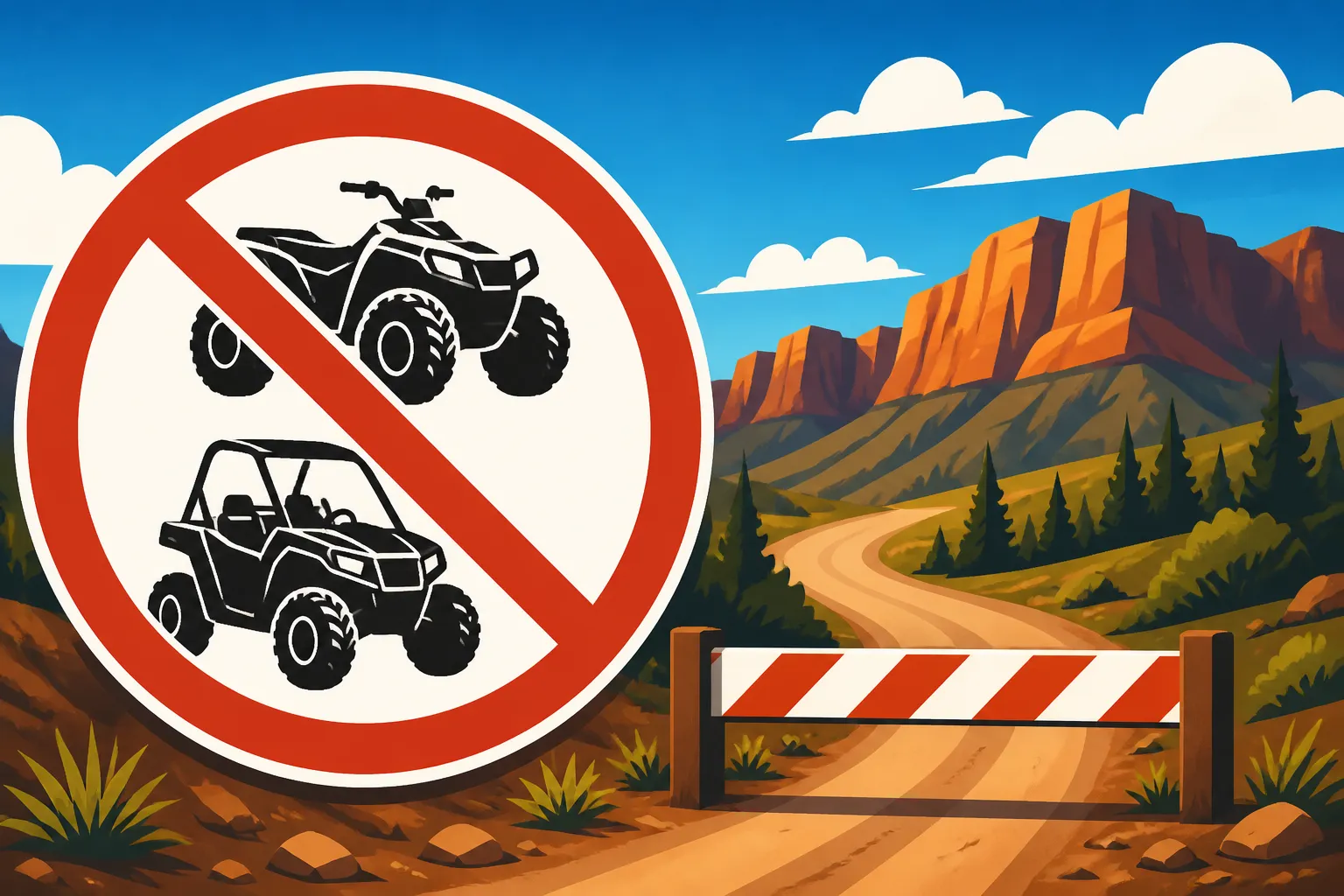
Once you're on the ground, the most important rule of thumb is to always obey signage. If a sign says "OHVs Prohibited," "No Motorized Vehicles," or "County Road – No OHV Access," respect it. These signs are there for a reason, whether it's safety, environmental protection, or simply to preserve the peace and quiet of a residential area. Ignoring them not only puts you at risk of a citation but also contributes to a negative perception of OHV riders, which can lead to further restrictions for everyone.
Think about the impact of your ride: dust clouds on residential roads, excessive noise from aftermarket exhausts near homes, or riding too fast past pedestrians. These actions create friction with locals and often fuel the push for more closures. Practicing "Stay The Trail" ethics means not only staying on designated routes but also being a courteous and respectful visitor. This includes riding at appropriate speeds, keeping noise levels down, and giving way to other trail users like hikers, mountain bikers, and equestrians. Even if your machine is equipped with rugged tires from SuperATV designed for off-road prowess, you must adapt your driving style to the environment and the rules. Remember that we are guests in these beautiful landscapes and in these communities, and preserving our access depends on our collective behavior.
Consequences of Ignoring OHV Road Closures
Ignoring designated OHV road closures in San Juan County isn't just a minor oversight; it carries tangible penalties and has broader, long-term implications for the entire riding community. It's easy to think "no one will see me," but local law enforcement and park rangers are often very aware of these problematic areas and frequently patrol them, especially during peak season.
Fines, Citations, and the Loss of Access
The most immediate consequence of riding on a closed county road is the risk of a citation. While specific fine amounts can vary, they are typically not cheap. As mentioned, a violation in Silverton can quickly set you back [The $300 Fine for Riding Into Silverton], and other county roads may carry similar penalties. Beyond the financial hit, a citation can also mean an unpleasant encounter with law enforcement, potential impoundment of your machine in severe cases, and a blot on your record.
More importantly, repeated or widespread violations by OHV riders can lead to even stricter regulations. Communities and land managers often respond to persistent rule-breaking by increasing closures, limiting access, or even reducing the length of the riding season. This isn't just about one rider's mistake; it's about the collective reputation of the OHV community. When rangers conduct [Colorado Ranger Checks at a Trailhead], they're not just looking for proper registration; they're also observing overall compliance with all local rules. A lack of respect for road closures can very well lead to a situation where more roads are deemed off-limits for everyone, regardless of how responsibly the majority rides.
Protecting Our Riding Privileges for the Future
Every time a rider disrespects a closure, rides off-trail, or acts irresponsibly, it creates ammunition for those who advocate for banning OHVs altogether. Colorado's stunning natural beauty and unique ecosystems are precious, and there's a constant tension between conservation and recreation. The OHV community has worked hard, often through volunteer efforts and organizations, to build relationships with land managers and local communities, helping to fund trail maintenance and promote responsible use. This is where companies like SuperATV also play a role, not just in providing quality parts, but in being part of an industry that understands the importance of sustainable access.
By adhering to road closures, staying on designated trails, and being mindful of local communities, you become an ambassador for the sport. You help demonstrate that OHV enthusiasts are responsible stewards of the land and respectful visitors. This responsible behavior is crucial for preserving and even expanding our riding privileges in places like San Juan County for generations to come. When you ride responsibly, you're not just avoiding a fine; you're contributing to the long-term health and accessibility of Colorado's incredible OHV opportunities.
Here's a quick overview of typical access rules you might encounter:
| Road Type | Typical OHV Access in Colorado (General) | Notes |
|---|---|---|
| Forest Service Roads | Often Open (Green on MVUMs) | Most common for trail connections and dispersed camping. Always check MVUMs for seasonal closures. |
| BLM Roads | Often Open | Similar to Forest Service roads, critical for accessing vast public lands. Check MVUMs. |
| County Roads (Rural) | Varies by County Ordinance | Can be open, closed, or restricted (e.g., speed limits). Always look for specific county signage. |
| County Roads (Residential/Urban Edge) | Often Closed (e.g., Silverton) | High likelihood of restrictions due to noise, dust, and safety concerns near homes. |
| Town/City Streets | Rarely Open (e.g., Silverton) | Almost universally restricted in populated areas. Some towns have specific, limited OHV routes. |
| Private Roads | Closed | Always require explicit written permission from the landowner to ride. |
Disclaimer
This article is for general informational purposes only and does not constitute professional advice. Laws, prices and regulations vary by location and change over time. Consult a qualified professional for guidance on your specific situation.