Passing an Oncoming Jeep on a Shelf Road
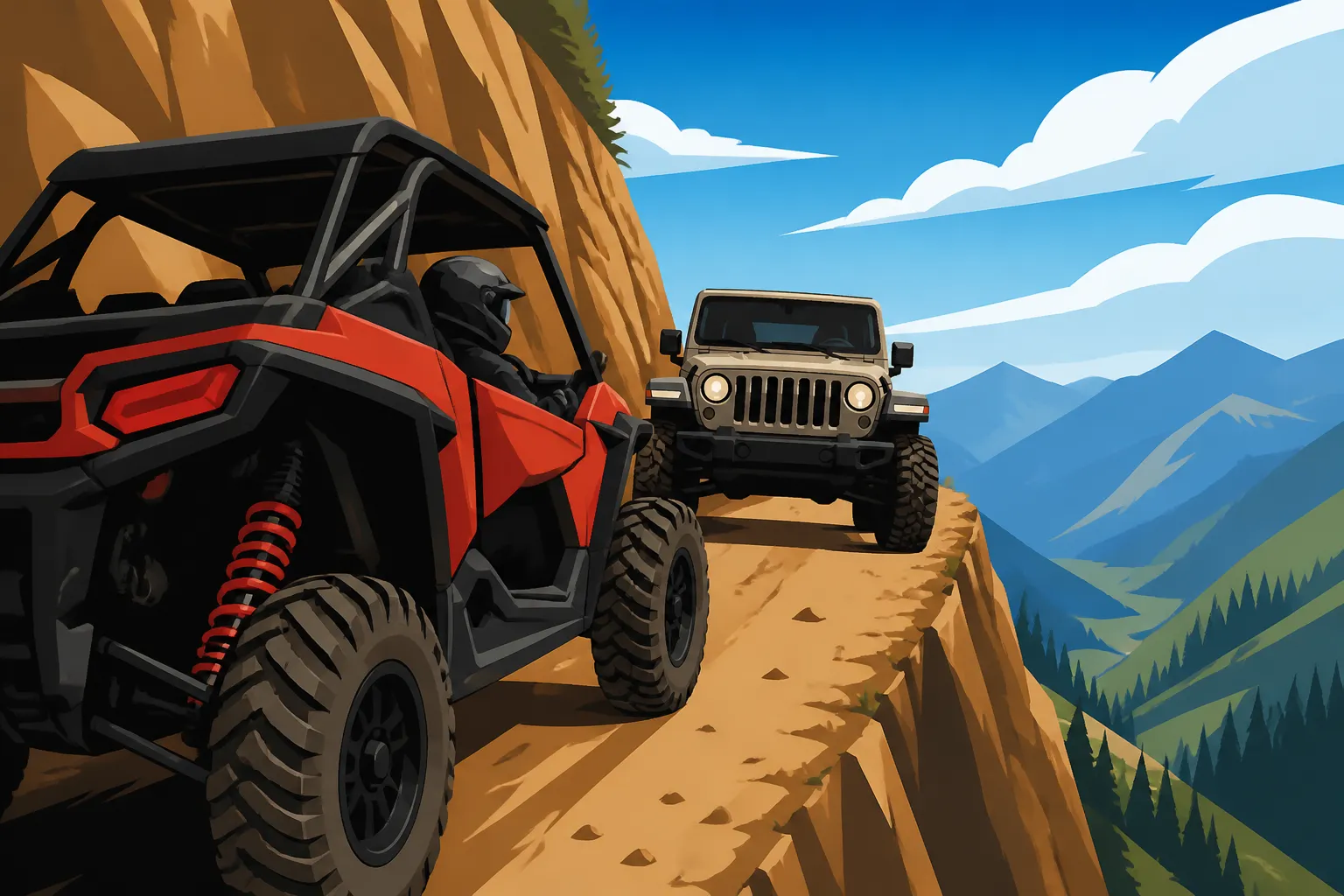
Picture this: you're navigating a stunning, but undeniably narrow, Colorado shelf road. The views are incredible, the air is crisp, and then, around a blind corner, you spot it – a full-size Jeep, or maybe another side-by-side, heading straight for you. That sudden jolt of anxiety is something every high-country rider has felt, wondering who moves, where to go, and how to get past safely without a heart-stopping moment. This guide is all about equipping you with the knowledge and confidence to navigate those tricky encounters, ensuring everyone gets to enjoy the trails and make it home safely.
Understanding Colorado Shelf Roads and Their Unique Challenges
Colorado's mountains are a playground for off-highway vehicles, but they also present some of the most challenging terrain imaginable. Shelf roads are a quintessential part of that experience, offering unparalleled views and a healthy dose of adrenaline. However, their very nature – narrow, often steep, and with significant drop-offs – means that meeting another vehicle demands careful strategy and clear communication. It's not just about space; it's about physics, perception, and mutual respect.
What Makes a Shelf Road So Intimidating?
A shelf road, by definition, is carved into the side of a mountain, often with a solid rock wall on one side and a sheer drop-off on the other. There's usually no shoulder, no extra room for error, and often, only enough width for one vehicle to pass comfortably. When you add in the variable surface conditions—loose gravel, embedded rocks, mud from a recent shower—the challenge intensifies. You might be climbing a steep grade, or descending with gravity working against you, making controlled stops and precise maneuvering even more critical. It’s not uncommon to feel your heart rate pick up as you peer over the edge, especially when you consider that [Riding a Narrow Shelf Road Safely] requires constant attention to your machine's placement and the immediate terrain.
The exposure on these roads can be truly breathtaking, but also a source of anxiety. Imagine looking out your side-by-side's door and seeing hundreds or even thousands of feet of air beneath you. This psychological aspect is real, and it can affect your judgment and reaction time. Knowing your machine's width, understanding its braking capabilities, and trusting your own skills become paramount. Even seemingly minor modifications, like a wider A-arm kit from a company like SuperATV, can slightly alter your perception of how much room you truly have, making it crucial to be familiar with your rig's exact dimensions.
Common Vehicles You'll Encounter
When you're out on Colorado's mountain trails, especially on those more popular shelf roads that serve as connectors or scenic routes, you're going to see a mix of motorized recreation. While our focus here is on ATV and UTV encounters with Jeeps, it's important to remember the full spectrum. You'll often find other side-by-sides, ATVs, and even dirt bikes. But the larger, more capable 4×4 vehicles like modified Jeeps, Toyota Tacomas, and full-size SUVs are also common, particularly on routes like the Alpine Loop or Engineer Pass.
These larger vehicles, while often very capable off-road, typically have a wider stance and a longer wheelbase than most UTVs, and certainly ATVs. This means they take up more of the narrow track, forcing one party to yield significantly. Knowing what kind of vehicle you're approaching can help you anticipate the necessary maneuvers. For instance, a long-wheelbase vehicle might have a harder time making tight turns to hug the rock wall, potentially requiring you to find an even wider spot to pull over. Respect for all trail users, regardless of vehicle type, is a core tenet of responsible riding.
Strategies for Safe Passing on Narrow Trails
When that moment comes – two vehicles approaching each other on a single-track shelf road – having a clear plan in mind is key. Panic leads to poor decisions, and on these roads, poor decisions can have serious consequences. The goal is always to create a safe, controlled passing scenario for both parties, minimizing risk and stress. This involves early detection, strategic positioning, and clear communication.
Who Has the Right-of-Way? Understanding Trail Etiquette
The general rule of thumb on multi-use trails, particularly in situations involving steep grades, is that the uphill traffic usually has the right-of-way. The logic here is straightforward: it's often more difficult and riskier for an uphill vehicle to stop, reverse, and then restart on a steep incline, especially if they lose momentum. A downhill vehicle, on the other hand, can often more easily stop and control a slow, careful reversal or pull-off. However, this is a guideline, not an absolute law carved in stone. Sometimes, the safest option for everyone dictates that the uphill vehicle yields, perhaps because there’s a much wider pull-out just a few feet behind them. Always prioritize safety over strictly adhering to an etiquette rule. Don't be the driver who insists on their right-of-way at the expense of everyone's safety because you didn't think about the practical reality of the situation. For a deeper dive into these rules, check out [Uphill Right-of-Way on a Colorado Pass].
Another important consideration is the "easier path" principle. Which vehicle can more easily and safely maneuver to a wider spot? Sometimes, even if you're the uphill traffic, if you're just feet from a perfectly wide, flat pull-out, it might make more sense for you to take it, rather than forcing the downhill vehicle to reverse for a much longer distance on a more precarious section. This highlights the importance of judgment and cooperation over rigid rules. When in doubt, a quick hand signal or a friendly wave can go a long way in establishing a cooperative passing plan.
Step-by-Step for a Controlled Pass
When you see an oncoming vehicle, the first thing to do is slow down immediately. Take your foot off the gas, cover the brake, and assess the situation.
- Early Detection and Communication: As soon as you spot an oncoming vehicle, make eye contact if possible. A simple wave or a flash of your lights can signal, "I see you, and I'm preparing to make a plan." This early communication can de-escalate tension and begin a cooperative effort. For example, if you know you're approaching a section with [Blind Corners on a Colorado Mountain Road], slow down even more and be ready for an unexpected encounter.
- Identify a Safe Pull-Out: Scan the road ahead and behind for the widest, safest spot where one or both vehicles can pull over. Look for areas that are relatively flat, stable, and offer the most room away from the drop-off. Sometimes this might be a small natural alcove in the rock wall, or a slightly wider section of the road. Don't assume the other driver will find it; be proactive in identifying the best option.
- Prioritize the Inside: If you're on the side with the rock wall, try to hug it as tightly as possible. This puts your vehicle furthest from the drop-off and often feels more secure for both parties. If you have rock sliders or a good sturdy bumper from SuperATV, now's the time to trust them, but still, be careful not to scrape too hard. The driver closest to the cliff face is usually the one with the higher anxiety, so doing what you can to give them more room can make a world of difference.
- Slow and Steady Reversal (if needed): If backing up is necessary, do it slowly and with extreme caution. Use your mirrors, and if you have a passenger, have them spot for you, especially near the edge. A common mistake is to rush backing up, leading to misjudgment of tire placement or the edge of the trail.
- Passing Maneuver: Once one vehicle is pulled over safely, the other vehicle should pass extremely slowly. Maintain a low gear, keep your eyes on the trail immediately in front of your tires, and steer with precision. Avoid sudden movements. A brief nod or a thank you wave as you pass can reinforce positive trail etiquette.
What to Do If There's No Obvious Pull-Out
This is the scenario that sends a shiver down every rider's spine: two vehicles, head-on, with seemingly nowhere to go. This is where patience and genuine cooperation become paramount.
- Stop, Assess, and Communicate Verbally: Both vehicles should stop. Get out if necessary (only if it's safe to do so, away from the immediate edge) and have a brief, calm discussion. Point out potential areas, even if they're small, and decide together which vehicle can most safely back up or hug the wall. Sometimes, with two side-by-sides, it might mean one driver tucking their tires right against the rock wall, while the other puts their passenger-side tires just on the edge of the trail, allowing for a tight, slow squeeze.
- "Spotting" Each Other: If one vehicle has to maneuver precariously, the other driver or passenger should get out and act as a spotter. Use clear, simple hand signals or verbal commands to guide the driver. This is especially helpful if one vehicle is significantly wider or longer. It's a team effort, even between strangers.
- Winching as a Last Resort: In extremely rare and challenging situations, if one vehicle is genuinely stuck or there's simply no safe way to pass, a winch might be a last resort to gently pull a vehicle slightly off the trail or help it get into a better position. This is an advanced technique and should only be considered by experienced individuals who know how to safely operate a winch and rig proper anchor points. Most of the time, careful maneuvering and spotting will get the job done.
Essential Communication and Etiquette for Mountain Trails
Beyond the physical act of passing, the human element plays a huge role in safe and enjoyable trail experiences. Proper etiquette and clear communication can prevent frustration, reduce risk, and foster a sense of community among trail users. Remember, we're all out there to enjoy Colorado's incredible backcountry.
Hand Signals and Verbal Cues
Since sound can travel strangely in mountain environments, and machines can be noisy, clear visual and verbal cues are vital.
| Signal | Meaning | When to Use It |
|---|---|---|
| Wave/Nod | "I see you, planning to stop/yield." | Early detection, establishing contact. |
| Pointing Down | "You go, I'll stop/yield here." | When you've found a good pull-out and are yielding. |
| Thumb Down | "Back up." | Guiding someone in reverse. |
| Flat Hand Up | "Stop." | Immediate stop needed during spotting. |
| Patting Roof | "Slow down." (or "Follow me slowly") | Approaching an obstacle or tight section, or guiding a pass. |
| Verbal "Clear!" | "You are clear to pass/move." | As a spotter, when the path is safe. |
| Verbal "Hold!" | "Stop immediately." | As a spotter, when there's an immediate danger. |
These simple signals can prevent misunderstandings. A friendly "Hello!" or "Thanks!" as you pass also goes a long way in setting a positive tone on the trail. It's all part of [Group Riding Etiquette in a Small Town], even if that "group" is just two vehicles meeting unexpectedly.
Respecting the Environment and Other Users
Our trails are a shared resource, and preserving them is everyone's responsibility. This means more than just staying on designated trails; it also means being considerate of how your actions impact the trail surface and other users.
- Minimize Dust: When passing, especially if the other vehicle has its windows down (if it's a Jeep) or is fully open (like a UTV), try to keep your speed very low to avoid kicking up excessive dust. This is a common courtesy often overlooked, but it significantly improves the experience for others.
- Trail Damage: Avoid spinning tires or making unnecessary tight turns that can chew up the trail surface, particularly if it's wet or loose. Our trails are constantly maintained by volunteer groups and grant money from OHV registrations, and unnecessary damage just creates more work. When [Colorado OHV Grant Program and Trail Funding] is dependent on responsible use, it's a stark reminder of our collective responsibility.
- Acknowledge and Thank: A simple wave and a nod of thanks after a successful pass shows respect and appreciation. We're all in this together, and a little civility makes the experience better for everyone. If you get a chance to chat briefly, share any trail intel you might have, such as [Colorado Trail Conditions Reports] or upcoming obstacles.
- Be Prepared: Always carry essential recovery gear, including a tow strap, first-aid kit, and enough water and layers for changing mountain weather. Being self-sufficient means you're less likely to need help, but also better equipped to offer help if someone else runs into trouble. Items like a good winch from SuperATV or robust recovery points are invaluable when you're far from paved roads.
Ultimately, navigating Colorado's challenging shelf roads requires a blend of driving skill, situational awareness, and good old-fashioned courtesy. By understanding the terrain, planning your passes carefully, and communicating effectively with other trail users, you can turn a potentially stressful encounter into just another routine part of an incredible day out in the Rockies.
Disclaimer
This article is for general informational purposes only and does not constitute professional advice. Laws, prices and regulations vary by location and change over time. Consult a qualified professional for guidance on your specific situation.