Uphill Right-of-Way on a Colorado Pass
Riding Colorado's breathtaking mountain passes on your ATV or UTV is an experience like no other, but the sheer beauty often comes with some intense challenges. One of the biggest head-scratchers, and frankly, one of the most nerve-wracking situations, is figuring out who has the right-of-way when you meet another vehicle on a narrow, winding trail. It's a real frustration when you're clinging to the side of a mountain, trying to navigate a tight corner, and suddenly find yourself face-to-face with another rig. This guide is here to untangle the confusion, clarify the unwritten rules of uphill right-of-way on Colorado passes, and help you navigate those encounters safely and courteously.
Understanding the Unwritten Rules of the Mountain Pass
There's something uniquely exhilarating and simultaneously terrifying about a Colorado mountain pass. You're high above treeline, the views are expansive, and the air is thin and crisp. But these aren't your typical groomed roads. They're often carved into steep mountainsides, with sheer drop-offs, unpredictable surfaces, and blind corners that can make even experienced riders gulp. Navigating these routes safely means understanding and respecting some long-standing traditions, especially when it comes to who yields to whom.
Why Right-of-Way Matters on Narrow Colorado Trails
The trails and old mining roads that crisscross Colorado's high country were never really designed for two-way traffic, especially not for the diverse mix of Jeeps, full-size trucks, side-by-sides, ATVs, and dirt bikes we see today. When you're on a single-lane trail, perhaps with a rock wall on one side and a thousand-foot drop on the other, meeting another vehicle can quickly turn a scenic ride into a high-stakes problem. The dangers are real: a wrong move could send a machine, or even a person, over the edge. Limited visibility around those infamous blind corners adds another layer of risk, making quick decisions and clear communication absolutely critical. You feel that stress in your gut when you hear an engine around a bend and have no idea what's coming or how much room you have. It’s a shared responsibility, and understanding right-of-way helps prevent those white-knuckle moments.
Beyond the immediate physical dangers, there's also the mental toll. Nobody wants to be the rider who causes a standoff on the trail, or worse, creates a situation where someone feels unsafe. The stress of encountering traffic in those tight spots can really detract from the enjoyment of the ride if you're constantly worried about where to pull over or if the other driver will understand the situation. A clear set of expectations, even if unwritten, helps everyone relax a little and focus on the incredible scenery, rather than just the imminent hazard. Ultimately, knowing these rules helps keep the flow of traffic moving and ensures everyone has a better, safer experience out there.
The Traditional Uphill Advantage: Why It Exists
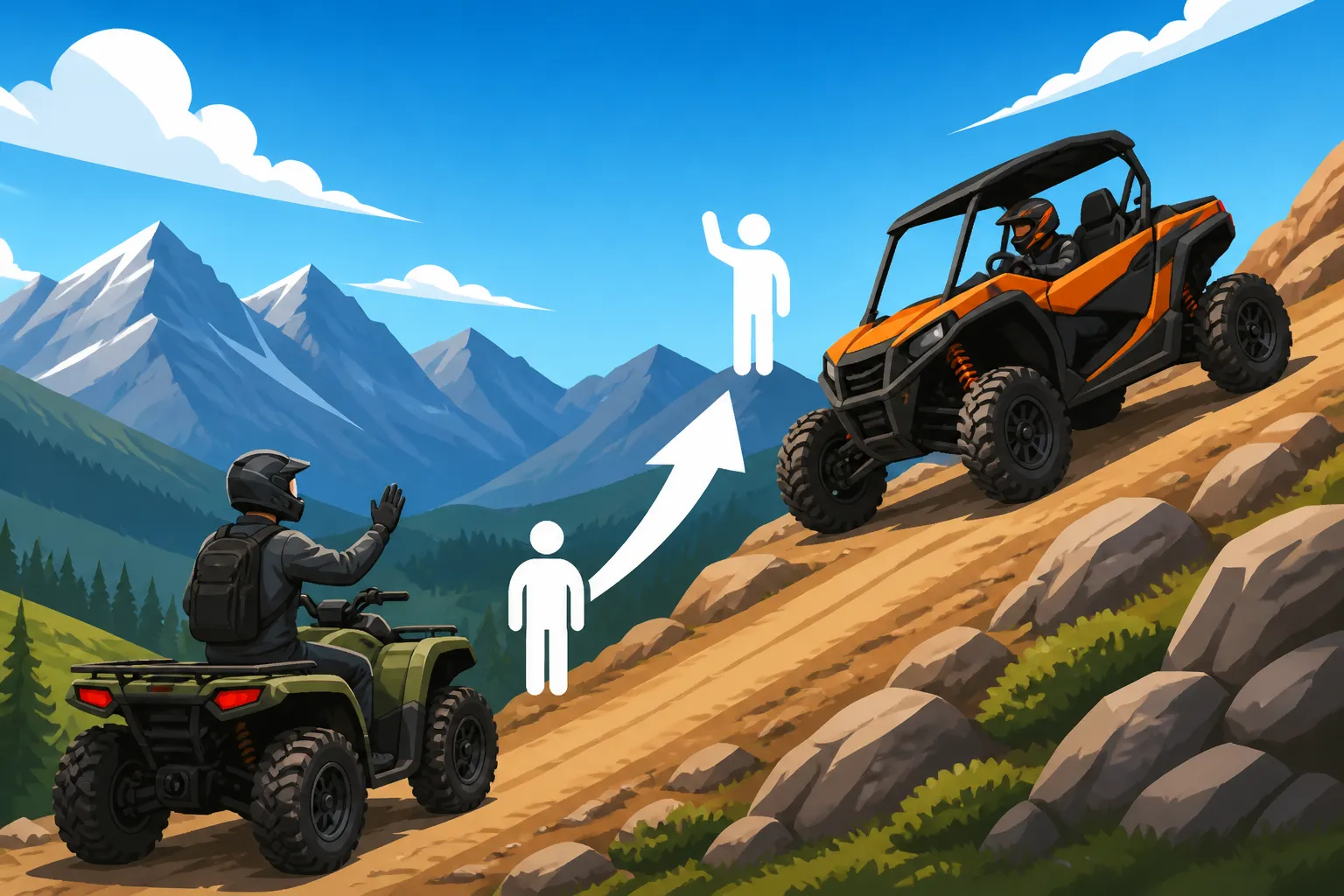
If you've spent any time on mountain trails, you've likely heard the adage: "uphill has the right-of-way." This isn't just a polite suggestion; it's a principle rooted in physics, vehicle dynamics, and practical safety. Imagine yourself climbing a steep, rocky section in your side-by-side. You've got momentum, your tires are fighting for traction, and you're carefully picking your line. Suddenly, a downhill vehicle appears. If you have to stop and back up on that incline, you risk losing traction, potentially sliding, or even stalling, making it incredibly difficult and dangerous to restart your climb. The downhill vehicle, on the other hand, can generally stop much more easily, maintain control, and has gravity working with them, not against them, to ease into a safe spot.
This traditional "uphill advantage" exists because it's inherently safer and more efficient for the downhill vehicle to yield. Their ability to stop, reverse, and pull over without losing critical momentum or struggling with traction is far greater. It minimizes the risk of a stall, a roll-back, or a loss of control on a steep grade. When you're trying to crest a challenging section, especially with an aftermarket lift and tires, you've got a lot of force working to propel you forward. To abruptly break that rhythm because a downhill vehicle isn't yielding can put you in a very precarious position. So, while it might feel counterintuitive at first, allowing the uphill traffic to continue its ascent simply makes good practical sense for everyone's safety and flow on the trail.
Colorado's Specifics for Uphill Right-of-Way
While there aren't specific Colorado statutes dictating right-of-way on every single non-highway trail, the "yield to uphill" principle is widely accepted and expected behavior on public lands, including Forest Service and BLM routes. Think of it as mountain common sense, learned through generations of folks traversing these challenging landscapes. Adhering to this understanding helps maintain safety and respect among trail users, which is crucial when you consider how many different types of vehicles share these paths.
The "Yield to Uphill" Principle in Practice
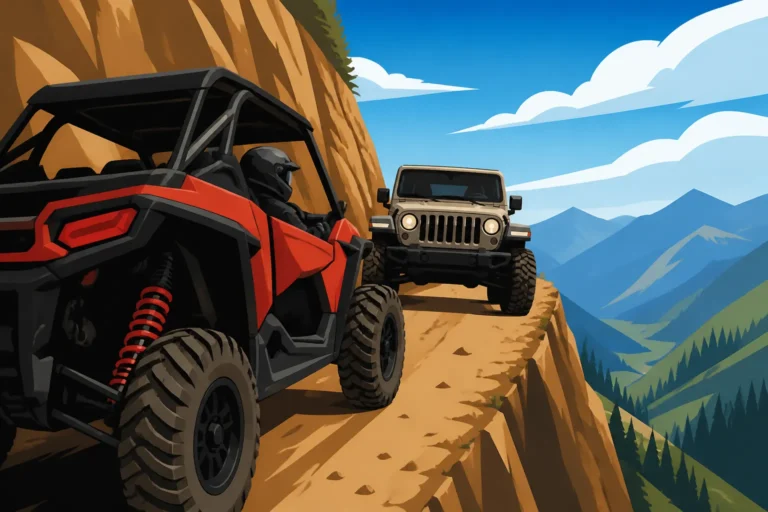
So, let's get down to how this actually works. When you're heading downhill on a narrow Colorado pass and you see another vehicle coming uphill, the expectation is clear: you, the downhill traveler, should yield. This means you need to slow down, look for the widest, safest spot to pull over, and allow the uphill vehicle to pass. It might be a small shoulder, a slightly wider section of the trail, or even a designated turnout. The key is to do it early and safely, without creating a new hazard. Don't wait until the last possible second, forcing an awkward stop or a potentially dangerous maneuver. A simple hand wave to acknowledge the other driver is always a nice touch, too. This rule applies whether you're encountering another side-by-side, a Jeep, or even a dirt bike. Remember that you're sharing this incredible natural space, and courtesy goes a long way. This is particularly important when you're passing an oncoming Jeep on a shelf road, where space is at an absolute premium. Always give the uphill machine the courtesy of a clear path.
Sometimes, pulling over means backing up a few feet to reach a wider spot. Don't be afraid to do that if it's the safest option. The goal is to make the passing maneuver as smooth and stress-free as possible for both parties. On many of Colorado's more popular passes, like Engineer or Cinnamon, you'll find that most experienced riders instinctively follow this rule, creating a safer and more predictable environment for everyone. It's a fundamental part of responsible trail riding.
Exceptions and Nuances on Colorado Passes
Now, while "uphill yields to downhill" is the golden rule, there are always those nuanced situations that call for a bit of common sense and flexibility. Imagine you're climbing a ridiculously steep, rocky section, and there's nowhere safe for you to pull over without risking a tip-over or severe body damage. Meanwhile, the downhill vehicle has a perfectly flat, wide spot just a few feet behind them. In a situation like this, the downhill vehicle might choose to yield, even though the traditional rule would suggest otherwise. It's about prioritizing safety above strict adherence to a guideline.
Another nuance involves communication. If you're in a large group, and the lead vehicle communicates via radio that they're pulling over, the uphill group might decide to wait. Similarly, if you see an uphill vehicle really struggling, perhaps they're new to the terrain or their machine is having issues, it might be more helpful and courteous to find a spot to pull over, even if you're the uphill traffic, to allow them a moment to regroup or even offer assistance. [Sharing a Mountain Road With Cyclists] also introduces another layer, as their stopping and maneuvering capabilities are different from motorized vehicles. Ultimately, while the rule is a fantastic baseline, the spirit of mountain trail etiquette is always about courtesy, communication, and ensuring everyone's safety, even if that means bending the rule slightly for a specific, safer outcome.
Practical Tips for Navigating Colorado's High-Country Roads
Riding Colorado's mountain passes isn't just about knowing the right-of-way rules; it's about developing a proactive and mindful approach to the entire experience. These aren't the kind of roads where you can just zone out and enjoy the scenery without paying attention. The consequences of even a momentary lapse in judgment can be severe. So, let's talk about some practical strategies to keep you safe and your ride smooth.
Situational Awareness and Proactive Driving
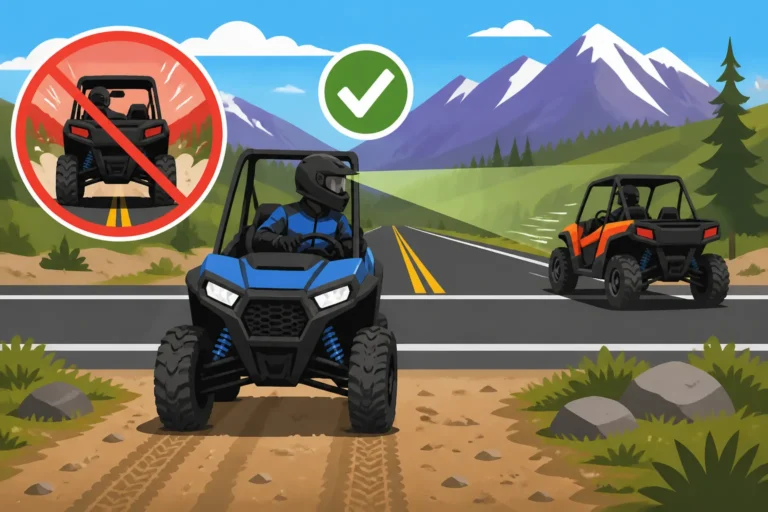
The absolute best defense against right-of-way dilemmas is to avoid them in the first place, or at least anticipate them. This means situational awareness is your best friend. Always be looking far down the trail, not just at the ground directly in front of your tires. Listen for the sound of other engines, especially before blind corners on a Colorado mountain road. Dust clouds ahead can be a dead giveaway that another vehicle is approaching. When you're approaching a blind turn, slow down significantly and be prepared to stop. A short, polite honk on the horn can sometimes alert oncoming traffic to your presence without being aggressive.
Beyond external factors, know your machine. Understanding your UTV or ATV's turning radius, braking capability, and power band will help you react confidently in tight situations. If you've invested in aftermarket suspension or upgraded axles from a brand like SuperATV, you likely have better articulation and strength, which can be a huge asset when you need to pull off quickly into an uneven spot. Being proactive also means knowing the route. If you've studied your map or GPS, you'll know where the particularly narrow sections or challenging climbs are, allowing you to be extra vigilant in those areas. The more information you have and the more aware you are of your surroundings, the less likely you are to be caught off guard.
Communication and Trail Etiquette
Beyond simply following the rules, good communication and solid trail etiquette are vital for harmonious coexistence on Colorado's passes. When you encounter another vehicle and one of you is yielding, a simple wave, a nod, or even a brief "thank you" can make a big difference. It acknowledges the other person's courtesy and helps maintain a friendly atmosphere on the trails. If you're in a group, consider using two-way radios to communicate with each other, and potentially with other groups you encounter, especially on those blind turns. This can be a game-changer for safety.
Etiquette also extends to how you yield. Don't just pull over haphazardly, creating a new obstacle or damaging fragile vegetation. Find a safe, stable spot. The "Leave No Trace" principles apply not just to trash, but to your driving habits too. Avoid driving off the established trail if at all possible, even when yielding. If you're part of a larger group, ensure everyone understands the right-of-way principles. It's frustrating for an uphill vehicle to pass half of a group only to find the next few machines still coming. Good [Group Riding Etiquette in a Small Town] carries over to the trails as well; respect for others and the environment ensures everyone can continue to enjoy these incredible places.
Preparing Your Machine for Mountain Ascents and Descents
Before you even hit the pass, make sure your machine is ready for the rigors of mountain riding. This means checking your brakes, tires, fluids, and overall mechanical health. Mountain passes often involve sustained climbs and long, steep descents, which put unique stresses on your ATV or UTV. For descents, understanding and utilizing engine braking on a steep pass is crucial to avoid overheating your brakes and experiencing brake fade on a long Colorado descent. Most modern UTVs and ATVs have excellent engine braking systems, but know how to use yours effectively.
On the climbing side, ensure your tires are in good condition and at the appropriate pressure for the terrain. Good tread and proper inflation can make all the difference in maintaining traction on loose, rocky inclines. If you've upgraded components like axles or suspension with heavy-duty parts from a company like SuperATV, you'll likely feel more confident in tackling the varied terrain and making those quick, controlled maneuvers required when yielding or passing. Also, don't forget to pack essential recovery gear for a shelf road, even if you hope never to use it. A well-prepared machine and rider are the safest combination on any Colorado pass. [Altitude and Carburetor Tuning] can also be a factor for older machines, so ensure your quad is running optimally for the elevation.
Common Scenarios and Problem Solving
Even with the best preparation and understanding of the rules, you're bound to encounter situations on Colorado's mountain passes that require quick thinking and good judgment. From facing down another OHV to dealing with a full-size truck, knowing how to react calmly and safely is paramount.
When Both Vehicles Are OHVs
This is perhaps the most common scenario: you, in your side-by-side or ATV, meeting another off-highway vehicle. The "uphill yields to downhill" rule applies directly here. If you're going downhill and see an uphill quad or UTV approaching, your job is to find the safest spot to pull over. This might involve a gentle turn into a wider shoulder or a short reverse to a suitable turnout. Clear communication, even if just a hand signal, helps avoid confusion.
What if it's a tight spot and both drivers hesitate? This is where courtesy truly shines. One driver might choose to wave the other through, or you might both decide to back up to a slightly wider spot simultaneously. It's rarely a good idea to try and squeeze past if there's any doubt about clearance. Remember that a full-size side-by-side takes up more room than a narrow dirt bike, so be mindful of the space needed for different types of machines to pass safely. The goal is always a safe, smooth pass, not a test of wills. It’s important for both parties to act decisively but cautiously.
Encountering Full-Size Vehicles
Colorado's mountain passes are shared not just by OHVs, but also by a variety of full-size vehicles, including Jeeps, customized 4x4s, and sometimes even local residents in pickup trucks. When you're on your side-by-side and meet one of these larger vehicles, the uphill rule generally still applies. However, it's crucial to acknowledge the size difference. A large Jeep often requires more room to maneuver, stop, and pull over than your typical ATV or UTV. This means that as an OHV rider, you might need to be extra proactive in finding a good place to yield, even if you are technically the uphill vehicle, simply because it's easier for you to find a safe spot than for a wider, heavier vehicle.
If you're the downhill OHV, be prepared to give the full-size vehicle ample room. They might also be navigating their own set of challenges, like limited visibility over their hood on a steep descent. Sometimes, you'll encounter a situation where [Plated Trucks on Colorado OHV Trails] are present. In these instances, common sense and safety should always dictate your actions. If a full-size vehicle is struggling or looks like it's in a precarious position, it's often best to give them all the space they need, regardless of who has the technical right-of-way. A moment of extra caution can prevent a much bigger problem.
What if Someone Doesn't Yield?
Let's be realistic: not everyone on the trail knows, remembers, or chooses to follow the unwritten rules. You might encounter a situation where you're the uphill vehicle, clearly have the right-of-way, and the downhill vehicle shows no sign of yielding. This can be frustrating, even infuriating. However, the absolute most important thing to do in this scenario is stay calm and prioritize safety.
Do not escalate the situation. Do not play chicken. Your personal safety and the safety of your passengers and machine are far more valuable than proving you were "right." If the other driver isn't yielding, find the safest way for you to proceed. This might mean pulling over yourself, backing up to a wider spot, or simply stopping and waiting for them to figure it out. A polite, non-confrontational wave to indicate your position or intent might help, but if they still don't respond, let it go. It's always better to be the bigger person on the trail, ensuring a safe passage for everyone, even if it means momentarily sacrificing your "right" to the path. Remember that incidents on the trail can lead to serious consequences, including citations or losing trail access after a Colorado citation, so keeping a cool head is always the best approach.
| Scenario | Uphill Traffic Responsibility | Downhill Traffic Responsibility | Key Considerations |
|---|---|---|---|
| Meeting Another OHV | Maintain steady progress | Yield and pull over safely | Communication, find widest spot, acknowledge other rider |
| Meeting Full-Size 4×4 | Maintain steady progress | Yield and pull over safely | Full-size needs more room, be extra cautious with OHV |
| Blind Corner Encounter | Slow down, anticipate traffic | Slow down, anticipate traffic | Both should slow significantly, be ready to stop |
| Struggling Uphill | Proceed when safe, communicate | Offer space, potentially assist | Prioritize safety, common sense over strict rule adherence |
| No Yielding Occurs | Prioritize safety, yield if needed | Re-evaluate, find safe solution | Do not escalate, ensure safe passage for all |
This article is for general informational purposes only and does not constitute professional advice. Laws, prices and regulations vary by location and change over time. Consult a qualified professional for guidance on your specific situation.