Blind Corners on a Colorado Mountain Road
One of the most heart-stopping moments you can experience while riding your ATV or UTV on Colorado's incredible mountain roads is encountering a blind corner. That sudden loss of visibility, the inability to see what's just around the bend, can turn a thrilling ride into a terrifying near-miss in an instant. This guide is all about helping you understand the inherent dangers of these hidden turns and, more importantly, equipping you with the strategies and mindset to navigate them safely, ensuring your mountain adventures remain memorable for all the right reasons.
The Hidden Dangers of Blind Corners in Colorado's Mountains
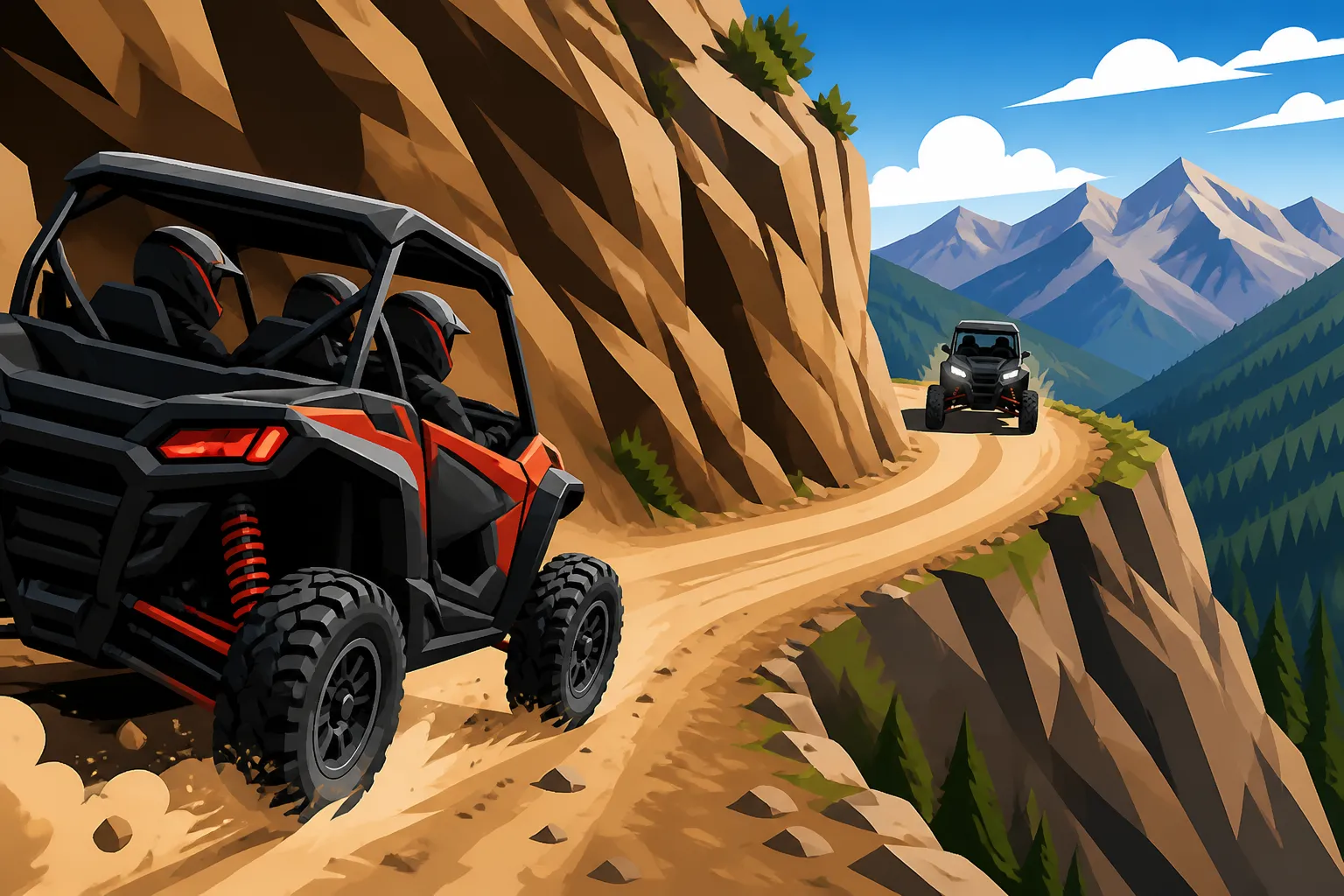
Colorado's mountains are undeniably beautiful, offering breathtaking vistas and some of the most exhilarating off-highway vehicle (OHV) experiences imaginable. However, their very geology – towering peaks, deep canyons, and winding passes – also creates unique challenges, especially when it comes to road design. Blind corners are a quintessential example of these challenges, transforming what looks like a simple curve into a potential hazard zone.
Why Blind Corners Are So Treacherous
The core issue with a blind corner is, quite simply, the lack of foresight. You cannot see what's coming toward you, what's stopped just around the bend, or what obstacle might be waiting. On a straightaway, you have ample time to react to an oncoming vehicle, a deer stepping onto the road, or a fallen rock. Around a blind corner, that reaction time shrinks dramatically, often to mere seconds, if not less. This reduced visibility means you might be halfway through the turn before you even register a potential threat.
Adding to the treachery, mountain roads often have other elements that amplify the danger. Loose gravel can compromise traction, making sudden braking or steering adjustments even more precarious. Steep drop-offs on one side and unforgiving rock walls on the other leave little room for error or evasive maneuvers. Furthermore, the sheer scale of the mountains can play tricks on your depth perception, making it harder to judge the radius of a turn or the speed of an approaching vehicle that momentarily appears.
Common Scenarios Gone Wrong
It's easy to picture the worst-case scenario: a head-on collision. While thankfully rare, near-misses are far more common and equally terrifying. Imagine you're riding your side-by-side up a winding forest road, enjoying the scenery, only to come around a tight, blind left-hand bend and suddenly find a full-size Jeep Wrangler descending directly in your path, hugging the inside of the turn. In that split second, you're both scrambling for brakes, adrenaline surging, hoping you can stop before impact.
Another common pitfall involves unexpected obstacles. Picture this: you're on an early season ride, and a blind crest-and-turn combo hides a fresh rockfall that's completely blocked one side of the narrow road. Without adequate time to react, you could easily hit the debris, losing control, or swerve into oncoming traffic (if there were any). Wildlife, like deer or elk, also frequently appear suddenly from the dense foliage lining mountain roads. Rounding a blind corner only to find a massive bull elk standing in the middle of your lane is a truly unsettling experience, requiring immediate, decisive, and safe action.
Consider also the scenario of encountering a slower vehicle, or even someone who's pulled over just around the bend. Perhaps a family in a rented UTV has stopped to take pictures of a stunning vista, completely out of sight from your approach. If you come around that corner too quickly, you could be on top of them before you have time to slow down, potentially causing a rear-end collision or forcing you off the road. These scenarios highlight why vigilance is paramount.
Mastering the Art of Safe Navigation on Colorado's Blind Turns
Navigating blind corners safely isn't about luck; it's about skill, discipline, and a deep respect for the unpredictable mountain environment. The techniques employed here are tried and true, applicable whether you're on a dirt bike, ATV, or a large side-by-side, and they emphasize minimizing risk where visibility is compromised.
The "Think Slow, See Fast" Mantra
This simple phrase should become your guiding principle on every mountain road. "Think slow" means consciously reducing your speed before entering a blind corner. You should be traveling at a pace that allows you to stop within the distance you can see. If you can only see 20 feet ahead, you need to be going slow enough to stop in 20 feet. This often means downshifting and letting engine braking assist, especially on descents. It’s far better to enter a corner slowly and accelerate out of it if clear, than to enter too fast and have to brake hard in a dangerous situation.
"See fast" refers to your eyes and mind. As you approach the turn, your gaze should be constantly scanning for any clues: dust clouds rising from around the bend, reflections of headlights, or even the sound of another vehicle's engine. Once you begin the turn, actively look through it as far as possible. If it's a left-hand bend, look to the right side of the road on your exit. If it's a right-hand bend, look to the left. This helps you predict the road's trajectory and anticipate any changes. For tricky turns where you really can't see through, try to get a visual on the furthest point of the turn you can see and assume there's a surprise just beyond it.
Proper line selection is also critical. Always stay as far to the right side of your lane as safely possible, especially on blind left-hand turns, to maximize your distance from any oncoming traffic that might cut the corner. For blind right-hand turns, you might subtly hug the outside of the turn as you approach (while still staying in your lane) to open up your line of sight earlier, but always be prepared to swing back to the right if you encounter an obstacle. The goal is to maximize visibility and minimize exposure.
Communication and Awareness
Your machine might be relatively quiet compared to a truck, but your horn can be an invaluable tool. Before entering a truly blind corner where you suspect oncoming traffic or where the road is particularly narrow, a short, sharp honk can alert others to your presence. Don't be shy about using it; a quick warning could prevent a serious incident. This is especially true on switchbacks where sound might echo strangely, but an alert is still better than silence.
If you're riding in a group, communication amongst yourselves is key. The lead rider should be the most cautious, calling out potential hazards or reporting clear sections. Hand signals can be useful for relaying information between machines, though be mindful that turning your head or taking a hand off the bars in a corner introduces its own risks. Ultimately, the best group communication around blind corners is a staggered riding formation that allows for maximum visibility and reaction time, coupled with a pre-agreed-upon expectation of slow, controlled entry into blind sections.
Beyond active communication, cultivate an almost hyper-awareness of your surroundings. Listen for the distinct whine of an engine struggling on an uphill climb, the rattle of a diesel truck, or even the distant chatter of voices. These auditory cues can sometimes give you precious seconds of warning before a visual confirmation. It's about engaging all your senses to paint a clearer picture of what lies beyond your immediate line of sight.
Equipment That Helps
While no piece of equipment can replace good judgment, some accessories can significantly enhance your safety on blind corners. Enhanced lighting is a prime example. Aftermarket LED light bars or auxiliary lights, like those offered by SuperATV, can cast a wider, brighter beam, illuminating more of the road ahead and around the immediate curve, especially if you're riding in low light conditions or under heavy tree cover. This extra illumination can reveal debris, potholes, or even the reflective eyes of wildlife a split second earlier.
Wider mirrors, or even additional mirrors, can also improve your peripheral vision. While they won't help you see around a blind corner, they are crucial for monitoring what's behind you and your group, and for confirming that no one is trying to pass you unsafely as you approach a tricky section. Some riders also equip their machines with whip flags, particularly in open riding areas or where visibility might be obscured by hills, though these are less effective for direct line-of-sight around a tight mountain corner. Ultimately, ensuring your brakes are in perfect working order and that your tires have good tread for maximum traction are fundamental "equipment" considerations that contribute directly to your ability to react safely when the unexpected appears. [What to Carry Over a High Pass] is another important read.
Anticipating and Reacting: Beyond the Corner Itself
Safe riding on Colorado's mountain roads isn't just about the moment you're in the corner; it's about everything leading up to it and how you handle the aftermath of an unexpected encounter. Developing strong anticipation skills and a clear reaction plan can be the difference between a minor scare and a major incident.
Reading the Road and Terrain
Before you even get to a blind corner, the road itself often provides clues. Look for changes in pavement or gravel color, which can indicate recent washouts or maintenance. Tire tracks leading into the corner, especially if they are fresh or indicate a path wider than your machine, suggest that other vehicles, possibly full-size ones, are frequently using this route. Dust clouds are a dead giveaway – if you see a plume of dust rising from around a bend, slow down immediately; there's almost certainly a vehicle just out of sight.
Always assume the worst. That little dip in the road, that slight elevation change, that patch of shadow – they could all be hiding something. Mountain roads, especially unpaved ones, are constantly changing due to weather, traffic, and natural events. A corner that was clear last week might have a wash-out or fallen tree this week. Keep an eye out for signs of water runoff, which can create loose gravel or unexpected ruts just where you don't want them. This constant vigilance, this "reading" of the environment, primes your brain for quick reactions. It's not about being paranoid, but about being realistically prepared for the unpredictable nature of mountain riding. [Reading a Colorado Motor Vehicle Use Map] can also help with planning.
What to Do in an Unexpected Encounter
Despite your best efforts, sometimes you will find yourself face-to-face with an unexpected obstacle or vehicle around a blind corner. Your immediate reaction should be to remain calm, apply progressive braking, and maintain control of your machine. Panic braking – grabbing the brakes hard – can lock up your wheels, leading to a skid, especially on loose gravel. Instead, squeeze the brakes firmly and progressively, using both front and rear brakes (if applicable for your machine type) to maximize stopping power. Engage your engine braking by downshifting.
While braking, scan for an escape route. Is there a wider shoulder? A small pull-off? A less-steep embankment? If a head-on collision is imminent and unavoidable, a controlled ditch into a soft embankment (if available and safe) might be preferable to a direct impact. However, this is a last resort and requires split-second judgment. If you encounter an oncoming vehicle, immediately flash your lights if you have them, and if safe, move as far to the right as possible, even if it means slowing to a crawl or coming to a complete stop to let them pass. For more on navigating shared roads, check out [Sharing a Mountain Road With Cyclists] and [Uphill Right-of-Way on a Colorado Pass].
Post-Encounter Protocol
After a close call, it's natural for your heart to pound and your hands to tremble. Pull over to a safe, wide spot on the road as soon as possible, take a few deep breaths, and let the adrenaline subside. Check your machine for any damage or issues, especially if you had to brake hard or swerve. Ensure your tires, brakes, and steering are still functioning correctly. If you were riding with others, communicate what happened and make sure everyone is okay.
Discussing the incident with your group can be beneficial, reinforcing safe riding practices and learning from the experience. It's a moment to re-evaluate your speed and line choices for upcoming corners. Don't let a scare ruin your ride, but certainly let it be a powerful reminder of the risks and the importance of caution. Once you feel calm and confident again, continue your journey, but perhaps with an even greater emphasis on the "Think Slow, See Fast" mantra. Remember, [Colorado Sheriff Patrols on OHV Routes] are out there ensuring safety, and an incident could lead to further interaction.
Colorado-Specific Considerations for Mountain Road Riding
Riding an OHV in Colorado's mountains offers an unparalleled experience, but the unique environment of the Centennial State comes with its own set of rules, challenges, and shared responsibilities that riders must understand. These local considerations add another layer to safe blind corner navigation.
Sharing the Road with Diverse Traffic
Colorado's mountain roads, whether they are designated OHV routes or general county roads, are not exclusively for ATVs and UTVs. You will encounter a wide variety of users. This includes other OHVs of all sizes, from dirt bikes to large custom buggies. But you'll also share the road with full-size passenger vehicles like SUVs and Jeeps, often driven by tourists who might be less familiar with mountain driving etiquette. Mountain bikers, hikers, and even equestrians frequent these routes, sometimes in unexpected places.
This diverse traffic mix means you must be prepared for anything. A large commercial tour van might be coming around that blind corner, or a group of cyclists pedaling uphill. Always assume the other user might not see or hear you, and be prepared to yield, especially when descending. The general rule for right-of-way on shared mountain roads is that uphill traffic has the right-of-way, as it's often harder for them to stop and restart. However, courtesy and defensive driving dictate that if it's safer for you to yield, do so. This proactive approach minimizes conflict and enhances safety for everyone.
Laws and Etiquette on Colorado County Roads
While many mountain roads feel like remote trails, many are technically county roads and are subject to traffic laws. This means speed limits, even if they feel slow for an OHV, must be observed, especially approaching blind corners. [Speed Limits for OHVs on Colorado County Roads] outlines these important rules. You must operate your OHV safely and defensively. While Colorado generally does not require a street-legal plate for OHVs on many county roads where ordinances allow, you are still expected to follow traffic rules.
Beyond written laws, there's unwritten etiquette. Minimize dust when passing homes or other users. Be respectful of private property boundaries, even on seemingly open roads. Understand that residents in mountain towns often share these roads for daily commuting and expect responsible driving from OHV users. Adhering to these unspoken rules, alongside the written ones, helps preserve access to these incredible riding areas. Penalties for unsafe operation can be significant, including fines for [Penalties for an Unregistered OHV in Colorado].
High Altitude and Machine Performance
Colorado's mountains are famous for their high altitudes, and this isn't just a concern for your personal health; it directly impacts your OHV's performance. At 8,000 feet and higher, the air is thinner, meaning less oxygen for your engine. Carbureted machines will often run rich and lose significant power, while even fuel-injected machines will experience some power reduction. This loss of power means your machine might not accelerate as quickly out of a corner, and your engine braking might be less effective.
For carbureted machines, consider having your carburetor re-jetted for altitude if you plan to do extensive high-country riding. For all machines, acknowledge the power loss and adjust your riding style accordingly. Give yourself more room for braking, and be more deliberate with your throttle input. If your machine is struggling on an uphill climb leading into a blind corner, you'll need to be even more cautious, as you won't have the quick acceleration to get out of trouble if needed. Always be mindful of [Brake Fade on a Long Colorado Descent] and how altitude can exacerbate it.
| Strategy | Description | Benefit |
|---|---|---|
| Reduce Speed | Slow down before entering a blind corner to a speed where you can stop within the visible distance. | Maximizes reaction time and ability to avoid obstacles or oncoming traffic. |
| Stay Right | Always keep your machine as far to the right of your lane as safely possible. | Creates maximum separation from potential oncoming vehicles cutting the corner. |
| Scan Far Ahead | Look as far through and beyond the corner as you can, seeking any visual clues (dust, reflections, tire tracks). | Helps anticipate road trajectory and potential hazards before they are fully visible. |
| Use Horn/Lights | A quick honk or flash of lights can warn others of your presence, especially on very tight, blind turns. | Proactive communication reduces the chance of unexpected encounters. |
| Listen Actively | Pay attention to engine sounds, voices, or any other auditory cues that might indicate traffic around the bend. | Provides early warning when visual cues are absent. |
| Progressive Braking | If you need to stop suddenly, apply brakes firmly but progressively to avoid locking up tires, especially on loose surfaces. | Maintains control of the machine and maximizes stopping power without skidding. |
| Consider Equipment | Enhanced lighting (like from SuperATV) improves visibility; well-maintained brakes and good tires are fundamental. | Provides better situational awareness and machine responsiveness. |
| Maintain Space | When riding in a group, ensure adequate spacing between machines for individual reaction time. | Prevents chain reactions and allows each rider to react independently to hazards. |
Disclaimer
This article is for general informational purposes only and does not constitute professional advice. Laws, prices and regulations vary by location and change over time. Consult a qualified professional for guidance on your specific situation.