Colorado OHV Rules for Official and Utility Use
It’s a common scenario across Colorado: you’ve got a side-by-side or an ATV that’s indispensable for getting work done, whether it’s checking fences on the ranch, maintaining trails for a public agency, or hauling tools around a sprawling commercial property. While these machines are powerful assets, many folks find themselves scratching their heads, wondering if the same rules that apply to recreational riders also apply when the OHV is strictly for business. This guide aims to clear up the confusion surrounding Colorado OHV rules for official and utility use, helping you understand when your work machine needs registration, how it can navigate public roads, and what special considerations apply to businesses and government entities.
Understanding the Nuances of "Utility Use" in Colorado
When we talk about "utility use" for an Off-Highway Vehicle (OHV) in Colorado, it's not always as straightforward as it sounds. Many people automatically think of a rancher checking livestock or a farmer tending crops, which are definitely examples. But the scope is actually much broader, encompassing a range of activities where an ATV or UTV serves as a workhorse rather than a toy. The critical distinction often lies in whether the machine is being used for a commercial purpose, for governmental operations, or for specific agricultural tasks, and whether that use is taking place on private property or venturing onto public lands or roads. This distinction is crucial because it often dictates whether you need a Colorado OHV registration, how you can operate it, and what equipment might be required.
What Constitutes Utility Use?
Utility use can mean a lot of things depending on who you are and what you're doing. For a farmer or rancher, it might involve traversing fields to inspect irrigation lines, moving feed, or herding cattle. These are often considered agricultural uses, which sometimes come with their own set of specific exemptions, particularly when operating on their own land. Then you have land managers – think U.S. Forest Service, Bureau of Land Management (BLM), or Colorado Parks and Wildlife (CPW) personnel – using OHVs for trail maintenance, wildlife monitoring, fire suppression, or search and rescue operations. Their machines are integral to their official duties, operating under government mandates.
Beyond agriculture and government, a variety of private businesses rely on OHVs for utility purposes. A construction company might use a UTV to transport workers and materials across a large job site, or a resort might employ a side-by-side for property maintenance, hauling luggage, or even providing guest transport on designated paths. Even a property management company might use an ATV for groundskeeping on private estates. The common thread here is that the machine is being used as a tool to accomplish a specific task related to work or operations, rather than for purely recreational trail riding.
It's important to recognize that just because you're using your OHV for work doesn't automatically mean it's exempt from all rules. Colorado’s OHV laws are designed to manage all motorized off-highway travel, and exemptions are typically narrowly defined. Understanding which category your utility use falls into is the first step in ensuring compliance and avoiding unexpected fines. For instance, if you're a small business owner using a UTV to deliver landscaping supplies across a large private subdivision, you're engaging in utility use, but you still need to be aware of registration and potentially even road-use rules if you ever cross public thoroughfares.
The Distinction Between Private and Public Land Operations
The line between private and public land is perhaps the most significant factor in determining the rules for utility OHVs in Colorado. If your utility use is exclusively on private property that you own or have permission to use, the rules are often much more relaxed regarding registration and certain equipment requirements. For example, a rancher using an ATV solely on their own ranch typically doesn't need to register it with Colorado Parks and Wildlife. The general principle here is that if you're not interacting with public lands or public road systems, many of the state's OHV regulations aimed at public land management don't apply. You can learn more about this by reading [Riding Only on Your Own Colorado Land].
However, the moment your utility OHV touches public land, whether it's a designated OHV trail, a Forest Service road, BLM land, or even just crossing a county road to get from one part of your private property to another, the rules shift dramatically. On public lands, virtually all OHVs, regardless of their intended use, are generally required to have a current Colorado OHV registration sticker. This applies equally to a recreational rider and a land surveyor using their quad to access remote sites. The "public" aspect triggers the need for a permit, as the fees from these permits directly fund trail maintenance, signage, and enforcement efforts that benefit all users.
This public/private distinction can be a real headache for those whose work naturally crosses these boundaries. Imagine a utility company needing to access power lines that span across both private easements and public forest land. Their OHVs would need to be properly registered for the sections on public land, even if their primary purpose is maintenance. It's not uncommon for land managers or law enforcement to check for current registration stickers even if the operator claims utility use, especially if they see a machine operating on a public right-of-way or designated public trail. Knowing when your operation will intersect with public land or roads is key to staying compliant.
Registration and Permitting for Utility OHVs
Just because you're using your OHV for work doesn't automatically mean it's exempt from the standard registration requirements in Colorado. Many operators, especially those who primarily use their machines on private property, are often surprised to learn that certain work-related activities still trigger the need for a Colorado OHV registration. The state's system is designed to fund the trails and services used by all off-highway vehicles, so understanding when your utility machine needs that green sticker is vital. Ignoring these rules can lead to unwanted attention from rangers and potentially steep fines, which no business or individual wants.
When a Work Machine Still Needs a Colorado OHV Registration
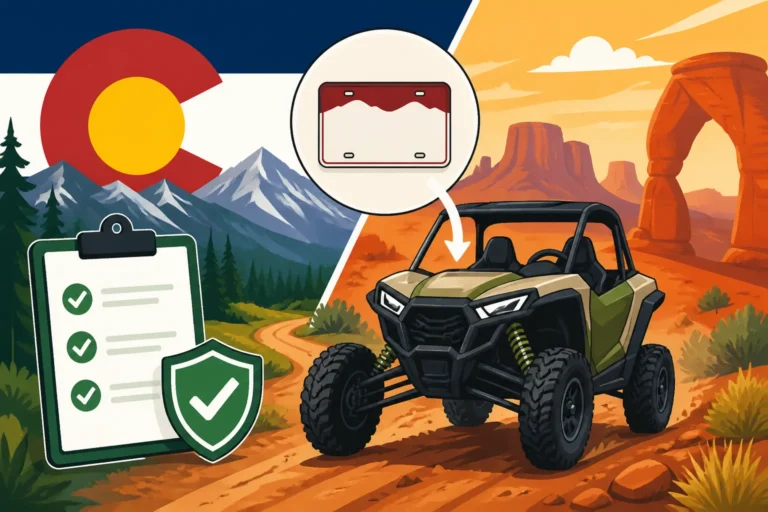
The general rule of thumb in Colorado is that if your OHV is used on public lands or public roads that are open to OHVs, it needs to be registered with Colorado Parks and Wildlife (CPW). This applies whether you're using it for fun on a weekend trail ride or for critical work tasks during the week. So, if you're a forestry contractor using a UTV to access remote logging sites on Forest Service land, or a guide taking clients on a photography tour across BLM property, your machines will absolutely need to be registered. The fees from these registrations go directly back into maintaining the very lands and trails you rely on for your work, supporting the overall OHV program in the state. [Registering an OHV in Colorado] details the general process.
This requirement also extends to situations where a utility OHV might briefly operate on public roads, even if it's just to connect two sections of private property. While there are very specific and limited circumstances where OHVs can use public roads for work, if that use involves areas designated for OHV recreation or any public roads (even county roads where local ordinances allow OHVs), then registration is likely required. It's not just about recreational trails; it's about any public access. Even if your machine is heavily customized with utility accessories from a brand like SuperATV, if it touches public ground, it usually needs that sticker.
It’s easy to overlook this detail, especially if your utility OHV spends most of its life on private property. However, imagine you're a land surveyor needing to access a remote corner of a client's property, and the easiest (or only) way to get there involves traversing a short section of a county road or an unpaved Forest Service road. In such a case, that machine needs its current CPW registration. The only exceptions are very specific, and it's always safer to assume registration is needed if there's any public land or road involvement. [Colorado OHV Permit Rules on Public Land] offers more insights into public land requirements.
Exemptions for Agricultural and Ranching Operations
Colorado does provide specific exemptions for certain agricultural and ranching operations, acknowledging the essential role OHVs play in these industries. Generally, an OHV used exclusively for agricultural purposes on private land owned or leased by the operator, or on land where the operator has written permission from the landowner, does not require a CPW registration. This is a significant relief for farmers and ranchers who rely heavily on ATVs and UTVs for daily tasks without ever venturing onto public recreational trails. This exemption specifically targets the use on private land for agricultural work.
However, these exemptions are not blanket passes for all situations. If that same agricultural machine is used on public land for any reason, even briefly, or if it crosses public roads beyond very specific, limited allowances for agricultural road use, then the exemption typically no longer applies, and a registration becomes necessary. For instance, a rancher moving cattle across a county road that bisects their property might be allowed to do so under specific agricultural road-use rules, but if they then decide to take a joyride on a nearby BLM trail, their machine would need to be registered. The key here is "exclusively for agricultural purposes on private land."
It's also important for agricultural users to understand what constitutes "agricultural purposes." This typically includes activities directly related to farming, ranching, and other forms of agriculture. Using an ATV to go hunting on your own land might fall under recreational use if not tied directly to agricultural management, which could affect the exemption if there's any ambiguity. Always check local ordinances and state guidelines carefully, and if in doubt, err on the side of caution and get the registration. The purpose of these exemptions is to support vital industries, not to create loopholes for other uses. For more details on this, see [Agricultural Exemptions From Colorado OHV Rules].
Road Use for Official and Utility OHVs
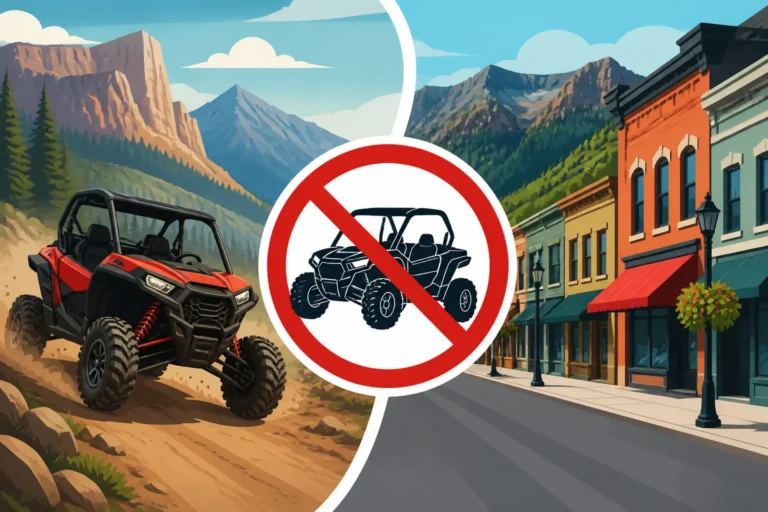
Navigating public roads with an OHV, even for legitimate work purposes, is a complex issue in Colorado. Unlike some other states, Colorado generally does not issue street-legal titles or plates for OHVs. This means that for the vast majority of ATVs and UTVs, riding on paved public roads is typically prohibited. However, the unique needs of official and utility operations sometimes necessitate brief road travel. Colorado law attempts to strike a balance, allowing for very specific, limited road access under strict conditions when an OHV is being used for work. This is a critical area where misinterpretation can quickly lead to fines or even more serious consequences.
Crossing Public Roads for Work Purposes
For official and utility OHVs, there are narrow circumstances where crossing a public road is permissible. The most common scenario involves an operator needing to cross a highway or county road to get from one section of private property to another, or to access an adjacent trail or work area. This isn't about cruising down Main Street; it's about the shortest, most direct route to get the job done. The key is "crossing," implying a perpendicular movement across the road, not traveling along it for any significant distance. These crossings must typically be done safely, yielding to all vehicular traffic, and often involve being equipped with basic safety features like headlights and taillights.
Beyond simple crossings, some local jurisdictions (counties or municipalities) have enacted ordinances that allow OHVs for specific utility purposes on certain county roads. These are highly localized and not a statewide blanket rule. For instance, a small mountain town might allow town maintenance crews to use UTVs on its streets to clear snow or access parks. It's crucial for any organization or individual operating an OHV for utility purposes on public roads to first verify if such an ordinance exists for their specific location and understand its exact parameters. Relying on what you "heard" someone else does is a recipe for trouble.
The importance of local knowledge cannot be overstated here. What's permissible in Hinsdale County for agricultural use might be completely different from what's allowed for a utility company in Grand County. Always check with the local sheriff's office or county clerk for the most up-to-date and specific information regarding road access for utility OHVs. Ignoring these nuanced rules, even with good intentions, can result in penalties for an unregistered or illegally operated OHV. For more information on road crossing rules, you can refer to [Crossing a Colorado Highway on an OHV].
Limited Road Access for Specific Utility Tasks
In addition to crossing roads, there are very restricted provisions for actual traveling on roads for specific utility tasks. These are not broad permissions for utility OHVs to operate freely on public roads, but rather specific allowances for critical functions. For example, OHVs operated by governmental agencies (like CPW, Forest Service, or local law enforcement) often have more leeway when performing official duties such as search and rescue, fire suppression, or enforcing regulations. These vehicles are typically clearly marked and operated by trained personnel under official capacity.
Similarly, OHVs used for agricultural purposes might have limited allowances to travel short distances on county roads to access fields or transport equipment between parts of a farm. Again, these are often defined by local ordinances and are usually very specific about the types of roads, distances, and times of operation allowed. A rancher might be able to drive their ATV a quarter-mile down a gravel county road to move fencing supplies from one pasture to another, especially if there's no safe alternative. [Colorado Rules for Agricultural Road Use] elaborates on these specific allowances.
For private businesses, these allowances are typically even more stringent. Unless specifically authorized by a local ordinance for a very particular purpose (e.g., a resort operating a UTV on a private access road that briefly intersects a public right-of-way, with proper permits), the general prohibition on road use for OHVs still applies. If your utility use requires road travel, it’s imperative to have explicit legal justification and ensure your machine is properly equipped for any authorized road sections. Retrofitting your UTV with necessary street-legal components from a company like SuperATV might be tempting, but it won't make it street-legal in Colorado without specific local authorization and vehicle classification that goes beyond typical OHV status.
Equipment Requirements for Road Travel
When an official or utility OHV is permitted to cross or travel on a public road, even for a limited distance or specific purpose, it must meet certain equipment requirements to ensure safety and visibility. These requirements are in place to make the OHV more noticeable to other vehicles on the road, reducing the risk of accidents. While a standard recreational OHV might get away with minimal lighting on a trail, road use demands more.
Typically, an OHV allowed on roads must be equipped with at least one headlight and one taillight that are operational, even if it's broad daylight. Turn signals might also be required, depending on the specific local ordinance, especially if the machine will be traveling along a road rather than just crossing it. A rearview mirror is often another mandatory piece of equipment. These items are fundamental for signaling intentions and being seen by oncoming and following traffic. You'll often see these features as standard on many utility-oriented UTVs, but if your machine is older or more basic, an aftermarket kit might be necessary.
Beyond lighting, some local regulations might also require a slow-moving vehicle (SMV) sign, a horn, or even a whip flag for increased visibility, particularly in areas with blind corners or heavy traffic. These are all aimed at making the OHV's presence undeniable to other drivers. It's not just about what the state might require; it's about what makes sense from a safety perspective for anyone operating a relatively slow and often less visible vehicle on a road with faster-moving traffic. Always check the specific ordinance that allows your road use, as it will detail the exact equipment needed. Failure to meet these requirements can lead to citations, even if your road use itself is authorized.
Special Considerations for Businesses and Organizations
Operating OHVs for commercial or organizational purposes in Colorado introduces another layer of complexity. While the machines themselves might be the same as those used by individual recreationists, the legal and operational framework changes when a business, government agency, or non-profit is involved. This includes considerations around ownership, employee usage, and liability. Businesses need to be particularly diligent in understanding these distinctions to ensure full compliance and protect their assets and personnel.
Registering an OHV Under a Business Entity
For businesses, government agencies, or non-profit organizations that own and operate OHVs for utility or official purposes, the registration process with Colorado Parks and Wildlife (CPW) is largely similar to that for individuals. However, the machine will typically be registered in the name of the business or organization, rather than an individual. This means the company name and any associated identification number (like a Federal Employer Identification Number or FEIN) will be used on the registration application. This ensures that the vehicle is properly tied to the entity responsible for its operation and maintenance.
When registering under a business name, it's crucial to have the correct documentation. This usually includes proof of ownership (like a bill of sale or manufacturer's certificate of origin) and identifying information for the business. While the sticker itself is green and the fee is the same, the administrative details align with corporate ownership. This is important for asset tracking, insurance purposes, and demonstrating legal ownership. For any business that uses OHVs on public lands, proper registration under the business name is a fundamental compliance step. See [Registering an OHV Under a Colorado Business] for more detailed information on this process.
Furthermore, if the business operates a fleet of OHVs, it will need to ensure each machine is individually registered. There isn't a single "fleet" registration that covers multiple machines under one sticker; each OHV requires its own permit. This can be an administrative task, but it's non-negotiable for public land use. Keeping accurate records of registration dates and renewals for each machine is essential for seamless operations and to avoid any interruptions or penalties during official work.
Employee Use and Supervision Rules
When employees operate OHVs for business or official purposes, special considerations for training, supervision, and safety become paramount. Employers have a responsibility to ensure their employees are competent and safe operators. This often goes beyond basic state requirements for recreational riders and delves into workplace safety standards. While Colorado doesn't mandate an OHV safety certificate for all riders, many businesses choose to implement their own mandatory training programs for employees who will operate these machines, especially in rugged or challenging work environments.
Supervision rules also come into play, particularly for younger employees or those new to OHV operation. Employers should establish clear guidelines for who can operate company-owned OHVs, under what conditions, and what level of supervision is required. This not only protects the employees but also the business from potential liability in case of an incident. Ensuring employees are aware of all applicable state and local OHV laws, as well as company policies, is a key aspect of responsible utility operation.
For government agencies, such as land management personnel or search and rescue teams, operators are typically required to undergo extensive specialized training specific to their roles and the types of terrain they'll encounter. This often includes advanced riding techniques, recovery procedures, and first aid, far exceeding what's expected of a casual recreational rider. Even for private businesses, investing in proper training from a certified OHV safety instructor can significantly reduce risks and increase efficiency for employees using these machines daily.
Safety and Compliance for Utility Operators
Regardless of whether an OHV is used for recreation or work, safety should always be the top priority. However, for utility operators, the stakes can feel even higher. These machines are often used in demanding conditions, sometimes with heavy loads or specialized equipment, and can expose operators to unique hazards. Ensuring strict compliance with safety regulations and best practices is not just about avoiding fines; it's about protecting lives, maintaining productivity, and preserving the organization's reputation.
Operator Licensing and Age Requirements
When it comes to operating an OHV for utility purposes, the same age and licensing requirements that apply to recreational riders generally hold true. In Colorado, there isn't a special "commercial OHV license." If operating on designated public roads where OHVs are allowed by local ordinance, the operator might need a valid driver's license, depending on the specific rules of that ordinance. For off-road operation, a driver's license isn't typically required, but age restrictions are important. For example, riders under 10 years old are generally restricted from riding on public roads open to OHVs. Riders between 10 and 16 often require adult supervision.
For employers, it's critical to verify that any employee operating an OHV meets these basic age and (if applicable) licensing requirements. Beyond the legal minimums, businesses should establish their own internal policies regarding operator age and experience. Just because a 16-year-old can legally ride an OHV on a trail doesn't mean they are qualified to operate a heavy-duty UTV with a loaded trailer across a challenging work site. Implementing internal age minimums or requiring specific training based on the complexity of the task can mitigate risks.
Furthermore, any operator, recreational or utility, must adhere to rules regarding impairment. The same laws concerning operating a motor vehicle under the influence of alcohol or drugs apply to OHVs. A DUI on an OHV in Colorado carries serious penalties, and for a utility operator, it could mean losing their job, facing legal charges, and damaging the reputation of their employer. Safety and sobriety are non-negotiable for anyone behind the controls of an OHV, especially when performing work duties. For specific age guidelines, you can look into topics like [Can a 12-Year-Old Ride a Colorado County Road?] to understand how age relates to public road use.
Importance of Safety Gear for Work-Related Riding
Just like recreational riders, utility OHV operators in Colorado should always wear appropriate safety gear. This includes a DOT-compliant helmet, eye protection, sturdy over-the-ankle boots, gloves, and long pants/sleeves. While Colorado doesn't have a statewide helmet law for all adult OHV riders on trails, many local ordinances and certainly most employers will require helmets for their operators, regardless of age or location. For riders under 18, helmets and eye protection are generally mandatory when operating on public lands or public roads open to OHVs. See [Colorado Helmet and Eye Protection: What Is Actually Required] for more details.
For utility work, additional safety gear might be necessary depending on the task. This could include high-visibility clothing if working near roads or other traffic, hearing protection for noisy operations, or specialized gear for specific hazards like chainsaw work or chemical spraying. Machines used for utility purposes, particularly UTVs, are often equipped with roll-over protection structures (ROPS) and seatbelts. It's imperative that operators always use these safety features, as they are designed to protect in the event of a roll-over. Many utility UTVs also come with sturdy brush guards or skid plates, some even enhanced by aftermarket parts from companies like SuperATV, which offer an added layer of protection for the machine itself when operating in rugged environments.
Ultimately, promoting a strong safety culture is crucial for any organization using OHVs for utility purposes. This involves regular equipment inspections, ensuring machines are properly maintained (including proper tire pressure, brake function, and fluid levels), and continually educating employees on safe operating procedures. The inherent risks of OHV operation are amplified when machines are used for demanding work tasks, making a proactive approach to safety and compliance essential for all utility operators in Colorado.
| Utility Use Category | Typical Registration Requirement (CPW) | General Road Access (Colorado) | Key Considerations |
|---|---|---|---|
| Agricultural (Private Land) | Generally No (if solely on private land) | Limited (crossing roads, short distances on county roads via local ordinance) | Exemption typically only applies to private land. Public land use requires registration. Check local agricultural road rules. |
| Government/Official | Yes (if on public land/trails) | Limited, often with greater leeway for official duties (e.g., emergency, maintenance) | Vehicles usually clearly marked, operators trained. Specific agency regulations often apply. |
| Private Business (Public Land) | Yes (if on public land/trails) | Highly restricted (crossing roads, very limited travel on specific county roads by ordinance) | Must comply with standard OHV public land rules. Local ordinances are crucial for any road travel. Employee training advised. |
| Private Business (Private Land) | No (if solely on private property) | None (unless specific, limited local ordinance applies for crossing) | Focus on internal safety protocols. No public land fees, but also no public trail access. |
Disclaimer
This article is for general informational purposes only and does not constitute professional advice. Laws, prices and regulations vary by location and change over time. Consult a qualified professional for guidance on your specific situation.