Colorado Rules for a Side-by-Side With Utah Plates
It can be incredibly frustrating to have a beautifully set-up side-by-side, legally plated for street use in Utah, only to arrive in Colorado and feel completely confused about where you can and can't ride. Many riders assume that because their machine is street-legal in one state, it automatically translates to being street-legal everywhere. Unfortunately, Colorado has its own unique set of rules, and they don't always align with the laws of neighboring states. This guide aims to clear up that confusion, explaining precisely what you can expect when bringing your Utah-plated side-by-side to the Centennial State.
The Core Disconnect: Utah vs. Colorado Street Legal Laws
It’s easy to understand why folks get mixed up. Utah has done a fantastic job of creating a robust framework for street-legal OHVs, and it’s a program that many other states look at with a bit of envy. But Colorado, with its deeply ingrained history of protecting its sensitive mountain environments and a slightly different legislative philosophy, has taken a different path.
How Utah Approaches Street Legality for OHVs
Utah truly embraces the idea of integrating off-highway vehicles into its road network, allowing them to legally travel on many public roads. If you’ve spent any time riding there, you know how convenient it is to hop on your side-by-side from your campsite, ride into town for gas or lunch, and then connect directly to a trail system, all while adhering to the law. To achieve this, Utah requires specific equipment on your OHV – things like headlights, taillights, brake lights, mirrors, turn signals, a horn, and a license plate, much like a regular car. Your machine gets inspected, you pay your fees, and voilà, you get a legitimate street-legal plate. It’s a fantastic system for their state, designed to maximize access and enjoyment, and many riders invest in high-quality aftermarket parts from companies like SuperATV to ensure their machines meet these requirements and stand up to tough trail use.
Why Colorado's Stance is Different
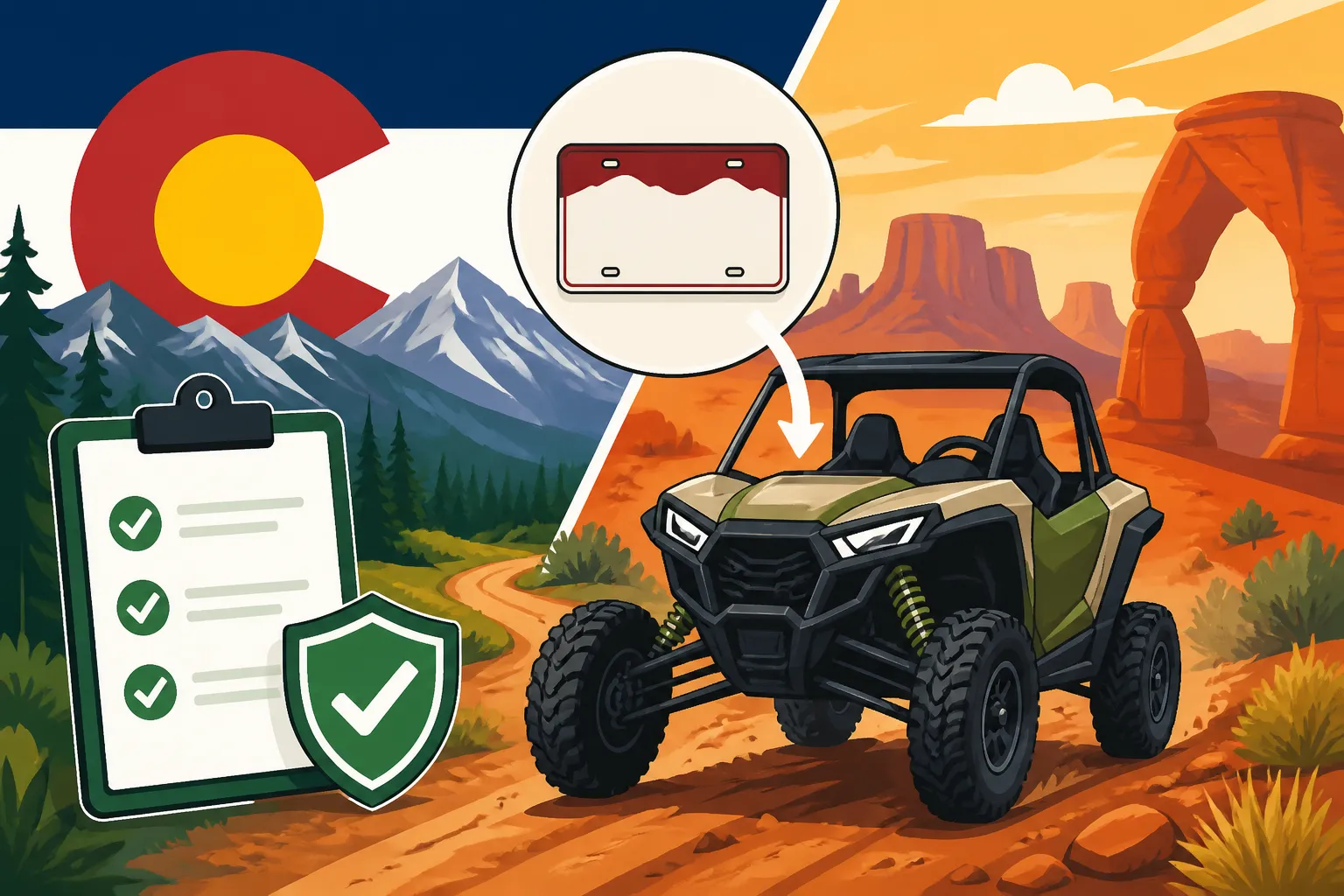
Now, here’s where Colorado throws a wrench in the works. Colorado does not have a statewide program to register or title OHVs as street-legal vehicles. Period. Full stop. What this means is that even if your side-by-side has all the bells and whistles, an inspection sticker from Utah, and a legitimate Utah license plate, Colorado generally considers it an off-highway vehicle when it comes to most paved state highways and federal routes. This can feel incredibly frustrating. You’ve done everything right in Utah, invested time and money, and here you are in Colorado, facing a completely different set of rules. The core difference is that Colorado sees OHVs as recreational vehicles primarily for off-road use, while Utah integrates them into its general transportation network. This isn't to say you can't ride your Utah-plated machine on any roads in Colorado, but it does mean you need to manage your expectations and understand the nuances. The state’s position is that these machines are not designed or intended for sustained use on high-speed public roads, a stance reflected in many of its regulations.
Where a Utah-Plated Side-by-Side Can Ride in Colorado
So, if your Utah plate doesn't grant you carte blanche on Colorado's roads, where can you ride? The answer lies in the patchwork of local ordinances and specific state provisions, often involving county roads and small town streets. It's not as straightforward as Utah, but there are still plenty of opportunities to enjoy your machine.
Designated County and Municipal Roads
This is the most crucial distinction. While Colorado doesn't offer statewide street-legal status, it does empower individual counties and municipalities to open certain roads within their jurisdiction to OHV use. This means that a side-by-side with a Utah plate, if it complies with all local ordinances for that specific road (which often mirror street-legal requirements like lights, mirrors, etc.), might be allowed.
Think of it this way: you could be riding legally on a county road near Lake City because Hinsdale County has an ordinance allowing it, but then if you cross into a different county that hasn't passed such an ordinance, you could suddenly be breaking the law. Some mountain towns, particularly those that are hubs for outdoor recreation, have embraced OHV access on their streets to help riders get to trailheads, access services, or enjoy local attractions. Examples include Lake City, Ouray (with some specific restrictions), and parts of Silverton (though Silverton itself has a well-known ban on OHVs within town limits). You'll often see signs indicating where OHV use is permitted. Always, always look for signage and check the specific county or town's website for their current ordinances. This hyper-local approach means what's legal in one valley might be illegal over the next pass. [Finding Your Colorado County's OHV Ordinance] is an excellent resource for this.
Crossing State Highways and Connecting Trails
Even where OHVs aren't permitted for general travel on state highways, Colorado law does allow for crossing paved highways at a right angle, provided it’s done safely and you yield to through traffic. This is critical for connecting trail segments or accessing different riding areas. You might also be allowed to ride on the shoulder of a state highway for a very short distance (usually no more than a few hundred feet) to connect two legal OHV routes. This isn't an invitation for a scenic drive down Highway 550, but rather a practical allowance to bridge gaps in the trail system. The key here is "shortest distance practicable" and "safely." Longer stretches of travel on a state highway, even if your machine has all the Utah street-legal gear, will likely result in a citation. [Crossing a Colorado Highway on an OHV] details these rules further.
What Colorado Still Requires for All OHVs, Regardless of Plate
Even with a Utah street-legal plate, your machine isn’t exempt from Colorado’s fundamental OHV requirements when you’re riding on public lands or designated routes. This is a common point of confusion and a frequent reason for citations.
Colorado OHV Registration/Permit
This is perhaps the most important rule for out-of-state riders to understand. Every single OHV—whether it's an ATV, dirt bike, or side-by-side—that operates on Colorado's public lands (including designated trails, forest service roads open to OHVs, and BLM routes) must display a current Colorado OHV registration sticker. Your Utah street-legal plate does not fulfill this requirement. Colorado Parks and Wildlife (CPW) uses the revenue from these permits to maintain trails, fund search and rescue, and develop OHV recreation areas.
For out-of-state residents, you'll need to purchase a non-resident OHV permit. These are inexpensive and typically valid for a year (April 1 to March 31). You can buy them online, by phone, or from numerous vendors across the state, including many sporting goods stores and powersports dealers. It’s crucial to get this permit before you hit the trails. Rangers are diligent, and the [Penalties for an Unregistered OHV in Colorado] can be significant. Even if you only plan to ride on specific county roads, if those roads lead into or are considered part of the state's managed OHV system, you'll need that sticker. [Colorado Non-Resident OHV Permit Explained] provides more detail on this essential permit.
Essential Safety Equipment for Colorado Riding
While your Utah-plated side-by-side probably has more safety equipment than a basic trail machine, Colorado still has its own set of minimum requirements that all OHVs must meet when riding on public lands or designated routes. These generally include:
- Spark Arrester: A U.S. Forest Service approved spark arrester is mandatory on the exhaust system to prevent wildfires. Most modern machines, especially those built by major manufacturers, come with these, but it's always good to double-check, especially if you have an aftermarket exhaust.
- Muffler: Your machine must have an adequate muffler in constant operation to prevent excessive noise. Colorado, particularly in its scenic mountain towns, is sensitive to noise, so loud exhausts can draw unwanted attention. Aftermarket pipes from brands like SuperATV might offer performance gains, but ensure they still meet noise standards. [Muffler Noise Limits in Colorado] are important to understand.
- Headlights and Taillights: If you're riding at dusk, dawn, or in low-visibility conditions, or anytime between sunset and sunrise, your machine must have at least one headlight and one taillight. Your Utah street-legal setup will likely have these covered, but it's a good reminder.
- Brakes: Functional brakes are, of course, a must.
- Eye Protection and Helmets: While Colorado doesn't have a statewide helmet law for adults on OHV trails, it does for riders under 18, and eye protection is generally recommended for everyone. When riding on county roads opened to OHVs, local ordinances might impose additional helmet requirements, especially for younger riders. [Colorado Helmet and Eye Protection What Is Actually Required] offers a detailed breakdown.
Always ensure your machine is in good working order before heading out. The rugged Colorado terrain demands a well-maintained vehicle.
Practical Advice for Utah Riders in Colorado
Navigating Colorado's OHV road rules with an out-of-state plate can feel like a minefield. Here’s some actionable advice to keep your trip enjoyable and citation-free.
Researching Local Ordinances is Key
I cannot stress this enough: do your homework before you go. Relying on general assumptions, even with a street-legal plate from another state, is a recipe for trouble.
Here’s how to approach it:
- Identify Your Destination: Pinpoint the specific towns, counties, and trail systems you plan to visit.
- Check County Sheriff Websites: Many county sheriff's offices, especially in popular riding areas like Hinsdale, San Juan, or Gunnison counties, will publish their OHV ordinances on their websites. These are the folks who will enforce the rules.
- Visit Town Websites: Similarly, towns like Lake City or Ouray will often have sections on their official websites detailing where OHVs are allowed within town limits, what equipment is required, and any specific hours of operation. Pay close attention to nuanced rules, such as Ouray's current ban on OHVs on Main Street, or Silverton's complete prohibition within town limits. [Ouray and Telluride OHV Town Restrictions] and [Silverton's Ban on OHVs in Town] are prime examples of this.
- Look for Local Signage: When you arrive, be vigilant for signs. Towns and counties that permit OHV use on certain roads will usually have clear signage at their borders or at key intersections. These signs are your best on-the-ground indicator of where you can and cannot ride.
- Talk to Locals/Ranger Stations: If in doubt, ask. Stop by a local visitor center, a forest service ranger station, or a reputable powersports dealer. They are usually excellent sources of current, reliable information.
- Use Maps: Utilize Colorado Motor Vehicle Use Maps (MVUMs) and apps like onX Offroad, which often have layers indicating legal OHV routes and even county road designations. This can help you plan your route to stay on legal roads and trails. [Downloading a Motor Vehicle Use Map] can guide you.
Avoiding Common Pitfalls and Fines
The goal is to have fun, not deal with tickets or recovery efforts. Here are some common situations where Utah riders might inadvertently break Colorado rules:
- Assuming Statewide Reciprocity: As discussed, your Utah plate is a huge asset in Utah, but it does not grant you blanket street-legal status in Colorado. Always assume a default "no" for state highways unless specifically allowed by local ordinance.
- Missing the Colorado OHV Permit: This is the easiest ticket to get. Even if you only ride designated county roads that connect to trails, you need that Colorado sticker. Don't skip it. [Fines for an Unregistered OHV in Colorado] are no fun.
- Riding Past Designated Areas: Even in towns that permit OHV use on some streets, there are often specific boundaries or streets that remain closed. Riding one block too far can put you in violation.
- Speeding or Reckless Operation: Even on permitted roads, OHVs are often subject to lower speed limits than other vehicles, and all operators are expected to ride responsibly. Loud exhausts or aggressive driving will quickly attract law enforcement attention, leading to scrutiny of your compliance with all rules.
- Ignoring Equipment Specifics: While your machine might have lights and mirrors, ensure they meet any specific Colorado requirements for road use in local ordinances. For instance, some ordinances might specify the height of headlights or the size of mirrors.
By being proactive in your research and understanding the clear distinctions between Utah and Colorado laws, you can ensure your visit to the Centennial State is filled with incredible memories on its stunning trails and designated routes.
Comparison: Utah Street-Legal OHVs in Colorado
To help clarify the differences and requirements, here's a quick comparison:
| Feature | Utah Street-Legal OHV (General) | Colorado OHV with Utah Plate (on Colorado Public Lands/Roads) |
|---|---|---|
| Street Legal Status | Recognized statewide on most public roads. Full licensure. | Not recognized statewide. Allowed only on county/municipal roads by local ordinance. |
| Required Equipment | Lights, turn signals, horn, mirrors, license plate, etc. | If on designated local roads, local ordinance dictates specific equipment (often similar to Utah). For trails, basic safety gear. |
| State OHV Permit | Utah OHV registration sticker (different from street plate) | Mandatory Colorado OHV permit sticker for all public land/designated route use. |
| Primary Use Recognition | Integrated into road network for travel and trail access. | Primarily for off-highway recreation; road use is secondary and highly restricted. |
| Enforcement | Utah highway patrol/local law enforcement for road rules. | Colorado CPW (for permits/trail rules) and local law enforcement (for road/ordinance rules). |
| Interstate Reciprocity | Assumed by rider, but not granted by Colorado law. | Limited. Street-legal status does not transfer; only local ordinances allow road use. |
Disclaimer
This article is for general informational purposes only and does not constitute professional advice. Laws, prices and regulations vary by location and change over time. Consult a qualified professional for guidance on your specific situation.