Colorado Rules for Agricultural Road Use
It's a common frustration for folks working on Colorado's ranches and farms: you need to move your ATV or UTV just a short distance down a county road to get to the next pasture, check on livestock, or mend a fence, and you're left wondering if you're breaking the law. The rules for off-highway vehicles (OHVs) in Colorado can feel like a tangled barbed-wire fence at times, especially when you're trying to figure out what applies to your work machine versus a recreational toy. This guide is here to untangle that confusion, offering a realistic look at Colorado's specific provisions for agricultural road use, so you can keep your operation running smoothly and legally.
The Rationale Behind Agricultural OHV Exemptions in Colorado
Colorado, with its vast agricultural landscapes, understands that not all OHV use is about tearing up trails for recreation. A significant portion of these machines are indispensable tools for farmers and ranchers. Imagine trying to manage hundreds of acres of cropland or a herd of cattle without the agility and utility of a side-by-side or ATV. The sheer practicality of these machines for everyday farm and ranch tasks is undeniable, and the state's regulations reflect an effort to accommodate these essential working vehicles.
Why Farmers and Ranchers Need Road Access
For many agricultural operations, property lines aren't always conveniently connected, or the quickest path from one field to another might involve a short stretch of public road. Hauling an ATV or UTV onto a trailer every time you need to cross a short distance – say, from the main barn to a back forty that's separated by a county road – is simply impractical and a massive time drain. These machines are often loaded with tools, feed, or even a sick calf, and the ability to move directly, albeit carefully, on certain roads is critical for efficiency and animal welfare. It's about getting the job done without unnecessary logistical hurdles, especially when time is often of the essence. Many times, these machines are simply the most efficient way to access remote areas of a ranch or to check irrigation lines that run alongside a public right-of-way.
Balancing Agricultural Needs with Public Safety
While the need for road access is clear for agricultural users, the state also has a responsibility to ensure public safety. That's why these exemptions aren't a free pass to drive your UTV like a car on any paved road. The regulations are designed to strike a balance: allowing farmers and ranchers the flexibility they need for their livelihoods while mitigating the risks associated with mixing slower-moving, less visible OHVs with traditional road traffic. This often means specific equipment requirements, limitations on which roads can be used, and rules about driver behavior. It's about recognizing the utility of these machines in a working context, but always with an eye toward keeping everyone on the road safe. Without these careful considerations, the potential for accidents or confusion would be much higher, which is why understanding the nuances of these laws is so important for local law enforcement and for ranchers alike.
What Colorado Considers "Agricultural Use" for OHVs
This is where many people get tripped up. The term "agricultural use" isn't just a casual descriptor; it carries specific legal weight in Colorado. It's not about occasionally driving your ATV across a field to check your deer stand, nor is it about using your UTV to haul firewood for personal use from your property. For an OHV to qualify for these specific road use exemptions, its primary purpose must be genuinely tied to a commercial agricultural operation.
Defining Bona Fide Agricultural Operations
In Colorado, an "agricultural operation" typically refers to the production of crops, livestock, or other agricultural products for commercial purposes. This means ranches, farms, dairies, orchards, vineyards, and similar enterprises. It generally excludes hobby farming or personal land management that doesn't involve the sale of agricultural goods. The state is looking for legitimate, revenue-generating agricultural activities where the OHV is an integral part of the business. This distinction is vital because simply owning a few acres or a couple of horses doesn't automatically grant you the same road access as a working rancher who relies on their land for their livelihood. Your OHV must be a tool in your trade, not just a convenient vehicle for personal errands on your rural property. For a deeper dive into these specifics, you might find our article on [Ranch and Farm ATV Use in Colorado] helpful.
Examples of Qualifying Agricultural Tasks
Think of tasks directly related to the production and management of farm products. This could include:
- Herding livestock: Moving cattle, sheep, or other animals between pastures, especially if a county road separates them.
- Inspecting crops or fences: Driving along property lines or through fields to check irrigation systems, crop health, or fence integrity.
- Transporting tools or supplies: Moving feed, hay, small equipment, repair parts, or fencing materials from one part of the farm to another, or to access a public road for short distances to reach an adjacent field.
- Pest control: Spraying fields or orchards for pests, requiring movement across roads.
- Property maintenance: Specific tasks like clearing brush along a fence line that runs parallel to a road, if it's part of the agricultural operation.
These are activities where the OHV is genuinely performing work directly supporting the agricultural enterprise. It's about efficiency in a commercial setting, not convenience for recreational activity. Companies like SuperATV offer a wide range of accessories, from cargo beds to implements, that enhance the utility of these machines for just such tasks, making them indispensable tools for the working rancher.
When a Machine Doesn't Qualify as Agricultural
It's equally important to understand what doesn't qualify. If you're using your UTV to go pick up groceries in town, or to visit a friend down the road, or simply for a joyride on a county road, even if you own a farm, that generally does not fall under agricultural use exemptions. The moment your activity shifts from direct agricultural production to personal or recreational travel, those specific exemptions often cease to apply. For instance, using your side-by-side to drive to a fishing spot on a public road, even if that spot is on your property, would typically be considered recreational and would require the machine to meet general OHV road use rules, which often means no road use at all. This distinction is critical to avoid potential [Penalties for an Unregistered OHV in Colorado] or an illegally operated vehicle.
Navigating Public Roads with Your Agricultural OHV
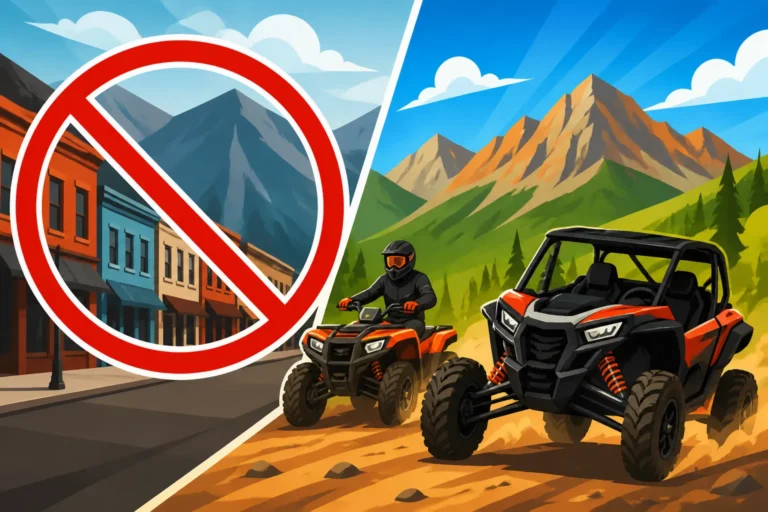
So, you've established your OHV is genuinely for agricultural use. Now, let's talk about where you can actually take it. Colorado doesn't simply open up every paved highway to agricultural OHVs. The rules are much more specific, generally focusing on local, lower-traffic roads and outlining clear restrictions on higher-speed state and federal routes.
Designated Roads for Agricultural OHV Travel
Colorado law typically allows agricultural OHVs to operate on county roads and public roads that are not part of the state highway system, for distances necessary to accomplish agricultural tasks. The key here is "necessary distances" – it's not an invitation for extended travel. This means moving between fields, accessing a water source, or traveling from one part of a ranch to another that happens to be bisected by a county road. These are often gravel or dirt roads, with lower speed limits and less traffic, making them more suitable for OHV travel. However, always check local county ordinances, as some counties might have further restrictions or specific designations for OHV use on their roads. What's permissible in Hinsdale County might differ slightly from Weld County, so always verify with your local authorities.
Crossing Paved Highways and Major Roads
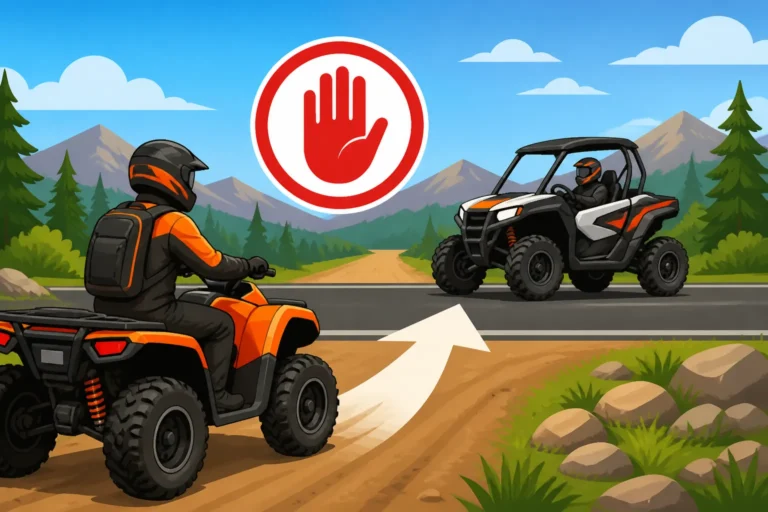
This is often the trickiest part. While extended travel on state highways or federal routes is generally prohibited, Colorado law typically permits an agricultural OHV to cross a public highway at an angle of approximately 90 degrees to the roadway, provided the operation can be done safely. This means you can't drive down a major highway, but you can go directly across it if it's the only way to get from one part of your farm to another. You must yield to all vehicular traffic and ensure a clear line of sight before crossing. It's a short, direct maneuver, not a prolonged drive. Think of it as crossing a busy street on foot – you do it quickly and with extreme caution. Always exercise the utmost vigilance when attempting such a crossing, as major roads often have higher speed limits and greater traffic volumes.
Local Ordinances and Their Impact
It's crucial to remember that while Colorado state law provides general guidelines for agricultural OHV use, local jurisdictions – counties and towns – often have their own ordinances that can further refine or restrict these rules. A county might designate specific roads where agricultural OHV use is allowed or impose additional time-of-day restrictions. Some towns, even in rural areas, might prohibit OHVs entirely within their municipal limits, even for agricultural purposes, unless specifically exempted by local council. Before you take your machine onto any public road, even for agricultural work, it’s always best practice to consult with your county sheriff’s office or the local town hall to understand any specific rules that apply in your immediate area. A quick phone call can save you a lot of headache down the road. This local variability is a constant theme in Colorado's OHV landscape, as highlighted in our discussion on [Finding Your Colorado County's OHV Ordinance].
Key Requirements for Agricultural OHVs on Colorado Roads
Just because you're using your OHV for farm work doesn't mean you're exempt from all rules. There are specific equipment, registration, and operator requirements that agricultural OHVs must meet when traversing public roads in Colorado. These are in place to ensure a minimum level of safety and identification.
Essential Equipment for Road Travel
When an agricultural OHV is used on a public road, even for a short distance, it must be equipped with certain safety features to make it visible and operable like other vehicles. These typically include:
- Headlights and Taillights: Essential for visibility, especially during dawn, dusk, or in adverse weather conditions. Most modern ATVs and UTVs come with these, but they must be functional and properly aimed.
- Brake Lights: To signal deceleration to traffic behind you.
- Turn Signals: Often required for signaling turns, though hand signals might be acceptable in some rural areas depending on local ordinances. It's always safer to have functional turn signals.
- Mirrors: At least one rear-view mirror is typically required to allow the operator to see traffic approaching from behind.
- Slow-Moving Vehicle (SMV) Emblem: This distinctive orange triangle with a red border is perhaps the most critical requirement. It's a universal signal to other drivers that your vehicle is operating at speeds of 25 mph or less, giving them ample warning to slow down.
- Muffler and Spark Arrester: While often related to environmental protection and fire safety on trails, a functional muffler is also important for noise reduction when operating near residential areas, even in a rural setting. You can read more about these requirements in [Mufflers and Spark Arresters in Colorado].
Companies like SuperATV offer a range of street-legal kits and accessories that can help ensure your agricultural machine meets these requirements, from turn signal kits to mirrors, making it easier to comply with road-use laws without having to piece together components from various sources.
Registration, Titling, and Documentation for Agricultural Machines
Here's a key distinction: machines used exclusively for agricultural purposes on private land generally do NOT require Colorado OHV registration. However, if you plan to operate your agricultural OHV on any public road, even under the agricultural exemption, it often falls under a different category of scrutiny, though not necessarily the standard [Colorado OHV Registration Explained] required for recreational trail use.
Colorado law, specifically for agricultural OHVs, sometimes allows for an exemption from the typical CPW (Colorado Parks and Wildlife) OHV registration sticker IF the vehicle is used solely for agricultural purposes and only travels on public roads necessary for the operation of the farm or ranch. This is a nuanced point. Some interpretations and local jurisdictions may still recommend some form of identification or registration to clearly distinguish it as an agricultural vehicle, or require a specific "farm vehicle" designation through the county. It's crucial to clarify this with your local county clerk or sheriff's office.
For instance, while a standard OHV permit might not be strictly required for an agricultural machine solely crossing a road for farm work, proof of ownership (like a bill of sale or title) should always be carried. If you're wondering [Do Colorado Ranchers Need an OHV Registration?], the answer truly depends on the precise nature and location of their road use. It's always safer to carry documentation proving your ownership and the agricultural nature of your work.
Operator Age and Licensing Rules
Unlike recreational OHV use on trails where younger riders have specific age and supervision requirements, operating any vehicle, even an agricultural one, on a public road often brings it under the purview of standard driver licensing laws. Generally, the operator of an agricultural OHV on a public road must:
- Hold a valid driver's license: Just like operating any other motorized vehicle on a public roadway, a valid state-issued driver's license is typically required. This ensures the operator has demonstrated a basic understanding of traffic laws and safe driving practices.
- Be of legal driving age: This usually means 16 years or older, though specific rules for agricultural equipment operators (like farm permits for younger drivers) might exist for very specific situations, they generally don't apply to OHVs in this context.
It's important not to confuse these road rules with the age restrictions for operating an OHV on designated trails, which are different. When you venture onto a public road, even for work, you're expected to operate as a licensed driver, understanding the rules of the road, including [Colorado Alcohol Limits for OHV Operators].
Avoiding Misuse: Agricultural vs. Recreational Riding
The line between legitimate agricultural use and recreational riding can sometimes feel blurry, especially to an outsider. However, for law enforcement, this distinction is often quite clear, and misrepresenting your OHV's purpose can lead to significant headaches and penalties. It's essential to respect the spirit of these exemptions.
The Fine Line Between Work and Play
Imagine a scenario: a rancher finishes moving cattle in the morning, then decides to take his kids for a quick ride on the side-by-side to a nearby fishing pond down the same county road he just used for work. While it seems innocent, that second trip, the one for fishing, would likely not qualify as agricultural use. The machine's purpose has shifted from a commercial agricultural task to recreation. This is where many folks inadvertently run afoul of the law. The exemption is tied to the activity, not just the owner or the machine. If the primary purpose of the trip isn't directly supporting the agricultural operation, then standard OHV rules (which generally prohibit OHVs from unposted public roads) apply. This is a common area of misunderstanding, and being aware of it can save you from potential citations.
Consequences of Misrepresenting Agricultural Use
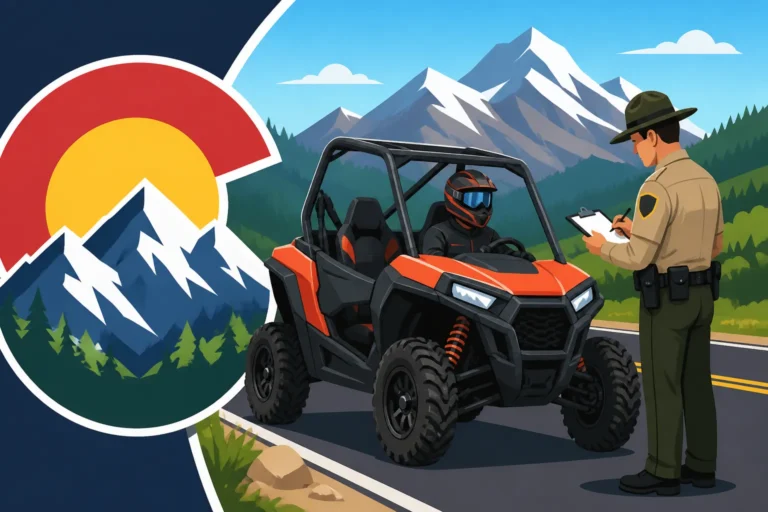
If you're caught using an agricultural OHV on a public road for non-agricultural purposes, you could face penalties for operating an unregistered vehicle, driving without a valid license (if you're unlicensed and relying on the farm permit type exemptions), or even operating an uninsured vehicle if your recreational insurance doesn't cover road use. Fines can be substantial, and repeated offenses could lead to more severe consequences. It's simply not worth the risk. Law enforcement officers, especially those in rural areas, are often very familiar with the difference between a working rancher and someone trying to skirt the rules for a joyride. They understand the rhythm of agricultural life, but they also enforce the letter of the law. Therefore, it's wise to ensure your machine is appropriately registered or exempted, especially if you think you might occasionally use it for recreation. Our article on [Private Land Riding and Colorado Registration] delves into similar distinctions for private vs. public land use.
Best Practices and Proactive Measures for Ranchers and Farmers
Operating an OHV on public roads, even for legitimate agricultural purposes, carries responsibilities. By adopting a few best practices, you can ensure you're always on the right side of the law and minimize any potential issues with local authorities. Being proactive and well-informed is your best defense.
Documenting Your Agricultural Operation
It's a smart move to have documentation readily available that proves your agricultural operation is legitimate. This could include:
- Business registration or tax ID: If your farm or ranch is a registered business.
- Agricultural tax exemption certificates: If you have them for other farm purchases.
- Proof of land ownership or lease agreements: To demonstrate you operate on the land where the OHV is used.
- A written statement: Briefly outlining the nature of your agricultural activities and how the OHV is integral to them.
While not always legally required to carry all of this on the machine, having it accessible can quickly resolve questions if a law enforcement officer stops you. It helps validate your claim of agricultural use on the spot. This kind of preparation can really help clarify situations, especially if you ever need to provide [Proof of Ownership for a Colorado OHV] in a legal context.
Staying Informed on Local Regulations
State laws provide a framework, but as discussed, local counties and even towns can add layers of specific rules. It's invaluable to connect with your local county sheriff's department, particularly the deputies who patrol your area. They are the ones you'll most likely encounter, and building a good relationship can ensure you're both on the same page regarding local agricultural OHV rules. Regularly check county websites or attend local planning meetings if OHV regulations are on the agenda. Changes to laws and ordinances can happen, and staying updated ensures you don't inadvertently fall out of compliance. This continuous education is key to navigating the unique aspects of [Colorado County Roads Open to OHVs] when it comes to agricultural use.
Protecting Your Investment with the Right Gear
Beyond legal compliance, ensuring your agricultural OHV is properly equipped for its demanding tasks is paramount. Think about accessories that enhance safety and utility for road use, such as proper lighting kits, mirrors, and durable tires designed for varied terrain – including short stints on gravel roads. For example, SuperATV provides heavy-duty axles and lift kits that can improve ground clearance and durability, which are beneficial when traversing rough agricultural land or moving between fields. Investing in quality parts and ensuring regular maintenance not only keeps you compliant with safety equipment rules but also extends the life of your valuable farm equipment. Having a well-maintained, clearly identifiable machine also conveys professionalism and diligence to anyone observing your operation, including law enforcement.
Here's a quick comparison of general OHV road rules versus agricultural OHV road use in Colorado:
| Feature/Requirement | General OHV (Recreational) on Public Roads | Agricultural OHV on Public Roads (Exempted Use) |
|---|---|---|
| Colorado OHV Registration (CPW Sticker) | Required for designated trail use | Generally NOT required if solely for agricultural use on private land and necessary road travel |
| Road Travel Allowed | Generally PROHIBITED on paved roads, limited to designated dirt/gravel roads (if local ordinance allows) | ALLOWED on county roads & non-state highway public roads for necessary agricultural tasks |
| Crossing State Highways | PROHIBITED | ALLOWED at ~90-degree angle if safe |
| Driver's License Required | NOT required for off-road trail use | TYPICALLY REQUIRED for public road travel |
| Slow-Moving Vehicle Emblem | NOT typically required | REQUIRED |
| Headlights/Taillights | Required for night/low visibility trail riding | REQUIRED for public road travel |
| Turn Signals/Brake Lights | Not always required for off-road | TYPICALLY REQUIRED for public road travel |
| Rear-View Mirror | Not always required for off-road | TYPICALLY REQUIRED for public road travel |
| Purpose of Travel | Recreational | Direct agricultural production/support |
| Local Ordinances | Always check local rules | Always check local rules, may add restrictions |
Disclaimer
This article is for general informational purposes only and does not constitute professional advice. Laws, prices and regulations vary by location and change over time. Consult a qualified professional for guidance on your specific situation.