Adults and Helmets on Colorado OHV Trails
There's a lot of confusion buzzing around Colorado's OHV trails about who needs to wear a helmet, especially for us adults. You're out there, cruising along a scenic forest road or tackling a rocky technical trail, and you see a mix of riders – some with helmets, some without. It leaves you wondering, "What's the actual rule here? Am I breaking the law if I leave my helmet in the truck?" This guide is going to cut through the noise and lay out exactly what Colorado law says about adult helmet use on OHV trails and, more importantly, why wearing one is always a smart move, legal requirement or not.
The Nuance of Colorado's Adult Helmet Laws on OHV Trails
Let's get right to the heart of it, because this is where many riders get tripped up. Colorado's laws regarding helmets for adults on OHVs are not as straightforward as a blanket "always wear one" or "never need one." It really hinges on where you're riding and who is driving. This isn't like some states with universal helmet mandates; Colorado takes a more granular approach, which can feel a bit like navigating a mountain pass in the dark if you don't know the specific turns.
Distinguishing Between General Trail Riding and Road Sections
For the most part, when you're roaring through the backcountry on a designated OHV trail—think the kind of dirt path clearly marked for ATVs and UTVs, twisting through the pines or over an open mesa—Colorado law does not mandate that adults wear a helmet. This is the common scenario most people picture when they think of off-roading. You're tackling mud, rocks, climbs, and descents, and the ground under your tires is definitely not paved.
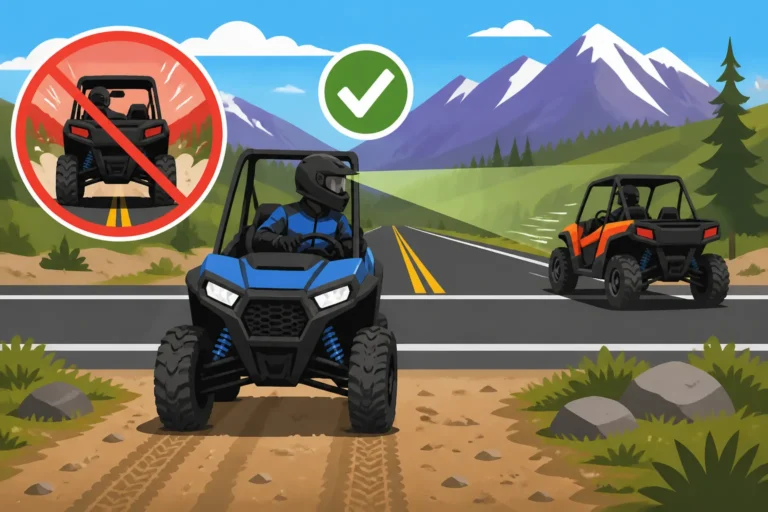
However, the moment your OHV rolls off that dirt trail and onto a paved or graveled county road that has been opened to OHV traffic, things change. Colorado's mountain towns and counties have been increasingly opening certain roads to OHVs, allowing riders to connect trails, access fuel, or grab a bite to eat. It's fantastic for convenience, but it also means you're entering a different legal landscape. Imagine you're riding a fantastic loop in the San Juans; one minute you're on a narrow, rocky single track, and the next you pop out onto a well-maintained gravel road that leads directly into a charming mountain town. That transition is key. You're no longer just "on the trail"; you're now on a public road where different rules may apply. This distinction is absolutely critical, and it's where many riders accidentally put themselves at risk of a citation or, worse, an injury. [What Colorado Requires on an OHV Road Ride] dives deeper into all the other gear you might need.
The "Opened Road" Exception and Driver's License Requirements
This is where the law becomes more specific for adults. If you are operating an OHV on a public road that has been legally designated and opened for OHV use, you are essentially treated more like a conventional vehicle operator. Under Colorado law, if you are an adult operating an OHV on one of these "opened roads" and you do not possess a valid driver's license, then you are required to wear a helmet. Conversely, if you do have a valid driver's license, the helmet requirement on these opened roads for adults typically falls away.
This rule is often a head-scratcher for new riders or those visiting from out of state. It's a way for the state to manage safety on shared roadways, acknowledging that individuals without a full driver's license might have less experience with the rules of the road or general vehicle operation. So, if you've got your driver's license tucked away, you might not legally need that helmet on a county road opened to OHVs. But if you're a licensed adult letting a non-licensed adult take a turn at the wheel on an opened road, ensure they have a helmet on. This rule highlights Colorado's approach to integrating OHVs into its road network, prioritizing safety without overly restricting experienced, licensed drivers. For more on who can drive where, check out [Driver's License Rules for Colorado Road Riding].
Why the "No Helmet on Trail" Rule Might Be Misleading
While the law might give adults a pass on helmets for dedicated trail riding, it’s vital to understand that this legal loophole doesn’t equate to safety. The notion that "if it's not required, it must be safe enough" is a dangerous one in the world of OHV riding. Colorado's trails, especially in the high country, are incredibly rugged and unpredictable. A sharp turn you didn't anticipate, a hidden rock, a sudden loss of traction, or even an unexpected encounter with wildlife can send you tumbling.
The fact is, head injuries are among the most serious and potentially life-altering consequences of an OHV accident. Even a low-speed tip-over can result in a concussion if your head strikes the ground or a roll bar. Many experienced riders who have seen their share of accidents will tell you that the helmet they weren't legally required to wear was the one that saved them from a trip to the emergency room, or worse. So, while you might not face a fine for riding helmet-less on a single track, you are absolutely exposing yourself to a significantly higher risk of severe injury. Think of it less as a legal burden and more as an essential piece of personal protective equipment, just like you wouldn't head out hiking in the high country without proper boots, even if no law requires them.
Beyond the Law: Why a Helmet is Your Best Riding Partner in Colorado
Alright, so we've dissected the legalities. Now let's talk real-world wisdom. Even if you're an adult with a valid driver's license, and you're sticking to trails where helmets aren't legally mandated, choosing to wear a helmet in Colorado's challenging terrain is one of the smartest decisions you can make. It's not about complying with a rule; it's about protecting your most valuable asset: your brain.
The Unpredictable Nature of Colorado's Backcountry
Colorado's OHV trails are breathtakingly beautiful, but they are also notoriously unpredictable. You're not riding on a flat, manicured track. You're dealing with constantly changing conditions, from loose gravel and deep ruts to exposed tree roots and sharp rock outcroppings. Picture yourself cresting a blind hill, only to find a sudden washout or a fallen log on the other side. Or imagine navigating a tight, off-camber turn, and your tires hit a patch of unexpected slick mud. These aren't hypothetical scenarios; they're everyday occurrences on our mountain trails.
Even experienced riders can get caught off guard. A moment of inattention, a lapse in judgment, or simply an unforeseen obstacle can lead to a spill or a rollover. And it's not just the terrain. Wildlife encounters are common—deer, elk, even a badger crossing the trail can cause a sudden swerve or brake, leading to an accident. The weather can also turn on a dime; a sunny morning can quickly become a hailstorm, making trails incredibly slick. In any of these situations, the first thing that often makes contact with the ground, a tree, or the machine itself, is your head. Having a helmet on provides that critical layer of protection against the unexpected. I always tell folks, it's not if you'll have a close call, but when, especially if you're riding alone over a high pass.
Protecting Against Minor Injuries and Major Trauma
The spectrum of head injuries from an OHV accident ranges from minor bumps and scrapes to severe concussions, skull fractures, and traumatic brain injuries. Without a helmet, even a seemingly minor fall can lead to a concussion, which can have lasting effects on memory, concentration, and overall brain function. We're not just talking about a headache; we're talking about impacts that can change your life.
A helmet acts as a shock absorber, distributing the force of an impact over a larger area and slowing down the movement of your head. This significantly reduces the chances of a direct blow causing a fracture or the brain sloshing violently inside the skull, which is the primary cause of concussions. While no helmet can guarantee absolute protection against all injuries, a properly fitted, certified helmet drastically improves your odds of walking away from an accident with less severe or even no head trauma. Think of it as investing in your ability to keep enjoying those breathtaking Colorado rides for years to come. Many riders also choose gear from brands like SuperATV for added protection, including robust roll cages and harnesses, which are excellent complements to a good helmet.
Setting a Good Example for Younger Riders
If you're riding with family, especially children or teenagers, your choices as an adult carry significant weight. Colorado has specific and much stricter helmet laws for youth riders. For example, riders under the age of 18 are generally required to wear a helmet when operating an OHV on public lands and designated roads. [Colorado OHV Rules for Young Riders] elaborates on these rules. If you, as an adult, are riding without a helmet right next to a child who is legally mandated to wear one, what message are you sending?
Children learn by example. By consistently wearing your helmet, you reinforce the importance of safety, not just compliance. You teach them that safety gear isn't just for when someone tells you to wear it, but because it's the smart and responsible thing to do. This modeling of safe behavior extends beyond helmet use, encouraging them to think about other protective gear like eye protection, gloves, and appropriate clothing. When a Colorado Ranger checks at a trailhead, they're looking for everyone to be safe, not just legally compliant, and setting a good example contributes to a safer riding culture for everyone.
Selecting the Right Helmet for Your Colorado OHV Adventures
Okay, so you're convinced that wearing a helmet is a no-brainer for your Colorado adventures. Great! But not all helmets are created equal, and choosing the right one can feel a bit overwhelming with all the options out there. Let's break down what to look for to ensure you get a helmet that offers maximum protection and comfort for our unique mountain riding conditions.
DOT Certification: The Non-Negotiable Standard
First and foremost, any helmet you consider for OHV riding must meet certain safety standards. In the United States, the minimum standard you should look for is DOT certification. This means the helmet has met the safety standards set by the Department of Transportation. A DOT-certified helmet is designed to protect your head from impacts, punctures, and abrasions. You'll usually find a "DOT" sticker on the back of the helmet.
While DOT is the legal minimum, you might also see helmets with Snell or ECE certifications. Snell (the Snell Memorial Foundation) sets even more rigorous testing standards, often exceeding DOT requirements, and is highly respected in motorsports. ECE (Economic Commission for Europe) is another robust international standard. While these additional certifications offer extra peace of mind and often superior protection, always ensure DOT is present at a minimum. Remember, [DOT Helmet Standards for OHV Riders] are there for your safety, so don't skimp on this crucial detail.
Types of Helmets for OHV Use
The type of helmet you choose will depend on your riding style, comfort preferences, and the specific kind of OHV you operate.
- Full-Face Helmets: These offer the most comprehensive protection, covering your entire head, face, and chin. They come with a visor that can be lowered to protect against dust, wind, and debris.
- Pros: Maximum protection from impact, excellent weather protection, integrated eye protection.
- Cons: Can feel a bit restrictive, sometimes less airflow (though modern designs have good ventilation), can be heavier.
- Best for: Aggressive trail riding, high speeds, cold weather, or anytime you prioritize maximum safety.
- Open-Face (3/4) Helmets: These cover the top, back, and sides of your head, but leave your face exposed. They are often lighter and offer a wider field of vision.
- Pros: Lighter, better airflow, greater sense of openness, compatible with goggles.
- Cons: No chin or face protection, require separate eye protection (goggles or sunglasses), vulnerable to debris.
- Best for: Casual, lower-speed riding, hot weather, or those who dislike the confined feeling of a full-face helmet (but remember the safety compromise!).
- Off-Road/Motocross Helmets: These are typically full-face helmets but often feature a more aggressive design with an extended chin bar for ventilation and a large peak (visor) to block sun glare and roost from other riders. They are designed to be worn with goggles, not an integrated face shield.
- Pros: Excellent ventilation, good field of vision with goggles, designed for the rigors of off-road riding.
- Cons: Require separate goggles for eye protection, less effective for road use due to the peak catching wind.
- Best for: Dedicated dirt bike, ATV, and UTV trail riding, especially in dusty or warm conditions. Many riders find a wide selection of these helmets, alongside other essential gear, at stores that carry brands like SuperATV.
- Modular (Flip-Up) Helmets: These combine features of full-face and open-face helmets. The chin bar and visor can flip up, allowing you to easily talk, drink, or get some air without removing the entire helmet.
- Pros: Versatility, convenience, full-face protection when closed.
- Cons: Can be heavier and more complex than a standard full-face, sometimes more expensive.
- Best for: Riders who appreciate the flexibility for various situations, such as trail riding with intermittent stops in town.
Fit, Comfort, and Features for High-Altitude Riding
A helmet can only protect you if it fits correctly and you're willing to wear it. An ill-fitting helmet is uncomfortable and may not perform optimally in a crash.
- Proper Fit: The helmet should feel snug all around your head, with no pressure points. It shouldn't move side-to-side or front-to-back when you shake your head. The cheek pads should press firmly against your cheeks. If it's too loose, it can shift during an impact; if it's too tight, it will be uncomfortable and distracting.
- Ventilation: Colorado's weather can vary wildly. Look for helmets with adjustable vents to manage airflow. Good ventilation keeps you cooler in summer and helps prevent visor fogging.
- Weight: A lighter helmet reduces neck fatigue, especially on long rides.
- Peripheral Vision: Ensure the helmet doesn't restrict your side vision, which is crucial for situational awareness on trails.
- Eye Protection: If you choose an open-face or motocross helmet, invest in high-quality goggles. They protect your eyes from dust, debris, insects, and UV rays. For high-altitude riding, consider goggles with good UV protection and anti-fog coatings.
| Helmet Type | Primary Protection | Eye Protection | Ventilation | Pros | Cons | Best Use Case |
|---|---|---|---|---|---|---|
| Full-Face | Head, Face, Chin | Integrated | Good | Max protection, weather resistance | Can feel restrictive, heavier | Aggressive trails, cold weather, max safety |
| Open-Face (3/4) | Head (top, back, sides) | Goggles Req. | Excellent | Lighter, more open feel, wide view | No chin/face protection, debris exposure | Casual riding, hot weather, good visibility |
| Off-Road/Motocross | Head, Chin | Goggles Req. | Excellent | Optimal for dirt, good airflow, peak | Requires goggles, peak catches wind on road | Dedicated dirt riding, dusty conditions |
| Modular (Flip-Up) | Head, Face, Chin | Integrated | Good | Versatile, convenient, full-face protection | Heavier, more complex, often pricier | Varied riding with stops, convenience focus |
Remember, the best helmet is one that's DOT certified, fits you perfectly, is comfortable enough to wear all day, and provides the level of protection you need for the risks you'll encounter on Colorado's spectacular, yet challenging, OHV trails.
The Hidden Costs of Riding Without Head Protection in Colorado
You might be thinking, "If the law doesn't always require it for adults, why bother?" This line of thinking, while understandable, ignores a whole host of consequences that go far beyond a potential traffic ticket. The costs of not wearing a helmet, even when legally permissible, can be staggering—financially, physically, and emotionally. It's about personal responsibility and understanding the real risks involved in a sport we all love.
Injury Severity and Medical Costs
Let's be blunt: a head injury is arguably the most serious outcome of an OHV accident. Without a helmet, even a seemingly minor fall can lead to a concussion, skull fracture, or worse. The immediate medical costs for treating a severe head injury can be astronomical. We're talking ambulance rides, emergency room visits, scans (CT, MRI), potential surgeries, and long stays in intensive care units. These bills can quickly run into tens, if not hundreds, of thousands of dollars. Even if you have good health insurance, you'll likely face significant deductibles, co-pays, and out-of-pocket expenses that can put immense strain on your personal finances.
Beyond the immediate costs, there's the long-term impact. Recovery from a traumatic brain injury (TBI) can be a marathon, not a sprint. It might involve years of physical therapy, occupational therapy, speech therapy, and psychological counseling. Many TBI survivors face permanent cognitive impairments, memory problems, personality changes, and difficulty returning to their previous quality of life or even their former job. The loss of income, combined with ongoing medical expenses, can cripple a family financially. It's a heavy burden to bear, and one that a simple piece of safety gear could potentially mitigate. While [Colorado ATV Insurance and When It Is Required] can help with some costs, it won't cover everything, especially if your injuries are catastrophic.
Insurance Implications
This is a tricky one, and it's worth considering. While Colorado law may not mandate a helmet for adults on certain trails, your insurance company might still take notice if you're injured in an accident while riding without one. Insurance policies are contracts, and they often include clauses about "negligence" or "reckless behavior." Even if you weren't breaking a specific helmet law, an insurance provider could argue that riding an OHV without a helmet, given the inherent risks, constitutes a form of negligence.
This isn't to say your claim would be automatically denied, but it could certainly complicate matters, lead to reduced payouts, or prolong the claims process. They might scrutinize your actions more closely if a preventable injury occurred. If you're involved in an accident with another party, and you weren't wearing a helmet, it could also impact liability discussions, even if the other party was primarily at fault. Having your personal injury claims fully paid out can be challenging enough; don't give the insurance company an extra reason to push back. Understanding [OHV Injury Claims After a Crash] is crucial for any rider.
The Human Cost: Impact on Family and Friends
Finally, and perhaps most importantly, there's the profound human cost. A severe head injury doesn't just affect the rider; it reverberates through their entire network of family and friends. Imagine the worry, the fear, and the heartbreak your loved ones would endure if you were gravely injured in an accident, especially if that injury could have been less severe with a helmet.
Your ability to work, participate in family life, or simply enjoy your hobbies could be severely diminished. The emotional toll on spouses, children, and parents is immense. They become caregivers, advocates, and witnesses to your struggle. The regret of not taking a simple, preventative step can be a crushing burden, not just for you, but for everyone who cares about you. We ride OHVs for enjoyment, for the thrill, for the incredible experiences Colorado offers. Don't let a moment of overlooking basic safety turn those joyful memories into a lifetime of regret for yourself and those you love.
Disclaimer
This article is for general informational purposes only and does not constitute professional advice. Laws, prices and regulations vary by location and change over time. Consult a qualified professional for guidance on your specific situation.