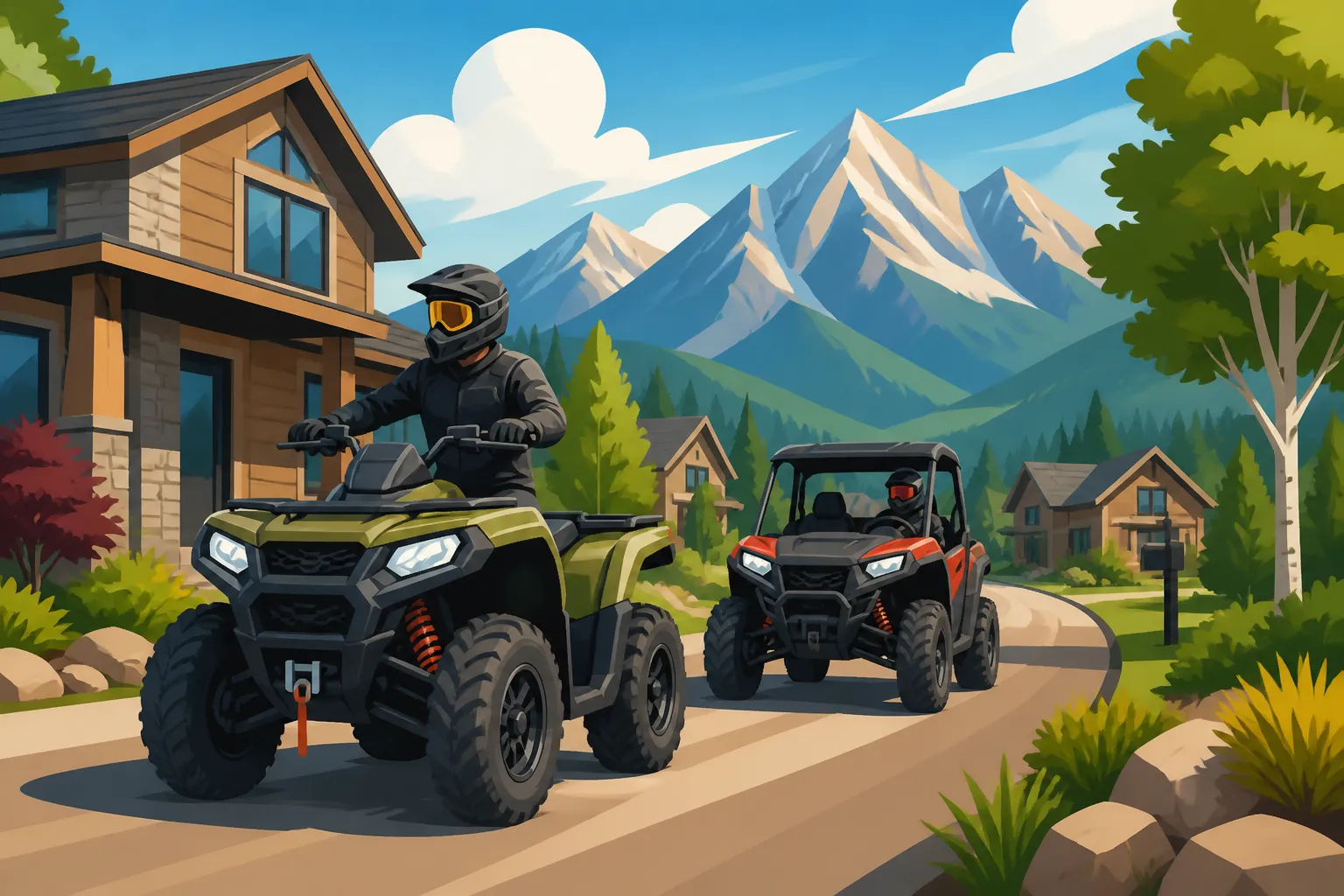
Riding Slowly Past Homes on a Route
Riding your ATV or UTV through a Colorado town, especially near people's homes, can feel like navigating a minefield. You're eager to get to the trailhead or grab a bite, but you also know that loud engines and dusty trails can quickly turn friendly residents into frustrated critics. This guide is all about helping you understand why riding slowly and considerately past homes on a route isn't just a suggestion, it's essential for maintaining access to the incredible riding Colorado offers, and we'll dive into the practical ways you can be a good neighbor on wheels.
The Ripple Effect: Why Mindful Riding Matters Near Homes
When you're out on your off-highway vehicle (OHV), whether it's a nimble ATV or a capable side-by-side, the experience can be exhilarating. However, as you transition from remote trails to county roads or designated town routes that pass by residential areas, the dynamic shifts dramatically. Suddenly, your machine isn't just a tool for adventure; it's a source of noise, dust, and potential concern for those living nearby. Understanding this shift is the first step toward becoming a truly responsible rider.
Think about it from a homeowner's perspective. They might be trying to enjoy a quiet morning coffee on their porch, putting a baby down for a nap, or just having a conversation in their backyard. A roaring engine, even for a short time, can disrupt their peace and quiet. This isn't just about personal annoyance; sustained noise pollution can genuinely impact quality of life, stress levels, and even property values in areas frequently traversed by OHVs. Many mountain towns, for instance, are increasingly sensitive to [Colorado Noise Rules in Mountain Towns] because the influx of visitors and their vehicles can overwhelm the tranquil environment residents moved there for.
Beyond noise, dust is another major culprit. Riding too fast on unpaved or gravel roads near homes, even for a short stretch, can kick up significant clouds of dust. This dust settles on cars, windows, laundry hanging out to dry, and eventually makes its way into homes. It's not just an aesthetic issue; airborne particulate matter can be a health concern, especially for those with respiratory conditions. Imagine having to constantly clean your home or being unable to open your windows on a beautiful day because of dust stirred up by passing vehicles. It’s a legitimate frustration for residents, and something we, as riders, have a direct impact on.
Finally, there's the perception of safety. While you know you're a skilled and careful driver, a fast-moving OHV near children playing in yards, pets running loose, or other vehicles can be alarming for residents. They might not understand the capabilities of your machine or your level of control. This can lead to complaints, increased law enforcement presence, and ultimately, a negative public image for the entire OHV community. Showing caution and respect in these areas isn't just polite; it's a strategic move to preserve our collective access to trails and routes that depend on town or county road connections.
Mastering the Art of the Slow Roll: Techniques for Courteous Riding
Okay, so we've established why it's important to ride slowly and respectfully past homes. Now, let's talk about the how. It's not always just about hitting the brakes; there are specific techniques and considerations that can make a huge difference in minimizing your impact and being a truly good neighbor on wheels.
The most obvious technique is simple speed reduction. When entering a residential area or a segment of road lined with homes, immediately ease off the throttle. Aim for a speed that is significantly below the posted limit, especially if no specific OHV speed limit is designated. Often, 5-10 mph is appropriate, depending on the conditions and the density of homes. This isn't about just avoiding a ticket; it's about minimizing noise, preventing dust plumes, and giving yourself ample time to react to anything unexpected, like a child running out or a dog darting into the road. Remember, a common frustration voiced by residents is not just the speed, but the perception of carelessness.
Another critical aspect of the slow roll is managing your engine noise. Many OHVs, particularly those with aftermarket exhausts, can be quite loud. While you might love the rumble on the trail, it's a different story when it's echoing off houses. If your machine allows, try to stay in a higher gear at lower RPMs when passing through residential zones. This keeps the engine "lugging" rather than revving, which significantly reduces the sound level. If you've modified your exhaust, consider quieter options that still offer performance, or ensure your spark arrester and muffler are in top condition, as required by [Mufflers and Spark Arresters in Colorado]. Sometimes, something like a quality slip-on muffler from a brand like SuperATV can offer a performance boost while still being more neighbor-friendly than a straight pipe.
Dust control is also paramount. When riding on gravel or dirt roads, even at a slow speed, some dust is inevitable. However, riding too fast exacerbates the problem. Beyond reducing speed, consider the conditions. If it's been a long dry spell, the dust will be worse. If possible, avoid hard braking or sudden acceleration that can churn up extra dust. Also, try to stay on the established track rather than kicking up fresh earth on the shoulders. If you are regularly riding dusty routes that pass by homes, a well-maintained machine can make a difference. Things like clean air filters or even specialized mud flaps (which SuperATV offers for many models) can help keep dust from spreading as widely. This thoughtful approach goes a long way in demonstrating respect for the community, especially concerning [Dust Control on a Gravel County Road].
| Action | Impact on Residents | Rider Benefit (Community Relations) |
|---|---|---|
| Reduce Speed to 5-10 mph | Less noise, less dust, safer | Avoids complaints, safer for all |
| Stay in Higher Gear/Lower RPMs | Quieter engine sound | Better public image, less enforcement |
| Avoid Hard Acceleration/Braking | Minimizes dust clouds | Shows consideration, builds trust |
| Maintain Exhaust/Spark Arrester | Reduces overall noise output | Complies with laws, prevents fines |
| Acknowledge Residents (wave) | Builds positive connection | Fosters goodwill, humanizes riders |
Local Rules and Good Neighbor Etiquette: Navigating Residential Zones
While general courtesy is a universal principle, riding through residential areas in Colorado often involves navigating specific local ordinances and unspoken community expectations. What might be perfectly acceptable on a remote forest road could earn you a citation—or worse, contribute to trail closures—when you're just a few feet from someone's home. Understanding these nuances is crucial for a smooth and sustainable riding experience.
Firstly, you absolutely must be aware of the specific rules governing OHV access on county roads and town streets. Many towns and counties in Colorado have adopted ordinances to allow OHV access on certain roads, but these often come with strict conditions. These conditions frequently include designated routes, specific hours of operation, and, crucially, speed limits. For example, some towns might mandate a 15 mph speed limit on residential streets where OHVs are permitted, regardless of a higher limit for plated vehicles. It's your responsibility as a rider to know these rules. Before heading out, make it a habit to check the local municipality's website or contact the county sheriff's office. You can often find valuable information by looking up [Finding Your Colorado County's OHV Ordinance]. Ignoring these rules, even unknowingly, can lead to [Fines for an Unregistered OHV in Colorado] or, in this case, a moving violation specific to OHVs.
Beyond the official rulebook, there's the unwritten code of good neighbor etiquette. This often goes above and beyond what's legally required. For instance, if you see residents outside their homes, a friendly wave or a nod can go a long way. It humanizes you and your machine, showing that you're a considerate person, not just a loud vehicle passing through. Avoid prolonged idling in front of homes, even if you’re waiting for friends. The exhaust fumes and constant rumble, even at idle, can be annoying. If you need to stop for a moment, try to find a spot away from immediate residential dwellings, perhaps at an intersection or a designated staging area if available.
Consider your impact during specific times of day. Early mornings and late evenings are often when residents value their peace and quiet the most. If your route takes you past homes during these hours, be extra vigilant about speed and noise. Children are often playing outside in the afternoons, so being particularly slow and watchful is paramount. Even if there are no signs, assume that residential areas require maximum respect and minimal intrusion. This includes avoiding unnecessary revving of engines or loud conversations that carry on the air. Think about it in terms of [Riding Slowly Past Homes on a Route] – it's not just a physical act, but a mindset of shared space and respect.
Protecting Our Access: The Long-Term Stakes of Community Relations
The way we behave as individual riders has a much broader impact than just the immediate interaction with a single homeowner. Every time an OHV rider is inconsiderate, it chips away at the goodwill the OHV community has worked hard to build. Conversely, every time we ride respectfully and courteously, we strengthen our collective standing and help secure the future of OHV access in Colorado. This long-term perspective is perhaps the most important reason to embrace the "slow roll" mentality in residential areas.
The biggest stake here is the continued access to roads and trails. When residents feel continually disturbed by OHVs, they vocalize their concerns to local councils, county commissioners, and state representatives. These complaints can directly lead to tighter restrictions, reduced operating hours, or even outright bans on OHV use in certain areas or on specific roads. We've seen examples of this happening in various communities, with some towns, like Silverton, having to contend with [Silverton's Ban on OHVs in Town] due to public outcry. The actions of a few thoughtless riders can spoil it for everyone, putting years of advocacy and trail development at risk.
By consistently demonstrating responsible behavior, we build a positive reputation for the OHV community. This makes it easier for local governments to approve new routes, extend existing access, and secure funding for trail maintenance. When residents see OHV riders as respectful members of the community, they are far less likely to oppose initiatives that support our sport. This is where organizations like SuperATV, which also support responsible riding and trail stewardship, come into play by providing products that help riders comply with regulations and enhance safety, indirectly contributing to positive community perception.
It's also about setting an example for future generations of riders. Many of us ride with our families, and teaching children to be respectful of local communities, wildlife, and the environment is a crucial part of the OHV experience. When young riders see adults slowing down, being quiet, and acknowledging residents, they learn valuable lessons about responsibility that will serve them—and the sport—for years to come. This ethos ensures that the joy of off-highway riding remains a viable and welcome activity in our beautiful state. By being mindful and courteous, especially when we are [Riding Slowly Past Homes on a Route], we are not just avoiding conflict; we are actively investing in the long-term health and accessibility of Colorado’s incredible OHV network.
Disclaimer
This article is for general informational purposes only and does not constitute professional advice. Laws, prices and regulations vary by location and change over time. Consult a qualified professional for guidance on your specific situation.