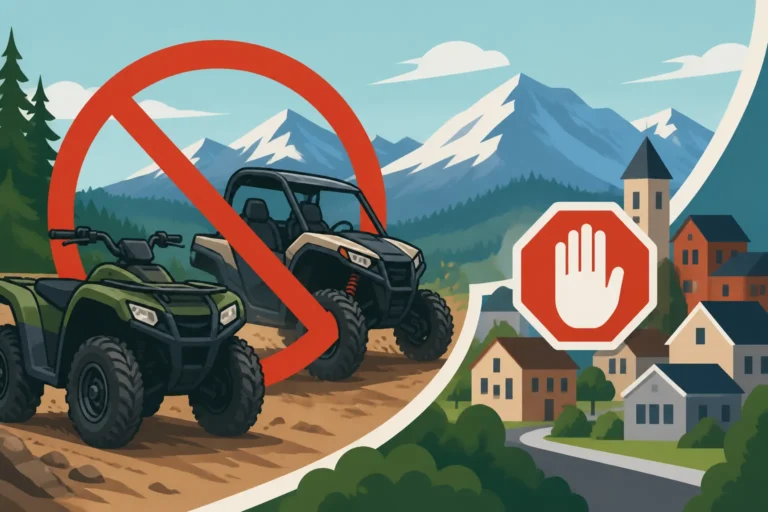
Kremmling’s OHV Street Rules
There’s nothing quite like pulling into a quaint mountain town after a long day on the trails, the dust still clinging to your tires, and wishing you didn't have to load your machine back onto the trailer just to grab a burger or refuel. For far too long, many Colorado communities felt like a no-go zone for off-highway vehicles (OHVs) once you left the dirt. But some towns are starting to see the light, understanding that riders contribute significantly to the local economy. Kremmling is one such place, and if you’re wondering how to navigate its streets with your ATV or UTV, you’re in the right spot. This guide will walk you through Kremmling's specific rules, ensuring your visit is smooth, legal, and enjoyable.
Understanding Kremmling's Unique Approach to OHV Access
Let's be honest, the frustration of being trail-bound yet unable to legally ride your machine into town for essentials is a universal rider complaint. You've spent all day exploring the vast trail networks around Grand County, you're hungry, maybe low on gas, and the last thing you want to do is load your UTV back onto a trailer just to drive a few blocks. It feels inefficient, right? Kremmling recognized this challenge, and rather than shutting out the OHV community, they've implemented a forward-thinking approach to welcome riders.
The Local Ordinance: What Changed and Why It Matters
Historically, many Colorado towns, including Kremmling, defaulted to prohibiting OHVs on paved town streets, largely due to concerns about safety, noise, and potential road damage. This often meant riders had to either camp outside town and pack everything in, or find designated staging areas where they could park their trucks and trailers, offload their machines, ride the trails, and then reload to drive into town. It was a logistical headache that sometimes deterred riders from even visiting.
However, Kremmling's local government made a conscious decision to change this narrative. They saw the value that OHV tourism brought – riders need gas, food, lodging, and sometimes even parts for their machines. By crafting a specific ordinance, they aimed to integrate OHVs responsibly into the town's traffic flow, boosting the local economy while still prioritizing safety and residential peace. This wasn't just about convenience for riders; it was a pragmatic move to support local businesses and embrace Kremmling's identity as a gateway to incredible backcountry adventures. The ordinance essentially carves out specific pathways, allowing riders to transition from remote trails to vital town services without missing a beat, making it far easier to enjoy everything this charming community has to offer.
Designated Routes: Navigating Kremmling's Street Network
Now, while Kremmling has opened its arms to OHVs, it's not a free-for-all. Imagine trying to navigate a new trail system without a map – it can be confusing and lead you down the wrong path. Similarly, in Kremmling, you need to understand that not every single street is open for OHV use. The town has carefully selected and designated specific routes, primarily focusing on roads that connect to the surrounding trail systems, provide access to essential services like gas stations and restaurants, and allow you to reach lodging without unnecessary detours through quiet residential areas. These routes are usually marked, so keep an eye out for signs. You can often find detailed maps of [Kremmling OHV Route Signs] on the town's website or at local visitor centers.
Think of it like this: you've just come off a fantastic ride in the Wolford Mountain area, your tank is nearing empty, and you're craving a hearty meal. Instead of having to trailer up, you can follow the designated OHV route right into town. You might take a specific street that leads directly to a gas station on the edge of town, then continue on another designated path to reach a diner or your hotel. This makes it incredibly convenient, letting you spend more time riding and less time fussing with logistics. And if you suddenly realize you need a replacement tie rod or a new set of tires, knowing you can easily get to a local powersports shop or an auto parts store that might carry SuperATV components for a quick repair is a huge relief. These designated pathways ensure a controlled and safe integration of OHVs into the town's traffic, benefiting both residents and visitors.
Essential Requirements for Riding Your OHV on Kremmling Streets
Just because Kremmling welcomes OHVs on its streets doesn't mean you can roll in straight off the trail with nothing but a helmet. There are crucial requirements you need to meet, blending both state-level Colorado rules and specific town ordinances. Failing to comply can quickly turn a fun trip into a costly citation, which nobody wants. It’s always best to be over-prepared than under-prepared, especially when it comes to legalities.
Colorado State Requirements First
Before you even consider riding on a town street, your OHV must meet all general Colorado state requirements for operating on public lands. This is your baseline, and it's non-negotiable. First and foremost, every ATV or UTV operating on public land or designated routes in Colorado, including Kremmling's town streets, needs to be properly registered with Colorado Parks and Wildlife (CPW). This means having your current OHV registration sticker clearly displayed on your machine. [Registering an OHV in Colorado] covers this process in detail, but suffice it to say, if you don't have that little green sticker, you're not legal.
Beyond registration, your machine needs to be equipped for safe operation. This includes a functioning spark arrester on your exhaust to prevent wildfires, and a muffler system that meets state noise limits. Nobody wants to be the rider that disturbs the peace in a quiet mountain town, and loud machines can lead to complaints and tighter regulations. [Mufflers and Spark Arresters in Colorado] explains the technicalities here. Furthermore, your machine must have working headlights, taillights, and a brake light for visibility, especially if you're riding during dusk, dawn, or in adverse weather conditions. [Lighting Requirements for a Colorado Road Ride] provides more details on these vital safety features. These state-level requirements are in place to protect riders, other users, and the environment, and they are the foundation upon which Kremmling's local rules are built.
Kremmling's Specific Additions and Rules
While meeting state requirements is essential, Kremmling's local ordinance will likely add a few more stipulations to ensure your OHV is truly "street-ready" for their town. These are the kinds of additions that differentiate between a trail-only machine and one equipped for mixed-use. One of the most common additions you'll encounter is the requirement for turn signals. While not always mandatory for pure trail riding, turn signals are critical for communicating your intentions to other drivers and pedestrians in a town setting, significantly enhancing safety.
Similarly, mirrors are almost universally required for OHV street access. You'll typically need at least one rearview mirror, and often two, to give you a clear view of traffic behind you. A horn is another small but mighty piece of equipment that's usually mandated. Being able to alert others to your presence is a basic safety measure on any road. Speed limits are also strictly enforced within town limits, and for OHVs, these might be even lower than for cars on certain streets. [Speed Limits for OHVs on Colorado County Roads] details how these limits work. Lastly, some ordinances might even require a safety flag for increased visibility, especially if you're riding a smaller machine that might be harder to spot in traffic. Many riders opt for quality aftermarket accessories from companies like SuperATV to ensure their machines meet these street-legal requirements, from robust mirrors to effective turn signal kits, making the transition from trail to town seamless and compliant.
Practicalities of Riding Your OHV in Kremmling
Okay, you've got your machine kitted out and all your paperwork in order. Now comes the exciting part: actually riding it in Kremmling. But hold on a second. Just like you wouldn't blindly charge down a difficult trail without understanding its challenges, you need to understand the nuances of riding your OHV within town limits. There are specific routes, certain rules about who can operate, and important safety considerations that go beyond just having the right equipment. Being informed about these practicalities ensures you have a stress-free and enjoyable experience.
Where You Can Go and Where You Can't
This is perhaps the most critical practical aspect to grasp: Kremmling's OHV ordinance designates specific streets or sections of streets as open for OHV travel. It's not an open invitation to ride on every single paved road. Think of it like a roadmap for your OHV, showing you the permissible paths to gas, food, and lodging, and crucially, how to connect to the trail systems outside of town. These routes are usually chosen to minimize impact on residential areas and to safely integrate OHV traffic with other vehicles. You'll often find signs indicating these routes, and it’s always a good idea to consult a current map of the [Kremmling OHV Route Signs] which can typically be found at local businesses, the town hall, or the visitor center.
Conversely, there will be areas where OHV use is strictly prohibited. This often includes major state highways that pass through town, like US-40, or certain quiet residential streets where OHV traffic might cause undue noise or safety concerns. Riding off the designated routes can lead to fines and, more importantly, create friction with the local community, potentially jeopardizing future OHV access. When it comes to parking, [Parking an OHV on a Colorado Main Street] has specific guidance. While you might be able to park your OHV in a standard parking spot in designated areas, always be mindful of signage, local parking meters, and any specific instructions for OHVs. The goal is to be a responsible visitor, enjoying the convenience while respecting the town's desire for order and safety.
Who Can Ride and Under What Conditions
Beyond the machine itself, the operator and passengers also need to meet certain conditions to legally ride an OHV on Kremmling's streets. Colorado state law dictates that anyone operating an OHV on a public road (which includes designated town streets) must possess a valid driver's license. So, if you're a seasoned trail rider but haven't gotten your standard vehicle license yet, you won't be able to legally drive an OHV on Kremmling's streets. [Driver's License Rules for Colorado Road Riding] explains these requirements in depth. This is a common point of confusion, as pure off-road operation often has different licensing requirements.
Age limits for operators also apply, particularly for younger riders. While Colorado allows younger riders on certain trails under supervision, the rules tighten considerably for street use. For instance, riders typically need to be 16 with a valid license to operate unsupervised on designated roads, and there are strict [Colorado Supervision Rules on a County Road] for those under that age. Furthermore, passengers must be carried safely, often requiring proper seating and seatbelts for UTVs. While Colorado does not have a universal helmet law for adults on OHVs on trails, some town ordinances or specific roads might recommend or even require helmets for all riders. For clarity on general state guidelines, refer to [Adults and Helmets on Colorado OHV Trails]. Always have your required paperwork – your driver's license, OHV registration, and proof of insurance – readily accessible, as rangers or law enforcement officers may request to see them. [Do You Carry Paperwork on the Trail?] is a good reminder on this front. Being prepared ensures a smooth interaction with authorities and a hassle-free ride through Kremmling.
Avoiding Pitfalls and Ensuring a Smooth Kremmling Experience
Riding your OHV directly into Kremmling can be a fantastic convenience, a real game-changer for your riding trips. But like any privilege, it comes with responsibilities and potential pitfalls if you're not careful. Nobody wants to be "that rider" who gives the OHV community a bad name, or worse, ends up with an unnecessary citation. By being aware of common mistakes and adopting best practices, you can ensure your Kremmling experience is not only legal but also enjoyable and respectful of the local community.
Common Mistakes Riders Make
It's easy to get caught up in the excitement of riding your side-by-side or ATV directly into town, but a few common missteps can quickly derail your plans. One of the biggest mistakes is assuming that if some streets are open, all streets are open. This is rarely the case. Many riders end up on restricted roads, often unknowingly, because they haven't consulted a current map of the designated OHV routes. Always confirm your route before you go, and look for [Kremmling OHV Route Signs] which indicate where you can and cannot ride. Another frequent oversight is not having all the required street-legal equipment. While your machine might be perfectly fine for the trails, it might lack the specific mirrors, turn signals, or horn that Kremmling's ordinance mandates. Don't wait until you're pulled over to realize you're missing a key piece of gear; check the local rules beforehand and equip your machine accordingly, perhaps with a street-legal kit from SuperATV.
Speeding is another common pitfall. The speed limits for OHVs on town streets are often lower than for cars, and breaking these rules not only risks a fine but also creates safety hazards and noise complaints, which can jeopardize the privilege of street access for everyone. Lastly, many riders forget the importance of proper documentation. Not having your valid driver's license, current OHV registration, or proof of insurance immediately accessible can lead to delays and problems during a routine stop. A quick check of all your documents before heading out is a small effort for significant peace of mind.
Best Practices for a Respectful Ride
Being a good neighbor and a responsible visitor goes a long way in ensuring that OHV access in Kremmling remains open and welcoming for years to come. One of the most critical best practices is to be incredibly mindful of noise. While your machine might meet state decibel limits, the continuous rumble of a large group of OHVs can be disruptive in a small town. Avoid excessive revving, especially near homes, businesses, or during quieter hours. [Colorado Noise Rules in Mountain Towns] offers general guidance on this. Think about how you would feel if someone was constantly making noise outside your home; extending that courtesy to Kremmling residents is paramount.
Another important aspect is dust control. When riding on unpaved town roads or even transitioning from a dirt trail to a paved street, be mindful of kicking up excessive dust, particularly near homes and businesses. Slow down, and if necessary, find alternative routes if your machine is creating a dust cloud that impacts others. Yielding to other traffic, pedestrians, and especially horses (if encountered) is not just a legal requirement but a common courtesy. Remember, you are sharing the road, and demonstrating respect for all road users fosters a positive image for the OHV community. Finally, make an effort to support local businesses. Grab a meal, fill your tank, buy groceries, or pick up a souvenir. By contributing to the local economy, you reinforce the positive impact OHV tourism has on communities like Kremmling, encouraging their continued hospitality.
Connecting Kremmling to the Wider Colorado OHV Network
Kremmling isn't just a destination in itself; it's a vital hub within the larger Colorado OHV network. Its strategic location and forward-thinking street access for OHVs make it an ideal base camp for exploring some of the most stunning and diverse trail systems in the state. Understanding how Kremmling integrates into this broader picture enhances your planning and unlocks even more adventure opportunities. This town is more than just a place to refuel; it's a launching pad.
Kremmling as a Staging Point for Grand County Adventures
The real beauty of Kremmling's OHV-friendly streets is its ability to serve as a seamless staging point for an immense amount of riding in Grand County and beyond. Imagine rolling out of your lodging in town, grabbing a quick breakfast, topping off your fuel tank, and then, without needing to load up your trailer, directly accessing nearby trailheads. This convenience is a game-changer for multi-day trips or even just maximizing your riding time on a single day. Kremmling is surrounded by vast tracts of public land managed by the Bureau of Land Management (BLM) and the U.S. Forest Service, offering hundreds of miles of diverse trails, from scenic forest roads to more challenging mountain passes. [Grand County OHV Road Access] provides an overview of the region’s possibilities.
From Kremmling, you can easily access areas like the Wolford Mountain Recreation Area, the vast trail networks connecting towards Grand Lake, or even venture south towards the Vasquez Peak wilderness area. Being able to run into town for a forgotten item, a quick repair part (perhaps a specialized tool or accessory from SuperATV), or a hot meal, then hop right back on the trails, significantly reduces the logistical friction often associated with OHV trips. It transforms the entire riding experience, making it more fluid and allowing you to truly immerse yourself in the natural beauty and adventure of the Colorado high country.
Future Outlook and Community Involvement
The welcoming stance that Kremmling has taken towards OHVs on its streets is a fantastic example of a community adapting to support a thriving recreational activity. However, these privileges are not set in stone and can evolve over time based on local experiences, community feedback, and rider behavior. It's important to remember that such ordinances are often a careful balance, and positive rider conduct is crucial for maintaining and even expanding these opportunities.
The future outlook for OHV access in Kremmling, and indeed in many other Colorado towns, largely depends on us, the riders. Responsible behavior—adhering to speed limits, respecting noise restrictions, staying on designated routes, and supporting local businesses—sends a clear message that OHV enthusiasts are a valuable and respectful part of the community. Engaging with local OHV clubs, participating in trail maintenance days, or simply being an advocate for ethical riding can also play a significant role. These actions help build positive relationships with town councils, land managers, and local residents. When riders demonstrate a commitment to stewardship and community integration, it paves the way for continued, and potentially enhanced, access for everyone.
| Requirement | Colorado State (Public Land) | Kremmling Town Streets (Typical Additions) |
|---|---|---|
| OHV Registration | Mandatory CPW Sticker | Mandatory CPW Sticker |
| Driver's License | Not always for off-road trails (age-dependent) | Mandatory for operator (valid, state-issued) |
| Headlights/Taillights | Required | Required |
| Brake Light | Required | Required |
| Spark Arrester | Required | Required |
| Muffler | Meets state noise limits | Meets state noise limits (courtesy encouraged) |
| Turn Signals | Not typically required | Often required (front and rear) |
| Mirrors | Not typically required | Often required (one or two rearview) |
| Horn | Not typically required | Often required |
| Safety Flag | Often recommended/required in open areas | Sometimes required for visibility |
| Designated Routes | Follow trail markings/MVUMs | Strict adherence to town-designated streets |
| Speed Limits | Posted limits (varies) | Often lower than for cars, strictly enforced |
Disclaimer
This article is for general informational purposes only and does not constitute professional advice. Laws, prices and regulations vary by location and change over time. Consult a qualified professional for guidance on your specific situation.