Colorado Rules for Out-of-State Street-Legal Machines
It’s a scenario played out countless times every summer: you’ve meticulously outfitted your side-by-side or ATV, got it registered and plated as street-legal in your home state, and you’re driving into Colorado, dreaming of cruising through charming mountain towns to epic trailheads. But then, you hit a wall of confusion, local ordinances, and maybe even a stern warning from a sheriff. This guide is here to unravel the complex and often frustrating reality of bringing an out-of-state street-legal machine to Colorado, helping you understand the rules so your mountain adventure doesn't turn into a ticket.
The Harsh Reality of "Street Legal" in Colorado for OHVs
Many of us in the powersports community love the flexibility of a machine that can legally transition from trail to pavement. You want to top off your fuel in town, grab a burger, or just bypass a boring stretch of gravel road by hopping on a paved county route. The problem is, what "street legal" means in Arizona or Utah doesn't quite translate the same way once you cross into the Centennial State. Colorado has its own unique—and often perplexing—set of rules for off-highway vehicles, and they don't always align with the standards of other states.
Why Colorado Doesn't Issue Street-Legal OHV Plates
First things first: Colorado simply does not issue specific "street-legal" plates for what it classifies as Off-Highway Vehicles (OHVs), which include ATVs, UTVs, and dirt bikes. While some states have embraced the idea of allowing these machines on public roads with proper registration, Colorado's approach has been far more conservative and segmented. From a state-level perspective, an ATV or UTV is primarily considered an off-highway vehicle, designed and intended for off-pavement use. This classification is a fundamental difference that many out-of-state riders find hard to grasp, especially when their machine has all the bells and whistles for street use, like turn signals, horn, and mirrors.
The Colorado Department of Revenue (DOR), which handles vehicle titling and plating, views OHVs differently than traditional motor vehicles. They aren't cars, trucks, or motorcycles in the eyes of state statute when it comes to general street use. This means there's no path to get a "regular" Colorado license plate for your UTV that allows it to drive anywhere a car can. While you might be able to get a title for your machine, which is proof of ownership, this is distinctly separate from state-level road registration. You'll often find yourself trying to explain to a local official that your machine is legal where you come from, only to be met with the polite but firm reality that "this isn't your home state." It’s a bitter pill to swallow when you've invested heavily in making your machine compliant elsewhere. [Why Colorado Will Not Plate Your UTV] dives deeper into this specific frustration.
The Disconnect for Out-of-State Riders
The biggest point of friction for visitors is the expectation that their out-of-state street-legal plate will be recognized and honored throughout Colorado, just like a car's license plate. Unfortunately, that's rarely the case for OHVs. While Colorado generally offers reciprocity for standard vehicle registrations (meaning your car from Texas is legal to drive on Colorado roads), this reciprocity often does not extend to OHVs. The state's position is that OHV road access is a local decision, not a blanket state endorsement. Even if your side-by-side has an Arizona street plate, once you're on a county road in Colorado, you're subject to Colorado's rules for OHV road use, not Arizona's.
This creates an immediate and often confusing disconnect. You’re not trying to ride your OHV down I-70; you’re simply trying to get from your rental cabin to the trailhead, or pop into town for gas and a bite to eat. Yet, the distinct classification of your machine as an "OHV" means it falls under a different set of rules than a traditional street-legal vehicle, regardless of its original registration. Local law enforcement, especially in popular OHV areas, are well-versed in this distinction. They understand that different states have different laws, but their primary responsibility is to enforce Colorado's laws within their jurisdiction. It's not personal, it's just how the system works here, and it’s crucial to understand this before you travel. For more on this, check out [Why an Out-of-State Plate Does Not Help in Colorado].
Understanding Colorado's OHV Classification and Road Access Laws
To truly navigate Colorado's rules, it’s essential to understand how the state classifies OHVs and the specific, often limited, ways they can gain road access. It’s not a free-for-all, nor is it a complete ban. Instead, it’s a patchwork of regulations that requires careful attention to detail.
What Constitutes an OHV in Colorado's Eyes
In Colorado, an Off-Highway Vehicle (OHV) is broadly defined as any self-propelled vehicle that is designed to travel on wheels or tracks in contact with the ground and that is required to be registered under Title 33, Article 14.5 of the Colorado Revised Statutes. This includes ATVs (all-terrain vehicles), UTVs/side-by-sides, dirt bikes, and even tracked vehicles. This definition is primarily used by Colorado Parks and Wildlife (CPW) for their OHV registration program, which funds trail maintenance and management. It's important to distinguish this from the Department of Revenue's (DOR) titling process. While you might title your OHV through the DOR, this merely establishes ownership and does not, in itself, grant street legality.
The critical takeaway here is that an OHV in Colorado is viewed through the lens of its primary purpose: off-highway recreation. Even if you've added turn signals, a horn, and all the road-safety equipment that would make it legal in another state, Colorado's foundational classification remains. This distinction is paramount because it dictates which sets of laws apply to your machine. For instance, a four-wheel drive Jeep, while capable of off-highway travel, is classified as a motor vehicle by the DOR and is therefore subject to different rules. Understanding this dual system of registration (CPW for trail use) and titling (DOR for ownership) is key to deciphering where your machine fits in. [Colorado OHV Title Versus CPW Registration] provides a deeper dive into this often-confused area.
The Limited Scope of Colorado's OHV Road Access
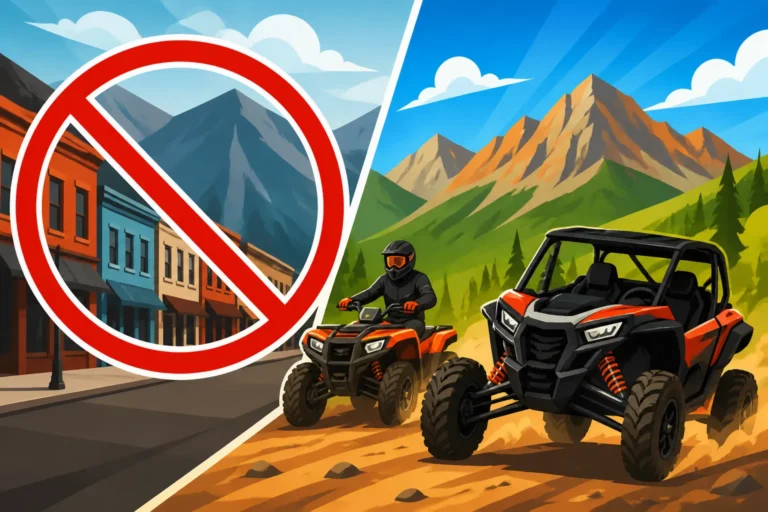
Unlike some states that have broad statewide allowances for OHVs on certain public roads, Colorado's road access for OHVs is primarily determined at the local level. This means that individual counties, towns, and cities have the authority to pass ordinances allowing or restricting OHV use on roads within their jurisdiction. There is no statewide law that broadly permits OHVs on all county roads or state highways (with a few highly specific, designated exceptions like the Highway 149 OHV corridor near Lake City). This local control is why you might find OHVs freely cruising the main street in one mountain town, while just a few miles down the road in another, they are strictly prohibited.
This localized approach is both a blessing and a curse. It allows communities to tailor rules to their specific needs and concerns, but it places a significant burden on riders to research and understand the rules for every single area they plan to visit. A county might open most of its unpaved roads to OHVs, but the town within that county might have its own, stricter rules. You might be allowed on a county road to get to a trailhead, but not allowed to ride through the town center. This fragmented system means that even if your machine is street-legal in another state, and you've acquired a Colorado OHV permit, you still need to verify the specific ordinances for your chosen riding area. [Colorado County Roads Open to OHVs] offers more insight into this variability.
Navigating County and Town Ordinances with an Out-of-State Machine
So, you’ve got your out-of-state plated, street-legal machine, and you understand Colorado's stance. Now what? The key to a smooth trip is meticulous preparation and understanding the specific local rules in the areas you intend to ride. This isn't just about avoiding a ticket; it's about being a responsible visitor and ensuring you contribute positively to the local OHV riding environment.
Researching Local OHV Ordinances Before You Go
This cannot be stressed enough: do your homework before you leave home. Simply having a street-legal plate from another state is not a golden ticket. Because Colorado's OHV road access is primarily governed by county and municipal ordinances, the rules can change dramatically from one town or county to the next. What's perfectly fine in Silverton might be strictly forbidden in Telluride, even if they're only a few miles apart. You need to know which roads are open, what equipment is required, and any time-of-day restrictions or specific speed limits.
Your best resources for this information are the official county government websites and the municipal websites for any towns you plan to visit or pass through. Look for sections on "OHV ordinances," "ATV regulations," or "motorized vehicle use." Many popular riding destinations, like Lake City, Ouray, or Silverton, often have dedicated pages or brochures for OHV visitors outlining their specific rules. You can also call the local sheriff's office or visitor information center for clarification. Printing out relevant sections or saving them to your phone can be incredibly helpful if you're ever questioned. Don't assume; always verify. This proactive approach will save you immense headaches on your trip. For help finding the right information, consider [Finding Your Colorado County's OHV Ordinance].
Common Requirements for OHV Road Use in Colorado Towns
Even if a Colorado county or town does permit OHVs on its roads, there will almost certainly be specific equipment and operational requirements that must be met. These are often designed to ensure that OHVs, when sharing the road with traditional vehicles, are as visible and controllable as possible. It's not enough that your machine is street-legal in another state; it must meet Colorado's local standards for road use.
Here are some common requirements you'll encounter, and frankly, if your machine is truly street-legal elsewhere, it probably already has many of these, but it’s always good to double-check:
- Headlights and Taillights: Mandatory for visibility, especially during dawn, dusk, or adverse weather. Many ordinances require them to be on at all times while on public roads.
- Brake Lights: Essential for signaling your deceleration to other drivers.
- Turn Signals: Required for indicating turns, just like a car.
- Mirrors: Typically, at least one rear-view mirror is required, though two (one on each side) are often preferred for optimal visibility.
- Horn: A working horn is necessary to alert others.
- Muffler and Spark Arrester: Your exhaust system must be equipped with a muffler that keeps noise levels within acceptable limits and a spark arrester to prevent wildfires.
- Windshield: While not universally required for all OHVs, some county ordinances might specify a windshield for UTVs on paved roads.
- Seatbelts/Roll Cage: If your machine has these from the factory (like most UTVs), they must be in working order and used.
- Insurance: Proof of liability insurance is generally required for any motorized vehicle operating on public roads, and OHVs are no exception.
- Colorado OHV Registration Decal: This is a crucial one! Regardless of your out-of-state plate, if you are riding your OHV on any designated public road, trail, or staging area in Colorado, you must have a current Colorado OHV registration sticker. This sticker signifies you've paid the state fee that supports the OHV program and trail system.
It’s worth noting that if you're missing some of these items, aftermarket companies like SuperATV offer fantastic solutions to bring your machine up to spec. They have a wide array of turn signal kits, mirrors, and horns that are designed to integrate seamlessly with various ATV and UTV models, making compliance much easier. Ensuring your machine is properly equipped for the specific local regulations is a foundational step in responsible riding. You can learn more about general requirements in [What Colorado Requires on an OHV Road Ride].
The Colorado OHV Registration Permit for Out-of-State Visitors
This is perhaps the most critical piece of the puzzle for out-of-state riders, and it's where many misunderstandings arise. Even if your machine is street-legal and plated in another state, and even if you're only planning to ride on roads open to OHVs in Colorado, you will almost certainly need a Colorado OHV registration permit.
Why You Still Need a Colorado OHV Permit
Let's clear up a common misconception: the Colorado OHV permit (the green sticker you see on machines) is not a "street-legal" permit. It is an off-highway registration designed to fund the state's OHV program, including trail maintenance, signage, and education. It's essentially your ticket to legally access public OHV trails, routes, and any road or area designated for OHV use within Colorado. The crucial part for out-of-state riders is that this permit is required for all OHVs operating on designated public lands or routes, regardless of where they are registered or whether they have a street-legal plate from another state.
Think of it this way: your out-of-state plate might allow you to drive on some roads, but the Colorado OHV permit is what grants you legal access to the trail system and designated OHV routes that include those locally opened roads. Without it, you are subject to fines for operating an unregistered OHV on public land. So, yes, even if your machine is a fully street-legal rig from Arizona, if you want to legally ride it on a county road that is part of an OHV route near Lake City, or use it to get to a trailhead in Taylor Park, you need that Colorado OHV permit. It’s an investment in the trails you’re there to enjoy. For a full explanation, see [Colorado Non-Resident OHV Permit Explained].
How to Obtain a Non-Resident Permit
Getting your Colorado OHV permit is fortunately quite straightforward, and it's something you can do even before you arrive in the state. The permit is valid from April 1st through March 31st of the following year, so it's an annual fee that covers a full riding season.
Here’s how you can typically obtain a non-resident permit:
- Online: The most convenient method is usually through the Colorado Parks and Wildlife (CPW) website. You can find their dedicated OHV registration portal, fill out the necessary information, and pay the fee. Your permit and decal will then be mailed to you. This is a great option to take care of before your trip, ensuring you have the sticker in hand.
- Vendors: Colorado Parks and Wildlife works with a network of authorized vendors across the state, including many sporting goods stores, powersports dealerships, and even some small mountain town shops. You can often purchase your permit over the counter, receiving a temporary print-out immediately and having the actual sticker mailed later. This is helpful if you arrive in Colorado without a permit.
- By Mail: You can also download a registration form from the CPW website, fill it out, and mail it in with your payment. This takes the longest, so plan accordingly if you choose this route.
Once you receive your physical sticker, proper placement is important. The decal needs to be visibly affixed to the machine. For ATVs, it typically goes on the front fender or side panel. For side-by-sides, it’s usually on the hood or a visible side panel. For dirt bikes, it often goes on the fork tube or front fender. Make sure it's in a spot that's clear, clean, and won't easily peel off. SuperATV often provides accessories that offer convenient flat surfaces for sticker placement, and ensuring a good adhesion means cleaning the area thoroughly before applying. [Buying a Colorado OHV Permit Online] and [Where to Put a Non-Resident Permit] offer more details on these processes.
Equipment and Safety Requirements on Colorado Roads and Trails
Beyond just having the right permits, operating your out-of-state street-legal machine on Colorado's public roads and designated trails means adhering to specific equipment and safety standards. Many of these overlap with what makes a machine "street-legal" in other states, but it's important to understand the Colorado interpretation.
Essential Equipment for Road-Legal Use in Colorado
When riding on any public road that has been opened to OHV use in Colorado, your machine must be equipped with certain safety features. This is about making sure you’re visible to other vehicles and can operate safely, preventing accidents and minimizing your impact on the environment. Even if your machine came from the factory with many of these features, a quick check before hitting the road is always a good idea.
Here's a detailed look at the equipment commonly required:
- Headlights: You must have at least one operational headlight that emits a white light and is visible from at least 500 feet to the front. Many local ordinances will require you to have your headlight(s) on at all times when operating on public roads.
- Taillights: At least one red taillight, visible from at least 500 feet to the rear, is required.
- Brake Lights: These are crucial for safety, signaling your deceleration to other drivers. They must activate when the brake is applied.
- Turn Signals: Both front and rear amber turn signals are typically required, visible from 100 feet. This is a common add-on for machines that aren't factory street-legal. Brands like SuperATV specialize in these types of kits, offering robust and easy-to-install turn signal systems that can help you meet local requirements.
- Mirrors: At least one rearview mirror, providing a clear view of the highway to the rear for a distance of at least 200 feet, is usually mandatory. Many riders opt for two mirrors for enhanced safety.
- Horn: An audible horn, capable of being heard from 200 feet, is necessary for signaling.
- Muffler and Spark Arrester: This is critical for both noise control and fire prevention. Your exhaust must be equipped with a muffler that prevents excessive or unusual noise, and a spark arrester that is effective in preventing the escape of flammable materials from the exhaust. Aftermarket exhausts that are too loud or lack a proper spark arrester can lead to citations and even trail closures.
- Roll Cage and Seatbelts: If your side-by-side or UTV came equipped with a roll cage and seatbelts from the manufacturer, they must be in good working order, and occupants must use the seatbelts while the vehicle is in motion. This is a non-negotiable safety feature.
- Tires: Tires must be in good condition, without excessive wear, and appropriate for road use.
- Brakes: Your braking system must be fully functional and capable of safely stopping the machine.
Meeting these requirements is not just about avoiding a ticket; it's about ensuring your safety and the safety of others sharing the road or trail. Check out [Lighting Requirements for a Colorado Road Ride] for more specific details on these requirements.
Helmet and Supervision Rules for Riders
Colorado's helmet laws for OHV riders often surprise visitors, as they are not as stringent as in some other states, especially for adults. However, there are still important regulations, particularly concerning youth riders, that everyone needs to be aware of.
- Adult Helmet Law: For riders aged 18 and older, Colorado does not have a statewide mandatory helmet law for OHVs on public lands or roads. This means if you're an adult riding your ATV or UTV, you are not legally required to wear a helmet. However, safety experts and experienced riders overwhelmingly recommend wearing one. A helmet is your best protection against head injuries, and mountain terrain can be unpredictable. Many local jurisdictions or private riding parks may still enforce their own helmet rules, so always check where you plan to ride.
- Youth Helmet and Eye Protection: This is where the rules become more specific. Riders under the age of 18 are required to wear a helmet that is properly fitted and securely fastened, along with eye protection (like goggles or a face shield). This applies to anyone under 18 operating or riding as a passenger on an OHV on public lands or routes.
- Supervision Rules for Young Riders: Colorado also has specific supervision rules for young OHV operators. Generally, riders between the ages of 10 and 16 must be under the direct supervision of an adult aged 18 or older who possesses a valid driver's license. "Direct supervision" usually means the adult must be within eyesight and able to provide immediate instruction or assistance. There are also engine size limitations based on age, which parents often consider when choosing a machine for their child.
Even without a statewide adult helmet law, it is always a wise decision to wear appropriate safety gear, including a DOT-compliant helmet, eye protection, gloves, and sturdy footwear. The mountains are beautiful but unforgiving, and a small mistake can lead to serious injury. Familiarize yourself with all the nuances of [Colorado Helmet and Eye Protection: What Is Actually Required].
Common Misconceptions and Penalties for Non-Compliance
Even with all the preparation, misunderstandings can still occur, and it's vital to be aware of common pitfalls and the potential consequences of not adhering to Colorado's specific OHV rules. Ignorance of the law is never a valid defense, especially when dealing with safety and resource protection.
The "Montana LLC" Myth and Other Pitfalls
One of the most persistent myths in the OHV community, especially for those seeking to make their machines street-legal, is the "Montana LLC" route. The idea is that by registering your OHV to a limited liability company (LLC) based in Montana, you can acquire a Montana license plate, which then makes your OHV street-legal everywhere, including Colorado. While Montana does have provisions for plating OHVs, and it might work for Montana residents or for some uses in some states, this strategy comes with significant risks and complications if you are a Colorado resident or intend to spend substantial time riding in Colorado.
Here's why the Montana LLC approach is a pitfall in Colorado:
- Colorado Residency Rules: If you are a Colorado resident, the state generally expects your vehicles to be registered in Colorado. Attempting to avoid Colorado registration and taxes by using an out-of-state LLC can be considered tax evasion or registration fraud. Colorado law is clear on what constitutes residency and when a vehicle must be registered in the state.
- Enforcement: Colorado law enforcement, particularly Colorado State Patrol and local sheriffs in OHV-heavy areas, are well aware of the Montana LLC tactic. They are trained to identify these situations and will often question drivers, especially if the operator is clearly a Colorado resident.
- Limited Reciprocity: Even if the Montana plate is legally issued to a Montana LLC, Colorado's OHV road access laws are still primarily local. As discussed earlier, an out-of-state OHV plate (from Montana or anywhere else) does not automatically grant statewide street-legal status in Colorado. You would still be subject to the local county and town ordinances and would still need a Colorado OHV permit for public land and designated routes.
- Legal Consequences: The penalties for tax evasion or fraudulent registration can be severe, including significant fines, back taxes, interest, and even criminal charges. It's simply not worth the risk.
Beyond the Montana LLC, another common pitfall is relying solely on advice from forums or friends without verifying current local ordinances. Laws change, and what was true last year might not be true today. Always consult official sources. For more details on this specific issue, refer to [The Montana LLC Route and What Colorado Owners Risk].
What Happens If You Ride Illegally
Riding your OHV illegally in Colorado, whether it's on a closed road, without a proper permit, or without required equipment, can lead to a range of unpleasant consequences that will quickly ruin your trip. Law enforcement, including Colorado Parks and Wildlife Rangers, Forest Service Law Enforcement, and local sheriffs, actively patrol popular OHV areas and trailheads.
Here's a breakdown of potential penalties:
- Fines and Citations: The most common consequence is a fine. Fines for operating an unregistered OHV, riding on a closed route, or failing to have required equipment can vary but are often hundreds of dollars. For example, [Fines for an Unregistered OHV in Colorado] details specific penalties for that offense.
- Vehicle Impoundment: In more severe cases, especially for repeat offenses or reckless operation, law enforcement has the authority to impound your OHV. Getting your machine back can be a lengthy and expensive process, involving impound fees, storage costs, and administrative hurdles, on top of any fines.
- Trail Closures and Loss of Access: Individual infractions, especially those involving environmental damage or reckless behavior, can lead to broader negative consequences for the entire riding community. Excessive noise, dust, or riding in prohibited areas can prompt local communities to restrict or even close OHV access to certain roads or trails. This directly impacts everyone who wants to enjoy the sport responsibly.
- Personal Liability: If you're involved in an accident while operating your OHV illegally, your insurance coverage may be jeopardized, leaving you personally liable for damages or injuries.
Ranger checkpoints are common at popular trailheads and staging areas, especially during peak season. They will check for current Colorado OHV permits, proper equipment, and adherence to age/supervision rules. Being prepared and compliant means you can pass these checks with a smile and continue on your adventure. Don't let a lack of preparation or a misunderstanding of the rules turn your dream ride into a nightmare. For a full scope of potential consequences, check out [Colorado Fines for Illegal Road Riding].
Here's a comparison table to help clarify the nuances between a typical "street-legal" setup from another state and Colorado's specific requirements for OHV road use:
| Feature/Requirement | Out-of-State "Street-Legal" OHV (Typical) | Colorado OHV Road Use (Local Ordinance) |
|---|---|---|
| Primary Status | Vehicle considered street-legal in its home state, often with a license plate | Primarily an Off-Highway Vehicle (OHV) in Colorado's eyes, even with out-of-state plate |
| State License Plate | Has a standard vehicle license plate from home state | Out-of-state plate does NOT grant general statewide road access; specific local ordinances must be followed |
| Colorado OHV Permit | Not always perceived as necessary by visitor, but IS REQUIRED for CO trail/route use | MANDATORY for any OHV on designated public land or locally opened roads, regardless of out-of-state plate |
| Road Access | Generally permitted on most public roads in home state | LIMITED to specific county roads and town streets explicitly opened by local ordinance, and designated routes |
| Equipment | Headlights, taillights, turn signals, mirrors, horn, seatbelts (if applicable) | ALL OF THE ABOVE REQUIRED for road use in CO, plus spark arrester and functional muffler. |
| Helmet Law (Adult) | Varies by home state, often mandatory | NOT MANDATORY for adults 18+ in CO, but highly recommended. Mandatory for riders under 18. |
| Reciprocity | Assumed for street-legal status by visitor | GENERALLY NOT EXTENDED for OHV "street-legal" status; Colorado's local rules apply regardless. |
| Purpose | General transportation and recreational use | Recreational use; limited road access typically for linking trails, accessing services, or designated corridors |
| Common Misconception | My out-of-state plate means I can ride anywhere in Colorado | My out-of-state plate means I can get a ticket if I don't follow Colorado's local rules and have a CO permit |
This article is for general informational purposes only and does not constitute professional advice. Laws, prices and regulations vary by location and change over time. Consult a qualified professional for guidance on your specific situation.