Engine Braking on a Steep Pass
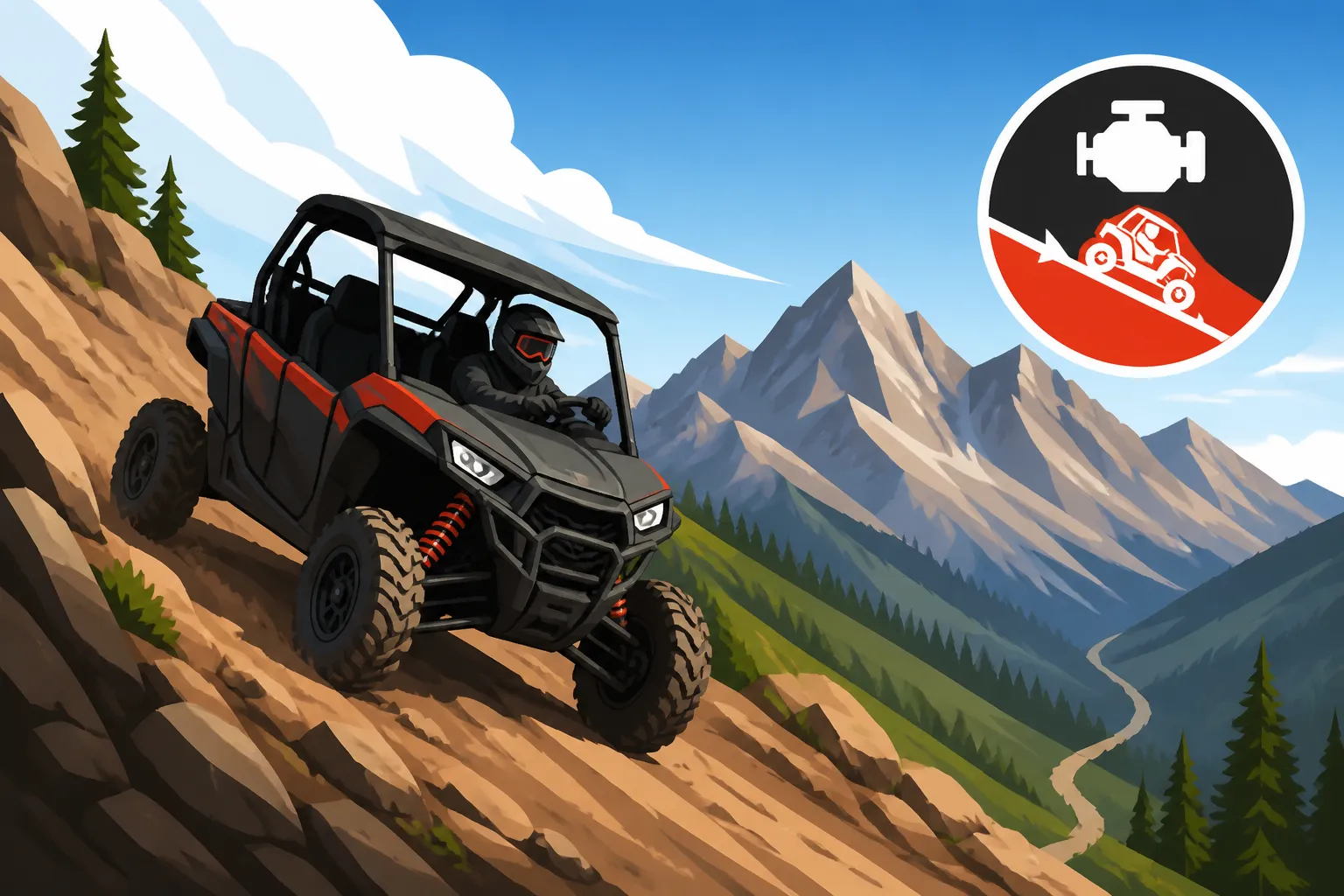
Picture this: you're cresting a beautiful Colorado pass, the views are absolutely breathtaking, but then the trail takes a sharp downward turn, plunging into a steep, rocky descent. Suddenly, your heart rate picks up, and you realize you need to manage your speed effectively to stay safe and in control. This guide will walk you through the essential techniques of engine braking on steep Colorado passes, helping you navigate those challenging descents with confidence and prevent scary situations like brake fade.
Understanding Engine Braking: Your Best Friend on Colorado Descents
When you're riding an ATV or UTV in the rugged Colorado mountains, especially on those long, steep descents, relying solely on your friction brakes (the foot pedal or hand lever) is a recipe for trouble. Not only does it put immense wear and tear on your brake pads and rotors, but it can quickly lead to what we call [Brake Fade on a Long Colorado Descent], where your brakes overheat and lose their effectiveness. That's a terrifying prospect when you're pointed straight down a mountainside. This is where engine braking truly shines as your most reliable ally.
What is Engine Braking and How Does It Work?
Simply put, engine braking is the resistance created by your engine when you take your foot off the accelerator or let off the throttle. Instead of burning fuel and producing power, the engine's internal components, like the pistons and valves, are still moving, but now they're working against the momentum of the vehicle. This resistance acts as a natural braking force, slowing you down without having to constantly apply your mechanical brakes. It's the engine essentially fighting itself, and that friction helps to control your speed.
Most modern ATVs and UTVs, particularly those designed for utility or trail riding, come equipped with some form of engine braking or a downhill assist system. These systems are specifically engineered to maximize this effect, often by using clutch mechanisms or electronically controlled transmissions to keep the engine RPMs higher when descending, thus providing more resistance. Think of it as gearing down in a car, but often much more pronounced and efficient in a powersports machine.
Why It's Crucial on Colorado's Steep and Rocky Trails
Colorado's high country is renowned for its incredible beauty, but also for its challenging terrain. You'll encounter trails with sustained steep grades, loose rock, and unpredictable surfaces. Relying solely on your brakes in these conditions can be dangerous. Your brakes are designed to stop you, not necessarily to control sustained downhill speed for miles on end.
Using engine braking preserves your friction brakes for when you truly need them – for sudden stops, tighter turns, or unexpected obstacles. It distributes the braking load, preventing overheating and ensuring that your primary braking system remains cool and responsive. Moreover, engine braking often provides a more stable, controlled descent, as the force is applied through the drivetrain, engaging all driven wheels (especially in 4WD), which can give you better traction and control compared to just locking up friction brakes, which can lead to skidding, particularly on loose surfaces. It's a fundamental skill for safe [Riding a Narrow Shelf Road Safely] or any significant mountain descent.
Mastering Engine Braking Techniques for Controlled Descents
Learning to effectively use engine braking isn't just about letting off the gas; it's about understanding your machine and the terrain, and using a combination of techniques to maintain optimal control. It’s a skill that builds confidence and significantly enhances safety on the trail.
Gearing Down for Maximum Control
For machines with manual transmissions or selectable low range (which is most utility and sport-utility UTVs and many ATVs), gearing down is your first and most effective step for maximizing engine braking. Before you even start a steep descent, shift into a lower gear. In a UTV, this often means engaging 'low range' if you have it. For ATVs with manual transmissions, select a gear that keeps the engine RPMs in a responsive range without lugging or over-revving.
The goal is to let the engine do the work of holding your speed back. If your RPMs are too low, the engine won't provide much resistance. If they're too high, you might feel like the machine is running away, or you're simply stressing the engine unnecessarily. Find that sweet spot where the engine is audibly working to slow you, but you're not riding the brakes. On really long descents, you might even start in a slightly higher gear and then downshift further if you start picking up too much speed. This strategy is especially important when you encounter trails with a [Colorado Trail Difficulty Ratings and What They Mean] indicating very steep sections.
Feathering the Throttle and Brakes Together
While engine braking is your primary tool, it's rare to use it entirely in isolation on challenging terrain. You'll often need to feather the throttle and gently apply your friction brakes as needed. Feathering the throttle means applying just enough gas to keep the clutch engaged (on CVT machines) and prevent freewheeling, or to maintain consistent engine braking on geared machines. This isn't about speeding up; it's about maintaining a constant, controlled descent speed.
As you descend, if your speed increases beyond what engine braking alone can manage, gently apply your friction brakes. Don't grab a handful or stomp the pedal; rather, squeeze or press them progressively until your speed is back where you want it, then release them. This allows your friction brakes to cool down, preventing overheating. The key is to avoid continuous, heavy braking, which can lead to brake fade. This delicate dance of throttle control and intermittent braking is vital, particularly when navigating [Blind Corners on a Colorado Mountain Road].
Machine-Specific Considerations
Every ATV and UTV is a little different, and their engine braking characteristics can vary widely.
- CVT (Continuously Variable Transmission) Machines: Many modern UTVs and automatic ATVs use CVTs with integrated engine braking or downhill assist. These systems are designed to automatically keep the engine RPMs up during descents. You might still need to feather the throttle to ensure the clutch remains engaged and the system is actively working. If you completely let off the gas, some CVTs might "freewheel" slightly until the RPMs drop enough for the engine braking to kick in effectively. Learning the nuances of your specific model is key.
- Manual Transmission ATVs: For sport quads or older utility ATVs with manual transmissions, your gear selection is everything. The lower the gear, the more engine braking you'll get. Practicing quick, smooth downshifts before steep sections is crucial.
- Aftermarket Enhancements: Some riders look for ways to enhance their machine's downhill performance. Aftermarket clutch kits, especially from brands like SuperATV, can sometimes be tuned to provide more aggressive engine braking characteristics for CVT systems, or even to adjust how quickly the belt engages and disengages. While this can offer benefits, always ensure any modifications are installed correctly and compatible with your machine's design.
Here's a quick comparison of common braking methods on steep descents:
| Braking Method | Description | Pros | Cons | Ideal Use Case |
|---|---|---|---|---|
| Engine Braking | Using the engine's internal resistance to slow the machine by letting off the throttle or downshifting. | Preserves friction brakes, provides stable and controlled descent, often engages all wheels, reduces wear on brake components. | Requires proper gear selection, can be less effective on very shallow grades, might feel less intuitive initially. | Long, steep descents; maintaining consistent speed on moderate grades; saving friction brakes. |
| Friction Brakes | Applying foot or hand brakes to slow or stop the machine using pads and rotors. | Immediate stopping power, precise control for small adjustments, effective at all speeds (up to a point). | Prone to overheating (fade) on sustained descents, increased wear, can lead to skidding on loose terrain if applied too heavily, requires more rider input. | Short, sharp stops; fine-tuning speed; emergency braking; slow maneuvers. |
| Combined Approach | Using engine braking as the primary speed control, with light, intermittent application of friction brakes for additional slowing or stopping. | Maximizes safety and control, prevents brake fade, extends component life, adapts to varying terrain, provides confidence. | Requires practice and coordination, understanding your machine's unique characteristics. | Virtually all significant downhill riding in Colorado's mountains; the recommended primary method. |
Maintaining Your Machine for Optimal Engine Braking
Effective engine braking isn't just about rider technique; it also relies heavily on a well-maintained machine. Just like any other system on your ATV or UTV, the drivetrain and braking components need regular attention to perform optimally, especially when tackling the demanding trails of Colorado.
Regular Drivetrain Inspections
The components involved in engine braking are primarily within your drivetrain. For CVT machines, this includes the primary and secondary clutches, the drive belt, and associated springs and weights. For geared machines, it's your transmission gears, shafts, and linkage.
Regularly inspect your drive belt for cracks, fraying, or excessive wear. A worn belt can slip, reducing the effectiveness of your engine braking. Ensure your clutches are clean and free of debris that could hinder their engagement. If you notice any unusual noises, vibrations, or a loss of engine braking performance, it's time for a deeper inspection. A well-maintained drivetrain ensures that when you lift off the throttle, that engine resistance is efficiently transferred to the wheels. Sometimes, upgrading to a heavy-duty belt or clutch kit, perhaps from SuperATV, can provide better longevity and more consistent performance on challenging terrain.
Proper Fluid Levels and Condition
Engine braking relies on your engine functioning correctly, and that means proper lubrication. Ensure your engine oil is at the correct level and isn't overdue for a change. Dirty or low engine oil can increase internal friction and heat, which might subtly impact performance and certainly reduce engine longevity. Similarly, check your transmission and differential fluid levels if applicable. These fluids lubricate crucial gears and components that are under stress during both acceleration and deceleration.
Beyond fluids, your cooling system also plays a role. While engine braking generates less heat than driving under power, sustained high RPMs on long descents still generate heat. Ensure your coolant is at the proper level and your radiator is clean and free of mud or debris. An engine that's running hot, perhaps due to [Overheating on a Colorado Climb] you just completed, will be less efficient at everything, including engine braking.
Brake System Health: A Backup You Can Trust
Even though engine braking takes the primary load off your friction brakes, you still need them to be in tip-top shape. They are your essential backup for precise speed control, unexpected stops, and emergencies.
- Brake Pads and Rotors: Check for excessive wear. Worn pads or deeply grooved rotors will reduce braking power and can lead to dangerous situations.
- Brake Fluid: Ensure your brake fluid reservoir is at the correct level and the fluid isn't discolored or old. Brake fluid is hygroscopic, meaning it absorbs moisture over time, which reduces its boiling point and can lead to a spongy brake lever or pedal, especially when hot.
- Brake Lines: Inspect lines for any signs of damage, leaks, or fraying.
Think of your friction brakes as your safety net. You use engine braking to stay off the net, but you absolutely need that net to be strong and reliable if you happen to fall. Before any big trip into the Colorado high country, do a thorough check of your entire braking system.
Advanced Tips and Common Misconceptions for Mountain Riding
Understanding the basics of engine braking is a fantastic start, but there's always more to learn and fine-tune for the unique challenges of Colorado's trails. Let's dig into some common questions and advanced techniques that can elevate your mountain riding experience.
Don't Fear the RPMs (Within Reason)
One common misconception among newer riders is the fear of high engine RPMs during descent. They might try to coast down in a higher gear, thinking they're saving the engine, but this actually puts more strain on their friction brakes and can lead to dangerous speeds. When engine braking, it's perfectly normal for your engine's RPMs to be higher than they would be when cruising on flat ground. Your engine is actively working to slow you down.
The key is to listen to your machine. If the engine sounds like it's screaming or bouncing off the rev limiter, you might be in too low of a gear, or you're descending too quickly. But if it's humming along, providing steady resistance, then you're likely in the right range. Modern engines are designed to handle these working RPMs. Trust your machine to do its job. Remember, the alternative – screaming brakes and potential brake fade – is far more detrimental to both your safety and your machine's longevity. This is an important consideration when [Planning a Colorado Riding Trip] that includes steep passes.
Combining Techniques for Optimal Control
True mastery of mountain descents comes from seamlessly blending engine braking with other riding techniques.
- Body Position: On steep descents, lean back slightly, keeping your weight centered or slightly towards the rear. This helps to keep your front wheels weighted for steering and prevents you from feeling like you're going to go over the handlebars (on an ATV) or through the windshield (in a UTV).
- Steering and Line Choice: Use precise steering inputs. Look far ahead down the trail to plan your line. Avoid sudden, jerky steering movements. On loose or rocky terrain, picking a good line can make a massive difference. Sometimes, going slightly off the main ruts to find firmer ground or a less steep path is the smartest move. This is critical for safe [Uphill Right-of-Way on a Colorado Pass] encounters and general trail etiquette.
- Tire Pressure: Ensure your tires are properly inflated for the terrain. Too high, and you'll lose traction. Too low, and you risk a bead coming off or damaging your tire. Proper tire pressure gives you the best contact patch for both traction and braking.
- Momentum Management: Before you even start a steep descent, make sure your approach speed is controlled. Don't carry unnecessary momentum into the pitch. A little foresight goes a long way.
Altitude's Effect on Engine Performance
Riding in Colorado means dealing with significant altitude changes, and this can subtly affect engine braking, particularly on carbureted machines. At higher altitudes, the air is thinner, meaning less oxygen. This can result in a slight loss of engine power, and consequently, a minor reduction in the amount of resistance your engine can provide for braking. Modern fuel-injected machines adjust better to [Altitude and Carburetor Tuning], but it's still something to be aware of.
This doesn't mean engine braking stops working; it just means you might need to be a bit more vigilant with your gear selection or rely slightly more on short, gentle applications of your friction brakes. Always be prepared for your machine to feel a little less potent at 12,000 feet than it does at 6,000 feet, whether you're going up or down.
What to Carry for Peace of Mind
Even with the best technique and maintenance, things can happen on the trail. Always carry essential recovery gear, especially when tackling challenging passes. A sturdy tow strap, basic tools, a tire repair kit, and a small air compressor can save your day. Even a communication device like a satellite messenger can be a lifesaver in areas without cell service. Knowing [What to Carry Over a High Pass] is just as important as knowing how to ride it. And if you're ever in a bind on a tough trail, having [Recovery Gear for a Shelf Road] could be the difference between a minor delay and a serious problem.
Learning to master engine braking takes practice, but the rewards are immense. It instills confidence, keeps you safer, and ensures your machine is ready for countless more adventures on Colorado's incredible trails.
Disclaimer
This article is for general informational purposes only and does not constitute professional advice. Laws, prices and regulations vary by location and change over time. Consult a qualified professional for guidance on your specific situation.