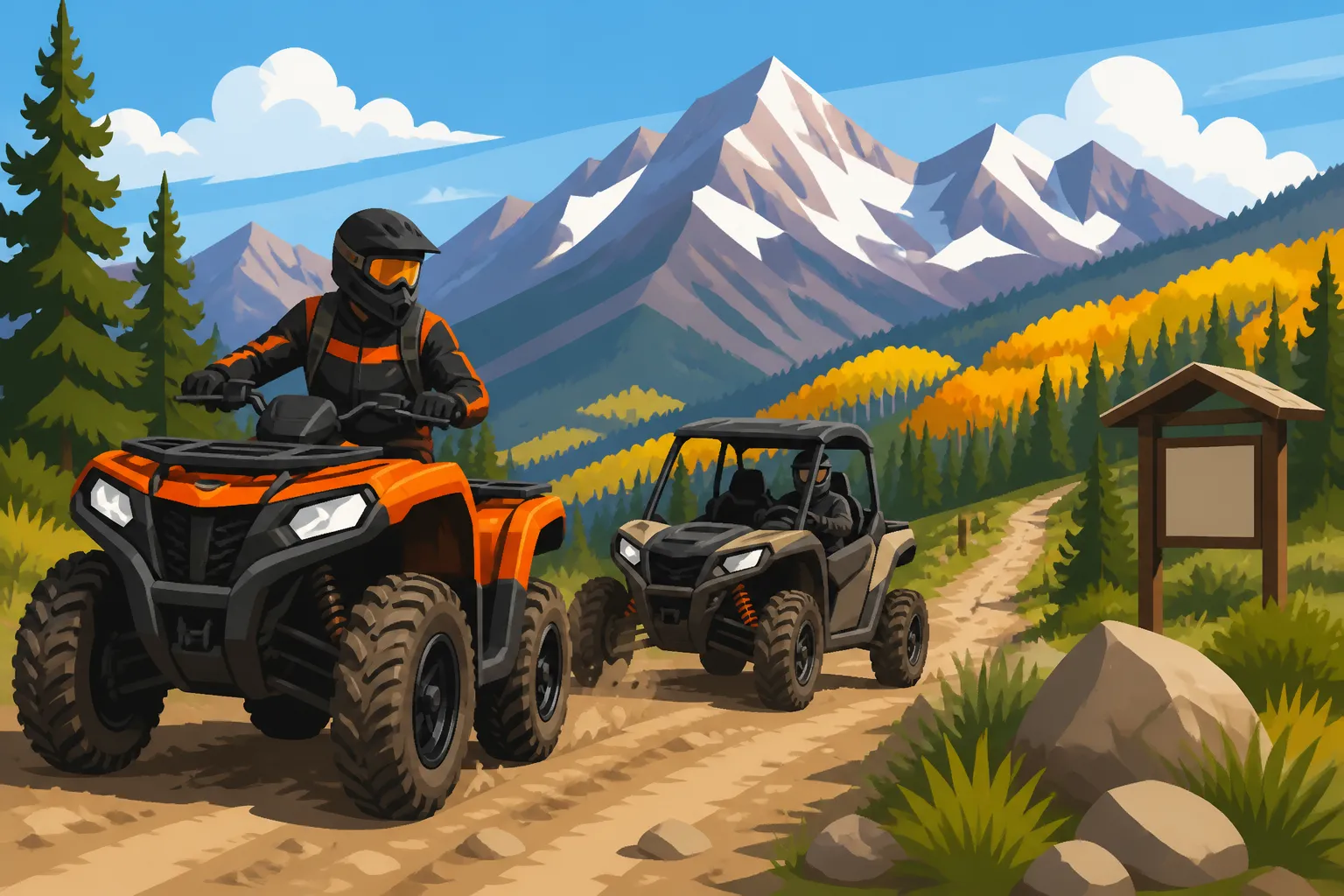
Riding an OHV to a Trailhead in Colorado
It’s a scenario every Colorado OHV enthusiast has dreamt of: you wake up at your campsite or vacation rental, hop on your ATV or side-by-side, and smoothly ride directly to the trailhead, bypassing the hassle of loading and unloading a trailer. While this dream is indeed possible in many parts of Colorado, it’s not as simple as just hitting the pavement. This guide will walk you through the complex reality, essential preparations, and navigation strategies to legally and practically ride your OHV to a trailhead in Colorado.
The Complex Reality of Riding to a Trailhead in Colorado
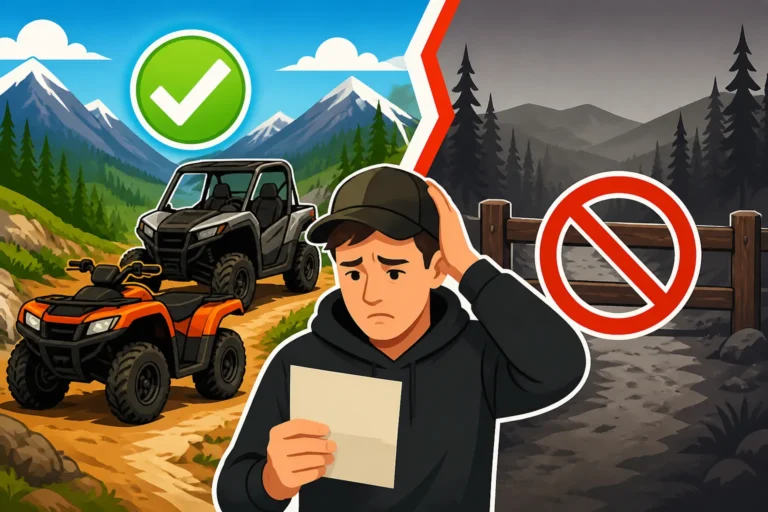
Many riders, especially those new to Colorado, arrive with the assumption that if their machine is "street legal" in another state, or if they add a few turn signals, they can just ride anywhere. Unfortunately, Colorado's approach to OHV road access is nuanced and can be a bit of a maze if you don't know where to look. It's not a blanket "yes" or "no" across the entire state, which is where a lot of the confusion comes in. The frustration is real when you think you're good to go, only to find a sheriff's deputy explaining a local ordinance you never knew existed.
Why "Street Legal" Isn't a Simple Answer Here
First things first: Colorado does not have a statewide process to make your ATV or UTV truly "street legal" in the same way you would register a car or motorcycle. You won't be heading to the Department of Motor Vehicles to get a standard license plate for your side-by-side, despite what you might have heard about other states. [Why Colorado Will Not Plate Your UTV] This is a huge point of confusion for many. Some states, like Arizona or Utah, have robust systems for plating OHVs, allowing them much broader road access. Riders from these states often assume their out-of-state "street legal" plate will grant them the same privileges in Colorado. While Colorado's 2021 law did offer some limited recognition for properly plated out-of-state OHVs on some roads, it's not a golden ticket to ride everywhere.
The crucial distinction is that a standard vehicle license plate implies broad access to public roads. Your OHV in Colorado, even when equipped for road use, is typically restricted to specifically designated roads or those covered by local ordinances. It's not about being "street legal" in the conventional sense; it's about operating on approved roads. This means a machine outfitted with a full SuperATV turn signal kit and horn might look ready for the highway, but without the specific local permissions, it’s still just an off-highway vehicle.
Understanding Colorado's "Opened Road" System
Instead of a statewide "street legal" status, Colorado operates on an "opened road" or "designated route" system for OHVs. This means that access to roads for OHVs is granted at the county or municipal level, or by federal land management agencies (like the Forest Service or BLM) on the roads they manage. It's a patchwork quilt of rules, and what's permissible in Hinsdale County might be strictly forbidden just a few miles away in Silverton. [Colorado County Roads Open to OHVs]
These "opened roads" are typically county roads, gravel Forest Service roads, or Bureau of Land Management (BLM) routes that lead to or connect with established trail systems. You'll often see signs indicating whether OHV use is allowed or prohibited on a particular road. The intent is to allow riders to connect trails, access services in small mountain towns, or simply get from their campsite to a dedicated off-road trail without loading their machine onto a trailer. This system aims to balance recreational access with local community concerns and traffic safety, which often means some roads are open, some are not, and rules can vary even street by street within a town.
Essential Preparations for Your Road-Legal Journey
Before you even think about putting your tires on a Colorado county road, you need to make sure your machine and your knowledge are up to snuff. Skipping these steps is a surefire way to invite a citation or, worse, put yourself and others at risk. It’s about more than just having a shiny new side-by-side; it’s about responsible riding.
The Colorado OHV Permit: Your First Step
Regardless of whether you're a Colorado resident or visiting from out of state, if you plan to ride your OHV on any public land or designated road in Colorado, you must have a current Colorado OHV permit (also commonly called a registration sticker). This is non-negotiable. This permit helps fund trail maintenance, safety programs, and law enforcement, ensuring the trails you love remain open and in good condition. You can often purchase these permits online through Colorado Parks and Wildlife (CPW), by phone, or from authorized vendors, which are frequently places that sell hunting and fishing licenses. [Colorado OHV Permits for Out-of-State Riders]
Once you have your permit, make sure it’s properly displayed. For ATVs, this usually means on the front or rear fender. For side-by-sides, it’s often on the front or rear bumper, or on the driver's side where it's easily visible. The green decal needs to be affixed directly to the machine, not on a clear plastic holder, as some riders mistakenly do. Rangers are vigilant about proper placement, and a misplaced sticker could still get you stopped. [Where the Colorado OHV Sticker Goes] Having your physical registration card with you on the trail is also highly recommended, so you can easily verify ownership and permit validity if asked by a ranger or law enforcement officer.
Equipping Your OHV for Road Use (and Avoiding Fines)
While Colorado doesn't issue "street legal" plates, if you intend to ride on any designated public road, your OHV must meet certain equipment requirements. These are often basic safety items that make your machine more visible and controllable in a mixed-traffic environment.
Here's a breakdown of common requirements and strong recommendations:
- Headlights and Taillights: These are usually standard on most modern OHVs, but they must be functional and turned on when operating on roads, especially during dawn, dusk, or in adverse weather.
- Brakes: Your machine needs fully functional brakes on all wheels.
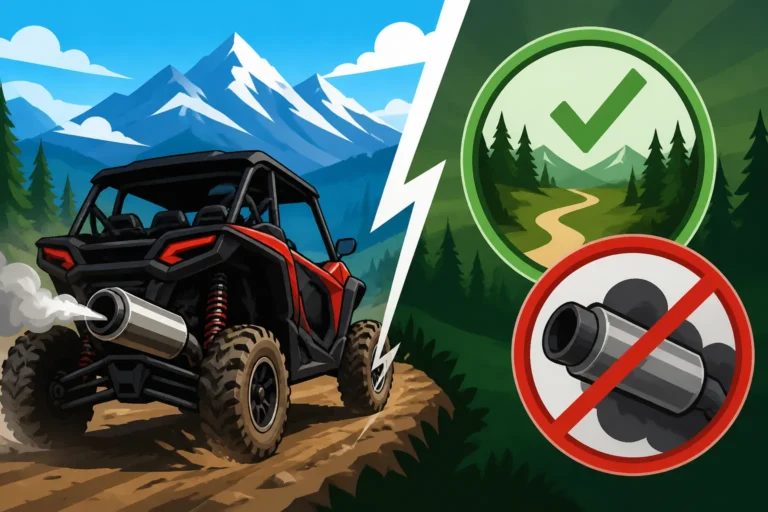
- Muffler and Spark Arrestor: All OHVs operating on public lands or roads in Colorado are required to have a functioning muffler and a U.S. Forest Service-approved spark arrestor. This is crucial for fire prevention and noise reduction. Aftermarket exhausts that exceed noise limits can lead to citations. [Mufflers and Spark Arresters in Colorado]
- Mirrors: While not always explicitly stated as a statewide requirement for all road use, having at least one rear-view mirror (and ideally two) is highly recommended for safety and is often required by local ordinances. Products like those offered by SuperATV provide robust and easy-to-install mirror kits designed for OHV use, significantly improving situational awareness when sharing the road with other vehicles.
- Turn Signals, Horn, Brake Lights: Again, these are not universal statewide requirements for all designated roads, but they are often mandated by specific county or town ordinances, especially on paved routes. Even if not required, they are incredibly important safety features that make your intentions clear to other drivers. Many riders opt for comprehensive signal kits to be prepared for any local rule.
- Helmets and Eye Protection: While Colorado doesn't have a statewide helmet law for adults on OHV trails, anyone under the age of 18 must wear a DOT-approved helmet when riding an OHV, and all riders, regardless of age, must use eye protection. When riding on public roads, especially if you're mixing with cars and trucks, wearing a helmet is a smart safety choice for everyone. [Colorado Helmet and Eye Protection: What Is Actually Required]
Don't assume your stock machine is fully equipped for road sections. Always check local ordinances, and consider adding safety accessories that enhance your visibility and communication with other road users.
Knowing the Local Rules: Your Best Defense
This is perhaps the most critical piece of preparation. Colorado's OHV road access is a patchwork, meaning rules change frequently from county to county and town to town. What's allowed in Buena Vista might be illegal in Telluride. You absolutely must research the specific rules for the county, town, and even particular roads you plan to ride.
Here's how to do it:
- County Sheriffs' Websites: Many county sheriff's departments in popular riding areas (like San Juan, Hinsdale, Gunnison, or Grand County) will post their OHV ordinances online. This is often the most authoritative source. [Finding Your Colorado County's OHV Ordinance]
- Forest Service and BLM Motor Vehicle Use Maps (MVUMs): These maps are your bible for federal lands. They clearly designate which roads and trails are open to which types of vehicles (including OHVs), and often include seasonal closures or other restrictions. These are legally enforceable documents.
- Local Visitor Centers: In towns like Lake City, Ouray, or Silverton, visitor centers are often excellent sources of current, localized information, including maps and printouts of local ordinances.
- Riding Clubs and Forums: Local OHV clubs are fantastic resources for up-to-date information on road access, trail conditions, and recent changes to ordinances.
Never rely solely on general online advice or what someone told you at a campground. Take the time to look up the official rules for your specific riding area. A few minutes of research can save you a significant fine or prevent an unwelcome encounter with law enforcement.
Navigating Colorado's Roads to the Trailhead
Once you've done your homework and properly equipped your machine, it's time to hit the road – but not just any road. Navigating Colorado's designated OHV routes requires a keen eye for signage and an understanding of right-of-way rules.
Identifying Legal OHV Routes
The key to successfully riding your OHV to a trailhead is to correctly identify the roads where it's permitted. This means paying close attention to signage.
- Designated Route Signs: On Forest Service and BLM land, you'll often see specific signs indicating "Motorized Trail" or "OHV Route" with route numbers. If a road isn't signed as open for OHVs, assume it's closed unless an MVUM clearly states otherwise.
- County Road Signage: County roads that are open to OHVs may have signs indicating this, or there may be signs prohibiting OHVs on roads that are not open. The absence of a "no OHV" sign doesn't automatically mean "yes," so always default to checking the county ordinance.
- State Highways: As a general rule, OHVs are not allowed on paved state highways (numbered routes like CO-149, US-550, etc.), with very few, highly specific exceptions. These exceptions are typically short connector sections through towns that have explicit state approval, like a particular stretch of Highway 149 near Lake City. Do not assume any state highway is fair game. [Colorado Rules for an Out-of-State Street-Legal Machine]
- Motor Vehicle Use Maps (MVUMs): Download or print the relevant MVUMs for your riding area. These maps are the definitive legal guide for Forest Service and BLM roads. They use color codes and symbols to show exactly which roads and trails are open to full-size vehicles, OHVs, motorcycles, or single-track bikes, and any seasonal restrictions. Using a mapping app like onX Offroad that overlays MVUM data can be a lifesaver.
Even if you have an out-of-state plate that you believe makes your machine "street legal," the 2021 Colorado law still generally restricts your OHV to designated county roads and routes. It doesn't grant you carte blanche to ride state highways or roads specifically closed to OHVs.
Best Practices for Sharing the Road
When you do find yourself on an "opened" road, remember you're sharing it with other traffic – cars, trucks, RVs, motorcycles, bicycles, and even pedestrians. Safety and courtesy are paramount.
- Stay to the Right: Always ride on the far right side of the road, just like any other vehicle.
- Maintain Speed Limits: OHVs are subject to the posted speed limits, which are often much lower on gravel county roads. On many designated OHV routes within towns, specific speed limits are imposed for OHVs, often 10-15 mph. Exceeding these limits is a quick way to get a ticket and erode local support for OHV access. [Colorado OHV Speed on a County Road]
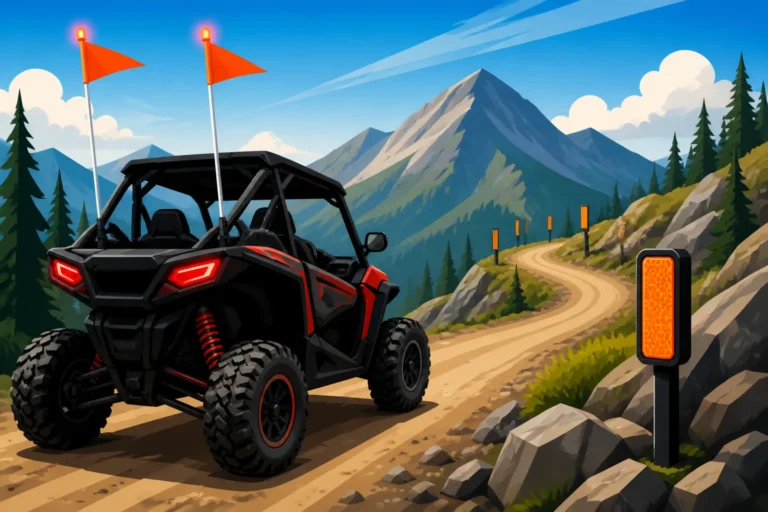
- Be Visible: Many riders add whip flags, especially if they're in an open area with limited sight lines. Always use your headlights and taillights. Bright colors on your machine and gear also help.
- Yield to Other Traffic: Treat any meeting with an oncoming vehicle, especially larger ones, with extreme caution. On narrow mountain roads, larger vehicles often have the right-of-way, particularly if they are climbing. Pull over to a safe spot if necessary to let others pass.
- Minimize Dust: On dry, gravel roads, your OHV can kick up a lot of dust. Be mindful of homes, other vehicles, and pedestrians. Slow down considerably when passing, especially near residences or campgrounds, to reduce dust. Excessive dust can lead to complaints and further restrictions. [Dust Control on a Gravel County Road]
- Watch for Livestock and Wildlife: Many county roads pass through open range. Be prepared to encounter cattle, horses, deer, elk, or other wildlife at any moment.
Specific Town Rules and Their Impact
Colorado's mountain towns often have the most stringent and localized OHV rules. While some towns warmly embrace OHV riders, allowing access on certain streets to connect to trails or services, others have strict prohibitions.
- Towns That Embrace OHVs: Places like Lake City and Creede have worked to integrate OHV access, allowing machines on specific town streets to access services or connect to the Alpine Loop. These towns usually have clear signage and maps indicating permissible routes.
- Towns with Restrictions: Other iconic towns like Silverton, Ouray, and Telluride have grappled with OHV traffic, resulting in various levels of restriction. Silverton, for instance, has a complete ban on OHVs within town limits, with significant fines for violators. [Silverton's Ban on OHVs in Town] Ouray and Telluride have specific street restrictions, often requiring OHVs to stick to perimeter roads or designated routes for access to trailheads. [Ouray and Telluride OHV Town Restrictions]
These town-specific rules can drastically impact your ability to ride directly to a trailhead. For example, if you're staying in Silverton and want to ride Engineer Pass, you'll still need to trailer your machine out of town to a staging area outside the municipal limits. Always check the specific town's website or visitor center for the most current rules. Ignoring these local ordinances is a common reason for riders to receive citations, and it can contribute to negative perceptions of the OHV community.
Common Pitfalls and How to Avoid Them
Even with the best intentions, it's easy to make mistakes when navigating Colorado's OHV road system. Understanding these common pitfalls can help you avoid unnecessary trouble and ensure a smooth, enjoyable ride.
The "It's Just a Short Stretch" Trap
This is one of the most common reasons riders get ticketed. You're riding a fantastic trail, and the GPS shows a paved road crossing or a short paved section between two dirt trails. It's just a mile, maybe less, you think. "Surely it's fine for such a short distance!" This mindset is a trap. If that section of road is not explicitly designated as open to OHVs by the county or land agency, riding on it is illegal, regardless of how short the distance.
Law enforcement officers, especially in popular riding areas, are often aware of these "short stretch" violations. They patrol these areas because they know riders are tempted to take the shortcut. A short, illegal ride can quickly turn into a costly citation, sometimes several hundred dollars, plus court fees. [Fines for an Unregistered OHV in Colorado] Always consult your MVUM or local ordinance. If there's any doubt, find an alternative route or be prepared to trailer that section.
Assuming Reciprocity or "Street Legal" Status From Other States
As mentioned earlier, many riders arrive from states like Arizona, Utah, or even Montana (via an LLC) where their OHVs are plated and considered "street legal." They naturally assume this status will transfer to Colorado. While Colorado has made some strides in recognizing out-of-state plated OHVs, it's a very limited form of reciprocity.
Colorado generally allows properly plated out-of-state OHVs on designated county roads and forest service roads. However, this does not grant you blanket access to all paved roads, state highways, or roads explicitly closed to OHVs. Your "street legal" plate from another state does not override Colorado's local ordinances or state highway regulations. You still need to abide by the Colorado OHV permit requirement for public land and designated road use, and adhere to local equipment and operational rules. Don't let an out-of-state plate lull you into a false sense of security; always check Colorado's specific rules for your riding area. [Colorado Rules for an Out-of-State Street-Legal Machine]
Underestimating Altitude and Mechanical Preparedness
Colorado's mountains are breathtaking, but they also present unique challenges for your OHV. Many popular trailheads are at 9,000 feet or higher, with passes soaring well above 12,000 feet. The thinner air at these altitudes can significantly impact your machine's performance, especially if it's carbureted. Engines can run rich, lose power, and even overheat if not properly tuned or maintained. [Altitude and Carburetor Tuning]
Beyond performance, the rugged terrain itself is hard on machines. Riding on mountain roads to reach a trailhead means your machine will endure bumps, dust, and continuous operation. Make sure your OHV is in excellent mechanical condition: check tires, brakes, fluids, and belts. Carry a basic tool kit, a tire repair kit, and perhaps a small air compressor. Components like axles, ball joints, and suspension parts, especially if you're tackling rougher county roads, can benefit from high-quality aftermarket upgrades. Companies like SuperATV offer heavy-duty parts that can withstand the rigors of Colorado's high country, giving you peace of mind that your machine won't leave you stranded miles from the nearest service station. A breakdown on a remote county road can quickly turn an enjoyable ride into a difficult and potentially dangerous situation.
To summarize the key points for riding to a trailhead in Colorado:
| Aspect | What You Need to Know | Key Action to Take |
|---|---|---|
| "Street Legal" | Colorado has no statewide "street legal" OHV plate. It's about designated road access. | Don't assume. Research specific county/town ordinances. |
| OHV Permit | Mandatory for all public land/road use, for residents and non-residents. | Purchase and display your current Colorado OHV permit (sticker). |
| Equipment | Lights, brakes, muffler, spark arrestor are minimum. Mirrors, signals often required locally. | Equip your OHV with necessary safety gear; consider adding turn signals and a horn for better visibility. |
| Local Rules | Rules vary drastically by county, town, and federal land. | Consult MVUMs, county sheriff websites, and local visitor centers before you go. |
| Road Identification | Look for clear signage. State highways are generally off-limits. | Use MVUMs and look for specific "OHV Route" signs. If in doubt, don't ride it. |
| Road Courtesy | Share the road with all users; maintain speed limits; minimize dust. | Be a courteous and safe driver. Slow down for others and near residences. |
| Altitude/Mechanics | Thinner air affects performance; mountain roads are tough on machines. | Perform pre-ride checks; ensure your machine is in top condition and carry basic repair gear. |
Riding your OHV directly from your lodging to a Colorado trailhead is an incredible experience that significantly enhances your adventure. By understanding and respecting Colorado's unique rules and preparing properly, you can enjoy the convenience and freedom of connecting the pavement to the trails seamlessly. Happy trails!
Disclaimer
This article is for general informational purposes only and does not constitute professional advice. Laws, prices and regulations vary by location and change over time. Consult a qualified professional for guidance on your specific situation.