Arizona and New Mexico Riders in Colorado
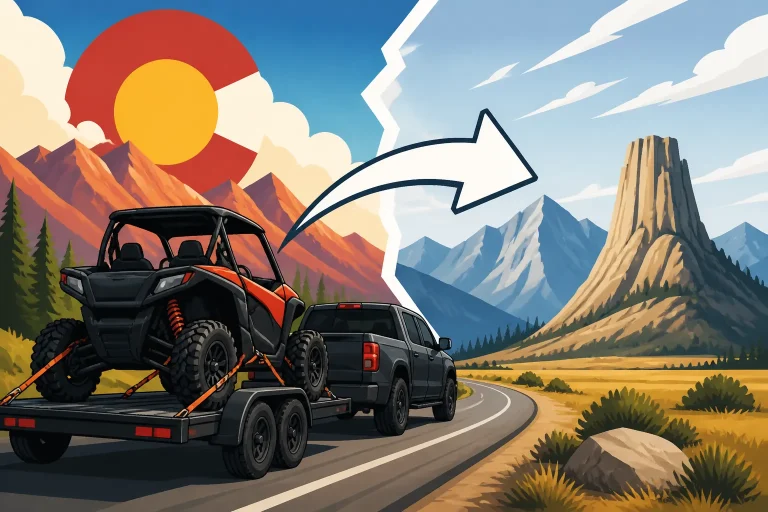
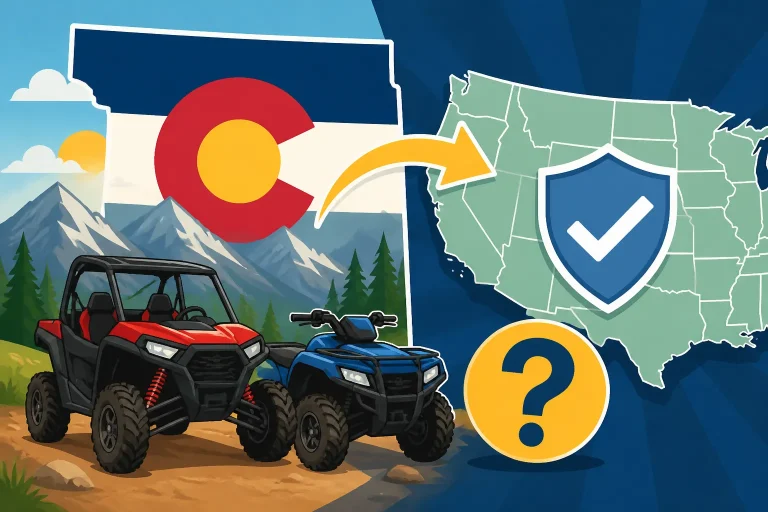
Arizona and New Mexico riders planning a Colorado ATV or UTV trip often wonder whether their home-state registration or permit carries over. The key is to check Colorado’s requirements for the machine and where you plan to ride; a permit or plate from home is not automatically a substitute for Colorado authorization on public riding areas.
What Arizona and New Mexico riders need in Colorado
Colorado’s requirements depend mainly on the machine and the place it will be operated, not on whether you live in Arizona or New Mexico. A home-state registration, OHV decal or permit does not automatically satisfy Colorado’s requirements. Before riding on public land, check whether your ATV, UTV or dirt bike needs a Colorado nonresident OHV permit.
That permit is separate from your home-state paperwork. It also does not give you permission to ride on every road or trail: the route must be open to your kind of machine, and local restrictions still apply. For an overview of the rule for visitors, see Colorado OHV Permits for Out-of-State Riders and Colorado Non-Resident OHV Permit Explained.
A useful first distinction is where the machine will be used:
| Where you plan to ride | What to check |
|---|---|
| Public OHV trail or riding area | Whether the machine needs a Colorado nonresident permit and how to display it |
| Public road open to OHVs | Whether the road is specifically authorized for OHV use, and what equipment and operator rules apply |
| Private property | The owner’s permission and any applicable registration or permit rules |
| A route used by a plated vehicle | Whether Colorado requires an OHV permit for that machine and route; a plate alone may not settle the question |
Do not treat an Arizona or New Mexico permit as interchangeable with a Colorado permit. States have their own registration and permit systems, and reciprocity is not something to assume. Check Colorado OHV Permit Reciprocity With Other States if you are trying to determine whether your existing paperwork qualifies.
Match the Colorado permit question to your machine
Start with the vehicle’s intended use and paperwork. Is it an ATV, side-by-side, dirt bike, or a vehicle with a license plate? Is it registered in its home state? Will it be used only on a private property, or on public land and designated riding routes? Those details help determine what to confirm with Colorado Parks and Wildlife before departure.
For an off-highway machine that is not registered in Colorado, a Colorado nonresident permit may be required for public-land riding. The permit requirement is separate from any registration or decal you already have. If you are unsure which category your machine falls into, Which Colorado Permit an Out-of-State Rider Buys is a useful next step.
A license plate does not always answer the permit question. Some vehicles that are legal for street use may also be used on routes or in areas subject to Colorado OHV permit rules. Confirm the requirements for your exact vehicle and planned route rather than relying on the fact that it is plated. See Colorado Permits for Plated Jeeps and Why Plated Vehicles Still Need a Colorado Permit for that distinction.
Keep these points separate when checking your plans:
- Registration or permit: Does the machine have the Colorado authorization required for the riding area?
- Road access: Is the road open to OHV travel, and is your vehicle allowed on it?
- Street equipment and operator rules: If you will ride on an authorized road, does the machine and operator meet the applicable requirements?
- Land access: Is the route on public land, private property or a mix of both?
A Colorado OHV permit does not make a closed road open, convert an ATV into a street-legal vehicle or replace permission from a private landowner. Likewise, a plate or home-state permit does not necessarily establish that the machine can use every Colorado OHV trail. For more on the difference between public areas and designated routes, see Colorado Permit Rules on Public Land and Colorado Permit Rules on Designated Trails.
Plan how to get and display the permit
If Colorado’s rules indicate that your machine needs a nonresident permit, arrange it before riding. Check the current instructions for purchasing a permit, the available sales options and how the permit must be displayed. Requirements and purchase details can change, so use Colorado Parks and Wildlife’s current information rather than relying on old trip notes or an online discussion.
The permit is generally tied to the individual machine, so do not assume one permit covers every ATV or UTV in a group. Check the requirement for each machine, including a borrowed vehicle or a second machine brought by the same household. Where to Buy a Colorado OHV Permit covers ways to get one, while Where to Put a Non-Resident Permit addresses display.
Before leaving home, use this checklist:
- List every machine. Record its type, identification details, registration status and whether it is plated.
- Map the actual riding areas. Note whether your route uses public OHV trails, public roads, private property or several kinds of access.
- Confirm the permit requirement for each machine. Do not assume the rules are identical for an ATV, a side-by-side and a plated vehicle.
- Check the permit’s validity and display instructions. Confirm the current dates and the required placement directly with the official information.
- Carry supporting paperwork. Keep your home-state registration and proof of purchase or ownership available if relevant. Follow Colorado’s instructions for carrying permit documentation.
- Check access and closures close to departure. A valid permit does not override a seasonal closure, route restriction or local road rule.
A small waterproof document sleeve can help protect paperwork from dust, rain and trail grime. Outdoor retailers, including Amazon, carry options, but choose one that will not interfere with visibility, vehicle controls or the permit’s required display.
If you buy a permit in advance, make sure you understand whether you must wait for a physical permit or can use another form of proof before it arrives. Do not assume an order confirmation is enough to ride; follow the provider’s current instructions. For related questions about permit timing, see How Colorado’s Green Non-Stick OHV Permit Works and OHV Permit Processing Time.
Avoid common trip-planning mistakes
The most common mistake is assuming that a state-issued sticker travels with the vehicle as valid authorization everywhere. Arizona or New Mexico paperwork may be necessary for operating the machine at home, but it does not by itself confirm that the machine meets Colorado’s requirements. Check Colorado’s rules separately before the trip.
Another frequent mistake is treating a route shown on a map as automatically open to every vehicle. Public-land routes can have restrictions based on vehicle type, width, season or local orders. A permit is not a route pass. Check current maps, signs and closure notices, and confirm that the route is appropriate for your machine. If you are bringing a wide side-by-side, route width and turning space matter as much as permit status.
Do not assume that a county road, forest road and OHV trail follow the same access rules. A road may be open to certain traffic under a local rule while nearby trails have different restrictions. If the route crosses jurisdictions, check each relevant section rather than relying on one town’s or county’s rules for the whole ride.
Private land can also create confusion. Permission from a landowner is essential when riding on private property, but it does not automatically authorize travel across adjoining public land. Likewise, a permit intended for public riding does not grant access across a ranch or other private parcel. Keep the land-access question separate from the permit question.
A practical final check is to ask, for each machine and each planned segment: “What authorizes this vehicle to be here, and is this route open today?” If you cannot answer both parts, pause and verify before riding. That simple check helps prevent a paperwork issue from turning into a route violation or a wasted day.
Disclaimer
This article is for general informational purposes only and does not constitute professional advice. Laws, prices and regulations vary by location and change over time. Consult a qualified professional for guidance on your specific situation.