Where to Put a Non-Resident Permit
A Colorado non-resident OHV permit is only useful if it is displayed on the machine it covers—and placed where it can be seen. If you are bringing an ATV, UTV or dirt bike from another state, the right spot depends on the machine’s shape and the permit’s instructions. Here’s how to attach it securely, avoid common placement mistakes and check that you have the right permit.
Put the permit on the machine, where it can be seen
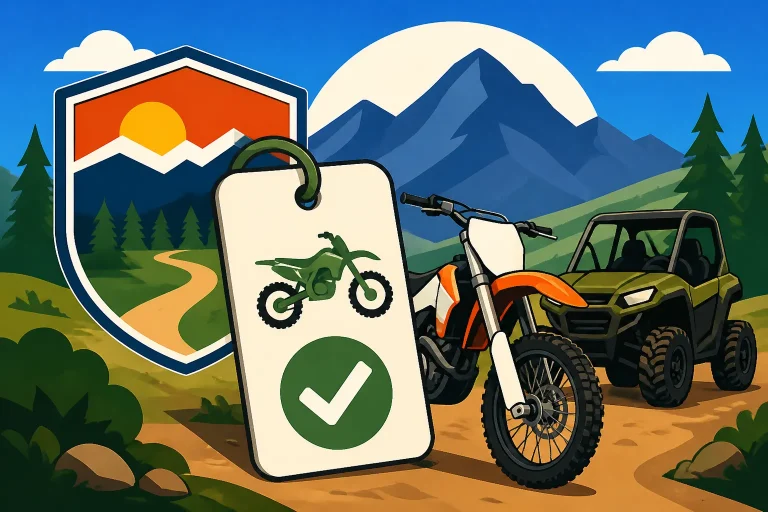
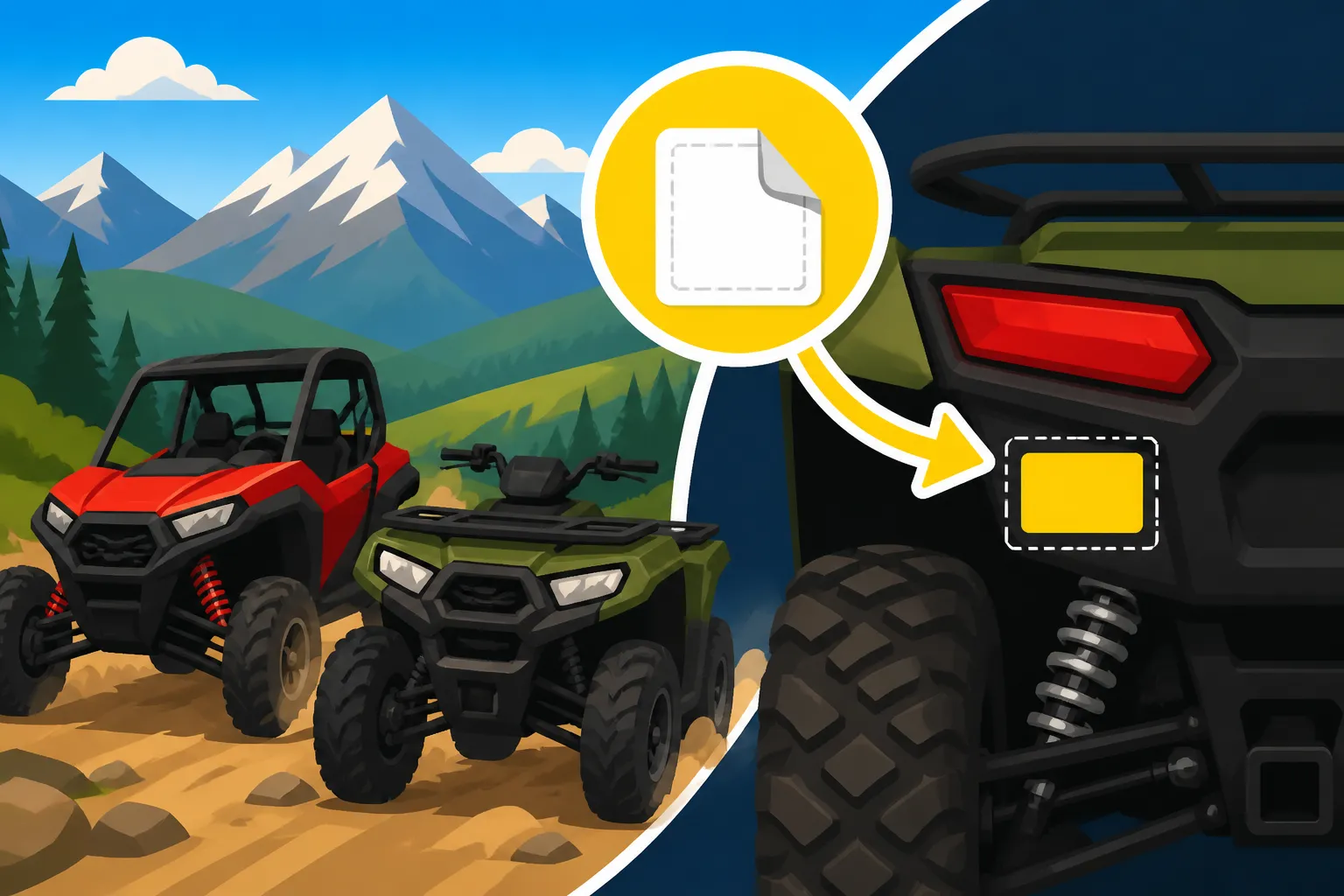
A non-resident OHV permit is associated with the off-highway vehicle, not simply with the person riding it. Attach the permit decal to the machine it was purchased for, in a conspicuous spot where it can be read or inspected without removing body panels or equipment.
For most ATVs and UTVs, a practical location is a clear area on the left side of the vehicle. Choose a flat, visible surface that is unlikely to be hidden by a rider, luggage, a spare tire or accessories. On a dirt bike, look for an exposed area on the left side that will stay visible and is suitable for the decal. The permit’s printed directions take priority if they specify a placement location.
| Machine | Practical placement approach | Check before riding |
|---|---|---|
| ATV | Choose a flat, exposed spot on the left side, commonly on a rear body panel or fender | Confirm the decal is visible from outside and not covered by a rack, bag or mud flap |
| UTV or side-by-side | Use an unobstructed area on the left side of the body | Check that doors, nets, accessories or a spare tire do not block it |
| Dirt bike | Use a visible, clean area on the left side of the bike | Make sure the decal does not interfere with moving parts or become hidden by riding gear |
| Plated vehicle used on OHV trails | Follow the permit instructions for that vehicle and its display | Confirm that a road plate does not replace any required OHV permit |
The table is a placement guide, not a substitute for the directions supplied with your permit. If the decal or purchase materials give a more specific location, follow those instructions.
The main test is simple: could an officer or ranger readily see that the machine has the required permit? A decal buried behind a storage box, tucked inside a compartment or attached to a trailer does not clearly show that the vehicle itself is covered. A permit carried in a wallet or glove box may be useful as backup documentation, but it is not a substitute for displaying the decal when display is required.
If you are still confirming which permit applies to your vehicle, start with Colorado Non-Resident OHV Permit Explained and Which Colorado Permit an Out-of-State Rider Buys. A non-resident permit is not the same thing as Colorado resident registration, and having one does not by itself make every route legal for your machine.
Prepare the surface before attaching the decal
A permit can peel off if it is applied over dust, oil, wax, mud or a textured surface. Before installation, choose the location and clean it carefully. Follow any surface-preparation directions included with the permit; if none are provided, use a method appropriate for the vehicle’s finish and let the area dry before applying the decal.
A few practical checks help:
- Choose the spot before peeling the backing. Hold the decal against the intended location and check that it is visible from a normal standing position.
- Check for obstructions. Open doors, move luggage and inspect the vehicle from different angles. A decal that is visible only when a panel is open is poorly placed.
- Clean and dry the surface. Do not apply the decal over wet mud, dust, grease or a damp panel.
- Apply it smoothly. Press out air pockets and make sure the edges are firmly attached, following the instructions supplied with the decal.
- Inspect it after the first ride. Vibration, water, dust and contact with gear can lift an edge. Check the decal before heading out again.
Avoid putting a protective film or clear cover over the decal unless the permit instructions allow it. A cover can trap moisture, interfere with adhesion or make the permit harder to inspect. Likewise, do not trim the decal or place it where a strap, tie-down or body panel will rub it.
If your machine has limited flat bodywork, take a moment to find a visible location that will not be damaged by normal use. Do not choose a spot that contacts the suspension, steering, exhaust or other moving or hot parts. If none of the obvious locations works, check the permit directions or ask the vendor or Colorado Parks and Wildlife how to display it on that vehicle type. Guidance on How Colorado’s Green Non-Stick OHV Permit Works may also help you understand the type of permit you have and how it is intended to be displayed.
Avoid common placement mistakes
Some placement errors come from treating the permit like a document rather than a vehicle decal. Others happen because owners copy the location used for a different vehicle. Use the permit’s directions for your specific machine rather than assuming that every ATV, UTV and dirt bike uses an identical spot.
Common mistakes include:
- Keeping the permit loose in the glove box. Keep your purchase confirmation or other paperwork as backup, but display the decal as directed.
- Attaching it to a helmet, trailer or tow vehicle. The permit needs to identify the covered OHV, not the equipment used to transport it.
- Placing it behind a door, net or cargo rack. A permit that is technically attached but routinely blocked is difficult to verify.
- Putting it on a removable accessory. If the accessory is taken off or moved to another vehicle, the permit can become separated from the machine it covers.
- Applying it over dirt or a damaged surface. Poor adhesion can cause the decal to lift or fall off on the trail.
- Assuming a license plate is enough. A plate and an OHV permit serve different purposes. Whether a plated vehicle needs a Colorado OHV permit depends on where and how it is being used. Check Colorado Permits for Plated Jeeps or Colorado Permit Rules for a Licensed Side-by-Side if that describes your vehicle.
Do not rely on a permit attached to one machine to cover another. If you are bringing several vehicles, check whether each needs its own permit before the trip. The purchase process and display requirements can be easier to sort out before departure; see Colorado Permits for a Second Machine if you are bringing more than one.
Also keep in mind that displaying a permit does not authorize riding everywhere. It does not open a closed route, grant permission to cross private land or make an off-highway vehicle legal on a public road. Check the rules for the land or trail you plan to use. Colorado Permit Rules on Public Land and Colorado OHV Permit Reciprocity With Other States are useful starting points for separate questions about permitted use and out-of-state documents.
Check the decal and your route before riding
Before unloading at a trailhead, confirm that the permit is on the correct machine and still easy to see. Make sure the decal has not peeled, become covered in mud or been damaged during transport. Keep your purchase confirmation or related paperwork accessible, especially if you bought the permit online or from a vendor before leaving home. That paperwork can help resolve a question, but it does not replace the displayed permit when one is required.
If the decal is missing, unreadable or damaged, do not assume that a receipt alone will settle the matter during an inspection. Contact the permit provider or Colorado Parks and Wildlife for current instructions on replacing or correcting it. For help choosing a purchase method, see Where to Buy a Colorado OHV Permit or Buying a Colorado OHV Permit Online.
Before the ride, check these points:
- The permit is attached to the vehicle it was issued for.
- The location follows the permit’s printed directions.
- The decal can be seen without moving gear or opening a compartment.
- It is firmly attached and not covered by a clear film or accessory.
- The trail or area allows your type of vehicle.
- Any separate requirements for road use, private land or special access have been checked.
A visible permit makes an inspection more straightforward, but it is only one part of trip preparation. Confirm that the route is open, suitable for your vehicle and accessible under the applicable land rules. If you are unsure whether an out-of-state registration or plate changes the permit requirement, verify that question before riding rather than relying on the plate as proof of permit coverage.
Disclaimer
This article is for general informational purposes only and does not constitute professional advice. Laws, prices and regulations vary by location and change over time. Consult a qualified professional for guidance on your specific situation.