How Long the OHV Safety Course Takes
A Colorado OHV safety course can take a few hours online or much of a day when instruction includes hands-on practice. The exact time depends on the provider and format, and taking a course is generally voluntary in Colorado. Knowing what counts as course time—and what does not—helps you plan without confusing training with registration or permit requirements.
How long a Colorado OHV safety course takes
There is no single statewide course length that applies to every Colorado OHV class. Providers may offer self-paced online lessons, scheduled classroom instruction, practical riding sessions, or a combination. The time commitment depends on the format, the course content, and whether you need to complete a quiz or other assessment.
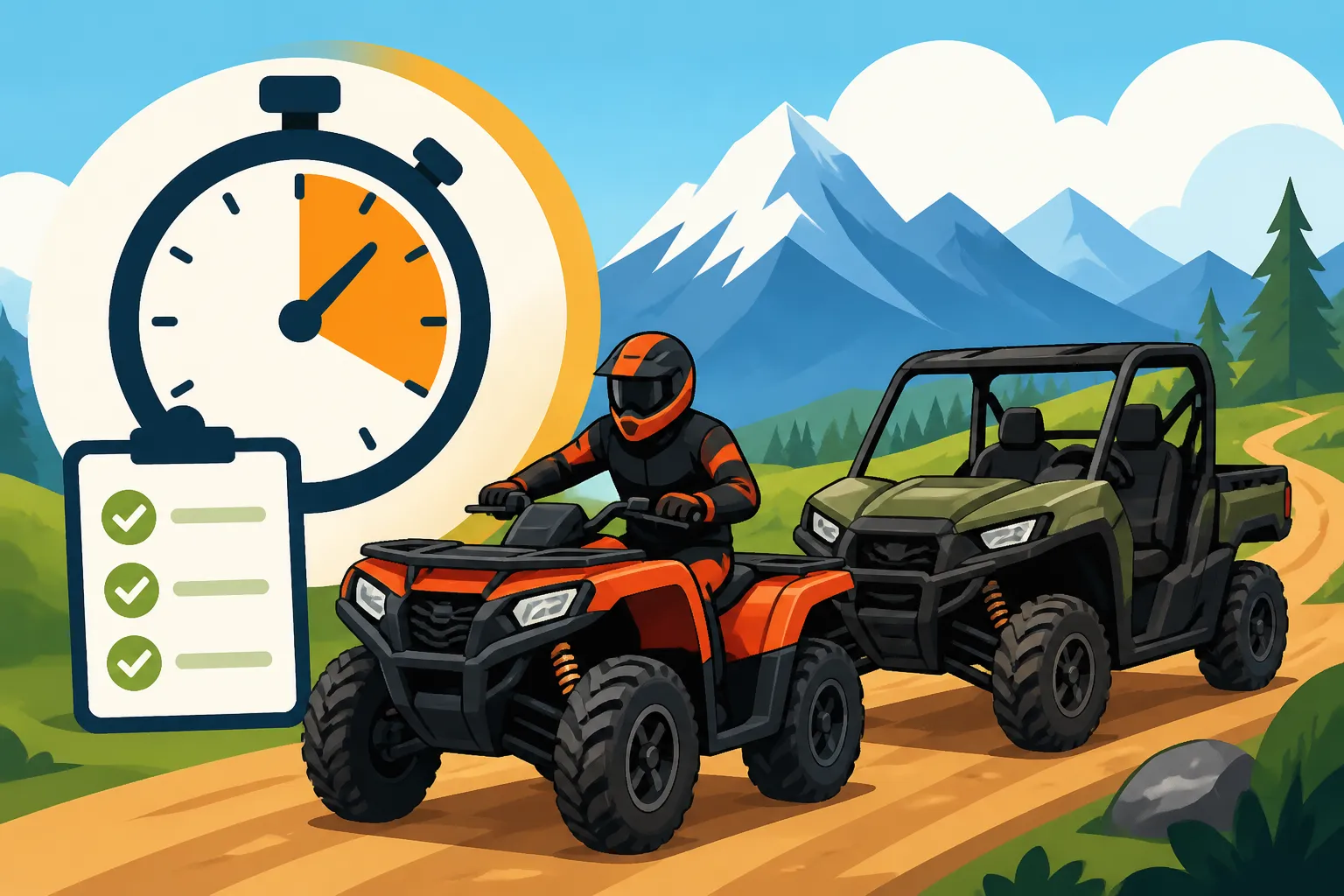
For a self-paced online course, plan for a few hours, and allow extra time if you pause, review material, or complete a test. A scheduled class may take a half day or longer. If it includes supervised riding practice, the session may take most of a day, particularly when the instructor needs to cover equipment checks, demonstrations, and practice for a group.
These are planning estimates, not guaranteed completion times. A provider’s course page or instructor can give the best estimate for a particular offering. Check whether the advertised duration includes breaks, a final assessment, or riding practice. A course described as a short online lesson may not include any time on a machine.
| Course format | What to expect | Planning estimate |
|---|---|---|
| Self-paced online | Lessons, safety information, and possibly a quiz; no supervised riding unless specifically stated | A few hours, with extra time for review or pauses |
| Scheduled classroom | Instructor-led material, discussion, and possibly an assessment | Several hours or a half day |
| Classroom plus practical session | Instruction followed by equipment checks or supervised skill practice | Half a day or longer |
| Private or small-group instruction | Timing depends on the lesson plan and the rider’s experience | Ask the instructor for a specific estimate |
If a provider sets a required minimum time, you may not be able to finish faster simply by clicking through the material. Some courses track progress or require you to complete each section before moving on. If timing matters, confirm the course rules before you start.
Also check what you receive after completion. Some programs provide a certificate or completion record; others may offer instruction without a formal credential. A course completion document does not automatically function as an OHV registration, permit, or proof that a machine may be used on a particular road or trail.
Is the course required in Colorado?
A common source of confusion is whether riders must complete an OHV safety course to ride in Colorado. In general, Colorado does not require every OHV operator to hold a safety-course certificate simply to ride. That makes the course different from a permit or registration requirement. For more detail on the distinction, see Why Colorado Requires No OHV Safety Certificate.
Voluntary training can still be useful, especially for a new rider, a young operator, or someone who has not used a machine at Colorado altitude or on steep, uneven terrain. The course may help a rider understand controls, protective equipment, trail etiquette, and common hazards before heading out. It does not replace checking the rules for the specific place where you plan to ride.
A course also does not replace required paperwork. Depending on the machine and where it will be used, you may need Colorado registration or a nonresident permit. Public-land riding rules, road access, and local restrictions are separate questions. Use Colorado Permit Rules on Public Land to understand why the location matters, and confirm current requirements with the relevant land manager or Colorado Parks and Wildlife before a trip.
Age and supervision rules are another separate issue. Taking a course does not automatically make a young rider eligible to operate on every route or road. Colorado has age-related rules for riding on opened roads, including rules that depend on a rider’s age and supervision. See Colorado’s Age Ten Rule for Riding an Opened Road and Colorado Supervision Rules for Riders 10 to 16 before planning a road ride with a minor.
In practical terms, think of a course as training, not a legal shortcut. It can improve preparation, but it does not grant permission to ride somewhere that is closed, remove age restrictions, or make an unregistered machine compliant.
What affects the time you need
The biggest factor is whether the course is online or includes an instructor-led and practical component. Online training is easier to fit around work or school, but it still requires attention. A rider who is entirely new to OHVs may need more time to absorb terms and concepts than someone who already understands basic machine controls.
The course content also matters. A brief overview may focus on safe operating habits and basic responsibilities. A more complete class may cover protective gear, pre-ride inspection, passenger safety, trail behavior, terrain, and what to do if a rider or machine has a problem. If the class includes practical exercises, participants may take turns, which can extend the session.
Other things that can add time include:
- Pausing to review a lesson or look up a term.
- Completing a knowledge check or final assessment.
- Waiting for an instructor to demonstrate a skill or answer questions.
- Sharing practice time with a group.
- Setting up a machine and checking its controls before riding.
- Completing provider paperwork or receiving a completion record.
Before enrolling, ask the provider a few direct questions: How long should a beginner set aside? Is the class entirely online, or does it include riding? Is there a quiz or skills assessment? Does the posted time include breaks? Will you receive a certificate or other record? These questions help compare courses without assuming that the shortest advertised option is the best fit.
If you are choosing an online course, Taking an OHV Safety Course Online can help you think through the format. If cost is part of your decision, see What a Voluntary Colorado Safety Course Costs; providers set their own terms, so verify current details with the course provider.
How to plan your course and first ride
Treat the course as one part of preparation, not the whole safety plan. Before enrolling, decide what you want from training. A first-time operator may benefit from an instructor who can explain controls and observe basic skills. An experienced rider who wants a refresher may prefer a self-paced option, provided it covers the topics they need.
A simple planning process can keep expectations clear:
- Choose the right format. Decide whether you need a flexible online lesson, a classroom setting, or hands-on instruction. If a young or inexperienced rider is involved, direct feedback may be more useful than a course that only presents information.
- Confirm the time commitment. Ask about the expected duration, required assessments, practice time, and whether you need to bring a machine or protective equipment.
- Check what the course provides. Find out whether you receive a completion record and how it is delivered. Keep it with your other riding records if you want a record of training, but do not treat it as a permit or registration.
- Review the rules for your planned ride. Confirm whether the machine needs registration or a permit, whether the route is open, and whether riders must meet age or supervision rules.
- Prepare for the conditions. Mountain routes can involve steep grades, changing weather, loose surfaces, and limited services. Training is useful, but route selection should still match the rider’s experience and the machine’s capabilities.
The length of training should not be the only factor in choosing a course. A short session may be enough for a refresher, while a new rider may benefit from time to ask questions and practice under supervision. Consider whether the course addresses the actual machine and riding environment involved. A lesson focused on basic controls is not the same as experience on a narrow, rocky mountain trail.
For parents, course completion is only one piece of the decision. The child’s ability to understand instructions, manage the machine, and respond calmly to changing conditions matters too. Review Colorado’s requirements and choose equipment suited to the rider; Colorado Age Rules for Young OHV Riders provides more context on youth rules. Before a family ride, explain boundaries, signals, stopping procedures, and what to do if the group becomes separated.
Finally, leave time to verify current information. Course offerings and provider requirements can change, and local riding rules may differ by land manager or community. The safest plan is to confirm course timing directly with the provider, then check the applicable registration, permit, age, and route rules before loading the machine.
Disclaimer
This article is for general informational purposes only and does not constitute professional advice. Laws, prices and regulations vary by location and change over time. Consult a qualified professional for guidance on your specific situation.