Towing a Small Trailer Behind an OHV in Colorado
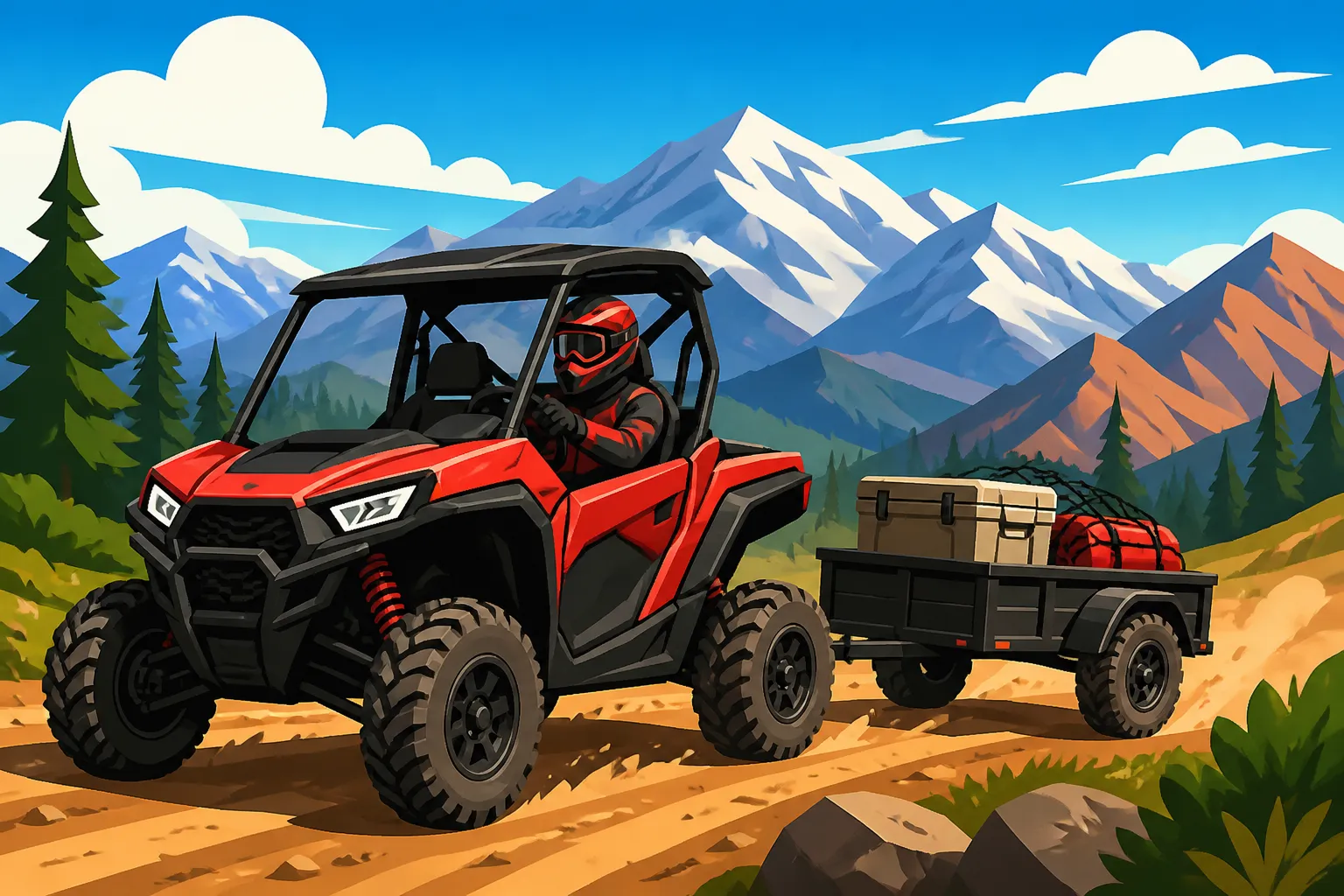
If you've ever found yourself wishing you could carry just a little more gear on your Colorado ATV or UTV adventures – perhaps extra fuel, a larger cooler, camping supplies, or even haul out that hard-earned elk – you've probably considered hooking up a small trailer. It's a fantastic idea for expanding your machine's utility, but navigating the rules and practicalities of towing a trailer behind your off-highway vehicle in our beautiful, rugged state can feel like threading a needle in a blizzard. This guide is here to untangle the confusion, lay out the legal landscape, and share essential tips for safely and effectively towing a small trailer on Colorado's diverse trails and roads.
Understanding Colorado's Rules for Towing a Trailer Behind an OHV
Let's start with the big question: Is it even allowed? The good news is, generally, yes! Colorado law, through Colorado Parks and Wildlife (CPW) regulations and various land management agency rules, does permit the towing of small trailers behind OHVs on designated trails and roads where OHV use is allowed. However, it's not a free-for-all. There are important nuances to consider, much like [Colorado OHV Rules for Official and Utility Use] or even [Colorado OHV Rules for Agricultural Road Use]. You can't just slap any old trailer onto your quad and expect to be within the bounds of the law or safety.
The primary concern for authorities, and rightly so, is safety and resource protection. This means that while the general act of towing is usually fine, the how and where matter tremendously. For instance, the size and weight of your trailer must be appropriate for your OHV and the terrain. You're not going to pull a full-size utility trailer up Engineer Pass! Land managers – whether it's the Forest Service or BLM – focus on ensuring that your setup isn't damaging trails, creating hazards for other users, or exceeding the practical limits of your machine. Always check the specific land management agency's rules for the area you plan to ride, as some might have more restrictive guidelines regarding trailer use, especially on narrower, more technical trails.
It's crucial to remember that your OHV must be properly registered with Colorado Parks and Wildlife, and display a current OHV permit sticker, even if you’re pulling a trailer. The trailer itself typically does not require separate registration as a motor vehicle in the same way your OHV does, but it must adhere to any requirements for being towed on public land or roads. For example, if you're taking your OHV and trailer on a county road that permits OHV use, the trailer might need functional taillights, brake lights, and turn signals, just like any other vehicle being towed. Always carry your [Do You Carry Paperwork on the Trail?] on hand, for both your machine and any relevant trailer documents, especially if you encounter a [Colorado Ranger Checks at a Trailhead].
Practical Considerations for Towing in Colorado's Backcountry
Colorado's backcountry isn't just scenic; it's challenging. Our trails feature steep grades, rocky sections, tight turns, and sometimes unexpected obstacles. Towing a trailer adds a whole new layer of complexity to these already demanding conditions. It's not just about what your OHV can tow on flat ground, but what it can safely tow over sustained climbs, descents, and rough terrain.
Think about the added weight. When you're climbing a steep pass, that extra weight behind you puts a significant strain on your engine, transmission, and brakes. You'll need to be mindful of your machine's [Overheating on a Colorado Climb] potential. On descents, the trailer can push your OHV, making [Engine Braking on a Steep Pass] even more critical. You might even find your OHV struggling to maintain traction on loose gravel or dirt with the extra load. This is where a good, sturdy hitch is paramount. Many riders upgrade their stock hitch receivers to a heavier-duty option, and reputable brands like SuperATV offer excellent aftermarket hitch receivers and accessories designed for the rigors of off-road use, ensuring your connection point is as robust as possible.
Maneuverability is another major concern. A trailer significantly increases your turning radius and makes navigating tight switchbacks, narrow tree lines, or crowded staging areas much more difficult. Backing up becomes an art form that requires practice. You also need to consider the length of your combined rig. Some trails are explicitly rated for certain vehicle lengths or widths, and adding a trailer could push you beyond those limits, potentially leading to citations or trail damage. Always review a [Reading a Colorado Motor Vehicle Use Map] before you head out, and pay attention to any restrictions. You wouldn't want to get stuck on a narrow shelf road with a trailer that won't make the turn.
Finally, ground clearance. Your OHV might have ample clearance, but a trailer can easily bottom out on rocks, roots, or uneven terrain. Choose a trailer with good ground clearance, or consider modifications to lift it if you plan on tackling anything beyond graded dirt roads. The last thing you want is a damaged trailer (or worse, a damaged trail) miles from the nearest recovery point.
Choosing the Right Trailer and Setup for Colorado Trails
Selecting the ideal trailer for your Colorado OHV adventures involves balancing capacity, durability, and practical trail considerations. This isn't just about grabbing the cheapest option; it's about investing in a piece of equipment that will serve you well without becoming a liability.
Types of Trailers:
- Utility Trailers: These are your standard open-bed trailers, often used for hauling yard waste or construction materials. While versatile, many are designed for road use and might lack the rugged suspension, ground clearance, or durable tires needed for rough trails. If you go this route, look for smaller, lighter models and consider upgrading tires for off-road durability.
- Specialized Off-Road or Expedition Trailers: These are built specifically for challenging terrain. They typically feature heavy-duty independent suspensions, greater ground clearance, larger off-road tires, and robust construction. Some even come with water tanks, power systems, and cargo solutions, making them perfect for extended backcountry camping or hunting trips. They are often more expensive but offer superior performance and peace of mind on technical trails. Many are designed to track well behind an OHV or Jeep.
- Cargo Boxes or Dump Trailers: Smaller, often single-axle units designed to carry specific loads like firewood, tools, or game. These are usually quite robust, relatively light, and highly maneuverable, making them excellent choices for lighter-duty work or short trips into the woods.
Key Features to Look For:
- Suspension: A good independent suspension system will keep the trailer tracking smoothly over bumps and rocks, reducing shock transferred to your OHV. Leaf springs are common, but independent torsion axles or coil-over shocks offer superior performance.
- Tires and Wheels: Match the trailer's tire size and bolt pattern to your OHV if possible. This provides redundancy in case of a [Flat Tires on a Rocky Trail] for either your OHV or the trailer. At minimum, ensure the trailer has robust, off-road-capable tires with good tread.
- Ground Clearance: As mentioned, this is critical. Look for trailers designed with ample clearance to avoid snagging on obstacles.
- Hitch Type: Most OHVs use a standard 2-inch receiver hitch, but some smaller quads might use a 1.25-inch receiver. Ensure your trailer's hitch coupler matches your receiver. For severe off-road use, an articulated hitch (like a Max Coupler or Lock-N-Roll) provides far more flexibility and prevents binding compared to a standard ball hitch. Brands like SuperATV offer heavy-duty receiver hitches that can significantly upgrade your towing capability and stability.
- Brakes: For heavier trailers, especially those exceeding 1,500 pounds, electric or hydraulic brakes are a serious safety consideration. While not always legally required for small trailers behind OHVs, they greatly enhance control, especially on steep descents. Your OHV's braking system is designed for the machine itself, not an additional ton of weight pushing it.
- Lighting: Ensure your trailer has functional taillights, brake lights, and turn signals, particularly if you'll be on any public roads or riding at dusk/dawn. Most trailers come with a standard flat-4 or 7-pin connector to interface with your OHV's electrical system, assuming your OHV is wired for it. If not, this can be an aftermarket addition.
| Feature / Type | Utility Trailer (Basic) | Off-Road / Expedition Trailer | Small Cargo / Dump Trailer |
|---|---|---|---|
| Typical Use | Light hauling, graded roads | Backcountry camping, heavy loads, tough trails | Firewood, tools, hunting, yard work |
| Suspension | Leaf springs, often stiff | Independent, articulate, heavy-duty | Often solid axle, sometimes limited suspension |
| Ground Clearance | Variable, often lower | High, designed for obstacles | Moderate to high |
| Tires | Highway-rated, smaller | Large off-road, rugged | Smaller, durable, often ATV-style |
| Hitch Compatibility | Standard ball, can bind | Articulated hitch recommended | Standard ball, less critical on light loads |
| Brakes | Optional for heavier models | Often includes electric/hydraulic | Rarely included, relies on OHV brakes |
| Maneuverability | Decent on open roads, can be awkward off-road | Excellent tracking, good articulation | Very good, short wheelbase |
| Cost | Low to moderate | High | Low to moderate |
Safety Tips and Best Practices for Towing an OHV Trailer
Towing a trailer adds an element of risk, but with proper preparation and cautious riding, you can do it safely.
- Know Your OHV's Limits: Consult your owner's manual for maximum towing capacity and tongue weight limits. Never exceed these. Overloading can damage your OHV and create extremely unsafe conditions. Factor in the weight of the trailer itself plus all your cargo.
- Proper Load Distribution: Distribute weight evenly in the trailer, with approximately 10-15% of the total trailer weight (including cargo) as tongue weight (the weight pressing down on the hitch ball). Too little tongue weight can cause the trailer to sway dangerously, while too much can lift the front of your OHV, affecting steering and traction.
- Secure Your Cargo: Use tie-downs, straps, and nets to secure everything in your trailer. Colorado trails are rough, and unsecured items can bounce out, shift, or become projectiles. Double-check all straps before you hit the trail and after any rough sections. This is even more vital than [What to Carry Over a High Pass] – securing cargo prevents losing it entirely.
- Inspect Everything Pre-Ride: Before every trip, check tire pressure on both your OHV and the trailer, ensure lug nuts are tight, verify brake lights and turn signals are working, and inspect the hitch connection for any wear or looseness. Make sure safety chains are correctly attached.
- Adjust Your Riding Style:
- Reduce Speed: You simply cannot ride as fast with a trailer as you can without one, especially on turns, bumps, and descents.
- Wider Turns: Account for the increased length and turning radius.
- Increased Braking Distance: Your stopping distance will be significantly longer. Anticipate stops and use both your OHV's brakes and engine braking effectively.
- Steep Climbs and Descents: Use lower gears on climbs to prevent overheating and maintain power. On descents, again, use engine braking and avoid riding your brakes, which can lead to brake fade.
- Visibility: A trailer can obstruct your view, especially to the rear. Consider adding side mirrors to your OHV or a rearview mirror for better visibility. Be extra cautious when backing up.
- Practice Makes Perfect: If you're new to towing, practice in a safe, open area before heading to challenging trails. Get a feel for how your OHV handles with the added weight and length. Practice backing up, turning, and stopping.
- Be Aware of Obstacles: A trailer can make crossing water, climbing over rocks, or navigating deep ruts much more difficult. Sometimes it’s safer to disconnect a small, light trailer and pull it over an obstacle by hand if possible, then reattach it.
- Carry Recovery Gear: Just in case, ensure you have a tow strap, a shovel, and maybe a small jack in your [Packing for a Guided Mountain Tour] essentials. A trailer stuck on a shelf road can be a serious problem. Remember, getting a [Fines for an Unregistered OHV in Colorado] can be costly, but breaking down with a poorly managed trailer is far worse.
- Respect Other Riders: Be mindful of the extra dust you might kick up, and if you're holding up faster riders, find a safe spot to pull over and let them pass. Good trail etiquette keeps everyone happy.
Towing a small trailer behind your OHV in Colorado opens up a world of possibilities for extended adventures, more gear, and greater utility. By understanding the regulations, carefully selecting your equipment, and prioritizing safety, you can confidently and responsibly hit the trails with your extra load. Happy trails, and safe towing out there!
Disclaimer
This article is for general informational purposes only and does not constitute professional advice. Laws, prices and regulations vary by location and change over time. Consult a qualified professional for guidance on your specific situation.