Colorado Rules Riders Break Most Often
There’s nothing quite like the rush of exploring Colorado’s backcountry on your ATV or UTV, the crisp mountain air filling your lungs as you navigate rugged trails and awe-inspiring vistas. Yet, beneath the thrill of the ride, there's a labyrinth of rules that can often feel confusing, leading even the most well-meaning riders to unintentionally break the law. This guide is here to shed light on the most frequently broken rules in Colorado, helping you understand the regulations, avoid common pitfalls, and ensure your adventures stay on the right side of the law – and protect our precious trail systems.
Navigating Colorado's OHV Rules: Common Pitfalls and Misconceptions
Colorado is an off-highway vehicle (OHV) paradise, offering millions of acres of public land perfect for riding. But with that privilege comes responsibility, and a sometimes-complex set of regulations designed to keep riders safe, protect the environment, and minimize conflicts with other users. Many riders, especially those new to the state or visiting from out of state, find themselves scratching their heads when trying to decipher what's allowed and what isn't. It's easy to assume that if your machine has certain features, it's automatically legal everywhere, or that "common sense" will guide you through. Unfortunately, Colorado's rules are often very specific, and what might seem logical can actually lead to a hefty fine or even loss of riding access.
The allure of an open road or a tempting shortcut can be strong, especially when you're deep in the mountains and just trying to get from point A to point B. This often leads to riders making assumptions about where they can operate their machines. Many of the most common infractions stem from a fundamental misunderstanding of Colorado's unique approach to OHV registration, titling, and road use. It's not just about having the right paperwork; it's about knowing when and where that paperwork applies, and what equipment your machine truly needs for specific scenarios. This section will dive into the overarching reasons why these rules become stumbling blocks for so many.
Why Ignorance Isn't Bliss: The Cost of Not Knowing
Let's be real: nobody sets out to break the law. Most riders are passionate about their sport and want to be responsible. However, the sheer volume and nuance of OHV regulations can be overwhelming. Colorado's rules can differ by county, by type of land (Forest Service vs. BLM vs. State Parks), and even by the specific designation of a road or trail. What's legal in one mountain town might land you a ticket in another just a few miles down the road. This patchwork of rules makes it incredibly difficult for riders to stay informed, leading to accidental violations.
The consequences of not knowing these rules can range from a minor inconvenience to a major financial headache. Beyond the immediate fines, repeat offenses or serious violations can lead to your machine being impounded, or worse, the loss of access to some of the state's most incredible riding areas. Organizations like Colorado Parks and Wildlife and the U.S. Forest Service work hard to maintain trails and manage access, and irresponsible riding practices, even if unintentional, threaten those efforts. Staying informed isn't just about avoiding a ticket; it's about preserving the sport for everyone.
The Myth of "Street Legal" in Colorado (and its Misleading Nature)
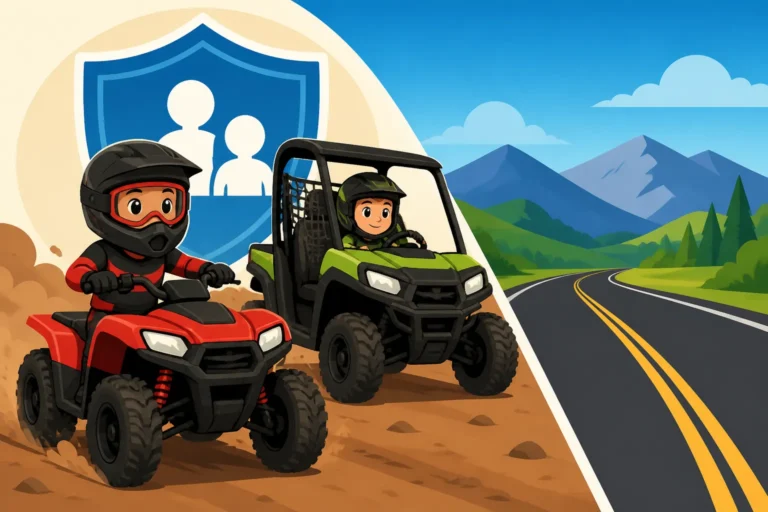
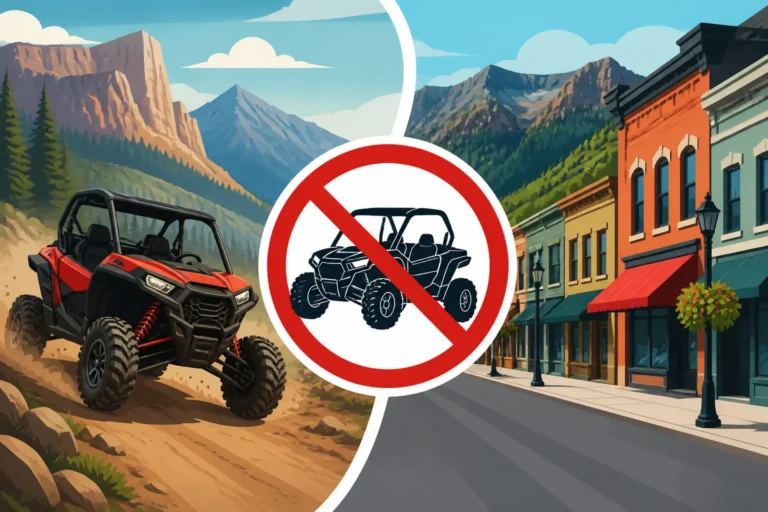
One of the biggest areas of confusion, and a source of countless violations, revolves around the term "street legal." Many riders, particularly those from other states where OHVs can be fully registered and plated for road use, arrive in Colorado with the misconception that their side-by-side or ATV can be driven on any public road. Unfortunately, Colorado has a very specific and limited approach to OHV road use. Unlike some other states, Colorado does not offer a statewide "street legal" license plate for ATVs and UTVs. While some counties and municipalities have opened certain designated roads to OHVs, these are always exceptions to the rule, not the rule itself.
This creates a significant trap for riders. They might invest in turn signals, horns, and mirrors—accessories that a brand like SuperATV offers to help with road-readiness—believing these modifications make their machine street legal. While these are excellent safety additions and often required for the limited road use that is allowed, they do not magically grant you the right to cruise down a state highway or a closed county road. Understanding that "road legal" in Colorado is a patchwork of local ordinances and not a blanket state endorsement is crucial to avoiding illegal road riding. You can learn more about this in [Why Colorado Will Not Plate Your UTV].
Road Riding: When the Asphalt Beckons and Rules Get Bent
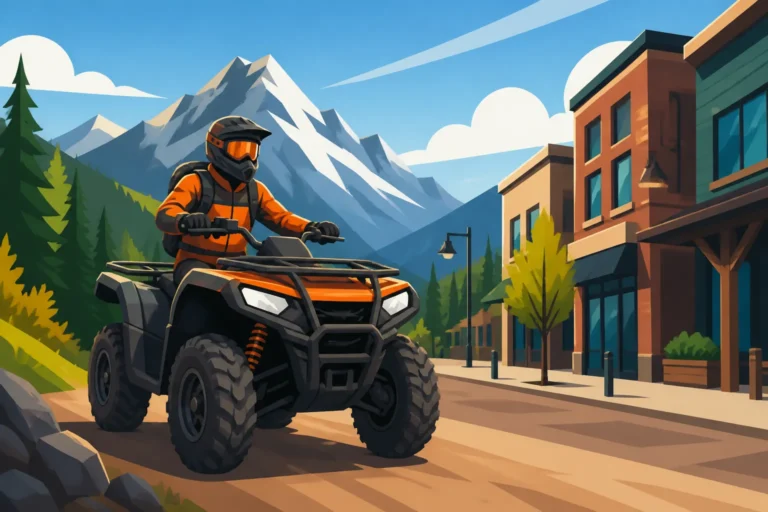
The call of the open road is strong, and sometimes it's simply the most direct way to get from your campsite to a trailhead, or from one trail system to another. Colorado has made some strides in opening some county roads to OHVs, especially in recreation-focused mountain communities. However, these opportunities come with stringent rules, and it’s these specific requirements that are often overlooked, leading to many riders finding themselves facing fines. Understanding the nuances of Colorado's road access laws is paramount to avoiding citations and enjoying your ride responsibly.
It's common for riders to see another OHV on a paved road and assume that if one can do it, everyone can. This perception is often misleading. That other rider might be in a municipality with a specific ordinance, or they might be breaking the law themselves. The critical takeaway is that you cannot assume blanket permission. Always verify the rules for the specific road or town you intend to ride in. This diligence prevents many of the most common, and frustrating, road-related violations.
Unregistered Machines on Public Roads (and Off!)
One of the most fundamental rules often broken, both on and off designated roads, is operating an unregistered OHV. Every ATV, UTV, or dirt bike primarily operated in Colorado must be registered with Colorado Parks and Wildlife (CPW) and display a current OHV sticker. This isn't just for public land; it applies to all riding, even if you’re just crossing a paved road that’s been designated as an OHV route. The funds from these registrations go directly back into maintaining our trail systems and supporting search and rescue operations, so it's a vital part of keeping our riding areas viable.
Many riders, especially those from out of state, might overlook this requirement or assume their home state registration is sufficient. While Colorado does have some reciprocity for plated street-legal vehicles from other states under certain conditions, a typical out-of-state OHV registration sticker isn't usually enough for machines primarily kept or operated in Colorado. This sticker is your official permission slip to ride the trails and authorized roads. Without it, you're not just risking a fine; you're not contributing to the upkeep of the very trails you enjoy. The [Penalties for an Unregistered OHV in Colorado] can be quite steep, making this an easy-to-avoid but often-violated rule.
Ignoring Local OHV Ordinances and Road Closures
Even in towns that have opened their streets to OHVs, there are almost always specific conditions. These can include designated routes, specific hours of operation, speed limits, and requirements for safety equipment like mirrors, turn signals, and horns. Failing to follow these local rules is a very common mistake. For example, a town might allow OHVs on certain county roads leading to a trailhead, but explicitly prohibit them on its main street or within residential areas. Riders who don't consult local ordinances or look for specific signage often find themselves in hot water.
Another frequent violation involves riding on roads that are simply not open to OHVs at all. This can include state highways (except for very specific, short crossings), private roads, or county roads that have not passed a local ordinance allowing OHV use. Ignorance of these specific local rules is not a defense. It's the rider's responsibility to know the lay of the land, both literally and legally. Before you plan to ride through any town or on any paved section, always check the local sheriff's office or town website for their specific OHV ordinances. [Colorado Fines for Illegal Road Riding] are not fun to deal with on your mountain adventure.
Improper Safety Equipment for Road Use
When OHVs are allowed on designated roads, they often come with additional equipment requirements beyond what's needed for strictly off-road use. These typically include:
- Headlights and Taillights: Must be functional and used during specific hours or conditions.
- Brake Lights: Essential for signaling stops to other traffic.
- Mirrors: Often required for rear visibility, one on the left side at a minimum, or dual mirrors for a side-by-side. Many riders opt for quality aftermarket mirrors from a company like SuperATV to ensure durability and good visibility.
- Horn: A working horn is usually mandatory to alert other vehicles or pedestrians.
- Muffler and Spark Arrester: While always required on public lands, proper mufflers are critical for noise control in populated areas. [Mufflers and Spark Arresters in Colorado] details these requirements.
Many riders forget to check if their machine meets all these requirements, particularly for mirrors and horns, when transitioning from trail to road. A quick visual inspection before hitting any asphalt can save you from a traffic stop and a citation. These are often easy fixes that make a big difference in safety and compliance.
| Common Road Riding Violations | Description | Typical Scenario |
|---|---|---|
| No OHV Registration Sticker | Operating without a valid, displayed CPW OHV sticker. | Out-of-state visitor assumes their home state registration is sufficient, or a resident forgets to renew. |
| Riding on Unapproved Roads | Driving on state highways, un-designated county roads, or private roads. | Rider sees a shortcut between trails, or assumes all paved roads in a mountain town are open. |
| Missing Required Equipment | Lacking mirrors, horn, proper lighting, or spark arrester for road use. | Rider only prepared machine for off-road use, not anticipating a designated road section. |
| Exceeding Speed Limits | Driving too fast on designated OHV roads, especially in town. | Rider is unaware of reduced speed limits for OHVs, or simply ignores them. |
| Improper Passenger Rules | Carrying too many passengers, or passengers without proper restraints/helmets (if required). | A family piles into a side-by-side without checking local rules for capacity or youth riders. |
Trail and Public Land Blunders: Protecting Access for Everyone
While road riding has its own set of unique rules, the majority of OHV use in Colorado happens on designated trails and public lands managed by agencies like the U.S. Forest Service and Bureau of Land Management (BLM). These areas are treasures, offering unparalleled access to stunning natural landscapes. However, because these lands are shared with hikers, mountain bikers, equestrians, and wildlife, there are strict rules in place to minimize environmental impact and ensure everyone has a safe and enjoyable experience. Many common violations on the trails stem from either a lack of awareness about these specific land management rules or a disregard for their purpose.
Every rider has a responsibility to understand and respect the regulations governing public lands. These rules are not arbitrary; they are designed to protect fragile ecosystems, prevent user conflicts, and preserve access for future generations. When riders break these rules, it doesn't just impact them personally; it can lead to increased restrictions, trail closures, and a negative perception of the entire OHV community. Maintaining positive relationships with land managers and other user groups is critical for the long-term health of our sport in Colorado.
Riding Off Designated Trails and Through Closed Areas
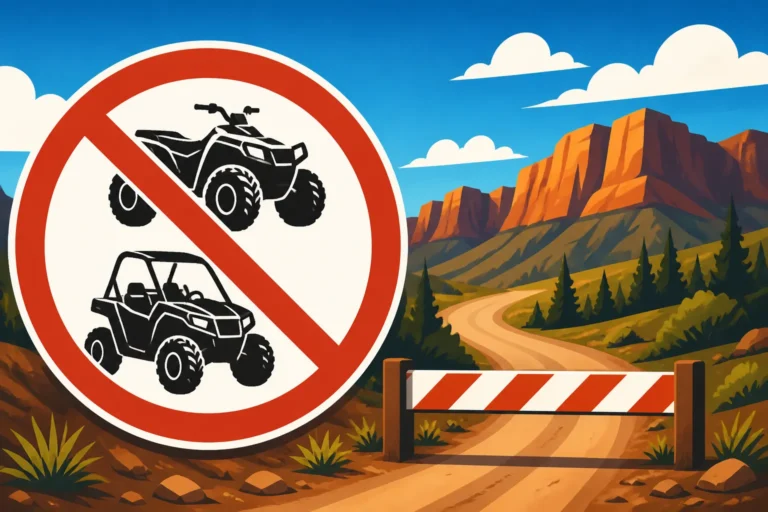
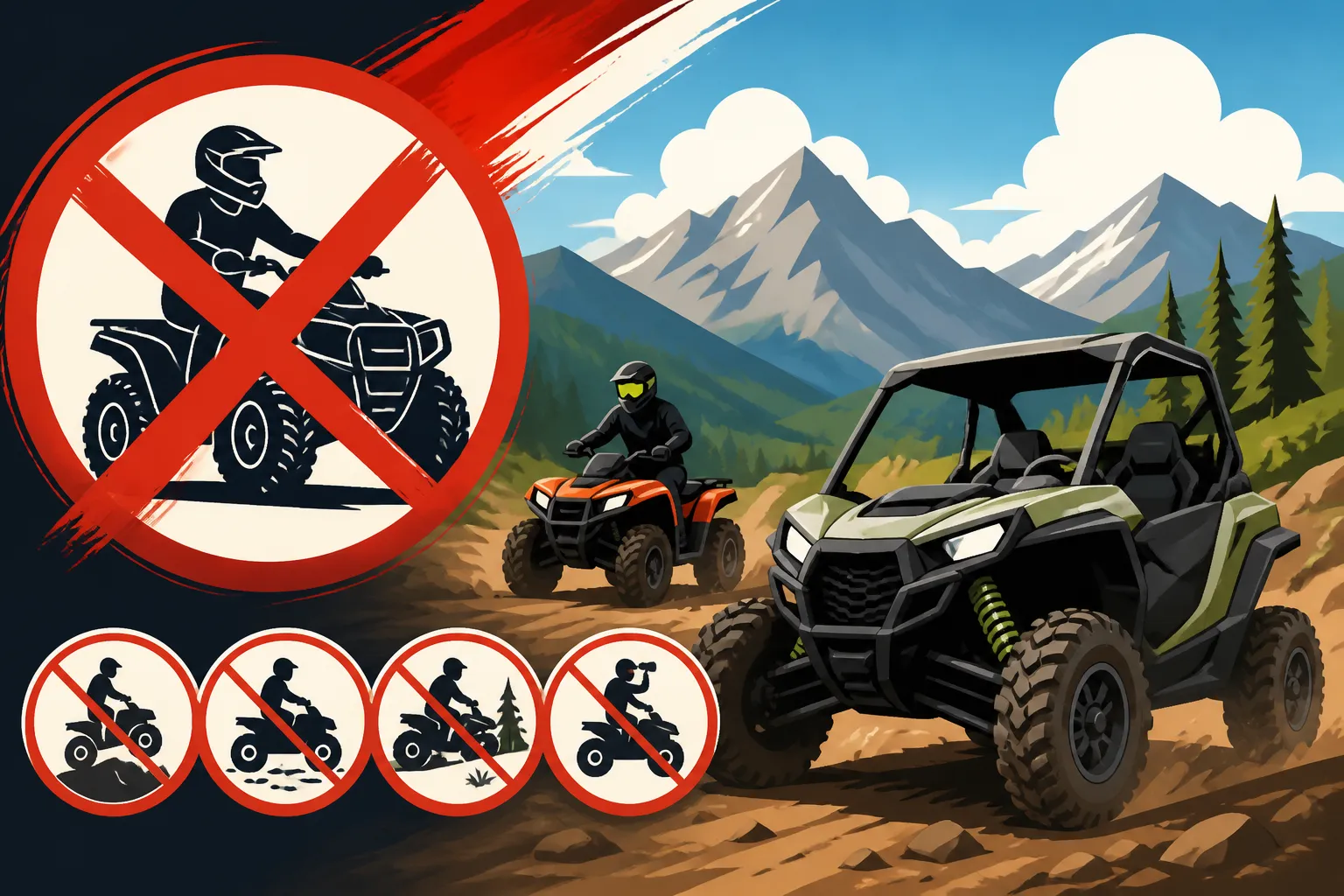
Perhaps the most damaging and frequently cited violation on public lands is riding off designated trails or entering areas that are explicitly closed to motorized use. Colorado's [Motor Vehicle Use Maps (MVUMs)] clearly delineate which roads and trails are open to OHVs, what types of vehicles are allowed (e.g., full-size, 50-inch wide, single-track), and any seasonal restrictions. Riders are legally required to stay on these marked routes. Veering off-trail, creating new "social trails," or cutting switchbacks causes severe environmental damage, leading to erosion, habitat destruction, and the spread of invasive species.
Closures can be seasonal (e.g., for mud season or winter wildlife protection) or permanent (e.g., wilderness areas, sensitive habitats). Signs are typically posted, but it's the rider's responsibility to consult current MVUMs and local alerts before heading out. Sometimes, a trail might look perfectly fine, but it's closed to protect thawing ground from deep ruts. Disregarding these closures, even if unintentional, is a serious offense that can lead to significant fines and rehabilitation costs. This is one of the quickest ways for the OHV community to lose access to cherished riding areas, as highlighted by [Colorado Trails Closed to Motorized Use].
Neglecting the OHV Permit on Public Lands
Just as with road riding, having your Colorado OHV registration sticker prominently displayed is mandatory for all public land use in Colorado. This rule often gets broken by out-of-state visitors who assume their home state registration is reciprocal, or by residents who simply forget to renew their sticker. The small green sticker on your machine is more than just a piece of paper; it's tangible proof that you're contributing to the trail maintenance, signage, and enforcement efforts that make Colorado such an incredible place to ride.
Without that permit, a ranger at a trailhead checkpoint or patrolling a trail system can issue a citation. [Colorado Ranger Checks at a Trailhead] are common, especially on busy weekends. It's an easy rule to follow, but surprisingly, it's one of the most common oversights. Make sure your sticker is current, properly affixed to the front of your machine, and visible.
Noise Violations and Aftermarket Exhausts
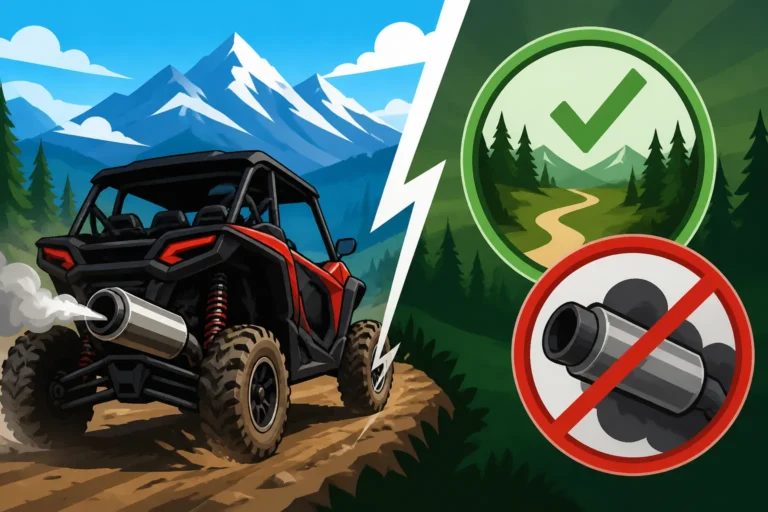
Colorado has specific noise limits for OHVs, especially in and around sensitive areas, campgrounds, or residential zones that border trail systems. Many aftermarket exhaust systems, while they might enhance performance or sound cool, can push a machine over these legal noise limits. While some riders modify their machines for performance, they often forget that these modifications must still comply with noise regulations. This is a big deal in mountain towns where residents and visitors are seeking peace and quiet.
Enforcement of noise regulations is increasing, particularly in popular riding areas. A loud machine can disturb wildlife, annoy other trail users, and lead to complaints from local communities, ultimately fueling calls for stricter OHV regulations or even closures. Always ensure your machine has a properly functioning muffler and spark arrester. If you're using an aftermarket exhaust, double-check that it's compliant with Colorado's noise standards. This is where researching products from reputable brands, like those offered by SuperATV, that meet or exceed compliance standards is key. You can find more details in [Colorado Noise Rules in Mountain Towns].
Alcohol and Drug Use While Operating an OHV
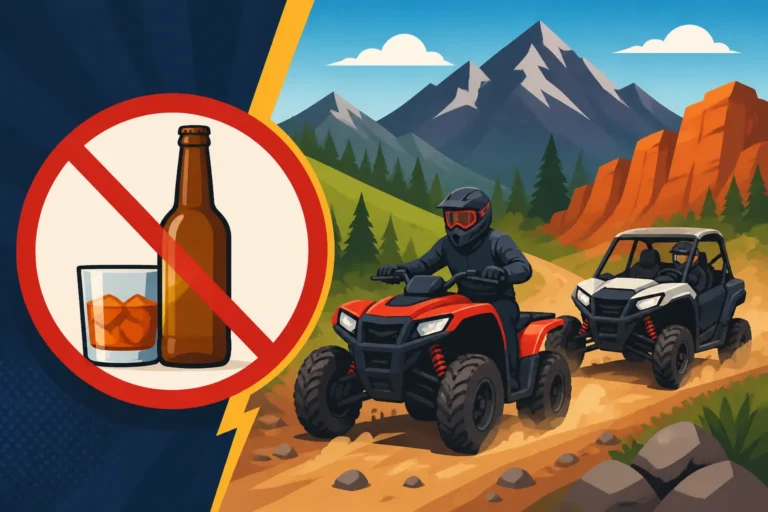
While many people associate DUIs with cars on paved roads, operating an OHV under the influence of alcohol or drugs on public land is just as illegal and carries similar serious penalties in Colorado. This rule is often broken by groups who might be camping near a trailhead and decide to take a "quick spin" after a few drinks, or by individuals who simply don't realize that OHVs fall under the same "operating a motor vehicle" laws.
The dangers of impaired riding are obvious: reduced reaction time, poor judgment, and increased risk of accidents for yourself and others. Beyond the immediate safety risks, a DUI on an OHV can result in significant fines, loss of driving privileges (for your regular vehicle too!), and even jail time. Public lands are patrolled, and rangers are vigilant about enforcing these laws. It's simply not worth the risk to your life, others' lives, or your riding privileges. Always save the celebrations for after the ride, when your machine is parked for the day. This is clearly spelled out in [Colorado Alcohol Limits for OHV Operators].
Beyond the Ticket: Why Following Rules Matters (and How to Stay Compliant)
It's easy to focus on avoiding fines and penalties, but the reasons behind Colorado's OHV rules run much deeper. These regulations are in place to ensure rider safety, protect the incredibly diverse and fragile ecosystems of our state, and maintain positive relationships between the OHV community and other land users, as well as local residents. Every time a rule is broken, it risks jeopardizing the future of motorized recreation in Colorado. Our access to these amazing lands isn't guaranteed; it's a privilege that must be earned and maintained through responsible stewardship.
Thinking about compliance proactively, rather than reacting only after a citation, is the best approach. There are many resources available to help you stay informed and prepared, ensuring that your time in Colorado's backcountry is filled with adventure, not anxiety about breaking the rules. Understanding why the rules exist can often make them easier to remember and follow. It transforms compliance from a chore into a contribution to the community and the environment.
The Bigger Picture: Preservation and Access
When riders unintentionally (or intentionally) break rules like riding off-trail, ignoring closures, or creating excessive noise, the repercussions extend far beyond a single fine. Environmental damage from off-trail riding can take decades to heal, and in some cases, it can be permanent. Erosion from illegal routes can impact water quality, damage fish habitats, and destroy sensitive plant life. Noise pollution can disturb wildlife and detract from the experience of hikers or campers seeking solitude.
These actions fuel public outcry and provide ammunition for groups advocating for more stringent restrictions, or even outright bans, on OHV use in certain areas. Land managers, under pressure from diverse user groups, might be forced to close trails or entire areas to motorized vehicles to mitigate damage or reduce conflict. The more violations that occur, the more difficult it becomes for agencies to justify continued OHV access. Every compliant rider contributes to a positive image of the sport and strengthens the argument for continued access to our trails.
Practical Tips for Staying Compliant
Staying on the right side of the law doesn't have to be a headache. With a little preparation and mindfulness, you can enjoy Colorado's trails worry-free. Here are some actionable steps:
- Get Your Sticker: The absolute first step is ensuring your OHV has a current Colorado Parks and Wildlife registration sticker. This applies whether you're a resident or a non-resident. You can often buy them online, by phone, or at numerous vendors across the state. Check out [Colorado OHV Registration Vendors Across the State] for more information.
- Know Before You Go: This is perhaps the most important tip. Before every ride, consult current Motor Vehicle Use Maps (MVUMs) for the area you plan to visit. These free maps, available from Forest Service or BLM offices (and often online), clearly mark open trails, closures, and vehicle restrictions. Don't rely on memory or old maps. Also, check local county or town websites for any specific OHV ordinances if you plan on riding in or near a community. Learning how to navigate and interpret these maps is vital for [Reading a Colorado Motor Vehicle Use Map].
- Inspect Your Machine: Before you hit the trail or any designated road, do a quick safety and compliance check. Are your lights working? Do you have mirrors if you'll be on a road section? Is your muffler intact, and do you have a spark arrester? Ensure your machine is in good working order to prevent mechanical issues that could leave you stranded or tempt you to take an illegal shortcut.
- Ride Sober and Responsibly: Never operate an OHV under the influence of alcohol or drugs. Period. Also, always ride within your skill level and the capabilities of your machine. Aggressive or reckless riding not only endangers yourself and others but also contributes to negative perceptions of OHV riders.
- Pack Out What You Pack In: Leave no trace. This fundamental principle of outdoor ethics is crucial. Pack out all trash, and make sure nothing accidentally falls off your machine.
- Be a Good Neighbor: Respect other trail users (hikers, bikers, equestrians) by slowing down, giving them space, and being courteous. When passing through towns or near private property, reduce your speed and keep noise to a minimum. A friendly wave goes a long way.
By taking these steps, you not only protect yourself from citations but also contribute to the long-term enjoyment and accessibility of Colorado's incredible OHV opportunities for everyone. Let's keep our trails open and our adventures responsible.
Disclaimer
This article is for general informational purposes only and does not constitute professional advice. Laws, prices and regulations vary by location and change over time. Consult a qualified professional for guidance on your specific situation.