Lightning Above Treeline on an OHV
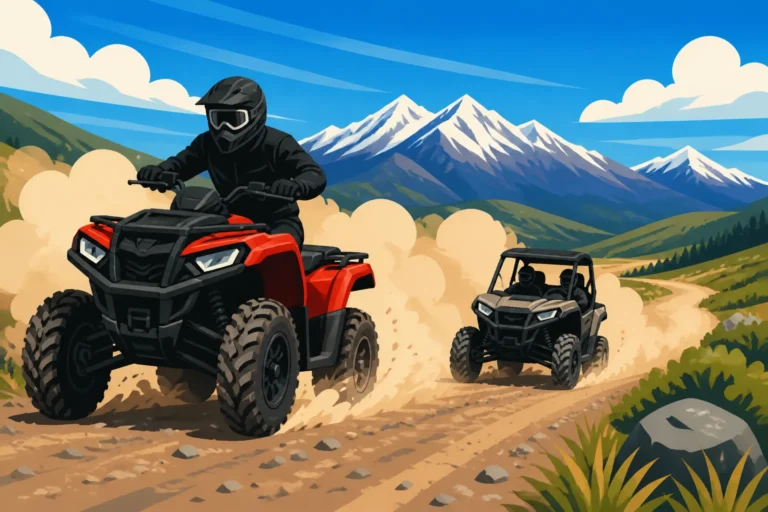
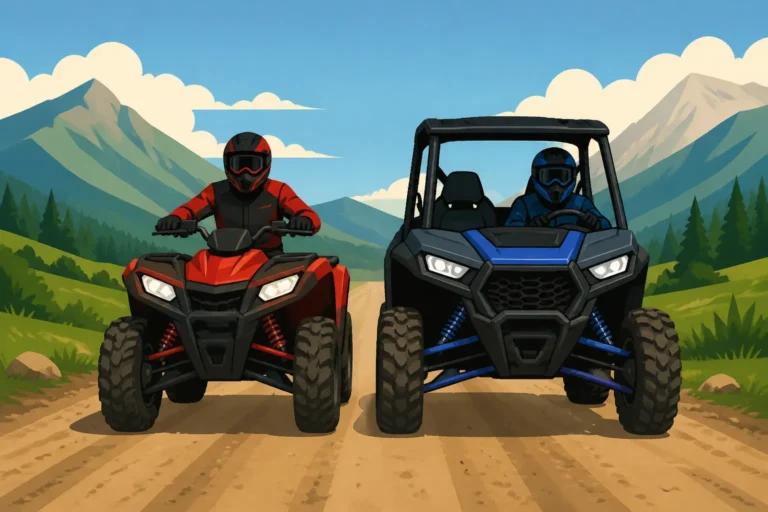
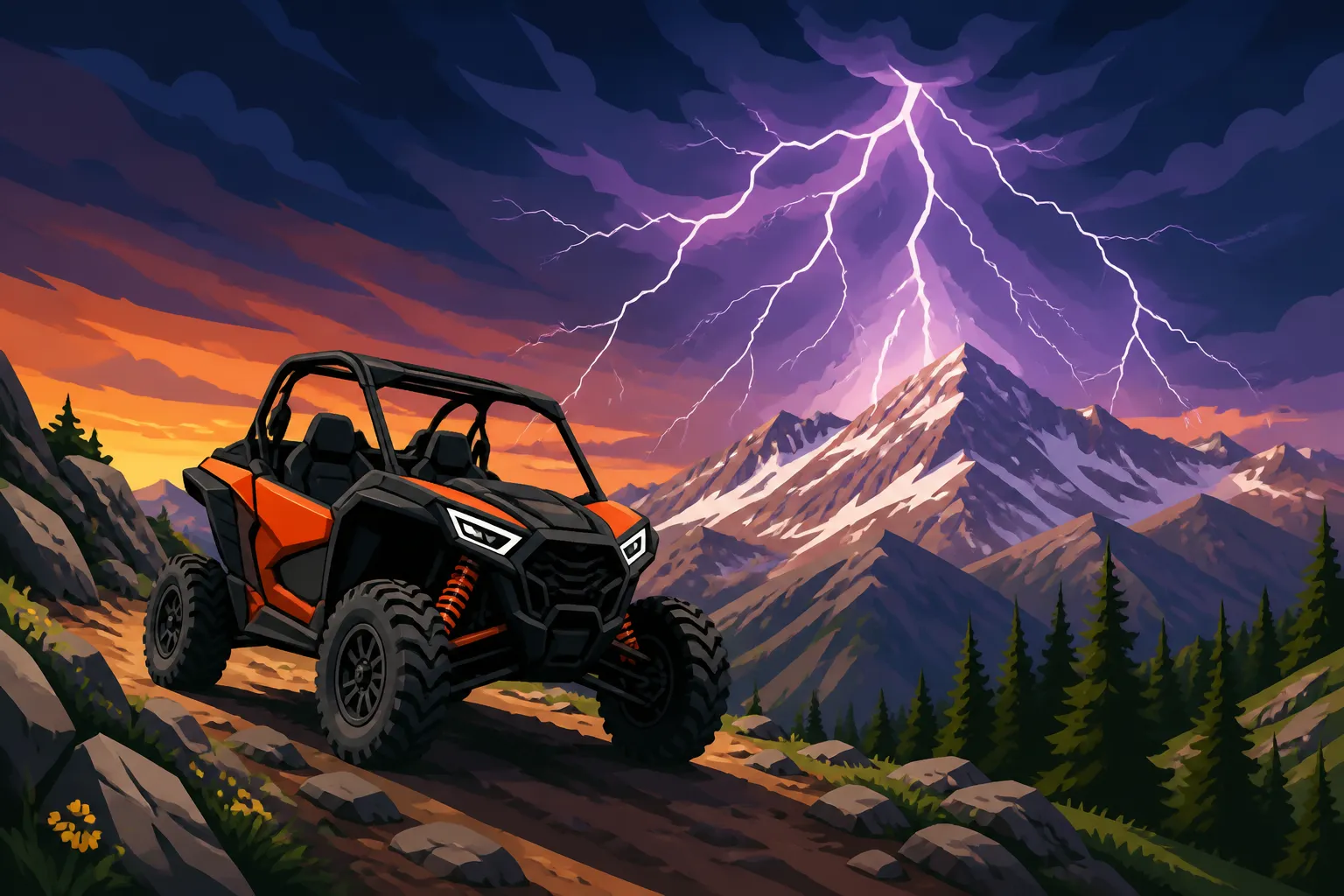
There's nothing quite like the exhilaration of riding your ATV or UTV high above the treeline in Colorado, where the air is thin, the views are endless, and you feel on top of the world. But that breathtaking beauty comes with a serious, often underestimated, risk: sudden, violent afternoon thunderstorms and the very real danger of lightning strikes. Getting caught exposed up there can quickly turn a dream ride into a terrifying ordeal, leaving you feeling vulnerable and frantic for safety. This guide will walk you through the harsh realities of mountain weather, how to prepare, and what crucial steps to take if you find yourself facing down a lightning storm while out on the trails.
The Harsh Reality of Colorado Mountain Weather and Lightning
Colorado's high country is a land of dramatic beauty, but also dramatic, fast-changing weather. One minute you could be basking in glorious sunshine, and the next, dark clouds roll in with alarming speed, bringing with them a very real threat of lightning. For off-highway vehicle (OHV) riders, this isn't just a concern; it's a critical safety issue that demands respect and preparation.
Why Treeline is Such a Risk Zone
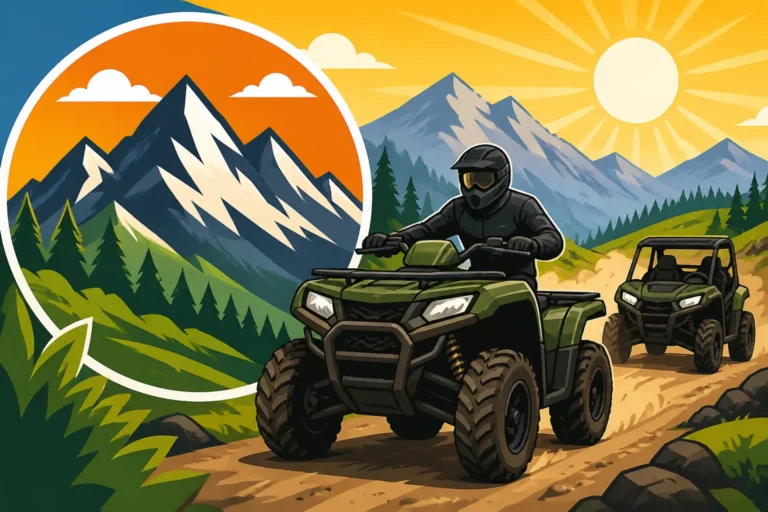
The treeline, typically found between 11,000 and 12,000 feet in Colorado, marks a crucial boundary for OHV riders. Below it, you have the relative protection of dense forests, where taller trees act as natural lightning rods, often taking the strike instead of you. Above it, however, you become the tallest object in a vast, open landscape, especially when seated on a metal machine. This makes you, and your OHV, prime targets for a lightning strike. The sheer exposure, combined with the rapid formation of storms, creates a uniquely dangerous environment that far too many riders underestimate.
Consider the physics for a moment: lightning seeks the path of least resistance to the ground. In an open alpine meadow, your helmeted head on a UTV or ATV might be the highest point for hundreds of yards. The metal frame of your machine, while it might offer some conductivity for a strike if you were perfectly grounded and sealed within it, is far more likely to conduct the current directly through you if you're touching it. It's a terrifying thought, but understanding the mechanics helps drive home the urgency of getting to safety. Furthermore, these high elevations often have less atmospheric shielding, meaning strikes can be more powerful and feel more immediate.
Recognizing the Signs of an Approaching Storm
You can't always rely on a perfect forecast, especially when you're deep in the mountains. Mountain weather has a notorious habit of forming locally and rapidly, often defying broader regional predictions. Therefore, developing an acute awareness of your surroundings is paramount. Always check the forecast before you leave home, but then keep checking the sky with diligence throughout your ride.
Look for visual cues: developing cumulus clouds that begin to build vertically into towering, dark thunderheads, often with anvil-shaped tops pointing in the direction the storm is moving. A sudden drop in temperature, especially when it's been warm, can also be a clear warning sign, as can a shift in wind direction or an increase in wind speed. Most critically, listen for distant thunder. If you hear thunder, even if it sounds far off, lightning is close enough to strike you. The general rule of thumb is: "When thunder roars, go indoors!" or, in our case, "When thunder roars, get below treeline or into a vehicle with a solid roof and metal frame!" You might also notice an odd calm before the storm, a stillness in the air that can be unsettlingly quiet before the wind and rain arrive. Keep an eye on [Afternoon Thunderstorms on a Pass] for more insights on this.
It's tempting to think you have time, but those storms can go from a few fluffy clouds to a full-blown tempest in minutes, especially in areas like the San Juan Mountains or the Flat Tops. One minute you're enjoying the view from Engineer Pass, the next you're hearing crackles in the air and seeing flashes. Having a robust GPS system like [onX Offroad for Colorado Trails] can help you identify quicker descent routes or nearby shelters if needed, but the best defense is always early detection and prompt action.
Immediate Actions When Lightning Strikes (or Threatens) Above Treeline
When those storm clouds start to loom large and the distant rumble of thunder turns into a closer growl, the time for sightseeing is over. Your priority shifts instantly to safety, and the actions you take in those crucial moments can literally be life-saving. Panic is your enemy; a clear head and a pre-planned strategy are your best friends.
The Critical Need to Descend Immediately
Your absolute number one priority is to get below treeline as quickly and safely as possible. This means turning around and heading down the mountain, even if it means cutting your ride short. Do not hesitate. Every minute you spend exposed above the trees increases your risk. A rapid descent helps you reach a safer elevation where the taller trees can provide some natural protection, acting as lightning rods themselves.
Trying to outrun a storm on your OHV, especially if you're on a narrow, technical trail, is a risky gamble. While OHVs can be fast, lightning travels at incredible speeds and can strike miles from the storm's core. Focus on navigating carefully but efficiently. If you're on a graded county road, you can likely make good time. However, if you're on challenging terrain like a steep, rocky climb that you just conquered, turning back can be tricky. This is where pre-ride planning comes in handy—knowing your bail-out routes and understanding the difficulty of descending a specific trail. Remember, even the most durable components, like those you might find from a company like SuperATV, won't save you from a lightning strike. Your best bet is to remove yourself from the high-risk environment.
What to Do If You Can't Get Below Treeline
Sometimes, despite your best efforts, you might get caught. Perhaps the storm materialized too fast, or you were too far from a safe descent. In these dire circumstances, you need to implement a "last resort" safety protocol. This isn't ideal, but it significantly reduces your risk compared to just standing there.
First, get off your OHV. Your machine, with its metal frame and prominent position, can act as a conductor. Move at least 100 feet away from it and any other tall metal objects. Seek out the lowest possible ground—a ditch, a depression, or a small valley. Avoid isolated tall trees, power poles, or rock outcroppings. Spread out from any other riders in your group; ideally, maintain at least 50-100 feet between individuals. This prevents a single strike from affecting multiple people.
Next, adopt the "lightning crouch." Crouch down low, with your feet together, placing your hands over your ears. Minimize your contact with the ground by only touching the ground with the balls of your feet. Do not lie flat on the ground, as this increases your contact area and makes you more vulnerable to ground current, which can travel through the wet earth after a strike. Stay in this position until the storm has clearly passed and you haven't heard thunder for at least 30 minutes. It will be uncomfortable, but it could save your life. Remember that [What to Carry Over a High Pass] should always include emergency layers, as temperatures drop fast during these storms.
Here's a quick summary of what to do and what to avoid:
| Action to Take | Action to Avoid |
|---|---|
| Descend immediately below treeline. | Staying above treeline for any reason. |
| Get off your OHV and move 100+ ft away. | Remaining on or touching your OHV. |
| Seek lowest ground (ditch, depression). | Hiding under isolated trees or rock overhangs. |
| Spread out from other riders (50-100 ft). | Huddling in a group. |
| Adopt the lightning crouch (feet together). | Lying flat on the ground. |
| Wait 30 minutes after last thunder. | Resuming travel too soon. |
Always remember that cell service can be spotty at high altitudes, so calling for help might not be an option. [Cell Service on Colorado Mountain Trails] is often non-existent when you need it most.
Preparing for the Inevitable: Pre-Ride Planning and Gear for High-Altitude Riding
While we hope to never encounter a lightning storm above treeline, hope is not a strategy. Preparation is key to mitigating risks and ensuring you can react effectively when danger arises. A little foresight before you even leave the trailhead can make a world of difference.
Essential Weather Monitoring and Route Planning
Before you even load your OHV onto the trailer, make comprehensive weather checks a non-negotiable part of your routine. Don't just check one source; look at multiple weather apps and forecasts. Pay particular attention to the "hourly" forecasts for the specific elevation you plan to be riding, not just the nearest town in the valley. Mountain forecasts often predict clear mornings with a "chance of afternoon thunderstorms" – that's your cue to be off the high peaks by noon or early afternoon. Plan your ride to be descending from the highest elevations by this time.
Review your route carefully. Identify potential "escape routes" or quicker paths to lower elevation if the weather turns. This is where a detailed map, either paper or digital like the ones you find on good GPS units, becomes invaluable. Look for roads or trails that allow for a faster descent. For instance, if you're exploring the Alpine Loop, know which segments have quicker exits to paved roads or lower valleys. [Planning a Colorado Riding Trip] should always include mapping out these alternatives. If you're riding with a group, communicate your weather plan and designated meeting points in case you get separated.
What to Carry for High-Altitude Survival
Beyond your usual riding gear, specific items are critical for high-altitude, variable weather conditions. These aren't luxuries; they're necessities for survival, especially if you get stranded during a storm.
- Rain Gear: Full waterproof rain jacket and pants are non-negotiable. Mountain rain can be torrential and icy cold, even in summer. Getting soaked quickly leads to hypothermia, which complicates any emergency situation.
- Extra Layers: Pack warm, non-cotton layers, including a fleece or down jacket, a warm hat, and gloves. Temperatures can drop 20-30 degrees Fahrenheit in minutes during a storm, and strong winds can make it feel even colder.
- Emergency Blanket/Bivy Sack: A Mylar emergency blanket or a lightweight emergency bivy can be a lifesaver for retaining body heat if you get stuck waiting out a storm.
- Satellite Messenger/PLB: Cell service is notoriously unreliable in the high country. A satellite messenger (like a Garmin InReach or Spot device) allows you to send emergency messages, communicate with family, and even get weather updates when you have no cell signal. This is arguably the most important piece of emergency gear for any remote ride. [What to Carry Over a High Pass] lists other essentials.
- First Aid Kit: A comprehensive kit with supplies for cuts, scrapes, sprains, and altitude sickness.
- Water and Snacks: Staying hydrated and nourished is crucial, especially if you're exerting yourself or are delayed.
- Navigation Tools: Beyond your OHV's dashboard, carry a separate GPS device or a smartphone with downloaded offline maps (and a power bank!). A good old-fashioned paper map and compass are also wise backups.
- Basic Tool Kit: For minor repairs, like a flat tire.
- Headlamp/Flashlight: If you get caught out late or have to descend in low light.
Ensure all your gear is stored in waterproof bags or containers, like sturdy cargo boxes, perhaps even from a brand like SuperATV, to keep it dry and accessible. Preparing for [Altitude Sickness on a Riding Trip] is also critical, as it can impair judgment in an emergency.
Long-Term Safety and Education
Understanding the immediate actions is vital, but fostering a long-term culture of safety and education within your riding group can further reduce risks and build confidence for those challenging mountain adventures. The more informed and prepared everyone is, the better equipped you'll be as a team.
Understanding Lightning's Behavior and Impact
Lightning isn't just a direct strike from the sky; it can behave in several dangerous ways. A direct strike is rare but devastating. More common are ground currents, which occur when lightning strikes the ground nearby and the electrical charge spreads outward. This ground current can travel through the wet earth and cause injury or death, even if you weren't directly hit. Side flashes, where lightning jumps from a taller object (like a tree) to a nearby shorter one (like you), are also a risk. Knowing these different behaviors reinforces the need to distance yourself from tall objects and minimize ground contact.
Lightning can also strike far from the center of a storm, sometimes as much as 10-15 miles away. These are often called "bolts from the blue" and emphasize that if you can hear thunder, you are already within striking distance. Educating yourself on these nuances beyond just the basic "don't get hit" rule empowers you to make smarter, more cautious decisions in the field. This isn't about fear-mongering; it's about respecting the immense power of nature.
Educating Your Riding Group
If you typically ride with friends or family, make safety briefings a part of your pre-ride ritual. Discuss the forecast, the plan for severe weather, and everyone's role if a storm hits. Ensure every member of your group understands the lightning safety protocols: when to turn back, what to do if caught above treeline, and the importance of spreading out. This is especially important when riding with children or less experienced individuals; they rely on your leadership and knowledge. [Riding Colorado Trails With Kids] requires extra vigilance.
Assign roles if needed: who has the satellite messenger, who has the first aid kit, who is responsible for checking the map. Practicing communication, even if it's just a quick "weather check" every hour, builds good habits. Consider taking a wilderness first aid course, or at least familiarizing yourself with basic emergency response for common injuries and conditions like hypothermia or altitude sickness. By sharing knowledge and developing a collective safety mindset, you transform a group of individual riders into a cohesive, prepared team ready to face whatever the Colorado mountains might throw at them. And if a local county has opened up some roads to OHV traffic, ensure everyone understands the specific local ordinances for [Colorado County Roads Open to OHVs] while also keeping an eye on the sky.
Disclaimer
This article is for general informational purposes only and does not constitute professional advice. Laws, prices and regulations vary by location and change over time. Consult a qualified professional for guidance on your specific situation.