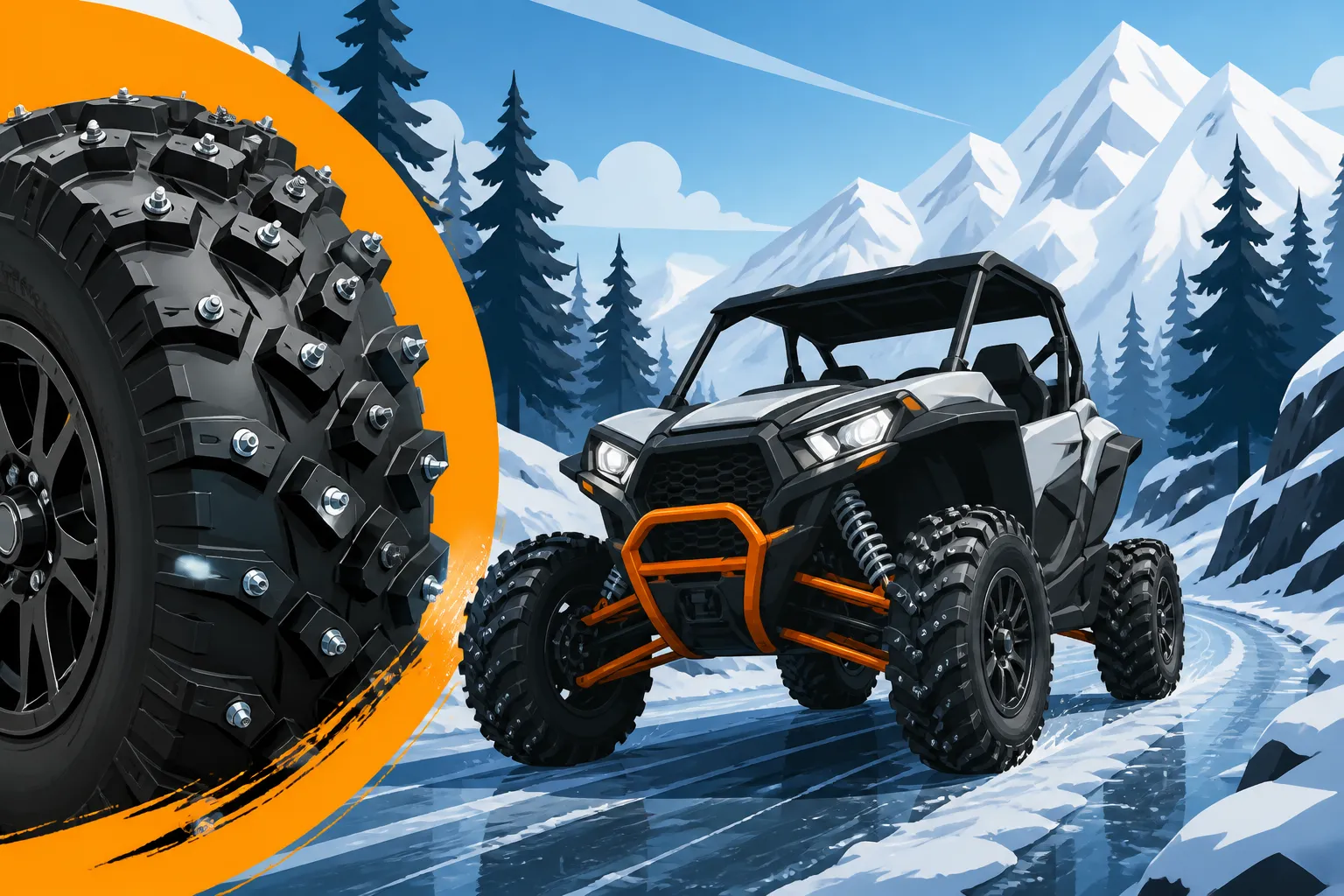
Studded Tires for Icy Forest Roads
There's nothing quite like the crisp, clear air of a Colorado winter or early spring ride on your ATV or UTV. The landscapes are absolutely breathtaking, often blanketed in pristine snow that transforms familiar trails into entirely new adventures. However, with that beauty comes a very real, often hidden danger: ice. Whether it's black ice lurking in the shadows of a forest road, or packed snow that's melted and refrozen into a treacherous glaze, losing traction on ice is a terrifying experience that can quickly turn a dream ride into a nightmare. This guide is all about equipping you with the knowledge to tackle those slick conditions safely and confidently, focusing specifically on how studded tires can be your best friend when Mother Nature throws a sheet of ice your way.
Why Studded Tires Are Essential for Colorado's Icy Forest Roads
Anyone who's spent time riding Colorado's high country knows that conditions can change in an instant. You might start your day with sunshine and clear trails, only to find yourself climbing into a shaded canyon where the melted snow from yesterday has refrozen into a slick, unforgiving surface. This isn't just an inconvenience; it's a serious safety hazard. Regular ATV or UTV tires, designed for dirt, rock, and mud, simply don't have the biting power needed for ice. That's where studded tires come in, acting as your secret weapon against the unpredictable grip of frozen terrain.
The Treacherous Nature of Black Ice and Packed Snow
Black ice is every rider's nightmare. It’s nearly invisible, blending in with the asphalt or dirt, and can appear suddenly in shady spots, especially at higher elevations or on north-facing slopes. One moment you're cruising, the next your machine is sliding uncontrollably, your heart in your throat. This can happen on a Forest Service road near [Taylor Park] or a county road leading to a popular trailhead. It's not just black ice, either. Imagine a packed snow road, well-traveled by snowmobiles or other OHVs, that has seen daytime melting and then a sharp drop in temperature overnight. What was once firm, grippy snow is now a layer of hard, slick ice.
Standard tire treads are designed to channel water, mud, and loose dirt, and to grab onto uneven surfaces. On ice, however, they simply ride on the surface, with minimal friction. This results in a frightening lack of steering control, difficulty braking, and a constant sensation of instability. You might feel a slight drift as you take a corner, only for it to escalate rapidly into a full slide. For anyone planning [Winter OHV Riding in Colorado], understanding this distinction is crucial for personal safety and machine control.
How Studded Tires Provide Superior Traction
Studded tires are fundamentally different because they introduce a critical element: sharp, hardened metal or tungsten carbide studs that physically bite into the ice. Think of them like miniature ice picks embedded in your tire tread. When your tire rolls over an icy patch, these studs dig in, creating micro-fractures in the ice that allow the tire to gain purchase where a regular tire would just slip. This dramatically increases the coefficient of friction, giving you significantly better grip for acceleration, braking, and — most importantly — steering.
The impact on control is immediate and profound. Suddenly, those slippery corners feel manageable, and braking becomes far more effective, allowing you to slow down without the machine sliding out from under you. This isn't about enabling reckless speeds on ice; it's about providing the confidence and capability to navigate treacherous sections safely, to avoid accidents, and to enjoy your ride without constant fear of losing control. Many riders who've invested in them describe it as a night and day difference, comparing it to the feeling of driving on dry pavement versus a skating rink. When you’re miles from a warm meal and a tow truck, that extra traction is invaluable.
Choosing the Right Studs and Tires for Your Colorado Adventures
Deciding to go with studded tires is a great first step, but the world of studs and tires isn't one-size-fits-all. You have options to consider, from different types of studs to the kind of tire you'll be putting them into. The right choice depends on your specific riding style, the terrain you frequent, and your budget. It’s not just about throwing any stud into any tire; it’s about a thoughtful combination that provides optimal performance and safety for your Colorado adventures, especially on those unforgiving [Colorado Forest Roads Open to OHVs].
Tire Types Best Suited for Studding
When it comes to studding, not all tires are created equal. You generally want a tire with a relatively aggressive tread pattern, but more importantly, one with deep, well-defined lugs that can securely hold the studs. The rubber compound also plays a role; a softer, more pliable rubber can perform better in cold temperatures, conforming to the terrain and retaining flexibility. Many riders opt for dedicated winter ATV/UTV tires if they plan extensive cold-weather riding, as these tires are designed with colder temperatures and deeper snow in mind. However, a good all-terrain or mud-terrain tire can also be an excellent candidate for studding, provided it has sufficient tread depth and a robust lug design.
For example, a tire with wide, blocky lugs offers plenty of surface area for stud placement, allowing for a higher density of studs and therefore more grip. Some manufacturers even produce "pre-drilled" tires, which have small indentations molded into the lugs specifically for stud installation, making the process much easier and ensuring optimal stud retention. When browsing options, consider reputable brands known for durable off-road tires. Companies like SuperATV offer a range of robust tires that could be suitable for studding, offering various tread patterns that can accommodate different stud types.
Understanding Different Stud Options: Carbide vs. Steel
The type of stud you choose makes a significant difference in performance and longevity. The two main categories are carbide-tipped studs and steel studs.
-
Carbide-Tipped Studs: These are generally considered the premium option. They feature a hardened steel body with a tungsten carbide tip. Tungsten carbide is incredibly hard and wear-resistant, meaning these studs will maintain their sharp bite for a much longer time, even with regular use on varied terrain. They offer superior grip on ice and packed snow and are more durable, making them a worthwhile investment for serious winter riders. While they cost more upfront, their longevity often makes them more economical in the long run. Many riders who depend on their machines for [Plowing a Private Colorado Road With a UTV] in winter swear by carbide studs for their reliable grip.
-
Steel Studs: These are typically less expensive than carbide-tipped studs. They are made entirely of steel and are quite effective at providing traction on ice. However, because steel is softer than tungsten carbide, these studs will wear down more quickly, especially if you frequently ride on pavement or rocky surfaces. As they wear, their effectiveness on ice diminishes, meaning you might need to replace them more often. They can be a good entry-level option or for riders who only anticipate occasional icy conditions.
Beyond the material, studs also come in various lengths and protrusion depths. Longer studs with greater protrusion will offer more aggressive bite but can also be more prone to wear or damage if ridden excessively on hard surfaces. The key is to match the stud type and length to your expected riding conditions and the specific tire you're using.
| Feature | Carbide-Tipped Studs | Steel Studs |
|---|---|---|
| Material | Hardened steel body with tungsten carbide tip | Fully hardened steel |
| Hardness/Wear | Very hard, excellent wear resistance | Softer than carbide, wears faster |
| Ice Traction | Superior, long-lasting bite | Good, effective initially but diminishes with wear |
| Durability | High, maintains effectiveness longer | Moderate, requires more frequent replacement |
| Cost | Higher initial cost | Lower initial cost |
| Best For | Frequent icy conditions, long-term use, demanding riders | Occasional icy conditions, budget-conscious riders |
| Pros | Exceptional grip, extended life, consistent performance | Affordable, provides good initial traction |
| Cons | More expensive, can still damage pavement | Wears quickly, less durable, effectiveness drops with wear |
Installation, Maintenance, and Considerations for Studded Tires
Getting your tires studded isn't just about picking out the right parts; it also involves proper installation and ongoing maintenance to ensure they perform safely and last as long as possible. Many riders consider doing it themselves, while others prefer professional help. Either way, understanding the process and the practicalities is key to maximizing your investment in [Studded Tires for Icy Forest Roads].
DIY vs. Professional Installation
Do-It-Yourself (DIY) Installation:
Many riders, especially those with a mechanical inclination, choose to stud their own tires. This can save money on labor costs and allows you to customize the stud pattern and density to your liking. You'll need a stud gun (a specialized tool that inserts the studs into the tire lugs), the studs themselves, and a good air compressor. The process involves drilling small pilot holes (if your tires aren't pre-drilled) and then using the stud gun to push the studs firmly into the tire lugs. It's a fairly straightforward process, but it can be time-consuming, especially for a full set of tires. Patience and careful attention to detail are important to ensure studs are inserted correctly and securely. For those looking for stud kits or tools, some off-road parts suppliers like SuperATV might offer them, making the DIY approach more accessible.
Professional Installation:
If you're not comfortable with DIY, or simply don't have the time or tools, most powersports dealerships or specialized tire shops can install studs for you. Professionals have the experience and equipment to do the job quickly and correctly, ensuring that the studs are properly seated and spaced for optimal performance. This can be a great option if you want peace of mind that the job is done right, especially since improper installation can lead to studs falling out prematurely or uneven wear. While it adds to the overall cost, the expertise can be well worth it, particularly for riders who rely on their machines for [Riding a Colorado Trail Through a Burn Scar] in varying conditions, where reliability is paramount.
Breaking in New Studs and Ongoing Care
Once your studded tires are installed, there's a crucial "break-in" period. For the first 50-100 miles, it's recommended to ride gently, avoiding hard acceleration, aggressive braking, and sharp turns. This allows the studs to properly seat themselves within the tire lugs and helps prevent them from tearing out. Think of it like a new engine break-in – gentle use sets the stage for long-term performance.
Ongoing care is relatively simple but important. Regularly inspect your tires for any missing or damaged studs. It's common for a few to come loose over time, especially if you ride frequently on hard or rocky surfaces. Replacing individual missing studs as needed can prolong the life of your tire set. Also, keep an eye on your tire pressure; proper inflation helps maintain the stud's grip and prevents premature wear on both the studs and the tire itself. After a particularly rough ride, cleaning any mud or debris from around the studs can also help prevent corrosion and ensure they maintain their sharp edges. If you notice significant stud loss, it might be an indicator that your riding style is too aggressive for your current stud setup or that the tires themselves are not holding the studs well.
Legalities and Practicalities of Studded Tires in Colorado
Before you hit those icy Colorado forest roads with your newly studded tires, it's crucial to understand the rules and practical implications. While incredibly effective on ice, studded tires can have a different impact on other surfaces, and there are specific regulations in Colorado regarding their use. Being informed ensures you stay legal and make the most of your traction advantage.
Colorado's Regulations on Studded Tire Use
Colorado has specific laws regarding when and where studded tires can be used on public roads, which often includes some Forest Service and county roads. Generally, the season for studded tires on paved public roads in Colorado runs from October 1st to May 31st. This window is designed to allow their use during the icy months while minimizing pavement damage during warmer periods. However, for off-highway vehicles, the rules can be a bit different, especially on unpaved forest and county roads where ice and packed snow can persist much longer, sometimes into June or even July in high-altitude passes. It is always wise to check with local Forest Service or BLM offices for specific area regulations, as some areas might have stricter rules.
It's also important to remember that these regulations primarily pertain to paved roads. Many [Colorado County Roads Open to OHVs] in the mountains are unpaved, and the intent behind using studded tires on these routes is clearly for safety in icy conditions, not for general road use. While you might use your OHV to get from your [Colorado Campground to the Trail], be mindful of paved sections and try to minimize studded tire contact with them outside the allowed dates. Ignoring these dates on paved roads can result in fines and potential damage to the road surface, which authorities are keen to prevent.
Impact on Pavement and Alternatives
While essential for ice, studded tires can cause wear and tear on paved surfaces, especially when ridden aggressively or at high speeds. The metal studs can chip away at asphalt, contributing to potholes and road degradation. This is precisely why Colorado, like many states, restricts their use to specific months. When you're transitioning between icy dirt trails and short stretches of paved road, try to reduce speed and avoid aggressive maneuvers to minimize this impact.
For riders who primarily stick to dirt and snow but encounter occasional ice, or for those who don't want the hassle of seasonal tire changes, there are a few alternatives or complementary strategies:
- Tire Chains: While more cumbersome to install and not suitable for all speeds or terrain, tire chains can provide excellent traction on deep snow and ice. They are generally used for very specific, difficult sections rather than as a permanent solution.
- Siping: This involves cutting thin slits into the tread blocks of your tires, which increases the number of biting edges and improves grip on slick surfaces. It's less aggressive than studs but can offer a noticeable improvement.
- Lowering Tire Pressure: While not a solution for ice on its own, slightly lowering tire pressure can increase the tire's footprint, providing more surface area contact with the ground, which can help in certain snow conditions. However, be cautious not to go too low, as it can de-bead a tire or damage the sidewall.
- Winter-Specific Tire Compounds: Some manufacturers offer ATV/UTV tires made from rubber compounds designed to remain pliable in freezing temperatures, offering better grip than standard all-season tires without the use of studs.
Ultimately, for dedicated icy conditions on Colorado's unpaved forest roads, studded tires remain the gold standard for safety and control. They allow you to confidently explore those stunning winter landscapes without the constant anxiety of slipping and sliding, ensuring you can focus on the incredible views and the pure joy of the ride. When it comes to [Cold Weather Gear for a High Pass], reliable traction is as important as warm clothing.
Disclaimer
This article is for general informational purposes only and does not constitute professional advice. Laws, prices and regulations vary by location and change over time. Consult a qualified professional for guidance on your specific situation.