Yielding Where a Road Crosses a Trail
Colorado OHV trail right-of-way rules require off-highway vehicles to yield to traffic on public roads at intersections.
Legal here, illegal one county over.
What each state allows, the mirrors, horn and signals a conversion requires, and the county and city overrides that quietly change the answer.
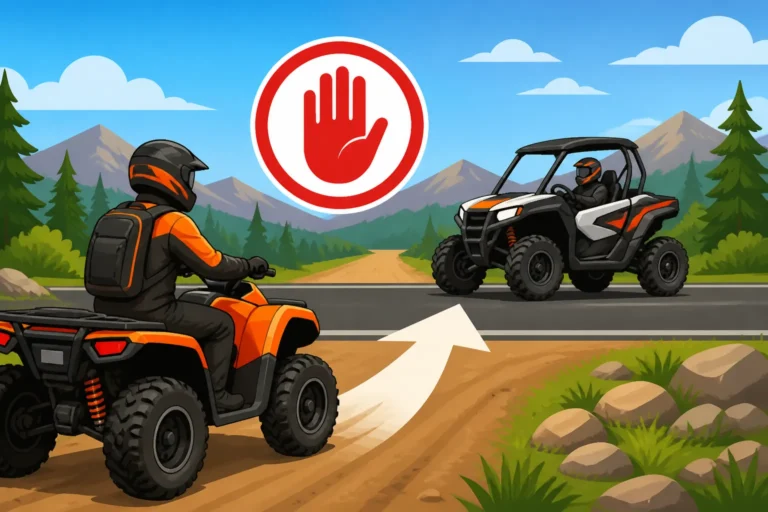
Colorado OHV trail right-of-way rules require off-highway vehicles to yield to traffic on public roads at intersections.

Colorado off-highway vehicle road rules explain how to navigate legal intersections between public highways and backcountry trails safely.
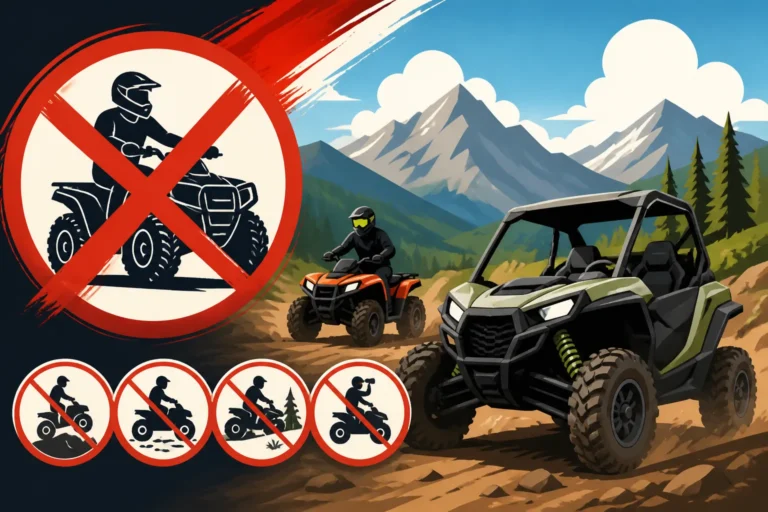
Colorado off-highway vehicle regulations explain the specific rules, registration requirements, and road use laws riders frequently break.
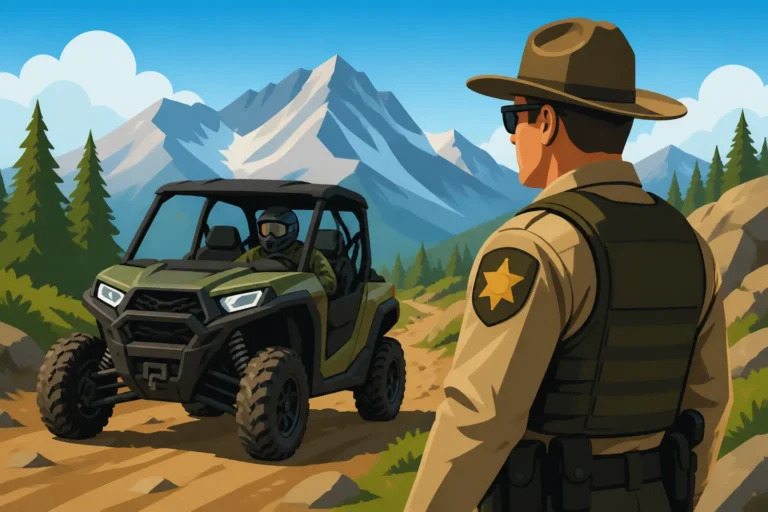
Colorado county sheriff patrols on OHV routes enforce traffic laws, registrations, speed limits, and impaired driving regulations.
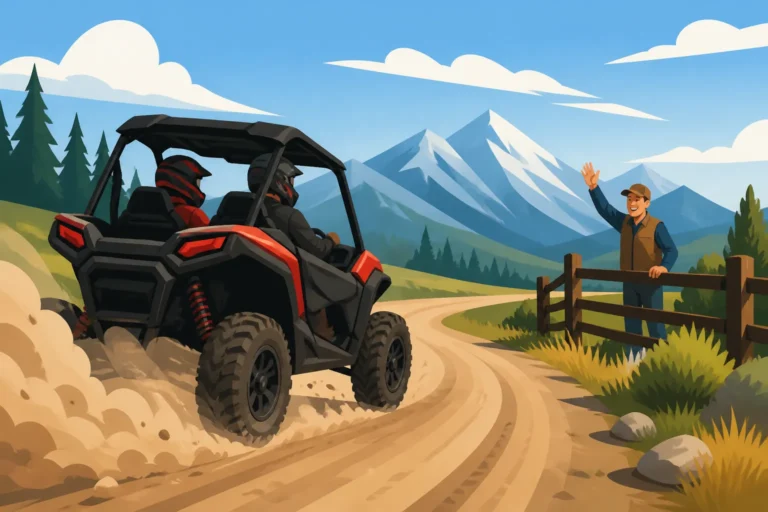
Colorado county road dust from ATVs creates environmental, health, and neighbor problems that riders can minimize.

Slow riding past Colorado homes in an ATV or UTV at 5 to 10 miles per hour preserves trail access and reduces noise and dust.

Group riding etiquette in Colorado mountain towns prevents noise complaints and protects trail access for off-highway vehicle enthusiasts.

Colorado forest road safety procedures for off-highway vehicle riders sharing trails with heavy timber trucks.

Safe sharing of Colorado mountain roads between off-highway vehicles and cyclists involves understanding right-of-way rules and blind corner hazards.

Colorado cattle guards and open range laws explain how riders safely share rural roads with livestock and ranchers.