Brake Fade on a Long Colorado Descent
There are few feelings more unsettling than being halfway down a long, winding Colorado mountain pass, relying on your ATV or UTV's brakes to keep you safe, only to press the pedal and feel… nothing. That terrifying loss of stopping power, often called brake fade, is a real and dangerous concern for anyone adventuring on our steep, high-altitude trails. This guide is here to walk you through exactly what brake fade is, why our Colorado terrain makes it such a significant risk, and most importantly, how you can prevent it and react safely if it ever happens to you.
Understanding Brake Fade: What It Is and Why It Happens on Colorado's Steep Descents
Imagine spending a glorious morning riding the Continental Divide, enjoying the crisp mountain air and panoramic views. Now, imagine starting your descent, a long, winding path down thousands of feet of elevation. You're constantly tapping the brakes, trying to maintain control. What you might not realize is that every time you touch that brake pedal, friction is being generated, and that friction creates heat—a lot of heat.
What Exactly is Brake Fade?
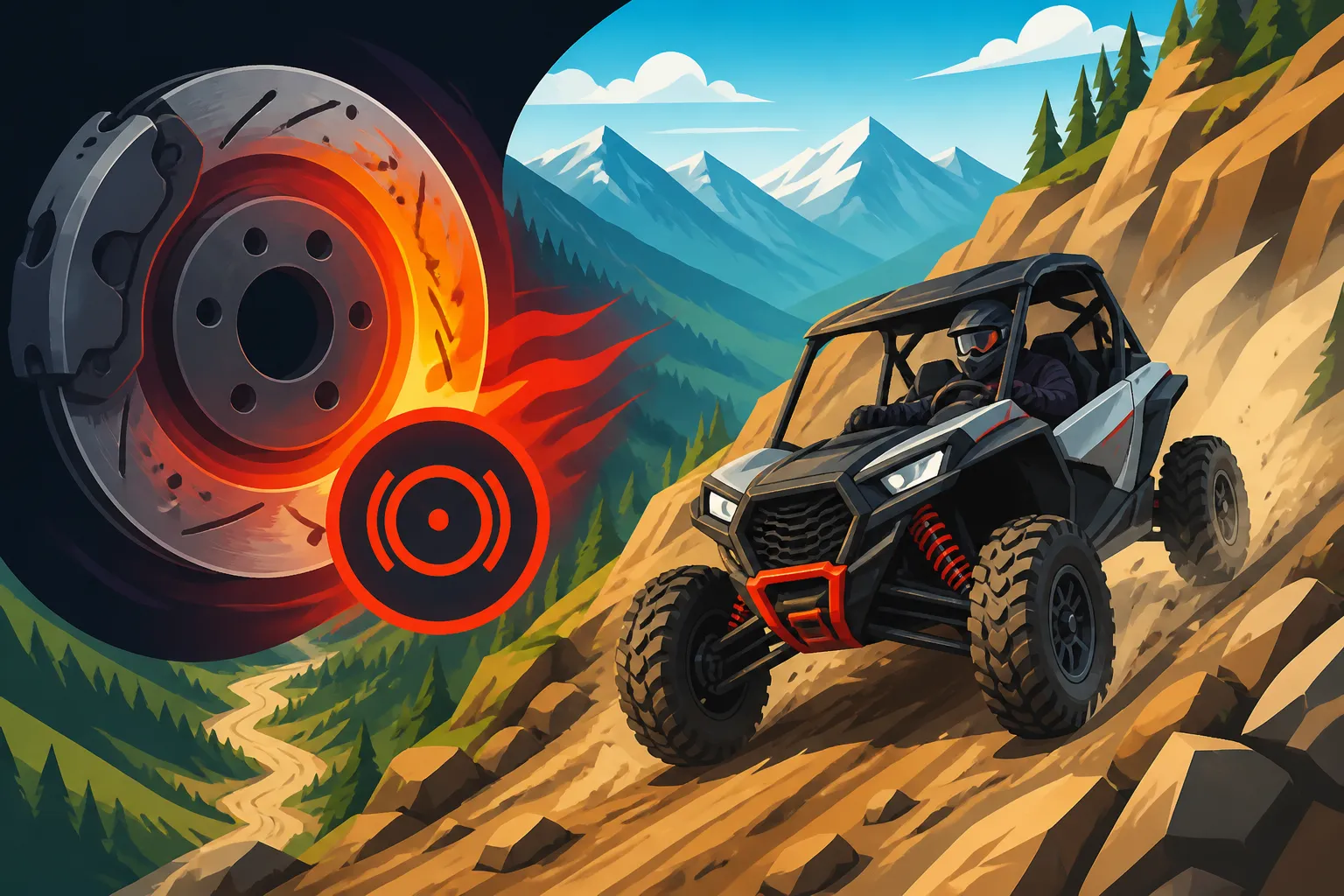
Brake fade is essentially a temporary loss of braking power due to excessive heat. Your braking system, whether it uses discs or drums, relies on friction to slow your machine. When you repeatedly apply the brakes, especially under heavy load or during prolonged deceleration, the components—brake pads, rotors, calipers, and even the brake fluid—absorb a tremendous amount of heat.
As these temperatures soar, several things can happen:
- Reduced friction: The material in your brake pads and the surface of your rotors can change their frictional properties when superheated. The pads might glaze over, or the rotor surface can become too smooth, leading to a significant drop in grip.
- Brake fluid boiling: Most brake fluids are hygroscopic, meaning they absorb moisture over time. Water has a much lower boiling point than brake fluid. When the calipers get scorching hot, this absorbed water can boil and turn into compressible gas bubbles within your brake lines. When you press the pedal, instead of pushing incompressible fluid to activate the brakes, you're compressing gas, resulting in a spongy, unresponsive pedal feel and almost no braking force. This is often called a "soft pedal" or "long pedal."
- Component expansion: Metal components like rotors and calipers expand when hot. This expansion can change tolerances within the braking system, leading to less efficient transfer of braking force.
It’s a vicious cycle: the more you brake, the hotter things get, the less effective your brakes become, leading you to brake even more forcefully, which only exacerbates the heat buildup.
The Unique Challenge of Colorado's Mountain Terrain
Colorado's mountains are a breathtaking playground for OHV enthusiasts, but they also present some of the most demanding conditions for your braking system. We're not talking about gentle rolling hills here. We're talking about sustained descents that drop thousands of feet in elevation over several miles, often with switchbacks, loose gravel, and steep grades.
Consider routes like Engineer Pass or Cinnamon Pass on the Alpine Loop. You might start at 12,000 or even 13,000 feet and descend to a valley floor around 9,000 feet, all while navigating tight turns and rocky terrain. This isn't a quick downhill sprint; it's a long, grinding process where your brakes are constantly working. The sustained nature of these descents means there's little opportunity for your brakes to cool down naturally. The thin mountain air, while beautiful, doesn't always provide the most efficient cooling either, especially when you're moving slowly and your machine's cooling fins aren't getting much airflow.
Why ATVs and UTVs Are Prone to Brake Fade
While cars and trucks are also susceptible to brake fade, ATVs and UTVs have a few characteristics that make them particularly vulnerable in mountainous terrain:
- Lighter weight, but still significant momentum: While lighter than a full-size truck, an ATV or UTV, especially a fully loaded side-by-side with passengers and gear, still carries significant momentum down a steep grade. The smaller braking systems on these machines have to work incredibly hard to manage that momentum.
- Smaller brake components: Compared to a passenger vehicle, the brake pads and rotors on an ATV or UTV are generally smaller. This means they have less surface area to dissipate heat and can reach critical temperatures faster.
- Less sophisticated cooling: Many OHV braking systems aren't designed with the same advanced cooling channels or airflows you'd find on performance street vehicles. This makes them more reliant on ambient air for cooling.
- Varied riding conditions: Unlike consistent road driving, off-road riding involves constant changes in traction, sudden stops, and often using brakes to help control steering on loose surfaces. This erratic application can contribute to heat buildup.
- Load and passenger weight: Hauling extra passengers, a cooler full of drinks, or a heavy gear bag means more weight pushing your machine downhill, demanding even more from your brakes.
- Brake dust and contamination: Off-road environments mean brakes are constantly exposed to dust, mud, and water, which can degrade pad performance and overall braking efficiency, further compounding the heat issue.
Understanding these factors is the first step in being a responsible and safe rider on Colorado's demanding trails.
Proactive Strategies to Prevent Brake Fade
The good news is that brake fade isn't an inevitable part of mountain riding. With proper technique, diligent maintenance, and some smart upgrades, you can significantly reduce your risk and keep your machine stopping reliably.
Mastering Proper Braking Techniques
This is perhaps the most crucial strategy. How you use your brakes determines how much heat they generate and how quickly.
- Intermittent, firm braking (Stab braking): Instead of dragging your brakes continuously down a hill, which rapidly builds heat, use short, firm applications. Press the brake pedal deliberately to slow your machine to a safe speed, then release it completely. Allow your vehicle to accelerate slightly before applying the brakes firmly again. This allows air to flow over the rotors and pads during the "off" periods, helping to dissipate heat. Think of it as a series of controlled pulses rather than a continuous squeeze.
- Use both front and rear brakes (if applicable): Many ATVs have independent front and rear brake controls. When descending, try to use both, as this distributes the braking load and heat more evenly across all four wheels. For UTVs, the single pedal often activates all brakes, but understanding that all four wheels are working is still important.
- Avoid panic stops: Anticipate the trail ahead. Look far down the trail for obstacles, sharp turns, or other riders. The less you have to make sudden, hard stops, the less stress you put on your braking system.
- Don't "ride" the brakes: This is the most common mistake. Resting your foot on the brake pedal, even lightly, can cause continuous friction, generating heat without providing much stopping power. Make sure your foot is off the pedal unless you are actively braking.
The Role of Engine Braking and Low Gear
This technique is your absolute best friend on a steep Colorado descent. Modern ATVs and UTVs are equipped with sophisticated drivetrains that allow the engine's compression to help slow the vehicle.
- Downshift, downshift, downshift: Before you even begin a long descent, shift your transmission into a low gear, typically 4-Low for many UTVs or a lower gear range on an ATV. This allows the engine to naturally resist the forward momentum of the machine. The higher the RPMs (within safe limits), the more engine braking force you'll generate.
- Let the engine do the work: The goal is to use your engine braking to maintain a controlled, slow descent speed without constantly touching your friction brakes. Your friction brakes should be used only for additional slowing or coming to a complete stop, not as the primary means of controlling your speed down a mountain.
- Understand your machine's system: Some machines have particularly effective engine braking systems. Get to know how yours responds. If you're struggling to maintain a slow speed in a low gear, it might be time for a short, firm brake application to bring your speed down, then allow the engine to take over again. This process is crucial for preventing [Brake Fade on a Long Colorado Descent].
Pre-Ride Inspection and Maintenance Essentials
A well-maintained braking system is a resilient braking system. Don't just check your tire pressure before a big ride.
- Check brake fluid: Regularly inspect your brake fluid reservoir. Ensure the fluid level is between the "min" and "max" marks. If it's low, investigate why – it could be a leak or worn pads. More importantly, check the fluid's condition. Brake fluid should be clear, not dark brown or black. Dark fluid indicates contamination or degradation, and it's time for a flush and replacement. Remember, brake fluid absorbs moisture, which dramatically lowers its boiling point.
- Inspect brake pads: Visually check your brake pads for wear. Most pads have wear indicators or you can simply observe the thickness of the friction material. If they're thin, replace them before your mountain trip. Worn pads offer less friction and can lead to metal-on-metal contact, which generates extreme heat and rapidly damages rotors.
- Examine rotors/drums: Look for deep grooves, cracks, or excessive discoloration on your rotors. Blue or purplish spots can indicate extreme overheating. Smooth, even surfaces are ideal.
- Check brake lines: Trace your brake lines from the master cylinder to the calipers. Look for any signs of leaks, cracks, chafing, or damage. A damaged line can lead to catastrophic brake failure.
- Bleed your brakes: If your brake pedal feels spongy even on flat ground, you might have air in your lines. Bleeding the brakes removes air bubbles, restoring a firm pedal feel. This is a vital maintenance step that many riders overlook.
Upgrading Your Brake System for Mountain Riding
Sometimes, your stock braking system just isn't quite up to the extreme demands of constant Colorado mountain riding, especially if you're frequently carrying heavy loads or pushing the limits.
- Heavy-duty brake pads: Consider upgrading to performance or heavy-duty brake pads. These are often made from compounds designed to withstand higher temperatures without losing friction or glazing over. Brands like SuperATV offer a range of aftermarket brake components that can make a real difference in performance and heat resistance.
- Slotted or drilled rotors: Aftermarket rotors with slots or drill holes are designed to dissipate heat more effectively and vent brake dust and gases, maintaining better pad contact.
- Stainless steel braided brake lines: These lines replace the standard rubber hoses, which can expand slightly under pressure and heat, leading to a softer pedal feel. Stainless steel lines provide a firmer pedal and more consistent braking performance.
- High-temperature brake fluid: Upgrade to a DOT 4 or even DOT 5.1 brake fluid, which has a higher wet and dry boiling point than standard DOT 3 fluid. Just be sure to check your machine's manual for compatibility, as DOT 5 (silicone-based) is not compatible with DOT 3, 4, or 5.1 (glycol-based) systems.
- Big Brake Kits: For extreme cases or heavily modified machines, some manufacturers, including SuperATV, offer "big brake kits" that include larger calipers, rotors, and sometimes master cylinders to provide significantly more stopping power and heat capacity. This can be a substantial investment but offers a massive performance boost for those who truly need it on challenging terrain.
Remember, prevention is always better than recovery when it comes to brake fade. Implementing these techniques and maintenance steps will go a long way in ensuring your safety.
What to Do When Brake Fade Strikes
Even with the best preparation, brake fade can sometimes catch you off guard. Perhaps you misjudged a descent, or conditions were tougher than expected. Knowing how to react calmly and correctly can mean the difference between a scary moment and a serious accident.
Immediate Actions on the Trail
That moment when you press the brake, and nothing happens, is chilling. Your gut reaction might be panic, but it's crucial to stay calm and execute these steps.
- DO NOT keep pressing the brake pedal harder: Your first instinct might be to stomp on the pedal. Resist this urge. If the fluid has boiled, or the pads are glazed, more pressure won't help and will only generate more heat, worsening the problem. If you have any remaining braking power, use it very gently and intermittently.
- Shift to an even lower gear: If you weren't already in the lowest gear, try to shift down further. This is your primary defense against a runaway vehicle. The engine compression is your best friend right now. Use gentle, controlled shifts to avoid unsettling the machine. Many UTVs, for example, have a "Low" range. Ensure you're in it.
- Look for an escape route or run-off area: While maintaining control with engine braking, scan the terrain for any level ground, an uphill section, or a softer area (like deep gravel or a brushy section) where you might be able to safely slow down or bring the machine to a stop. Avoid sudden sharp turns or veering into unknown territory.
- Use the parking brake (as a last resort, with extreme caution): If you are truly losing control and engine braking isn't enough, some machines have a parking brake that can be gently feathered to provide some additional friction. This is extremely risky, as it can lock up the rear wheels and cause a skid, especially on loose terrain. Only consider this if you have no other options and are moving very slowly, feathering it on and off rather than yanking it hard.
- Alert other riders: If you're riding in a group, signal your distress immediately. Yell, wave your arms, or use your horn. They can create space, warn oncoming traffic, or offer assistance.
Safe Recovery and Continued Descent
Once you've managed to slow your machine down or bring it to a stop, the immediate danger might be over, but you're not out of the woods yet.
- Stop and cool down: Find the safest, most stable place possible to pull over. Turn off your engine and let the machine sit. The key here is to allow the entire braking system—pads, rotors, calipers, and fluid—to cool down completely. This can take a surprisingly long time, sometimes 20 minutes or more, especially if you're in a shaded area or there's little airflow. Do not attempt to continue your descent until you are confident the brakes have recovered.
- Inspect your brakes: While waiting, visually inspect your brake components. Look for any visible damage, excessive discoloration (like blue spots on rotors), or leaking fluid. Check the brake fluid reservoir. If the fluid looks foamy or smells burnt, it has boiled.
- Test your brakes before moving: Once you believe the system has cooled, start your machine and gently test the brakes on flat ground if possible. Does the pedal feel firm again? Do the brakes engage effectively? Start with very slow, deliberate applications.
- Proceed with extreme caution: If your brakes seem to have recovered, continue your descent very slowly and deliberately. Emphasize engine braking even more. Use your friction brakes only sparingly, and make your stops shorter and firmer to prevent heat buildup. Plan frequent stops to allow for cooling periods. It might take longer, but your safety is paramount. You might even consider having another rider in your group lead the way and help spot any issues. This is especially important when considering topics like [Riding a Narrow Shelf Road Safely] or [Blind Corners on a Colorado Mountain Road].
Post-Incident Assessment and Repair
Experiencing brake fade is a wake-up call. It means your braking system was pushed beyond its limits.
- Professional inspection: Even if your brakes seem to recover, it's highly recommended to have your machine professionally inspected by a qualified mechanic as soon as possible after experiencing brake fade. Hidden damage, like warped rotors, cracked pads, or compromised brake fluid seals, might not be immediately obvious.
- Brake fluid flush and replacement: If you suspect your brake fluid boiled, it must be flushed and replaced. The absorbed water doesn't magically disappear, and its boiling point remains compromised. This is a relatively inexpensive service that can prevent future fade.
- Pad and rotor replacement: Depending on the severity of the fade, your brake pads and rotors may need to be replaced. Excessive heat can permanently alter the friction material of pads and warp or harden the surface of rotors. Look for upgrades from reputable brands like SuperATV if you found your stock setup insufficient.
- Consider upgrades: If brake fade was a recurring issue or you frequently ride in demanding terrain, now is the time to seriously consider upgrading your braking system as discussed in the prevention section. This might include heavy-duty pads, slotted rotors, or stainless steel lines. It's an investment in your safety and riding enjoyment.
- Review riding habits: Take some time to reflect on what might have contributed to the fade. Were you dragging your brakes? Not downshifting enough? This introspection helps reinforce safe riding habits for future adventures. This might also lead you to consider [Pre-Purchase Inspection at Altitude] before future machine acquisitions.
Navigating the challenging, yet rewarding, terrain of Colorado's mountains requires respect for your machine and the forces of nature. By understanding brake fade, diligently maintaining your vehicle, practicing smart riding techniques, and knowing how to react in an emergency, you can ensure your adventures remain thrilling and safe.
| Brake Fade Cause | Prevention Strategy | Emergency Reaction |
|---|---|---|
| Excessive Heat | Engine braking, intermittent braking, brake upgrades | Stop & cool down, shift to lowest gear |
| Boiling Brake Fluid | Regular fluid flush, high-temp fluid | Stop & cool down, don't pump pedal, replace fluid post-ride |
| Worn/Glazed Pads | Pre-ride inspection, replace worn pads, upgrade to HD pads | Gentle engine braking, look for run-off, professional inspection |
| Damaged Rotors | Regular inspection, avoid overheating | Stop & inspect, professional repair |
Always remember that safety comes first. A little preparation and knowledge can make all the difference when you're thousands of feet up in the Rockies.
Disclaimer
This article is for general informational purposes only and does not constitute professional advice. Laws, prices and regulations vary by location and change over time. Consult a qualified professional for guidance on your specific situation.