Why Colorado Has No Statewide OHV Helmet Law
The rules and regulations around off-highway vehicles (OHVs) in Colorado can feel like a winding mountain trail—sometimes clear, sometimes shrouded in fog, and often changing without much warning. One of the most common areas of confusion, and frankly, frustration, for riders new to the state or even seasoned locals, revolves around helmet laws. Many folks assume there's a blanket rule, a simple "yes" or "no," but the reality is far more nuanced, leaving riders scratching their heads and wondering if they're breaking the law simply by enjoying a beautiful day on the trails or a designated county road. This guide is here to untangle that complexity, explaining why Colorado doesn't have a statewide OHV helmet law for all riders, where helmets are specifically required, and why wearing one is always a wise choice regardless of the law.
The General Confusion Around Helmet Laws in Colorado
It's completely understandable why so many riders find themselves bewildered by Colorado's stance on OHV helmet requirements. After all, many other states have very clear, often universal, mandates for helmet use when operating an ATV, UTV, or dirt bike. When you pull into a Colorado trailhead, you might see some riders fully geared up, helmets securely fastened, while others might be riding open-air, hair blowing in the wind. This visual inconsistency immediately sparks questions: Who’s right? Who’s legal? And what am I missing?
Misconceptions from Other States
One of the biggest sources of confusion stems from riders bringing their experiences and expectations from other states. If you've previously ridden in, say, Utah or Arizona, where specific age groups or all riders are often required to wear helmets on public lands, it's natural to assume Colorado operates under similar statutes. You might even have friends or online forums spreading information that applies elsewhere, not here in the Centennial State. This creates a mental framework that doesn't quite fit Colorado's unique regulatory landscape, leading to a lot of second-guessing before a ride.
The truth is, each state crafts its own OHV laws based on a variety of factors, including local culture, legislative priorities, and incident data. What's considered standard practice or mandatory in one state might be entirely optional in another. For visitors, this patchwork of regulations across state lines can be a genuine headache. It's why relying on general "OHV laws" you've learned elsewhere simply won't cut it when you're gearing up to hit the amazing trails and scenic roads Colorado has to offer. You really need to dive into the specifics of Colorado's rules to avoid any unexpected run-ins with enforcement or, more importantly, to ensure your own safety.
The Difference Between Trails and Roads
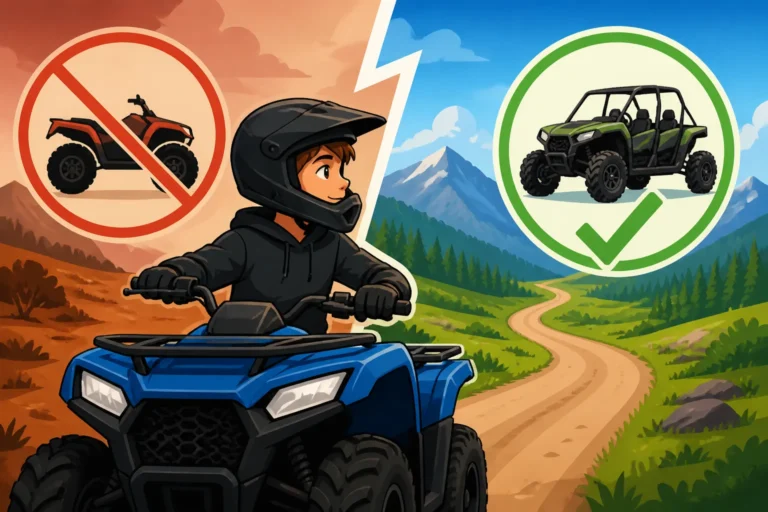
Adding another layer of complexity is the distinction Colorado often makes between designated OHV trails and public roads, even those that have been opened for OHV use. While your initial thought might be that any place you can legally ride an OHV would have consistent safety requirements, that's not always the case. A forest service trail might have one set of guidelines (or lack thereof), while a county road just a few miles down the mountain, though still open to OHVs, might fall under different local ordinances.
This means you can literally cross an imaginary line on your ride and suddenly be subject to different rules. Imagine riding through a national forest, enjoying the freedom of the open air, and then coming down into a small mountain town that has adopted an ordinance requiring helmets on their town streets or designated county roads. Without knowing this, you could unintentionally be in violation. It’s a situation that truly requires local knowledge or a keen eye on signage, which can be frustrating when all you want to do is explore without a legal dictionary in your lap.
The Role of Personal Responsibility
Given the absence of a blanket statewide helmet mandate, Colorado's approach often leans heavily on personal responsibility for adult riders. The philosophy here, in many ways, reflects a broader Western ideal of individual freedom and the ability to make personal choices regarding risk. While this offers flexibility, it also places the onus squarely on the rider to assess dangers and make informed decisions about their own safety gear.
This focus on personal choice doesn't diminish the very real risks associated with OHV riding, but rather empowers adults to decide how they mitigate those risks. However, for those who prefer clear, universally applied guidelines, this can feel like an ambiguity that forces them to guess rather than follow a definitive rule. It's a balance, and understanding this underlying philosophy helps to explain why the rules aren't as straightforward as some might expect.
Where Helmets Are Required in Colorado (and for whom)
Despite the lack of a statewide adult helmet law, there are very specific instances and demographics for whom helmets are indeed mandatory when operating an OHV in Colorado. These rules are in place for very good reasons, primarily focusing on protecting the most vulnerable riders or situations where the risk of head injury is deemed significantly higher. Knowing these specific requirements is crucial, not just for compliance but for the safety of yourself and those you ride with.
Youth Riders on Public Land
This is the most critical and widely enforced helmet requirement in Colorado: all OHV operators and passengers under the age of 18 are required to wear a DOT-approved helmet when riding on public lands. This rule is non-negotiable and applies uniformly across all state parks, national forests, BLM lands, and any other public areas where OHVs are permitted. [Colorado's Minimum Age to Ride an Opened Road] also ties into this, as does [Youth Machine Engine Sizes Colorado Families Choose] and ensuring children ride appropriately sized machines.
The intent behind this rule is clear: children and teenagers are still developing, have less experience, and often take greater risks. Their bodies, especially their heads, are more susceptible to severe injury in the event of a crash or tip-over. A helmet can literally be a lifesaver, significantly reducing the risk of traumatic brain injury. As a parent or guardian, ensuring your child wears a proper helmet isn't just about following the law; it's about protecting their future. Rangers and law enforcement officers regularly check for helmet compliance, particularly with younger riders, and penalties can be steep for violations.
Road Sections in Certain Jurisdictions
While Colorado doesn't have a statewide law requiring helmets for adults on public roads, many individual counties, cities, and towns that have opened their streets to OHVs have enacted their own local ordinances. These ordinances often include a mandatory helmet clause for all OHV operators and passengers, regardless of age, when traversing their specific road sections. This is where the confusion really escalates, as you might transition from a trail with no adult helmet requirement to a town street where one is suddenly mandatory.
For example, a town like Silverton, which is a popular hub for OHV enthusiasts, might have specific rules for riding on its streets. Other communities that have embraced OHV tourism, like Lake City or Grand County, have specific regulations detailing when and where helmets are required on their designated routes. [Colorado County Roads Open to OHVs] often come with these specific local rules. It's imperative that before you ride into or through any municipality or county with opened roads, you check their specific OHV ordinances. This information is typically available on the county or town's official website, or at local visitor centers and OHV staging areas. Ignoring these local laws could lead to fines, or worse, put you in a dangerous situation without adequate protection.
Supervision Requirements and Helmets
Tied closely to the youth helmet requirement is the rule regarding supervision for younger riders. In Colorado, individuals between the ages of 10 and 16 operating an OHV must be under the immediate supervision of a person 18 years of age or older. While the helmet rule applies to all riders under 18, the supervision rule adds an extra layer of responsibility for adults. This supervising adult is not only responsible for guiding the younger rider but also for ensuring they are compliant with all safety regulations, including wearing a DOT-approved helmet.
This isn't just about watching the younger rider; it's about active guidance and enforcement of safety protocols. [Colorado Supervision Rules on a County Road] become especially pertinent when a supervised youth is riding on open public roads. The supervising adult essentially becomes the primary enforcer of the helmet rule, as well as ensuring safe riding practices. Failure to ensure a supervised minor is wearing a helmet can reflect poorly on the adult, potentially leading to citations for both the minor (if applicable) and the supervisor. It underscores the community's commitment to protecting its youngest and most vulnerable riders.
Why No Statewide Helmet Law? Understanding Colorado's Approach
The question naturally arises: if helmets are so important for safety, especially for youth, why doesn't Colorado have a universal, statewide helmet law for all OHV riders? The answer lies in a combination of legislative philosophy, historical context, and a delicate balance between individual freedom and public safety mandates. Colorado's approach to OHV regulation often prioritizes education and personal responsibility for adults, rather than broad, universal mandates, especially when it comes to personal protective equipment.
Colorado's "Educate, Not Mandate" Philosophy
A core tenet of Colorado's OHV safety strategy for adult riders often revolves around education rather than strict mandates. The state, through agencies like Colorado Parks and Wildlife (CPW), heavily promotes OHV safety courses, best riding practices, and the use of appropriate safety gear, including helmets. However, for adults, this is presented as a strong recommendation and a matter of personal choice, not a legal requirement across the board. The thinking is that informed adults are capable of assessing risks and making their own decisions.
This philosophy manifests in various ways, such as informational brochures available at CPW offices and online, trail signage emphasizing safe riding, and partnerships with OHV clubs to promote responsible recreation. While you won't find a law telling every adult rider to wear a helmet, you'll certainly find abundant resources encouraging it. The state views its role as providing the necessary information and fostering a culture of safety, allowing individuals to then take the reins of their own protective measures. It's a hands-off approach that respects individual autonomy while still advocating for safe practices.
Balancing Freedom and Safety
The absence of a statewide adult helmet law also reflects a deeply ingrained desire to balance individual freedoms with public safety concerns. Colorado has a strong tradition of outdoor recreation and personal liberty, and for many OHV enthusiasts, the ability to ride without a helmet (where not specifically required) is seen as part of that freedom. Legislators have historically grappled with how to mandate safety without infringing too heavily on what some consider personal choice.
This balance is often a point of debate, with passionate arguments on both sides. Proponents of mandatory helmet laws point to injury statistics and the proven effectiveness of helmets in reducing fatalities and severe head trauma. Those who oppose universal mandates often argue that adults should have the right to choose their own level of risk and that excessive regulation can detract from the recreational experience. Colorado's current legal framework, therefore, represents a compromise, or at least a leaning towards, allowing adults more latitude in their personal safety gear choices while still drawing a firm line for minors.
Legislative History and Debates
The lack of a comprehensive statewide helmet law isn't an oversight; it's the result of specific legislative decisions and ongoing debates. Over the years, various proposals to introduce broader helmet mandates for OHV riders in Colorado have been introduced, discussed, and ultimately either failed to pass or were significantly watered down. These legislative battles often pit different interest groups against each other – safety advocates, medical professionals, OHV manufacturers, and various rider organizations.
The outcomes of these debates often reflect the political climate and the prevailing sentiment regarding government intervention in personal safety matters. While many states have moved towards more universal helmet laws for various motorized activities, Colorado has maintained its more nuanced approach for OHVs. This doesn't mean the conversation is over; laws and regulations are always subject to change. However, understanding this history helps to explain why, as of now, adult riders in most areas of Colorado have the choice to wear a helmet, rather than being compelled by a blanket state law.
The Importance of Helmets (Even When Not Required)
While Colorado's law doesn't mandate helmets for all adult OHV riders, it's absolutely crucial to understand that legal requirements and smart safety practices are not always the same thing. Riding an ATV or UTV carries inherent risks, and head injuries are among the most serious consequences of an accident. Therefore, regardless of what the law dictates for your age or location, wearing a high-quality, properly fitted helmet should always be a non-negotiable part of your riding routine.
Protecting Against Head Injuries
The most obvious, yet perhaps most overlooked, reason to wear a helmet is for protection against head injuries. Even a low-speed tip-over on a trail can result in hitting your head on a rock, a tree, or the hard ground. Side-by-sides, with their roll cages and seatbelts, offer a good measure of protection, but a collision or rollover can still cause your head to impact the cage or other internal components with significant force. Helmets are specifically designed to absorb and distribute impact energy, drastically reducing the severity of concussions, skull fractures, and other traumatic brain injuries.
Think about it: your brain is the command center for everything you do. A severe head injury can lead to lifelong cognitive impairments, physical disabilities, or worse. The cost of a good helmet pales in comparison to the potential medical bills, lost income, and diminished quality of life that can result from a preventable head injury. It's not about being overly cautious; it's about being prepared for the unpredictable nature of off-road riding. Even when [Adults and Helmets on Colorado OHV Trails] are not required by law, they are always a good idea.
Enhancing Visibility and Comfort
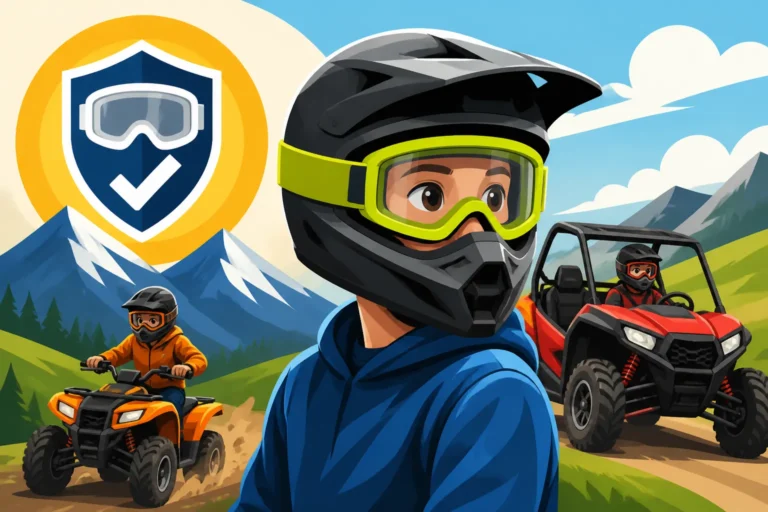
Beyond direct impact protection, modern helmets offer several other benefits that enhance your overall riding experience and safety. Many helmets include visors or can be paired with goggles (which often are required by law for youth riders and highly recommended for adults – see [Eye Protection Rules for Young Colorado Riders]), protecting your eyes from dust, branches, insects, and harsh sunlight. This improved visibility means you can better react to changing trail conditions, avoiding obstacles and potential hazards.
Furthermore, a well-ventilated helmet can actually increase your comfort by reducing wind noise fatigue and protecting your face from cold wind or sun exposure. Some helmets are designed to integrate communication systems, allowing you to talk to fellow riders or passengers, which is a significant safety advantage on group rides. The thought that helmets are restrictive or uncomfortable is often outdated; today's designs prioritize both protection and rider experience, ensuring you can focus on the ride ahead, not discomfort.
Choosing the Right Helmet for Your Ride
Not all helmets are created equal, and choosing the right one for OHV riding is important. You'll want a helmet specifically designed for off-road use, which typically means a full-face design with an extended chin bar for maximum protection and a peak (or visor) to shield from roost and sun. Look for helmets that meet recognized safety standards like DOT (Department of Transportation), Snell, or ECE. [DOT Helmet Standards for OHV Riders] are a crucial thing to understand. These certifications indicate that the helmet has undergone rigorous testing and meets minimum safety requirements.
Consider the fit above all else. A helmet that's too loose can shift during an impact, failing to protect effectively, while one that's too tight can be uncomfortable and distracting. Visit a reputable powersports dealer to try on various styles and sizes. They can help you find a snug, comfortable fit that won't move around on your head. Don't skimp on quality when it comes to head protection; it's an investment in your well-being. And just like you'd consider aftermarket parts from a trusted brand like SuperATV to enhance your machine's performance and durability, think of your helmet as the ultimate performance and durability upgrade for your head.
Youth Riders and Helmet Requirements
When it comes to the safety of our youngest riders, Colorado does not mess around. As mentioned earlier, the most definitive and widely enforced helmet law in the state pertains directly to youth riders. This isn't just a suggestion; it's a mandatory requirement designed to protect children and teenagers from the often devastating consequences of head injuries in OHV accidents. Parents and guardians have a significant responsibility to understand and comply with these rules.
Specific Age Brackets and Rules
In Colorado, any person under 18 years of age operating or riding as a passenger on an OHV on public lands must wear a properly fastened, DOT-approved helmet. This includes dirt bikes, ATVs, and side-by-sides. There are no exceptions for experience level, machine type (within the OHV category), or whether the child is riding on a designated trail or a public road opened to OHVs. The line is clear: if you're under 18 and on public land with an OHV, you need a helmet.
This age bracket covers a wide range of developmental stages, from young children just starting out on youth models to teenagers who might feel invincible on larger machines. The law recognizes that all individuals within this age group are at a higher risk due to their developing bodies, less developed judgment skills, and often, their lack of extensive riding experience. Therefore, the requirement is universal across this demographic, providing a crucial layer of protection where it's most needed.
Supervising Adults' Role
The responsibility for ensuring youth riders comply with helmet laws falls squarely on the shoulders of the supervising adult. If a minor is operating an OHV, they must be under the immediate supervision of someone 18 years or older. This adult is not just a passive observer; they are legally accountable for the minor's adherence to all OHV safety regulations, including helmet use. [Who May Supervise a Young Colorado Rider] lays out these responsibilities clearly.
Imagine you're out with your 14-year-old on a national forest trail. You, as the supervising adult, are expected to ensure their helmet is on, fastened correctly, and that it's a DOT-approved model. If a ranger encounters your child riding without a helmet, you, as the supervisor, could face a citation right alongside the minor. This shared responsibility emphasizes the seriousness with which Colorado views youth OHV safety. It's a call for active, engaged adult supervision to prevent accidents and ensure compliance.
Machine Size and Helmet Use
While helmet requirements are primarily age-based, they indirectly intersect with rules regarding machine size for youth. Colorado has specific guidelines and recommendations for the engine size of OHVs that can be operated by different age groups, particularly for riders under 16. For example, children under a certain age are typically restricted to smaller, lower-powered machines. Regardless of the machine size—whether it's a small 90cc ATV for a 10-year-old or a larger UTV for a 16-year-old—the helmet rule remains constant for anyone under 18. [Youth Machine Size Rules Colorado Parents Ask About] are worth reviewing.
Even on smaller, seemingly less dangerous machines, the risk of head injury remains significant. A machine's power and speed are only one factor in an accident; loss of balance, unexpected terrain, or simply an unfortunate tip-over can occur on any size of OHV. Therefore, the helmet serves as essential protection irrespective of the machine's capabilities, reinforcing the idea that it's the rider's vulnerability, not just the machine's power, that necessitates the safety gear.
Local Ordinances and Helmet Rules on County Roads
This is arguably the trickiest aspect of Colorado's OHV helmet laws for adult riders: the patchwork of local ordinances. Unlike a clear statewide mandate, individual counties, cities, and towns have the authority to establish their own rules for OHVs operating on local roads within their jurisdiction. This means what's legal and safe in one mountain town might be a violation just a few miles down the road in another.
County-by-County Variations
Many counties across Colorado have recognized the economic benefits of OHV tourism and have taken steps to open certain county roads for OHV use. However, these openings often come with specific stipulations, including varying helmet requirements. For instance, some counties might simply defer to the state's minimal rules (i.e., helmets for under 18), while others might implement a universal helmet requirement for all riders on their designated county road network.
This creates a significant challenge for riders who plan multi-county trips or simply traverse through different jurisdictions. You could easily start your ride in a county with no adult helmet law, enjoy some trails, and then enter another county or municipality where a helmet suddenly becomes mandatory on their specific road sections. There isn't a single, easily accessible, comprehensive map detailing all these county-specific helmet ordinances. Riders are often responsible for researching the rules of each specific county they intend to ride in, which can be quite a task.
Town Street Access and Local Rules
The situation becomes even more localized when you consider specific towns that have opened their streets to OHVs. Places like Silverton, Lake City, or Ouray, which are popular base camps for high-country riding, have all implemented specific OHV ordinances. These often detail speed limits, parking rules, and sometimes, explicit helmet requirements for all riders, regardless of age, when operating an OHV within town limits or on designated town connector roads. [Ouray and Telluride OHV Town Restrictions] are prime examples.
Imagine you've been riding all day on national forest trails, where as an adult, you're not legally required to wear a helmet. As you descend into a quaint mountain town for gas or lunch, you need to be aware that their local ordinance might suddenly mandate a helmet on those very streets. [The $300 Fine for Riding Into Silverton] is a stark reminder that local rules are enforced. Failing to check these local rules can quickly turn a relaxing stop into a costly citation, even if you were perfectly legal on the trails outside of town. It underscores the critical need for riders to do their homework before heading out on an adventure.
Staying Informed About Local Regulations
Given this complex tapestry of regulations, staying informed is paramount. Before embarking on any OHV trip in Colorado, especially one that involves riding on county roads or entering towns, you should:
- Check County and Town Websites: Look for "OHV ordinances" or "off-highway vehicle rules" on the official websites of the counties and towns you plan to visit.
- Consult Local Visitor Centers: These centers often have up-to-date brochures or staff who can advise on local OHV rules, including helmet requirements.
- Look for Signage: Pay close attention to signs at trailheads, as you enter new jurisdictions, or on designated OHV routes. These often indicate specific local rules.
- Connect with Local OHV Clubs: These clubs are often deeply familiar with local regulations and can be an invaluable resource.
While it might seem like a lot of work, being proactive about understanding local helmet laws will save you headaches, potential fines, and ensure you're riding safely and legally. This vigilance is a key part of responsible OHV recreation in Colorado.
Understanding Helmet Standards
When a helmet is required by law, or when you simply choose to wear one for your own safety, it's not enough to just put any helmet on your head. The law, especially concerning youth riders, specifically mandates a "DOT-approved" helmet. But what does that really mean, and what other standards should you be aware of? Understanding these certifications is critical to ensuring your helmet provides genuine protection.
DOT, Snell, and ECE Certifications
There are several recognized safety standards for helmets, each with its own testing protocols and requirements:
- DOT (Department of Transportation): This is the minimum federal safety standard for helmets sold and used on public roads in the United States. A DOT certification means the helmet has passed specific tests for impact attenuation (how well it absorbs energy), penetration resistance, and retention system effectiveness. If a helmet is DOT approved, it will have a sticker on the back indicating this. For youth riders in Colorado, DOT approval is the legal minimum.
- Snell: The Snell Memorial Foundation is a non-profit organization that establishes higher, more rigorous safety standards than DOT. Snell certification involves more intense impact tests, multiple impacts to the same spot, and more stringent penetration tests. Helmets with a Snell certification (e.g., Snell M2020) offer a superior level of protection, often preferred by racers and those seeking the highest degree of safety.
- ECE (Economic Commission for Europe): This standard is widely recognized internationally, especially in Europe. ECE 22.05 (or the newer 22.06) is a comprehensive standard that includes tests similar to DOT and Snell, with a strong emphasis on rider comfort and peripheral vision. Many quality helmets sold globally will carry ECE certification.
While DOT is the legal requirement for youth in Colorado, adult riders seeking maximum protection might consider Snell or ECE certified helmets for their enhanced safety features.
What to Look for in a Certified Helmet
Beyond the certification sticker, there are other aspects to consider when selecting a helmet to ensure it truly protects:
- Full-Face Coverage: For OHV riding, a full-face helmet that protects the chin and jaw is highly recommended. Open-face or "shorty" helmets offer minimal protection in a frontal impact.
- Off-Road Specific Design: Off-road helmets typically have a larger eye port to accommodate goggles, an extended visor to block sun and roost, and enhanced ventilation to keep you cool during strenuous rides.
- Proper Fit: This is perhaps the most crucial factor. A helmet should fit snugly all around your head, without painful pressure points. It should not move side-to-side or front-to-back when you shake your head. The chin strap should be securely fastened, allowing only enough room for one finger underneath. A poorly fitting helmet, even if certified, cannot provide optimal protection.
- Good Visibility: Ensure the helmet allows for a wide field of vision, especially peripheral vision. Consider pairing it with quality goggles for comprehensive eye protection.
Investing in a well-fitting, certified helmet is one of the smartest decisions you can make as an OHV rider. It's not just a piece of gear; it's a vital safety system.
Helmet Fit and Maintenance
Even the most expensive, highly certified helmet won't protect you properly if it doesn't fit right or isn't maintained. Here are a few tips:
- Try Before You Buy: Helmet sizes vary by manufacturer. Always try on several helmets and sizes to find the best fit for your head shape.
- Check for Wear and Tear: Helmets are designed for a single major impact. If your helmet has been in a crash, or has sustained a significant drop, it should be replaced immediately, even if there's no visible damage. The protective foam inside can compress and lose its ability to absorb future impacts.
- Regular Cleaning: Keep your helmet clean, inside and out. Use mild soap and water for the shell, and follow manufacturer instructions for cleaning removable liners. Sweat and grime can degrade materials over time.
- Storage: Store your helmet in a cool, dry place, away from direct sunlight or extreme temperatures, which can damage the shell and internal components.
- Lifespan: Helmets have a limited lifespan, typically 5-7 years from the date of manufacture (often stamped inside). Over time, materials degrade, reducing the helmet's protective capabilities. Replace your helmet periodically, regardless of whether it's been impacted.
Taking care of your helmet means it will be there to take care of you when you need it most.
| Rider Age | Location Type | Helmet Required by State Law | Notes |
|---|---|---|---|
| Under 18 | Public Land (Trails/Roads) | Yes (DOT Approved) | Applies to operators and passengers. Supervising adult responsible. |
| Under 18 | Private Land | No (Strongly Recommended) | State law does not mandate, but private landowners may require. |
| 18 and Over | Public Land (Trails) | No (Strongly Recommended) | Personal choice; highly advisable for all riders. |
| 18 and Over | Public County Roads | No (Strongly Recommended) | Unless specified by local county/town ordinance. Check local rules! |
| 18 and Over | Private Land | No (Strongly Recommended) | Landowner rules may apply. |
Beyond Helmets: Other Essential Safety Gear
While helmets are often the focus of safety discussions and legal requirements, they are just one component of a comprehensive approach to OHV safety. To truly protect yourself and enhance your riding experience in Colorado's diverse terrain, it's vital to consider other essential gear and machine enhancements. Thinking holistically about safety can prevent injuries and make every ride more enjoyable.
Eye Protection and Goggles
Even if you're an adult riding in an area where helmets aren't legally required, eye protection is almost universally recommended and often legally mandated for youth. Dirt, dust, branches, insects, and even small rocks kicked up by other riders can cause serious eye injuries. A good pair of goggles or a helmet with a clear visor provides an invaluable barrier. Look for goggles with anti-fog coatings and UV protection, designed specifically for off-road use, that fit comfortably with your helmet. [Eye Protection Rules for Young Colorado Riders] are clear: if you're under 18, you need eye protection, often in conjunction with a helmet.
Beyond legal compliance for minors, having clear vision is paramount for safety. You need to see the terrain, anticipate turns, and spot obstacles. Impaired vision due to dust or glare can lead to misjudgments and accidents. Many modern side-by-sides come with windshields, which are a great start, but often don't fully protect from dust swirling inside the cab or branches reaching in. Goggles or safety glasses are a low-cost, high-impact safety investment for all riders.
Riding Gear (Gloves, Boots, Chest Protectors)
Your clothing and protective gear extend far beyond just a helmet. Here’s a quick rundown of other essentials:
- Gloves: Protect your hands from blisters, abrasions, and impacts. They also improve grip and can help reduce hand fatigue, especially on long or bumpy rides.
- Boots: Sturdy, over-the-ankle boots are crucial for protecting your feet and ankles from impacts, crushing injuries, and hot engine components. Motocross-style boots offer the highest level of protection.
- Long Pants and Long-Sleeved Shirt: Even on warm days, wearing long sleeves and pants made of durable material can protect your skin from scrapes, cuts, sun exposure, and flying debris. Specialized riding jerseys and pants offer padding and ventilation.
- Chest Protector/Body Armor: For more aggressive riding or dirt bike riders, a chest protector or full body armor can shield your torso, shoulders, and elbows from impacts with the ground, handlebars, or other objects. These are especially recommended for youth riders and can significantly reduce injuries in a crash.
- Knee Pads: Similar to chest protectors, knee pads can prevent painful scrapes, bruises, and even fractures to the knees in a fall or collision.
Thinking about all parts of your body, not just your head, is a proactive approach to safety that pays dividends.
Machine Enhancements for Safety
Beyond personal protective equipment, consider enhancements for your OHV that can improve safety and performance. Many aftermarket companies offer robust solutions that can make your machine safer. For example, upgrading to stronger roll cages, installing full doors, or adding five-point harnesses instead of standard seatbelts can significantly improve occupant protection in a rollover or collision in a UTV.
Companies like SuperATV offer a wide range of accessories, from enhanced suspension components that improve stability to durable skid plates that protect vital undercarriage components from damage that could lead to a breakdown in a remote area. LED light bars improve visibility for evening rides, and winches can be critical self-recovery tools if you get stuck, preventing the need to walk out of a remote location. While these might not be "safety gear" in the traditional sense, they contribute to a safer, more reliable riding experience, especially when exploring Colorado's challenging terrain. Always ensure any modifications are installed correctly and maintain the integrity of your machine's design.
Disclaimer
This article is for general informational purposes only and does not constitute professional advice. Laws, prices and regulations vary by location and change over time. Consult a qualified professional for guidance on your specific situation.