Why Colorado Has No Street-Legal Plate for a UTV
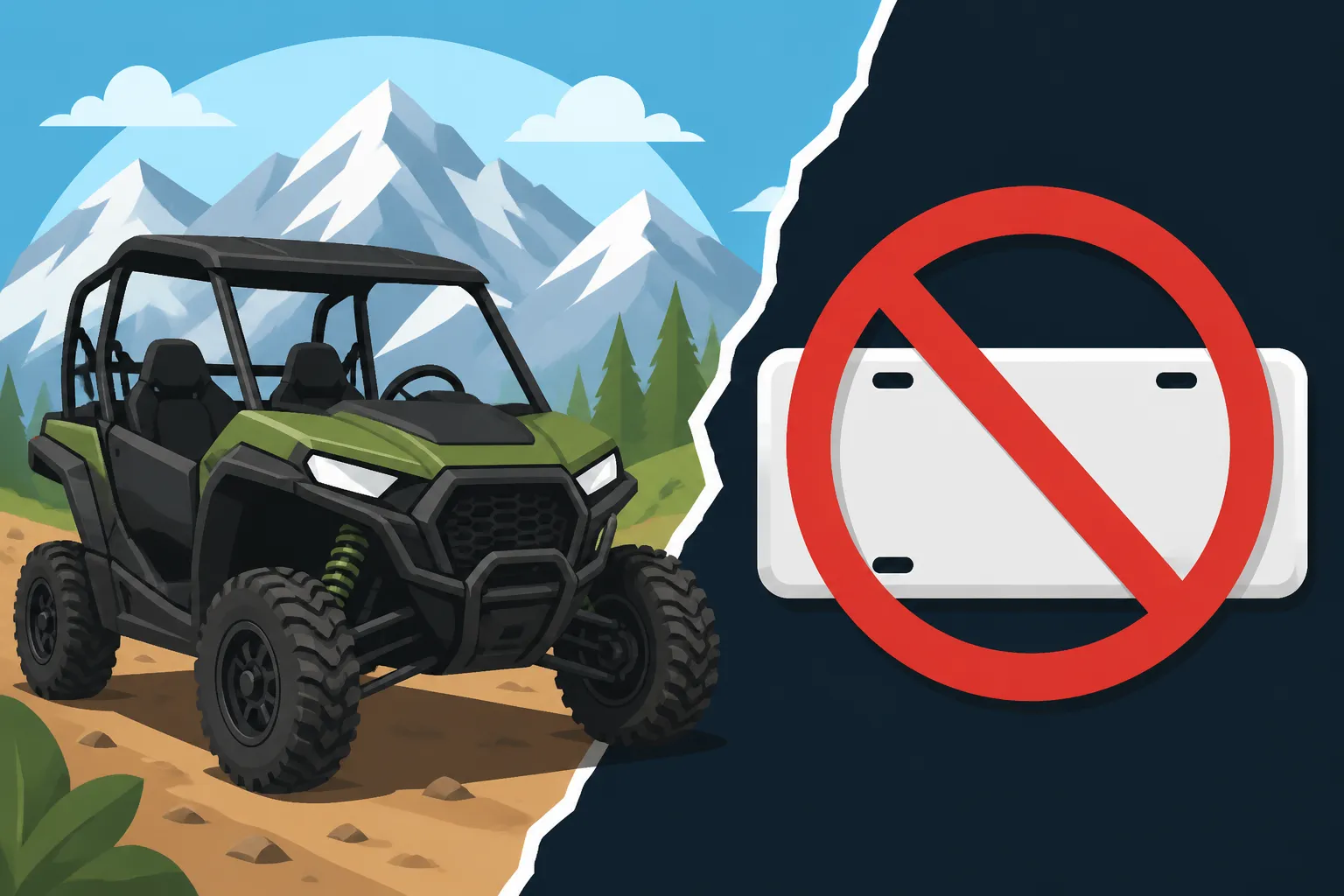
It’s a question that echoes through every gathering of UTV and ATV enthusiasts across Colorado: "Why can't I just get a street-legal plate for my side-by-side?" The frustration is real, and the confusion is understandable, especially when you see vehicles in other states driving right down main street with what looks like an identical machine. This guide is here to untangle the complexities and explain precisely why Colorado, despite its vast network of trails and roads that often intersect, doesn't issue a traditional street-legal license plate for your UTV.
The Core Distinction: OHV Registration vs. Street Legal Plates
Understanding why your UTV doesn't get a regular license plate in Colorado starts with grasping a fundamental difference in how the state (and the federal government) classifies vehicles. It's not just semantics; it's about purpose, design, and regulatory frameworks.
What Colorado Considers an Off-Highway Vehicle (OHV)
In Colorado, a UTV, or Utility Terrain Vehicle, falls squarely under the umbrella of an Off-Highway Vehicle (OHV). This designation applies to any motorized vehicle that's primarily designed for off-road use, including ATVs (All-Terrain Vehicles), dirt bikes, and snowmobiles. The key here is "primarily designed for off-road use." These machines are engineered for tackling rough terrain, climbing steep grades, and navigating narrow trails, not for cruising down I-25 or even your local paved county road. Their suspension, tire design, braking systems, and overall structural integrity are built for different demands than those of typical road vehicles.
The state's legal framework for OHVs acknowledges their recreational value and importance to outdoor enthusiasts. It provides a system for managing their use on public lands and trails. However, this system operates distinctly from the regulations governing vehicles intended for daily street operation. This foundational difference in classification is the bedrock upon which all subsequent rules are built, making it incredibly difficult to simply re-categorize a UTV for street use without a complete overhaul of its design and legal standing.
The Purpose of OHV Registration in Colorado
When you register your UTV in Colorado, you're not getting a license plate for road use; you're obtaining an OHV registration sticker from Colorado Parks and Wildlife (CPW). This small, sticky decal is your passport to Colorado's incredible network of designated motorized trails and open riding areas. It signifies that you've contributed to the maintenance and management of these resources. The fees collected from OHV registrations are crucial. They directly fund trail construction, maintenance, signage, law enforcement patrols on trails, and even search and rescue efforts. Think of it as a user fee that supports the very trails you love to ride.
This registration is a vital component of responsible off-highway recreation. It ensures that the infrastructure supporting your adventures remains viable and safe. Without this funding, many of the trails we cherish would quickly degrade, become impassable, or even close permanently. Therefore, the OHV registration serves a very specific, and highly beneficial, purpose directly tied to off-road activities, not public highway travel. You can learn more about this system in [Colorado Parks and Wildlife OHV Registration Explained]. For details on the financial impact, check out [Where Colorado OHV Registration Money Goes].
What a Street Legal Plate Signifies
In stark contrast, a traditional street-legal license plate, issued by the Colorado Department of Revenue (DMV) for vehicles like cars, trucks, and motorcycles, carries a completely different set of implications. This plate is a declaration that the vehicle meets stringent federal and state standards for operation on public roads and highways. It signifies compliance with a vast array of safety, emissions, and design regulations designed to protect not only the occupants but also other motorists, pedestrians, and the environment.
A vehicle with a street-legal plate has undergone rigorous testing and certification processes by the manufacturer, verifying its adherence to Federal Motor Vehicle Safety Standards (FMVSS). This includes requirements for features like airbags, crumple zones, advanced braking systems, standardized lighting, mirrors, and emissions controls, among many others. When you obtain a street-legal plate, you're not just getting permission to drive; you're attesting that your vehicle is engineered for the complex, high-speed, and often unforgiving environment of public roadways. This is where the fundamental incompatibility with UTVs truly becomes apparent.
Understanding Federal Motor Vehicle Safety Standards (FMVSS)
The most significant hurdle preventing UTVs from being considered street-legal in Colorado (and most other states) lies in their design and manufacturing. It's not about what you can add to your UTV, but what it lacks from the factory.
The Barrier to Manufacturers
The plain truth is that UTVs are simply not built to meet Federal Motor Vehicle Safety Standards (FMVSS). These are a comprehensive set of safety regulations established by the U.S. National Highway Traffic Safety Administration (NHTSA) that all vehicles sold for highway use in the United States must comply with. Think about it: a UTV doesn't have airbags, anti-lock brakes designed for highway speeds, electronic stability control, crumple zones engineered to absorb crash energy, or specific lighting configurations required for road use. They aren't put through crash tests like passenger cars. Their emissions systems aren't designed for sustained highway operation.
For a manufacturer to make a UTV FMVSS compliant, it would essentially have to re-engineer the entire vehicle, transforming it into something far closer to a compact car or a specialized utility vehicle, rather than the agile off-road machine we know and love. The cost and complexity of this endeavor would be astronomical, likely driving up prices to a point where they'd be out of reach for many recreational users, and potentially compromising the very off-road capabilities that make UTVs so appealing. This fundamental design difference is the biggest brick wall between your UTV and a street-legal plate.
Why This Matters to State DMVs
State Departments of Motor Vehicles (DMVs) are not equipped, nor are they legally allowed, to individually inspect and certify vehicles for FMVSS compliance. Their role is to register vehicles that have already been certified by the manufacturer as meeting these federal standards. When you buy a new car, it comes with a manufacturer's statement of origin (MSO) or certificate of origin (COO) that explicitly states it conforms to FMVSS. Without that factory certification, a state DMV cannot, in good conscience or by federal mandate, issue a traditional street-legal plate.
Colorado's DMV relies on this crucial certification. If a UTV manufacturer hasn't built and certified their product to meet FMVSS, the state simply doesn't have the authority or the framework to declare it street-legal for general highway use. It would be a significant legal and safety liability for the state to do so, opening the door to potentially unsafe vehicles on public roads and creating a patchwork of unenforceable standards. This administrative hurdle reinforces the distinction between off-highway and on-highway vehicles.
Aftermarket Modifications and Their Limitations
Many UTV owners, understandably wanting to bridge the gap, turn to aftermarket accessories. You can easily find kits that add turn signals, horns, mirrors, windshields, and even DOT-approved tires – and companies like SuperATV offer fantastic products to enhance your UTV's functionality and safety. While these additions are incredibly valuable for improving visibility, communication, and overall safety when operating on trails or approved local roads, they do not, unfortunately, magically transform your UTV into an FMVSS-compliant vehicle.
Adding a horn from SuperATV, for instance, makes your UTV more audible, which is great for trail safety and local road access. However, it doesn't address the lack of a federally mandated crumple zone or the fact that the vehicle hasn't been crash-tested. The state isn't just looking for a checklist of individual components; it's looking for a comprehensive design and manufacturing standard that ensures the vehicle, as a whole, is safe for highway speeds and interactions with other, much heavier and faster, vehicles. It's a classic case where doing your best to make a machine safer for one purpose doesn't necessarily qualify it for an entirely different legal classification.
Colorado's Specific Vehicle Classification Laws
Beyond federal standards, Colorado has its own statutes that define and categorize vehicles, creating a clear legal separation between street-legal machines and off-highway vehicles.
Colorado's Definition of a Motor Vehicle
Colorado law meticulously defines what constitutes a "motor vehicle" for the purpose of titling, registration, and operation on public roads. Generally, these definitions align with the federal FMVSS requirements. Off-highway vehicles like UTVs are typically given their own distinct classification, specifically designed for their intended use. This means they are often excluded from the broader definitions of vehicles permitted on public highways. For instance, the statutes might explicitly state that an OHV is not a motor vehicle for general highway use.
This distinction isn't arbitrary; it's a deliberate legislative choice based on the design, safety characteristics, and intended operational environment of different vehicle types. To allow UTVs onto all public roads without meeting the same rigorous standards as cars would necessitate a significant rewrite of core Colorado transportation law, effectively dismantling years of carefully constructed safety and regulatory frameworks. This legal segregation is a powerful reason why you won't find a standard street-legal plate for your UTV in Colorado. If you’re curious about the specific way Colorado tracks OHV ownership, you might want to read [Titling an Off-Highway Vehicle in Colorado].
Why UTVs Don't Fit the "Car" or "Motorcycle" Box
UTVs exist in a unique space that doesn't neatly fit into existing street-legal vehicle categories like "passenger car," "truck," or "motorcycle" under Colorado law. They have features of all of them (engine, wheels, steering), but none of them completely. They're wider than a motorcycle, lack the enclosed cabin and safety features of a car, and aren't typically used for commercial hauling like most trucks. This makes them an "orphan" in the existing legal framework for on-road vehicles.
The legal system prefers clear, unambiguous definitions, and UTVs present a classification challenge. Creating a new category for "street-legal OHV" would require defining new safety standards, insurance requirements, and taxation structures, effectively creating a whole new bureaucratic and regulatory system. This legislative inertia, combined with the inherent design differences, means UTVs remain firmly in their "off-highway" box when it comes to statewide street legality.
The Legislative Process and Policy Choices
Laws are not created in a vacuum, and the current legal status of UTVs in Colorado is the result of policy choices and the legislative process. Lawmakers have, to date, chosen to prioritize safety and the distinction between recreational off-road use and general public road use. While there's certainly advocacy from rider groups to expand UTV road access, such changes require significant debate, compromise, and a thorough assessment of potential impacts.
Introducing a statewide "street-legal UTV" category would involve addressing concerns from safety advocates, environmental groups, insurance companies, and even other vehicle manufacturers. It's a complex balancing act that Colorado's legislature has, thus far, opted not to undertake at a statewide level for general road use. This contrasts with some other states that may have different vehicle classification histories or policy priorities, leading to varied approaches to UTV street legality across the country.
Safety Concerns on Public Roads
Beyond legal and manufacturing distinctions, genuine safety concerns play a huge role in Colorado's decision not to offer a statewide street-legal plate for UTVs. It's not just about protecting UTV occupants, but also everyone else on the road.
Design Differences Impacting Road Safety
Imagine a typical mountain highway in Colorado – winding curves, varying grades, and traffic that includes everything from RVs to semi-trucks. Now picture a UTV trying to navigate that environment. UTVs are designed with a high center of gravity for ground clearance over rough terrain, but this makes them less stable at higher speeds or in evasive maneuvers on paved surfaces. Their knobby tires provide excellent grip in dirt and rocks, but offer reduced traction and can feel "squishy" on pavement, especially when braking or cornering rapidly.
Furthermore, the overall structural integrity of a UTV, while robust for off-road impacts, isn't engineered to withstand a high-speed collision with a passenger car or truck. The lack of traditional safety cages, airbags, and reinforced body panels means occupants are significantly more exposed and vulnerable in a crash scenario compared to those in street-legal vehicles. These inherent design differences are a major red flag for highway safety regulators.
Speed Limits and Roadway Dynamics
Most UTVs, even powerful ones, are not designed for sustained speeds above 50-60 mph, and many are limited to lower speeds. On a highway where speed limits can reach 75 mph, a UTV would become a slow-moving hazard, creating significant speed differentials that increase the risk of rear-end collisions. Even on county roads with lower speed limits, the acceleration and deceleration characteristics of a UTV are different from cars, requiring other drivers to react in unexpected ways.
Moreover, the quick reflexes and precise handling required to safely merge into traffic, navigate complex intersections, or avoid road hazards are often compromised by a UTV's off-road-tuned steering and suspension. Roadway dynamics, including wind buffeting from larger vehicles, varied road surfaces, and the need for consistent braking performance, all present challenges that UTVs are not optimally equipped to handle.
Crash Data and Risk Assessment
State transportation agencies, when considering changes to vehicle classifications, always look at crash data and conduct risk assessments. The potential for severe injuries and fatalities in UTV-involved crashes on public roads is a serious concern. If Colorado were to broadly allow UTVs onto all its roads, there would be an inevitable increase in incidents. Given the lack of robust passive safety features in UTVs compared to cars, the outcome of such collisions is likely to be far more severe for UTV occupants.
From a liability standpoint, the state would be assuming considerable risk by certifying these vehicles for general road use without them meeting federal safety standards. This prudent approach to public safety is a cornerstone of Colorado's current stance. It's not about denying fun; it's about mitigating foreseeable risks to all road users.
The "Montana LLC" Loophole and Colorado's Stance
Many UTV owners, desperate for street legality, look to other states, particularly Montana, where an LLC can sometimes be used to register a UTV with a street-legal plate. While this seems like a clever workaround, Colorado law enforcement takes a very different view.
How the Montana LLC Strategy Works (or Doesn't Work in Colorado)
The "Montana LLC" strategy involves establishing a limited liability company (LLC) in Montana, purchasing your UTV through that LLC, and then registering it in Montana as a street-legal vehicle. Montana, having different vehicle classification laws, may issue a license plate for it. The idea is that since the vehicle is legally registered in Montana, it should be recognized as street-legal in all other states, including Colorado, under principles of reciprocity.
On paper, it sounds plausible, but in practice, for Colorado residents, it's fraught with legal peril and simply doesn't hold up to scrutiny by Colorado authorities. The core issue lies in where the vehicle is primarily garaged and operated, and the intent behind avoiding local registration and taxes. For a deeper dive into the risks, you should definitely read [The Montana LLC Route and What Colorado Owners Risk].
Why Colorado Law Enforcement Sees Things Differently
Colorado law enforcement, including the State Patrol and county sheriffs, generally does not recognize Montana-plated UTVs as street-legal for general road use if the vehicle is primarily owned and operated by a Colorado resident within Colorado. They look at the physical location of the vehicle, the residency of the owner, and the vehicle's design. If it's a Colorado resident driving a UTV on Colorado roads, and that UTV doesn't meet Colorado's definition of a street-legal vehicle (i.e., it doesn't have an MSO showing FMVSS compliance), then the Montana plate is often considered irrelevant for operating on Colorado's general public roads.
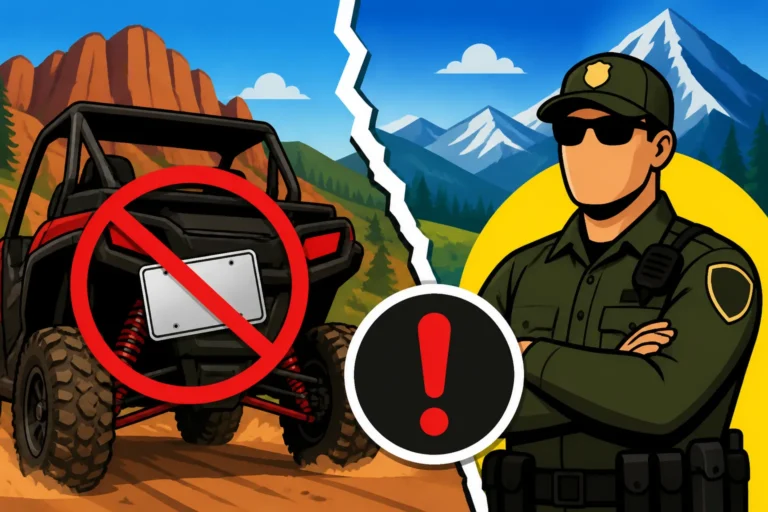
Officers are trained to identify vehicles that don't meet Colorado's standards, regardless of an out-of-state plate. The reciprocity agreements between states typically apply to vehicles that are genuinely street-legal in their home state and are being temporarily used in another. When a Colorado resident uses an out-of-state LLC to avoid Colorado's registration and tax laws for a vehicle permanently garaged and used here, it's seen as an attempt to circumvent state law. The penalties can include citations for operating an unregistered or uninsured vehicle, significant fines, and potentially even impoundment. Don't risk it; familiarise yourself with [Fines for an Unregistered OHV in Colorado].
The Legal Precedent and Resident Status
The legal principle at play here is that states have the right to regulate vehicles primarily domiciled and operated by their residents within their borders. While visitors with genuinely street-legal vehicles from other states generally enjoy reciprocity, this doesn't extend to Colorado residents trying to bypass local laws. Colorado's Department of Revenue and law enforcement are aware of the Montana LLC strategy and actively enforce against it. They often view it as an attempt to evade Colorado's sales and use taxes, which are due when a vehicle is purchased or brought into the state for primary use by a Colorado resident.
Ultimately, while the Montana LLC route might offer street legality in Montana, it provides little to no protection for Colorado residents operating their UTVs on Colorado's general public roads. It's a risk that most riders find isn't worth taking, given the potential legal and financial repercussions.
Local Road Access and the Exception to the Rule
Now, here's where the conversation gets a bit more nuanced and provides a glimmer of hope for UTV owners in Colorado. While a statewide street-legal plate is off the table, specific local jurisdictions do allow limited road use.
County and Municipal Ordinances for Limited Road Use
This is the critical distinction! Colorado law does allow individual counties and incorporated municipalities to pass their own ordinances permitting the operation of OHVs on designated public roads within their boundaries. This is why you might see UTVs legally driving on certain streets in towns like Lake City, Silverton (with very strict exceptions), or areas in Hinsdale County. These aren't blanket permissions; they are highly localized and specific. Each ordinance details which roads are open, what equipment is required, and sometimes even specific times of day or seasons.
This approach gives local communities the flexibility to manage OHV traffic based on their unique infrastructure, tourism goals, and resident concerns, without forcing a statewide mandate. It means that while your UTV won't get a traditional license plate for all of Colorado's roads, it can legally access specific county roads or town streets if the local government has explicitly allowed it. It's paramount to know the specific rules for any area you plan to ride in. For general information, check out [Colorado Towns That Let OHVs Use Their Streets] and [Colorado County Roads Open to OHVs].
Requirements for Local Road Access (Lights, Horn, Mirrors, etc.)
Even in areas where local ordinances allow limited road use, your UTV will almost certainly need to meet specific equipment requirements. These typically include:
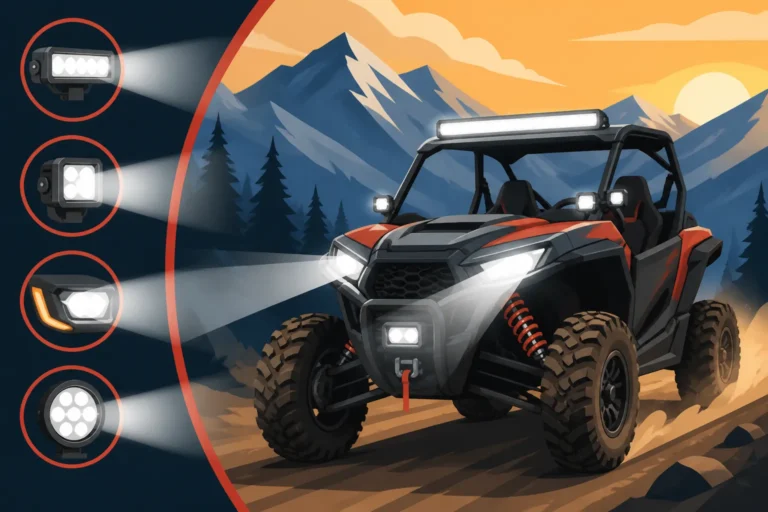
- Headlights and Taillights: Functional headlights and taillights, sometimes specifically requiring a low beam setting.
- Brake Lights: Operational brake lights.
- Turn Signals: Front and rear turn signals.
- Horn: An audible warning device.
- Mirrors: At least one rearview mirror, and often two (one on each side).
- Windshield: Some ordinances may require a windshield.
- Spark Arrester: A U.S. Forest Service-approved spark arrester on your exhaust.
- Muffler: A functional muffler that keeps noise levels within acceptable limits.
Beyond the vehicle itself, the operator will typically need a valid driver's license, proof of insurance, and, crucially, a current Colorado OHV registration sticker. Many of these accessories, like turn signal kits and mirrors, can be purchased from companies like SuperATV, ensuring your machine is compliant for local road access. Remember, adding these items makes your UTV safer and compliant with local rules, but it still doesn't make it street-legal across the state. For a comprehensive overview, look at [What Colorado Requires on an OHV Road Ride].
Where to Find Local Ordinances and Maps
Navigating these local rules requires diligence. The best places to find definitive information are the official websites of the county sheriff's office or the specific town's municipal government. Many counties, especially those with popular trail systems like Hinsdale, San Juan, or Gunnison, publish detailed maps and ordinances online. These resources often highlight which roads are open, which are closed, and what the specific operating requirements are.
Rider groups and forums can also be good places to get anecdotal information, but always verify with official sources. Relying on outdated information or assumptions can lead to tickets and fines. For example, while Lake City and Hinsdale County generally embrace OHV road access, Silverton has very strict rules and even bans OHVs from its downtown core during peak season. Understanding these nuances is key to a hassle-free ride. Get started by looking up [Finding Your Colorado County's OHV Ordinance]. To see how different towns handle it, compare [Silverton's Ban on OHVs in Town] with [Lake City and Hinsdale County Road Access].
The Future of Colorado UTV Road Access
The conversation around UTV road access in Colorado isn't static. It's a dynamic topic with ongoing discussions, challenges, and potential future developments.
Ongoing Discussions and Advocacy
There's a vibrant and dedicated community of UTV enthusiasts in Colorado, many of whom are actively advocating for expanded road access and potential legislative changes. Rider clubs, tourism bureaus in mountain towns, and industry associations regularly engage with state and local lawmakers to explore options. The challenges are significant, balancing the economic benefits that OHV tourism brings to rural communities with concerns about public safety, environmental impact, and noise.
Any proposed legislation would need to navigate these complex interests, find common ground, and present solutions that satisfy a broad range of stakeholders. This is a slow and often arduous process, but it's important to remember that the current regulations aren't set in stone forever, even if changes are difficult to achieve.
What a "Street Legal" UTV Might Look Like in Colorado
If Colorado were ever to introduce a new statewide "street-legal UTV" category, it would likely be a highly specific and regulated one. It wouldn't mean simply slapping a car plate on your existing UTV. Instead, it might involve:
- Manufacturer Certification: Requiring UTVs sold as "street-legal" to meet a new, possibly state-specific, set of safety standards that are less stringent than full FMVSS but more rigorous than current off-road requirements.
- Mandatory Equipment: A comprehensive list of mandatory safety equipment, far beyond what's currently needed for local road ordinances (e.g., specific lighting, advanced braking, potentially even seatbelt interlocks or structural reinforcements).
- Speed Restrictions: Limiting the maximum speed for UTVs on public roads, or restricting them to roads with lower speed limits.
- Designated Road Networks: Rather than universal access, perhaps a network of "OHV-friendly" state highways or roads would be designated, similar to the current local ordinance approach but on a larger scale.
- Special Licensing/Insurance: Potentially requiring a special endorsement on a driver's license or specific insurance policies.
Such a system would be a significant undertaking and would represent a paradigm shift in how Colorado classifies and manages these vehicles. It would essentially create a new vehicle class, requiring new regulations, enforcement protocols, and infrastructure considerations.
Best Practices for Current UTV Owners
Until such a time that statewide changes occur (if they ever do), the best approach for UTV owners in Colorado is to operate responsibly and within the existing legal framework.
First and foremost, always ensure your UTV has a current [Registering an OHV in Colorado]. This is non-negotiable for riding on public lands and trails. Second, do your homework for every riding area. Never assume that because one town allows UTVs on its streets, another one will too. Check local county and town ordinances and maps before you unload your machine. Websites like those from county sheriffs, Forest Service, and BLM are your best friends.
Invest in the necessary safety equipment, not just for compliance but for your own protection. Accessories like turn signals, mirrors, and horns (many available from SuperATV) are essential for operating even on approved local roads. Be a responsible ambassador for the sport: ride quietly, minimize dust, obey all traffic laws on roads, and be courteous to other trail users and residents. Your actions reflect on the entire OHV community and can influence future policy decisions. By adhering to current rules, you not only stay safe and avoid fines but also contribute positively to the future of UTV riding in Colorado.
Disclaimer
This article is for general informational purposes only and does not constitute professional advice. Laws, prices and regulations vary by location and change over time. Consult a qualified professional for guidance on your specific situation.