Kremmling OHV Route Signs
Steering your side-by-side or ATV through a new mountain town can feel like solving a puzzle, especially when you're trying to figure out which streets are open to off-highway vehicles and which are strictly off-limits. It's frustrating to feel unsure, constantly scanning for clues. This guide is here to clear up that confusion, specifically for the charming Colorado town of Kremmling, by breaking down exactly what those OHV route signs mean and how you can confidently navigate their streets.
The Heart of Kremmling: Why OHVs are on These Streets
Kremmling, often affectionately known as "Sportsman's Paradise," truly embraces the off-highway vehicle culture, understanding that it's a huge part of what draws many adventurers to its doorstep. Unlike some towns that might be hesitant, Kremmling has actively worked to integrate OHVs into its street network, creating a welcoming environment for riders. This isn't just about fun; it's about providing practical access to trails and local businesses, making your entire experience more seamless.
A Welcoming Trail Town Tradition
Picture this: you've just rolled off the trail after a thrilling morning ride, dust on your machine, a smile on your face, and your stomach rumbling. In many mountain towns, your next move would be to load your machine back onto a trailer just to drive a few blocks for lunch. What a hassle! Kremmling, however, sought to alleviate this exact frustration. They recognized that riders want to easily access gas stations, restaurants, and lodging without the constant back-and-forth of trailering. By opening certain town streets to OHV traffic, they've created a direct connection from the trail system to the heart of their community, fostering a genuine trail-town tradition that benefits everyone. It’s about more than just riding; it’s about the convenience of grabbing a burger, topping off your tank, or picking up supplies like extra fuel jugs or a quick repair kit from a local hardware store before heading back out.
Understanding the Local Ordinance
The ability to ride your OHV on Kremmling's streets isn't a free-for-all; it's carefully regulated by local ordinances. These are the specific rules and guidelines put in place by the town council to ensure safety for both OHV operators and other motorists and pedestrians. Think of it as a carefully crafted welcome mat rather than an open invitation to disregard normal traffic laws. The ordinances define which roads are part of the designated OHV route, the hours of operation, and any specific equipment requirements your machine must meet to be street-legal within town limits. For example, your machine must typically have working headlights, taillights, brake lights, and a horn, just like any other vehicle on the road. Without these ordinances and the clear signage that stems from them, the entire system would be chaotic, leading to more restrictions, not fewer. It's a testament to Kremmling's commitment to being OHV-friendly while still prioritizing safety and order. For more on general road rules, check out [Colorado OHV Road Rules for Young Riders].
Decoding the Signs: Your Visual Guide to Kremmling's OHV Routes
When you're rolling into Kremmling, or heading out from your hotel towards the trails, the route signs are your best friends. These aren't just decorative; they're essential navigational tools designed to guide you safely and legally through the town's designated OHV routes. Learning to read them quickly and accurately will save you time, prevent confusion, and ensure you stay on the right path.
Identifying "OHV Route" Markers
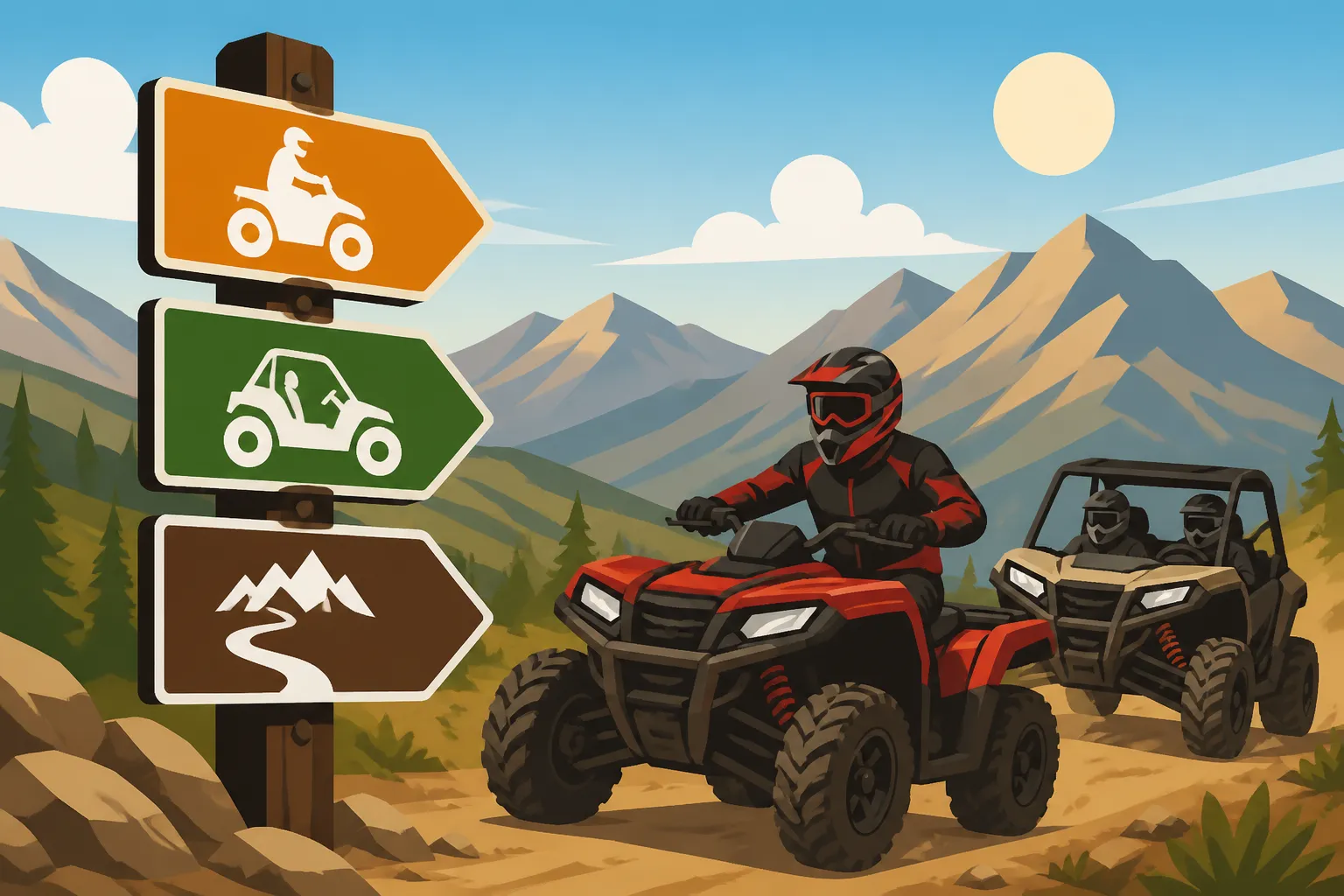
The most important signs you'll be looking for are the "OHV Route" markers. These signs typically feature a specific graphic – often a symbol of an OHV, like a side-by-side or ATV, along with text indicating it's an approved route. They are strategically placed at key intersections and turns to clearly delineate where OHVs are permitted. Imagine you're driving down a main street, and there's an intersection ahead. If the street you're turning onto is part of the OHV route, you'll see one of these signs clearly posted, usually on a standard green street sign pole or its own dedicated post. These signs act as a visual breadcrumb trail, confirming you're on a legal thoroughfare for your machine. They’re designed to be unmistakable, so if you don't see one, it's generally a good indication that the road ahead is not part of the designated route.
Understanding Regulatory and Warning Signs
While the "OHV Route" signs tell you where you can ride, other regulatory and warning signs tell you how you should ride. These are familiar to any driver, but their importance is amplified when you're on an OHV, especially one that might handle differently than a standard car. You’ll encounter standard road signs like speed limit signs, stop signs, yield signs, and one-way street indicators. It’s crucial to remember that all these signs apply to you as an OHV operator. A 25 MPH speed limit is 25 MPH for everyone, including you on your side-by-side. Additionally, you might see specific warning signs for things like "Children Playing" or "Pedestrian Crossing" in residential areas or near parks. Paying close attention to these signs not only keeps you safe but also helps maintain a good relationship with the local community, which is vital for keeping these routes open. Ignoring a stop sign, for instance, isn't just dangerous; it undermines the privilege of having OHV access in town. For a deeper dive into road rules, see [Colorado County Roads Open to OHVs].
Navigating Intersections and Business Districts
Navigating intersections in a town like Kremmling can be a bit more dynamic for OHV riders. You might be transitioning from a gravel county road onto a paved town street, or vice versa. Always approach intersections cautiously, as other drivers might not always anticipate an OHV. Look for the "OHV Route" signs to confirm your path, and be mindful of cross-traffic. In business districts, you'll want to be particularly aware of pedestrians and parked cars. These areas often have lower speed limits and more activity. When passing storefronts, remember that excessive noise or dust can be disruptive to businesses and shoppers. It's about blending in safely and respectfully, making sure your presence enhances rather than detracts from the town's atmosphere. If you’ve upgraded your machine with high-quality components from SuperATV, you likely have excellent brakes and responsive steering, which come in handy for navigating these busy spots.
Beyond the Signs: Rules, Etiquette, and Safety on Kremmling's Roads
Just because you see an OHV route sign doesn't mean it's a free-for-all. Riding an OHV on town streets comes with responsibilities. It's about sharing the road, adhering to established rules, and projecting a positive image for the entire riding community. A respectful rider helps ensure these routes remain open for everyone to enjoy for years to come.
Adhering to Traffic Laws and Speed Limits
This is non-negotiable: all standard Colorado traffic laws apply to OHVs operating on designated town streets in Kremmling. That means wearing your seatbelt if your machine has them, signaling your turns, yielding the right-of-way, and, perhaps most importantly, obeying the posted speed limits. Mountain towns often have varying speed limits, sometimes dropping significantly as you enter residential areas or main street corridors. It can be tempting to open up your machine, especially if you're used to open trails, but speeding through town not only puts you and others at risk but also generates noise complaints and animosity from residents. Imagine a family trying to enjoy a quiet evening, only to be interrupted by a loud OHV roaring down their street. Respecting speed limits and general traffic laws is paramount to a harmonious coexistence. If you're unsure about specific speed limits, err on the side of caution and go slower. Check out [Speed Limits for OHVs on Colorado County Roads] for more details on this topic.
Parking, Fueling, and Respecting Residents
When it's time to stop for a bite or to fill up your tank, knowing the rules for parking and fueling is essential. Most towns with OHV routes will have designated OHV parking areas, or you might be able to park in regular parking spaces, provided your machine fits and doesn't impede other traffic or block access. Always look for signage indicating where OHVs are permitted to park. If you're parking on a street with homes, ensure your machine isn't blocking driveways or causing a nuisance. When fueling, treat your OHV like any other vehicle at the gas pump; keep the area clean and be mindful of other patrons.
Beyond the formal rules, there's the unspoken etiquette:
- Noise: While your machine might sound awesome on the trail, try to keep noise to a minimum in residential areas and business districts. Many SuperATV products are designed to perform without excessive noise, which is a great help here.
- Dust: On gravel sections, be mindful of kicking up too much dust, especially if there are homes or businesses nearby. Slow down.
- Passing: If you encounter other OHVs or even bicycles, pass respectfully and give ample space.
- Cleanliness: Don't track excessive mud or dirt onto paved roads. A quick hose-down before entering town helps immensely.
These small gestures go a long way in building goodwill with the community. For advice on stopping for gas, read [Fueling an OHV in a Colorado Trail Town].
SuperATV Gear for Safer Street Riding
While many OHVs are trail-focused, adding some appropriate gear can significantly enhance safety and compliance when riding on town streets. Think of it as making your machine more "street-aware." For instance, proper mirrors are crucial for seeing traffic behind and beside you, something often overlooked when only thinking about trail riding. Turn signals, while not universally required on all Colorado OHVs for street use, greatly improve your communication with other drivers. Investing in a good horn that's loud enough to be heard over ambient town noise is also a smart move. Aftermarket windshields can protect you from debris, and even a robust winch from a brand like SuperATV isn't just for trail recoveries; it can be incredibly useful in unexpected town situations or even for helping a stranded motorist, further cementing a positive image for OHV riders. Equipping your machine thoughtfully ensures you're not just legal, but also prepared for the unique demands of mixed-use routes.
Planning Your Kremmling OHV Adventure
A successful OHV trip to Kremmling is more than just throwing your machine on a trailer and heading west. It involves a bit of planning, both for your machine and for your route, ensuring you get the most out of the town's welcoming policies and access to the spectacular Colorado backcountry.
Preparing Your Machine for Town and Trail
Before you even load up, give your machine a thorough once-over. This isn't just for trail safety; it's also about being street-legal and reliable in town. Check all your lights – headlights, taillights, and especially brake lights – to ensure they're functioning perfectly. Confirm your horn works. Inspect your tires for proper inflation and tread wear, as street surfaces can be harder on knobby tires than dirt. Make sure your brakes are sharp and responsive. If you're riding a side-by-side, check your seatbelts. And don't forget your spark arrestor – it's a requirement on public lands and helps keep noise down in town. A well-maintained machine is a safer machine, whether you’re navigating a rocky trail or cruising down Kremmling's main street. Consider carrying a small toolkit, a tire repair kit, and a first-aid kit; you never know when these might be needed, both on the trail and in town. You might even consider heavy-duty axles from SuperATV if you anticipate a lot of diverse riding.
Checking Local Updates Before You Ride
Local regulations and trail conditions can change. Before you head out or even before you leave home, it's always a good idea to check for any updates. The town of Kremmling's official website or the local chamber of commerce often posts current OHV rules, maps, and any temporary closures or advisories. Forest Service and BLM offices, which manage many of the surrounding trails, also provide crucial information on trail status, fire restrictions, and seasonal closures. A quick phone call or visit to their websites can prevent unexpected detours or disappointments. This is especially true if you're visiting early or late in the season, when snowmelt or early freezes might impact trail accessibility. Being informed ensures a smooth and legal experience, both on the open roads and the designated town routes. For information on local ordinances, see [Kremmling OHV Route Signs].
Connecting Kremmling to Broader Colorado Adventures
Kremmling's OHV-friendly streets aren't just an end in themselves; they're a gateway. The town is strategically located, offering easy access to a vast network of trails in the surrounding Arapaho National Forest and BLM lands. From Kremmling, you can connect to a variety of riding experiences, from challenging mountain passes to scenic forest roads. Think about planning multi-day trips where Kremmling serves as your base camp, allowing you to venture out daily and return to town for supplies, a hot meal, or a comfortable bed. Many riders use the Kremmling routes to access popular destinations like the Troublesome Creek Trail System or to connect with routes that lead towards other trail towns. It’s an ideal starting point for exploring more of what Colorado has to offer, from high-alpine scenery to thrilling desert landscapes, truly making your OHV a versatile adventure machine.
Summary of Kremmling OHV Street Rules
To help visualize the key considerations for riding your OHV on Kremmling's designated streets, here's a quick reference table. Remember, this is a general overview, and always refers to the official town ordinances for the most current and detailed information.
| Category | Key Requirement/Guideline | Why It Matters |
|---|---|---|
| Designated Routes | Only ride on clearly marked "OHV Route" streets. | Ensures legal compliance and safety, respecting private and restricted areas. |
| Signs & Signals | Obey all standard traffic signs (stop, yield, speed limits, one-way). | Critical for safety, preventing accidents, and orderly traffic flow. |
| Machine Equipment | Headlights, taillights, brake lights, horn, rearview mirrors, spark arrestor. | Essential for visibility, communication, and environmental protection. |
| Speed Limits | Adhere strictly to posted speed limits, typically lower in town. | Reduces noise, improves safety, and maintains positive community relations. |
| Operator Rules | Valid driver's license (if applicable), no alcohol/drugs, follow all traffic laws. | Legal requirement; ensures responsible operation and minimizes risk. |
| Etiquette | Minimize noise and dust, be courteous to pedestrians and other vehicles, park considerately. | Fosters a welcoming environment and helps preserve OHV access for the future. |
| Proof of Reg. | Carry current Colorado OHV registration/permit. | Required by law; demonstrates your machine is authorized for use. |
This table provides a snapshot of the major points, but always remember that the spirit of the rules is to ensure safety and respect for everyone in the community. For more on the paperwork, you might want to read [Colorado Parks and Wildlife OHV Registration Explained]. If you're concerned about alcohol limits, check [Colorado Alcohol Limits for OHV Operators]. For info on what a ranger might ask for, look at [Colorado Ranger Checks at a Trailhead]. You'll also want to make sure your machine is properly insured; you can learn more here: [Insuring an ATV in Colorado]. And don't forget where to put that sticker: [Where the Colorado OHV Sticker Goes].
Disclaimer
This article is for general informational purposes only and does not constitute professional advice. Laws, prices and regulations vary by location and change over time. Consult a qualified professional for guidance on your specific situation.