Keeping the Registration Card on the Machine
It's happened to all of us: you're out on a gorgeous Colorado trail, the sun is shining, the engine is purring, and suddenly, there's a ranger. Your heart does a little skip, not because you've done anything wrong, but because you immediately wonder, "Do I have all my paperwork? And where is it, exactly?" Fumbling through gear, digging into a backpack, or worse, realizing you left it in the truck at the trailhead, can turn a fantastic ride into a stressful encounter. This guide is all about making sure you're prepared for those moments, focusing specifically on why and how to properly keep your Colorado OHV registration card on your machine when you're out enjoying the backcountry.
Why Your Colorado OHV Registration Card Needs to Be Accessible on the Trail
Riding an off-highway vehicle (OHV) in Colorado comes with certain responsibilities, and one of the most fundamental is ensuring your machine is properly registered with Colorado Parks and Wildlife (CPW). But simply having a registration isn't enough; you also need to be able to prove it when asked. This isn't just about following rules; it's about protecting yourself, maintaining access to our incredible trail systems, and showing respect for the land managers and law enforcement who keep our trails safe.
The Letter of the Law: What Colorado Requires
Colorado law is pretty clear: if you're operating an OHV on public lands, you need to have your valid registration permit (the sticker) displayed on your machine, and you also need to carry the corresponding registration card. Think of it like your driver's license and vehicle registration for your car. You wouldn't drive your car without those documents, right? The same principle applies here. When a Colorado Parks and Wildlife ranger, Forest Service officer, or county sheriff pulls you over for a routine check, they're going to ask for that card. It's their way of verifying that the machine you're operating matches the registration sticker and that you are the rightful, or authorized, operator. Without it, even if you have the sticker, you could face a citation. You might even want to understand the [Penalties for an Unregistered OHV in Colorado] to fully grasp the importance.
Avoiding Unnecessary Fines and Delays
Let's be real: no one wants a ticket, especially not for something as easily preventable as missing paperwork. The fines for not carrying your registration card can be frustrating and costly. Beyond the financial sting, having to deal with a citation can eat up valuable riding time, cause stress, and frankly, just be an annoyance. Imagine you're deep in the San Juan Mountains, miles from cell service, and you get stopped. If you can't produce the card, it creates a whole situation for both you and the officer. They might have to verify your information another way, which takes time, or they might issue a citation on the spot. It's far easier and less stressful to simply have your card ready to go. You can learn more about [Colorado Ranger Checks at a Trailhead] to be fully prepared for what they might ask for.
Contributing to Responsible Riding and Trail Funding
Every time you correctly register your OHV and carry your card, you're doing more than just following the rules; you're contributing to the health of Colorado's OHV program. The fees collected from OHV registrations directly fund trail maintenance, signage, enforcement, and the development of new riding opportunities across the state. By demonstrating that you're a responsible rider who understands and adheres to the regulations, you help reinforce the positive image of our riding community. This, in turn, helps secure continued access to the incredible network of trails that make Colorado such a premier OHV destination. It's all part of the bigger picture of [Where Colorado OHV Registration Money Goes].
What Information is on Your Colorado OHV Registration Card
Your Colorado OHV registration card is more than just a piece of paper; it's a vital document packed with crucial information about your machine and its registration status. Understanding what's printed on it can help you verify its accuracy and quickly provide the necessary details if you ever need to.
Key Details Printed on the Card
When you receive your registration card from Colorado Parks and Wildlife, you'll notice several important data points. Typically, this small card will include:
- Your Name and Address: The name and address of the registered owner or owners, if the machine is registered in multiple names. This is important for verification purposes.
- OHV Type: Whether your machine is an ATV, UTV (side-by-side), dirt bike, or another type of OHV.
- Vehicle Identification Number (VIN): This is perhaps the most critical piece of information, as it uniquely identifies your specific machine. Rangers will often cross-reference this with the VIN stamped on your vehicle. If you ever have issues, you might need to know about [Fixing a Wrong VIN on a Colorado Title].
- Make and Model: The manufacturer and specific model of your OHV, such as a Polaris RZR, Honda Rancher, or Kawasaki KFX.
- Year: The model year of your machine.
- Expiration Date: The date your current registration expires. In Colorado, the OHV registration year runs from April 1st to March 31st, so your card will reflect that cycle. Understanding [Colorado's OHV Registration Year Runs April to March] is key to staying current.
- Registration Number: This is the unique number assigned to your registration, often printed on the sticker itself.
- Fee Paid: The amount you paid for the registration.
It’s a compact document, but every detail serves a purpose, confirming the legality and ownership of your off-highway vehicle.
Verifying Accuracy and Keeping it Current
Before you even head out on your first ride with a new registration card, take a moment to carefully review all the information printed on it. Compare the VIN on the card to the VIN stamped on your actual OHV. Check your name and address for any typos. Ensure the make, model, and year are correct. Mistakes happen, and it's far easier to get an error corrected before you're out on the trail and facing a ranger. If you find any discrepancies, contact Colorado Parks and Wildlife as soon as possible to get it rectified. Similarly, always be aware of your [When a Colorado OHV Registration Expires] and renew it promptly. A current card with accurate information is your best friend when it comes to compliance.
What to Do If Your Card is Lost or Damaged
Things happen. Paper gets wet, wallets go missing, or cards just wear out over time from being handled frequently. If your Colorado OHV registration card gets lost, stolen, or becomes so damaged that the information is illegible, don't fret! You can typically request a replacement. Often, this can be done through the Colorado Parks and Wildlife website or by contacting them directly. Having a replacement ensures you're always in compliance, even if the original meets an untimely end. While you might be able to get a new one, you'll still need to carry proof of ownership, which could be a [Using a Bill of Sale as Proof of Ownership] or your title, until the new card arrives.
Best Practices for Storing Your Registration Card While Riding
Having your registration card is one thing; keeping it safe, dry, and readily accessible while you're bouncing down a rocky trail or splashing through a stream is another challenge entirely. The goal is to protect it from the elements and ensure you can grab it quickly when needed, without having to unpack your entire day bag.
Weatherproofing and Protection Strategies
Our Colorado weather can be unpredictable, going from sunny and dry to a sudden downpour or even a hail storm in minutes, especially in the high country. Water, mud, and dust are the enemies of paper documents. Here are a few reliable ways to weatherproof your registration card:
- Laminated Pouch or Waterproof Bag: This is probably the most common and effective method. Small, clear, waterproof pouches (often sold for phones or documents) are perfect. They keep the card completely dry and free from dirt, and you can still read it without removing it.
- Ziploc Bag Inside a Hard Case: For an extra layer of protection, place your card in a sturdy freezer-grade Ziploc bag, and then put that inside a small, durable, hard-shell case (like a Pelican case or a small dry box). This protects against crushing, too.
- Sealable Wallet Compartment: Many riding jackets or pants come with internal pockets that are designed to be water-resistant or at least have a secure zipper. While not always fully waterproof, combined with a Ziploc, this can be a good option for quick access.
Avoid simply stuffing it into a regular wallet pocket, especially if that wallet is in a pant pocket that might get soaked or muddied.
Ideal Locations for Quick Access
Where you store your registration card on your machine or person is just as important as how you protect it. You want it somewhere you can easily get to it without fumbling, ideally while still on your machine if a ranger approaches.
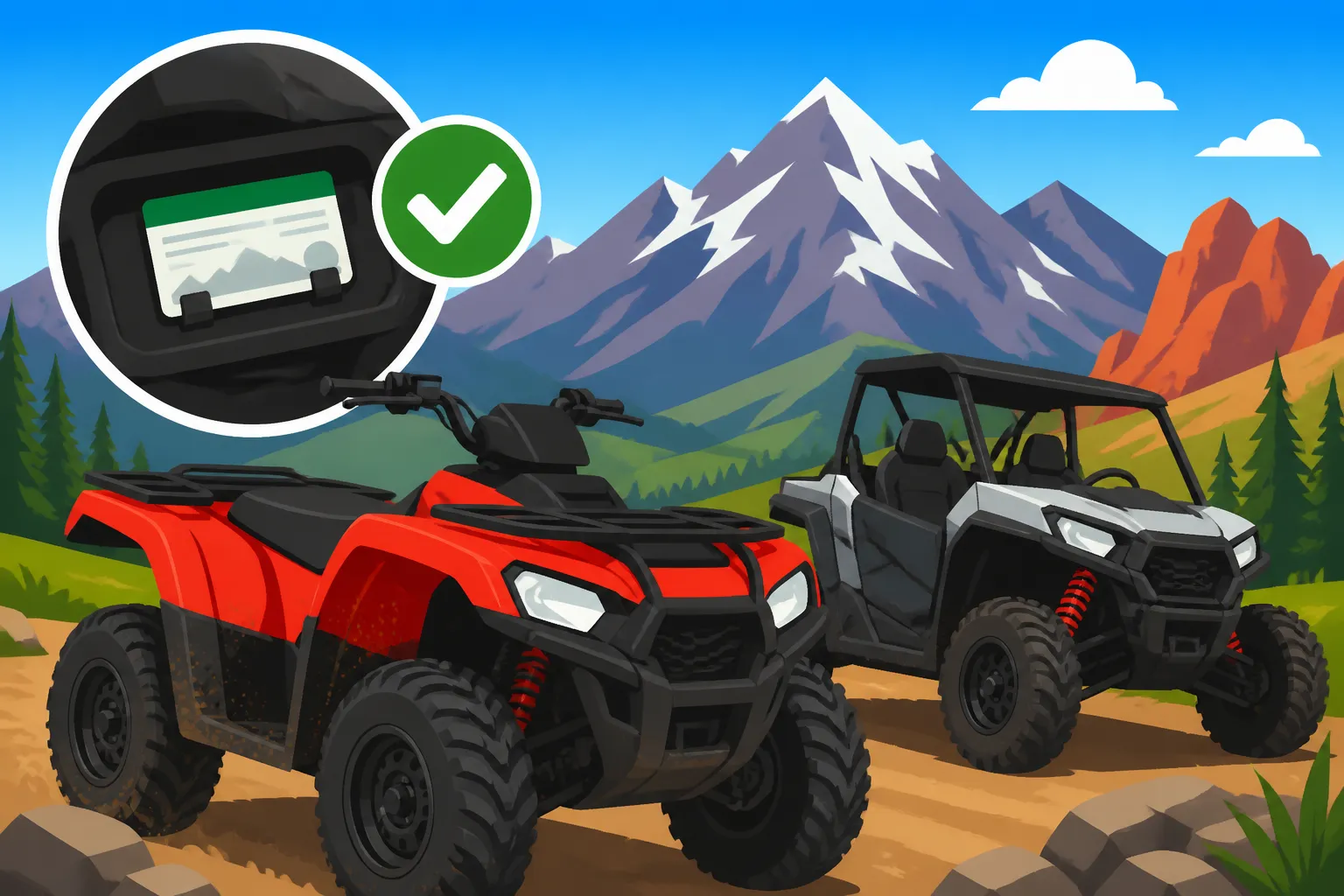
- Glove Box or Console Compartment (UTVs/Side-by-Sides): Many UTVs have a small, lockable glove box or a central console compartment. This is an excellent place if it's watertight. Keep it in a waterproof pouch inside this compartment.
- Fender Bag or Tool Kit Compartment (ATVs/Dirt Bikes): For ATVs and dirt bikes, a small, secured fender bag (often mounted to the front or rear rack) or a dedicated, waterproof tool kit compartment can work. Again, always use a waterproof pouch for the card itself.
- Rider's Personal Gear: Some riders prefer to carry it on their person, perhaps in a zippered, internal pocket of their riding jacket or a hip pack. This ensures it's always with you, even if you step away from your machine. The key here is an internal, secure pocket, not an outer one where it might fall out. Just remember, if it's on your person, don't leave your jacket or hip pack unattended with your machine.
Regardless of where you choose, make it a habit to put it in the same place every single time you ride. This builds muscle memory and reduces stress when you need to find it quickly.
Keeping it Secure: Avoiding Loss or Theft
While accessibility is important, security is paramount. The last thing you want is for your registration card to fall out on the trail or for it to be easily snatched if your machine is left unattended.
- Zippers and Latches: Ensure any compartment or bag you use is securely zippered, latched, or snapped shut. Vibration on trails can open things you wouldn't expect.
- No Loose Pockets: Avoid carrying the card in an open pocket where it could easily slip out, especially if you're taking a tumble or navigating rough terrain.
- Consider a Lanyard (with caution): Some riders attach their waterproof pouch to a short lanyard secured inside a compartment, so it doesn't fall out completely when opened. Just make sure the lanyard isn't so long that it could get snagged.
Here's a quick comparison of storage options:
| Storage Location | Pros | Cons | Best For |
|---|---|---|---|
| UTV Glove Box/Console | Easy access, often secure, protected | Not always waterproof, can be forgotten | Side-by-sides, family rides |
| ATV Fender Bag/Tool Box | On-machine, dedicated spot | Can get muddy/wet, less secure from theft | ATVs, enduro bikes |
| Jacket/Hip Pack (on person) | Always with rider, highly secure from loss | Can be bulky, easy to forget jacket/pack | All OHV types, solo riders |
| Backpack (internal pocket) | Secure, protected | Requires dismounting/unpacking for access | All OHV types, longer rides, less urgent need |
The key is finding a system that works for you, your machine, and your riding style, prioritizing both protection and accessibility. And don't forget, you also need to carry [Proof of Ownership for a Colorado OHV] if it's a new machine or you're riding someone else's.
What Happens If You Don't Have Your Registration Card
It’s easy to think, "Oh, I have the sticker, that's enough, right?" Not quite. While the sticker is visible proof of registration, the card carries the specific details needed for verification. Forgetting or losing that card can lead to some frustrating, and potentially costly, consequences.
Citations and Fines for Missing Documents
The most immediate and common consequence of not having your registration card on hand is receiving a citation. Even if your machine is registered, and you have the sticker prominently displayed, the lack of the physical card can be interpreted as not having proper documentation. A ranger needs that card to verify the VIN and ownership details quickly and accurately. Law enforcement officers have a job to do, and if you can't provide the requested documentation, they have grounds to issue a ticket. These fines can range, and they add up quickly, turning a fun day into a financial headache. This is certainly one of the [Colorado Rules Riders Break Most Often], often unintentionally.
Delays and Frustration on the Trail
Beyond the financial penalty, not having your card can lead to significant delays. Imagine you're on a long, remote ride, perhaps [Riding the Alpine Loop Between Colorado Towns], and a ranger stops you. If you don't have the card, they might have to spend extra time verifying your information through their system, if they even have access to one in that remote location. This takes away from their time patrolling and assisting other riders, and it certainly eats into your precious riding time. It's a frustrating situation for everyone involved, and one that's easily avoided by being prepared.
The Importance of Carrying the Actual Card, Not Just a Photo
In our digital age, it's tempting to think a photo of your registration card on your phone would suffice. While some rangers might be lenient in certain situations, legally, you are usually required to carry the physical document. Phones can run out of battery, get damaged, or lose signal, especially in the remote areas where we often ride. A physical card, properly protected, is reliable. Don't take the chance; carry the actual card. Just like you carry your driver's license, you should [Carry Your Paperwork on the Trail].
What to Do If You Get Pulled Over Without Your Card
If you find yourself in this situation, the best approach is honesty and politeness. Explain that you might have forgotten it or where it is. Offer to provide other forms of identification, like your driver's license, and try to locate the sticker on your machine. Be cooperative and respectful. While a citation might still be issued, a good attitude can sometimes lead to a warning or at least a less adversarial interaction. If you are given a ticket, make sure you understand the violation and what steps you need to take next. If you feel there was a misunderstanding, or you can later prove your registration was indeed current, you might be able to [Fighting an OHV Ticket in Colorado]. However, it's always best to simply avoid the situation by having your card ready.
Remember, responsible riding means more than just safe operation; it means being fully prepared with all the necessary documentation. A little bit of planning before you hit the trail can save you a lot of hassle and expense down the road.
Disclaimer
This article is for general informational purposes only and does not constitute professional advice. Laws, prices and regulations vary by location and change over time. Consult a qualified professional for guidance on your specific situation.