Do You Need Both a Title and a Registration in Colorado?
Navigating the world of off-highway vehicles (OHVs) in Colorado can feel a bit like trying to solve a puzzle, especially when it comes to understanding all the legal bits and pieces. Many new and even experienced riders often scratch their heads, wondering if they need just a title, just a registration, or both, to legally own and ride their ATV or UTV here in our beautiful state. It's a common point of confusion that can lead to headaches if not properly understood, potentially spoiling a long-planned trip to the mountains. This guide is here to untangle that knot, breaking down the distinct roles of an OHV title and a registration in Colorado, so you can ride with confidence and keep all your ducks in a row.
Understanding the Core Difference: Title vs. Registration
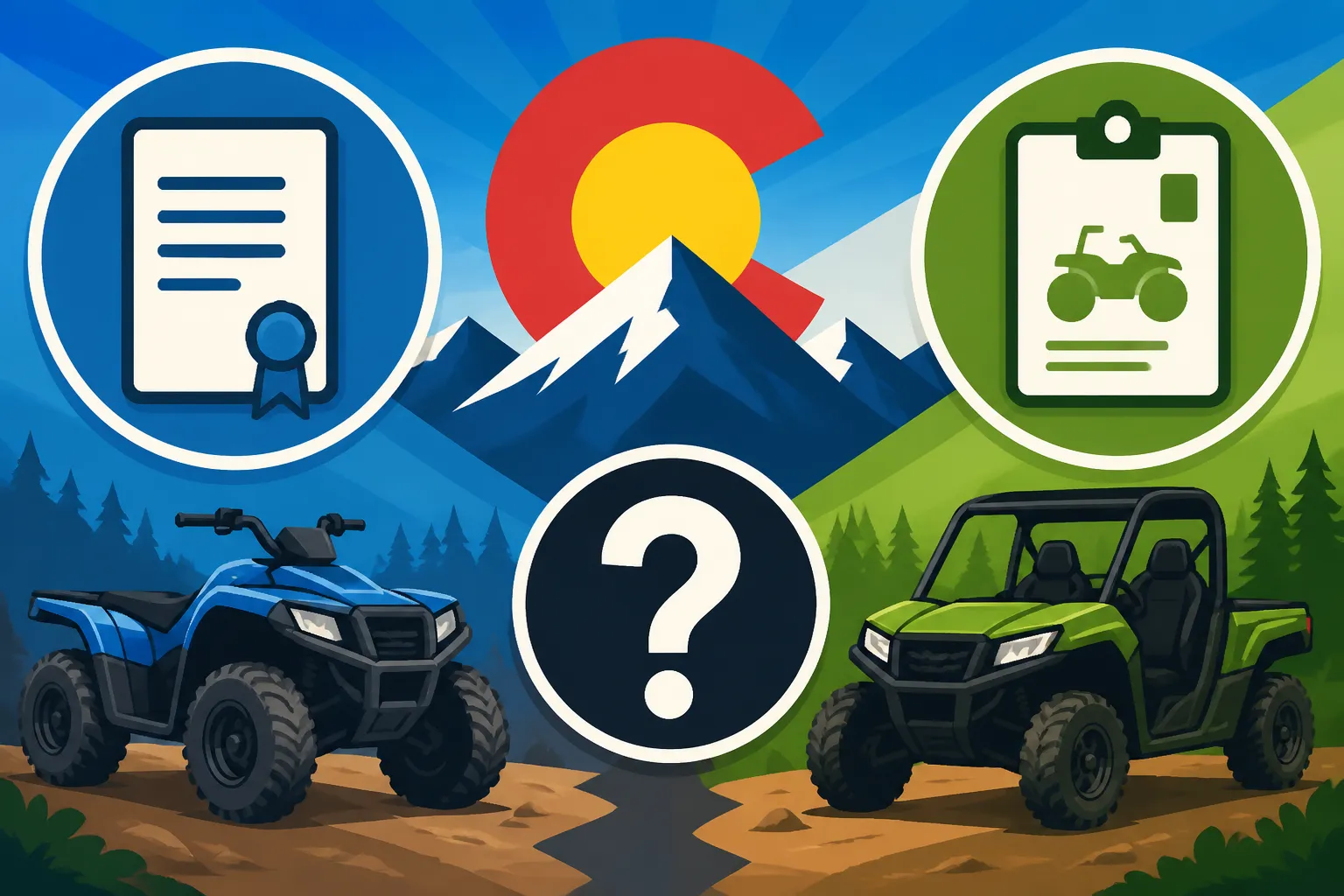
Let's clear up the biggest source of confusion right off the bat. A title and a registration are two completely separate things, serving different purposes, though both are incredibly important for any OHV owner in Colorado. Think of it like owning a house: you have the deed (your proof of ownership), and you might also have a building permit (allowing you to make changes or use it in certain ways). The deed is permanent; the permit is often temporary and specific to an activity.
What Exactly is an OHV Title?
An OHV title in Colorado is essentially the legal document that proves you are the owner of a particular off-highway vehicle. It's issued by the Colorado Department of Revenue (DOR) through your local county motor vehicle office, much like a title for your car or truck. This piece of paper contains vital information about your machine, including the Vehicle Identification Number (VIN), make, model, and the names of the legal and registered owners. Without a title, proving ownership can be incredibly difficult, which is a massive headache if you ever decide to sell your machine or if it gets stolen.
The title is crucial for establishing a clear chain of ownership, ensuring that when you buy or sell an OHV, everyone involved knows who legally owns the machine. It’s also what lenders use if you finance your purchase, as they'll place a lien on the title until the loan is paid off. Think of it as your OHV’s birth certificate and deed rolled into one—a foundational document that confirms its identity and your legal claim to it. While you might not carry it with you on every ride, its existence in a safe place is paramount to your rights as an owner. [Titling an Off-Highway Vehicle in Colorado] goes into more detail about this process.
What is an OHV Registration (Permit)?
An OHV registration, often referred to as an OHV permit or sticker, is what allows you to legally operate your ATV or UTV on designated public lands and trails in Colorado. This is handled by Colorado Parks and Wildlife (CPW), not the DMV. When you register your OHV, you receive a colorful, self-adhesive decal that you must prominently display on your machine. This decal acts as your annual pass for public land use, showing that you've contributed to the system that maintains our fantastic trail network.
Unlike a title, which is about ownership, registration is about permission to operate. It needs to be renewed annually, and the fees collected from these registrations go directly back into funding trail maintenance, signage, and enforcement of OHV regulations across the state. Without a current CPW registration, you're not legally permitted to ride on Forest Service roads, BLM trails, or any other public land specifically designated for OHV use in Colorado. A ranger check at a trailhead is going to look for this sticker first, because it signifies you're authorized to be there. [Colorado Parks and Wildlife OHV Registration Explained] clarifies much of this process.
When You Need Both: The Colorado Reality
For the vast majority of OHV owners in Colorado, having both a title and a current registration is not just a good idea, it's often a legal necessity for practical reasons. While they serve different purposes, they work hand-in-hand to ensure you can fully enjoy your machine without legal complications.
Public Land Riding: The Mandate for Registration
If you plan on venturing out onto Colorado's incredible network of public trails—whether that's exploring the historic Alpine Loop, tackling the challenging routes in Taylor Park, or cruising the vast open spaces of the Grand Mesa—your OHV absolutely must have a current Colorado Parks and Wildlife registration. This isn't optional. Every single time you load up your side-by-side or ATV and head for a designated public OHV trail, you need to have that colorful sticker affixed to your machine in the correct location. It's how our state ensures that those who use the trails are contributing to their upkeep and that there's some accountability for machines operating in these areas.
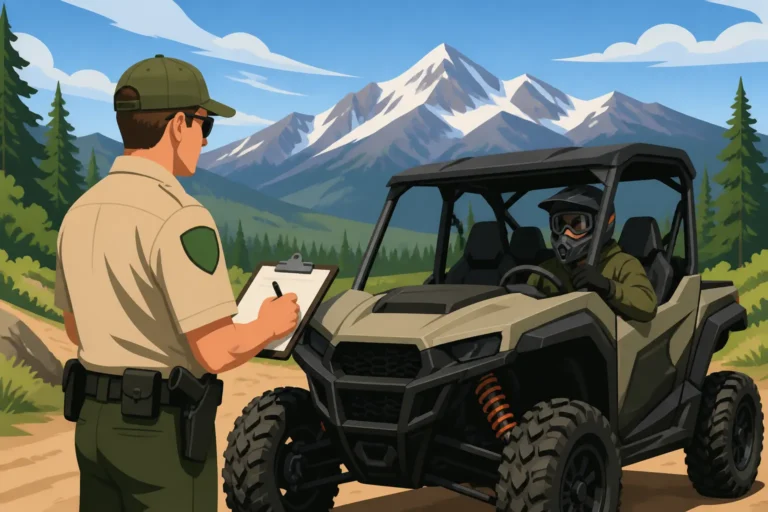
Rangers and local law enforcement actively patrol these areas, and if you're found riding an unregistered machine on public land, you could face a citation and a fine. It's simply not worth the risk of ruining a good ride, especially when the registration process is fairly straightforward. So, before you hit the dirt, always double-check that your sticker is current and properly displayed. Ignoring this can quickly turn a fun day into a costly one. For more information on what happens if you skip this step, read [Penalties for an Unregistered OHV in Colorado].
Ownership and Resale: The Case for a Title
Even if you primarily ride on private land (which we'll discuss next) or don't plan to ride much, possessing a title for your OHV is crucial for establishing and proving legal ownership. Imagine buying a used side-by-side from a private seller only to find out later that it was stolen, or that the seller didn't have the legal right to sell it. Without a proper title transfer, you could lose both your money and the machine. The title is the definitive document in these scenarios.
Furthermore, if you ever decide to sell your ATV or UTV, the buyer will almost certainly expect a clear, transferable title. This makes the sale process smooth and instills confidence in potential buyers. Many lenders also require a title as collateral if you're financing a new purchase. Simply put, a title protects your investment and ensures that you can legally transfer ownership when the time comes. If you don't have one, or if there's an issue with it, you could be in for a lot of trouble down the road. The process for legally changing hands is outlined further in [Titling an OHV at the Colorado DMV].
Scenarios Where One Might Be Enough (But Rarely Recommended)
While the general rule of thumb for most Colorado OHV owners is to have both a title and a registration, there are specific, limited situations where you might technically get by with only one. However, it's important to understand the limitations and potential downsides of these scenarios, as they don't apply to most riders.
Private Land Riding: Registration Exemptions (But Not Titles!)
This is perhaps the most common exception people consider. If your off-highway vehicle never leaves private property and is never operated on any public lands or designated trails, then you are generally not required to have a Colorado Parks and Wildlife registration. This scenario often applies to farmers, ranchers, or individuals who strictly use their ATV or UTV on their own vast acreage for work or recreation. For example, a rancher using a quad to check fences or herd cattle on their personal property doesn't need a CPW sticker for that specific use.
However, even in this very specific context, the importance of having a title for your OHV doesn't diminish. While you might not need a registration, you still need to prove legal ownership. If you buy a machine solely for private land use, and it lacks a title, you're still vulnerable to the same ownership disputes, difficulties in resale, or recovery issues if it's stolen, as any other OHV owner. So, while the registration might be optional for pure private land use, the title truly isn't. You can learn more about this nuance in [Colorado OHV Registration for Machines Kept on Private Land] and [Private Land Riding and Colorado Registration].
Dealer Sales and New Machines: How it Works
When you purchase a brand-new ATV or UTV from a licensed Colorado dealer, they typically handle a significant portion of the paperwork for you. This often includes processing the manufacturer's certificate of origin (MCO) to get your machine its initial title with the Department of Revenue. They might also offer to help you complete the Colorado Parks and Wildlife registration application. However, it's crucial to understand that even if the dealer starts the process, you, as the new owner, are ultimately responsible for ensuring both the title is legally transferred into your name and that the registration sticker is acquired and affixed before you take your machine onto public land.
The dealer might collect the registration fee on behalf of CPW, but you'll still need to wait for the actual decal to arrive in the mail or pick it up from an authorized vendor. Never assume that because you bought from a dealer, everything is automatically taken care of for both title and registration. Always clarify what paperwork they are filing on your behalf and what you still need to do. Reputable dealers will walk you through these steps, but it’s always wise to ask explicit questions. For further details on what paperwork dealers typically handle, check out [Buying From a Colorado Dealer: What They File].
Navigating the Process: Tips for Colorado OHV Owners
Understanding the distinction between a title and a registration is the first step, but actually managing the paperwork can still feel like a chore. Here are some actionable tips to ensure you're always in compliance and your OHV ownership experience is smooth.
The Importance of Proof of Ownership
Beyond the formal title, always maintain solid proof of ownership for your OHV. This includes a clear bill of sale, especially for private party transactions. A well-crafted bill of sale, signed by both buyer and seller, detailing the machine's VIN, purchase price, and date, can be invaluable even if a formal title is being processed or if you're dealing with an older machine that might not have a traditional title from previous owners. This document serves as a critical link in the ownership chain and can provide a fallback if there are any questions down the line. It's essentially your primary evidence that you lawfully acquired the machine.
For those situations where a formal title might be difficult to obtain—perhaps with a very old machine or one acquired under unusual circumstances—a robust bill of sale becomes even more critical. Resources like LawDepot offer customizable bill of sale templates that ensure you include all the necessary legal language and details. This can be a lifesaver if you ever need to demonstrate legitimate ownership. Having multiple forms of documentation can also help. [Proof of Ownership for a Colorado OHV] explains why this is so important, and [Colorado ATV Bill of Sale Template] offers guidance on creating one.
Keeping Your Paperwork in Order
Once you have your title and registration, don't just toss them in a drawer and forget about them. Keep your OHV title in a secure location, like a fireproof safe, along with other important documents. This is not something you should carry on the trail, as losing it could lead to a significant hassle. However, you absolutely must carry your current Colorado Parks and Wildlife registration card (the paper card, not just the sticker) or a legible copy of it with you whenever you're riding on public lands. This is what a ranger will ask for if they stop you.
Consider laminating a copy of your registration card or storing it in a waterproof bag that stays with your machine. Ensure the physical sticker is properly affixed to your OHV according to CPW guidelines. Losing this critical information, or not having it accessible during a trail stop, can lead to unnecessary fines and delays. An ounce of prevention here is worth a pound of cure, especially when you're miles into the backcountry. For advice on what to carry, check out [Do You Carry Paperwork on the Trail?].
Out-of-State Machines and New Residents
If you're bringing an OHV into Colorado from another state, or if you've recently moved here, you'll need to understand how Colorado's rules apply to your machine. Generally, if your OHV has a title from another state, you'll transfer that title to Colorado through the Department of Revenue, just like you would with a car. This process establishes your Colorado legal ownership.
Regarding registration, if you plan to ride your out-of-state machine on Colorado's public lands, you will need to purchase a Colorado Non-Resident OHV Permit, even if your machine is currently registered in your home state. Colorado does not have reciprocity agreements for OHV registrations with most other states. New residents, once established, will need to register their OHV with Colorado Parks and Wildlife as a resident. This ensures that everyone using Colorado's trails contributes to their upkeep. To avoid surprises, read up on [Registering an Out-of-State Machine in Colorado] and [Moving to Colorado With an Out-of-State ATV].
Here's a quick comparison of titles and registrations:
| Feature | OHV Title | OHV Registration (Permit/Sticker) |
|---|---|---|
| Purpose | Proves legal ownership of the vehicle | Grants permission to operate on public lands |
| Issued By | Colorado Department of Revenue (County DMV) | Colorado Parks and Wildlife (CPW) |
| Duration | Permanent (until ownership transfer) | Annual (April 1st to March 31st) |
| Required For | Legal ownership, selling, financing, theft recovery | Public land riding, designated trails |
| Physical Form | Paper document, usually mailed | Adhesive decal/sticker & paper card |
| Where to Keep | Secure location (home safe) | Affixed to machine (sticker), carried on person (card) |
Ultimately, for most OHV enthusiasts in Colorado, both a title and a registration are essential. The title confirms your legal ownership and protects your investment, while the registration allows you to legally access and enjoy the incredible public lands our state has to offer. Taking the time to understand these requirements and keeping your paperwork in order will ensure your Colorado OHV adventures are filled with fun, not frustration.
Disclaimer
This article is for general informational purposes only and does not constitute professional advice. Laws, prices and regulations vary by location and change over time. Consult a qualified professional for guidance on your specific situation.