Colorado OHV Title Fee
Alright, let's talk about getting that shiny new (or new-to-you) ATV or UTV officially titled in our beautiful state of Colorado. It can feel like a bit of a maze sometimes, with forms and offices and fees that seem to pop up out of nowhere. Many folks just want to know the bottom line: "What's this going to cost me?" This guide is here to unravel the mystery of the Colorado OHV title fee, helping you understand not just the basic cost, but all the other related expenses that might come along for the ride.
Understanding the Core Colorado OHV Title Fee
When you're dealing with the official paperwork for your off-highway vehicle, the actual "title fee" itself is usually a fairly straightforward administrative charge. It's not the big ticket item most people worry about, but it's a fundamental part of establishing legal ownership in the state. Think of it as the cost of getting your name officially stamped on the deed to your machine.
The Flat Fee for a New Title
Colorado, like most states, charges a modest, flat fee for issuing an OHV title. This isn't a percentage of your machine's value, nor does it change based on whether your ATV is a brand-new, high-dollar side-by-side or a well-loved older quad. This fee is primarily designed to cover the administrative costs associated with processing your application, printing the title certificate, and maintaining the state's records of vehicle ownership. It ensures the Department of Revenue has the resources to accurately track who owns what, which is crucial for everything from preventing theft to resolving disputes.
It's super important to understand that this specific title fee is distinct from other major costs you might encounter, such as sales tax (which we'll dive into next) or the separate fee for your annual OHV registration through Colorado Parks and Wildlife. The title is your proof of ownership, while the registration allows you to legally operate your machine on public lands and trails. They're two different animals, so to speak, each with its own associated cost and purpose. You'll definitely want to read up on [Colorado OHV Title Versus CPW Registration] to fully grasp the difference.
When Does This Fee Apply?
The Colorado OHV title fee applies in several key scenarios, essentially anytime a new title certificate needs to be issued or updated. If you're buying a brand-new ATV or UTV from a dealership here in Colorado, the dealer will typically handle the initial titling paperwork on your behalf, and this fee will be part of the total costs they collect. Similarly, if you're bringing a machine into Colorado from another state, you'll need to apply for a Colorado title, incurring this fee.
The fee also comes into play during a change of ownership. This is particularly relevant if you're buying a used ATV in a private sale, receiving one as a gift, or inheriting a machine. In these cases, you'll be responsible for submitting the necessary paperwork to your local county motor vehicle office, which operates under the Colorado Department of Revenue, to transfer the title into your name. If, heaven forbid, you ever lose your original title certificate or it gets damaged beyond recognition, applying for a duplicate will also involve paying this fee again. For a deeper dive into the overall process, checking out [Titling an OHV at the Colorado DMV] can be incredibly helpful.
Beyond the Basic Fee: Other Costs Associated with Titling
While the core title fee is a fixed, relatively small amount, it’s rarely the only cost you'll face when getting your OHV properly documented in Colorado. There are several other significant expenses that are part of the broader titling process, and being prepared for them will save you from any unwelcome surprises.
Sales Tax and Use Tax Considerations
Without a doubt, sales tax (or use tax, depending on your situation) is usually the largest financial consideration beyond the purchase price of your machine. When you buy an ATV or UTV in Colorado, whether new from a dealer or used from a private seller, you are generally required to pay Colorado sales tax on the transaction. The exact rate can vary slightly depending on your specific county and municipality, but it's often a substantial percentage of the purchase price. Dealers will collect this tax at the time of sale, but if you're buying from a private individual, you are responsible for reporting and paying that sales tax when you apply for the title at your county motor vehicle office. Failing to account for this can be a real shocker when you get to the counter. For a comprehensive overview, definitely look into [Colorado Sales Tax on an ATV Purchase].
Now, what if you bought your machine out of state and are bringing it into Colorado? That's where "use tax" comes into play. Colorado law requires residents to pay use tax on items purchased outside the state but intended for use within Colorado, essentially making sure everyone contributes their fair share, regardless of where they made their purchase. This means if you found a great deal on a side-by-side in, say, Wyoming or New Mexico, you'll still owe Colorado use tax when you title it here. This can be a point of confusion for many new residents or those making cross-border purchases, so understanding [Use Tax on a Machine Brought Into Colorado] is critical to avoid any issues down the line.
Potential Additional Documentation or Service Fees
While not strictly part of the "title fee" itself, you might encounter a few other minor charges during the overall titling journey. For instance, some transactions, particularly private sales, might require a notarized bill of sale to prove the transfer of ownership. While not always mandatory for OHV sales in Colorado, having a properly executed bill of sale is always a good practice and can sometimes be requested by the county clerk, especially if there are any ambiguities in the paperwork. If you need a solid template, services like LawDepot can provide a robust [Colorado ATV Bill of Sale Template] that you can customize and get notarized if needed, ensuring all your bases are covered.
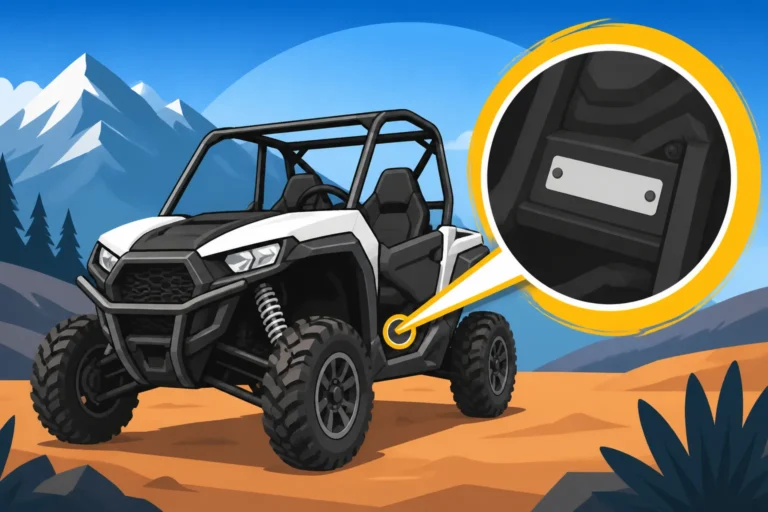
If you financed your OHV purchase, the lending institution will typically record a lien on the title. There will be a separate, small fee associated with recording this lien, which essentially legally protects the lender's interest in the machine until your loan is paid off. You can learn more about this in [Liens on a Colorado OHV Title]. In some specific circumstances, such as if your vehicle identification number (VIN) is difficult to read or needs verification due to a complex history, you might be required to get a VIN inspection, which could involve a small fee from the inspecting agency, though this is less common for standard titling.
Comparison: Title Fee vs. Registration Fee
It’s incredibly common for people to confuse the title fee with the OHV registration fee, and understandably so! Both involve paperwork and fees related to your machine in Colorado, but they serve distinct purposes and are handled by different state agencies.
To clarify:
- The Title Fee is a one-time (or occasional, if you replace a lost title) fee paid to the Colorado Department of Revenue (via your county motor vehicle office) to establish and record legal ownership of your ATV or UTV. It's your proof that the machine belongs to you.
- The Registration Fee is an annual fee paid to Colorado Parks and Wildlife (CPW). This fee, which usually includes a small dealer or vendor fee if you buy it that way, grants you the privilege to operate your OHV on designated public lands and trails throughout the state. It's what gets you that annual sticker to affix to your machine.
You absolutely need both to legally ride your OHV on Colorado's public trails. You can own a machine (have a title) but not be able to ride it on public land without current registration, and vice-versa. Many find it helpful to think of the title as akin to the deed for your house and the registration as the annual property tax that allows you to enjoy the services of the community. Understanding [What Colorado OHV Registration Costs] will give you a clear picture of that side of the equation.
Here's a quick table to help differentiate these primary costs:
| Feature | OHV Title Fee | OHV Registration Fee |
|---|---|---|
| Purpose | Establishes legal ownership | Permits legal operation on public lands/trails |
| Agency | Colorado Department of Revenue (County DMV) | Colorado Parks and Wildlife (CPW) |
| Frequency | One-time (or for ownership transfer/duplicate) | Annually |
| Cost | Relatively small, flat administrative fee | Varies, usually a fixed annual amount |
| Required For | Proving ownership, selling the machine | Riding on most public OHV trails in Colorado |
| Major Add-ons | Sales/Use tax, lien fees | No major add-ons, but often includes small vendor fee |
Navigating the Titling Process and Payment
So, you've got your new machine, or you're ready to put that used one officially in your name. Knowing where to go and what to bring will make the titling process much smoother and less stressful.
Where to Pay the Colorado OHV Title Fee
The Colorado OHV title fee, along with any applicable sales or use tax, is paid at your local county motor vehicle office. These offices are part of the Colorado Department of Revenue's Motor Vehicle Division, but they operate at the county level. So, if you live in Jefferson County, you'll visit a Jefferson County DMV office. If you're in Mesa County, you'll go to a Mesa County office, and so on. It's always a good idea to check your specific county's website for their exact locations, hours of operation, and any specific appointment requirements they might have. Some counties allow walk-ins, while others prefer or require you to schedule your visit.
When it comes to payment, most county motor vehicle offices accept a variety of payment methods, typically including cash, personal checks, cashier's checks, and major credit or debit cards. However, it's prudent to confirm accepted payment types with your specific county office beforehand, especially if you plan to pay with a credit card, as some may charge a small processing fee for card transactions. Don't show up with just a handful of cash if they only take cards, or vice-versa!
Required Documents and Proving Ownership
Getting your OHV titled means proving you are the rightful owner. This generally requires a few key documents:
- Original Title (if applicable): If you're buying a used OHV, the seller must provide you with the original, properly assigned title. "Properly assigned" means the seller has filled out their section, signed it, and included all necessary information like the sale date and purchase price. Make sure this is complete and accurate before you leave the seller!
- Bill of Sale: This is critical, especially for private party sales. A bill of sale acts as a receipt for the transaction and formally documents the transfer of ownership, the purchase price, the date, and the details of the machine (VIN, make, model, year). Even if your county doesn't require a notarized bill of sale, having a detailed one is a smart move for both buyer and seller. As mentioned earlier, resources like LawDepot can help you generate a professional [Colorado ATV Bill of Sale Template] quickly and easily. It provides a clear, legal record that can save you headaches down the road.
- Proof of Identity: You'll need a valid, government-issued photo ID, such as a Colorado driver's license or state ID card.
- Odometer Disclosure Statement: For most motorized vehicles, including many OHVs, an odometer disclosure might be required.
- Applicable Fees and Taxes: Be prepared to pay the title fee, sales tax, and any other associated charges at the time of your visit.
Making sure you have all your ducks in a row with these documents before you head to the DMV will prevent frustrating delays. For a deeper dive into what paperwork you'll need, check out [Documents the Colorado DMV Wants for an OHV Title]. It’s also wise to understand [Proof of Ownership for a Colorado OHV] so you know exactly what constitutes acceptable evidence when you’re standing at the counter.
Common Scenarios Affecting Your Title Costs
The basic title fee is just one piece of the puzzle. Different purchase scenarios can introduce additional complexities and costs, especially concerning sales tax and potential documentation hurdles. Being aware of these can help you budget accurately and prepare your paperwork efficiently.
Titling a Used ATV or UTV
When you buy a used ATV or UTV from a private seller in Colorado, the burden of paying sales tax falls squarely on your shoulders. Unlike a dealership that collects it directly, you'll need to calculate and pay this tax at your county motor vehicle office when you go to title the machine. The sales tax calculation will be based on the agreed-upon purchase price listed on your bill of sale. This is why having a clear, concise, and accurate bill of sale is not just good practice, but essential for this transaction. LawDepot can be a real lifesaver here, allowing you to create a professional document that captures all the necessary details and avoids ambiguity.
Beyond sales tax, buying a used machine can sometimes come with unexpected paperwork challenges. What if the seller doesn't have the previous title, or it has errors? What if a previous owner is missing a signature? These situations can lead to complications, potentially requiring a "bonded title" process, which involves extra steps and costs to establish legal ownership when the paper trail is incomplete or broken. Understanding the implications of a [Bonded Title for an ATV in Colorado] is vital if you find yourself in such a predicament. It’s always best to ensure the seller provides a clear, lien-free title, properly signed and filled out, before you hand over any money.
Bringing an Out-of-State OHV to Colorado
If you've recently moved to Colorado or purchased an OHV from another state and plan to use it here, you'll need to title it in Colorado. As we discussed earlier, the primary additional cost here will be Colorado's use tax. This tax is assessed on the purchase price of the vehicle, similar to sales tax, but it's specifically for items bought out of state for use in Colorado.
The process typically involves presenting your out-of-state title and bill of sale (or other proof of ownership) at your county motor vehicle office. In some cases, depending on the age or condition of the machine, or if there's any discrepancy, a VIN inspection might be required to ensure the vehicle matches its documentation. This is generally a straightforward process but can add a small fee. Planning to [Registering an Out-of-State Machine in Colorado] is essential to avoid any fines or issues when you start exploring our beautiful trails. The county clerk will guide you through this process, ensuring all the correct paperwork and fees are handled.
Replacing a Lost Title
Life happens, and sometimes important documents go missing. If your original Colorado OHV title certificate gets lost, stolen, or damaged beyond recognition, don't panic! You can apply for a duplicate title through your county motor vehicle office. There will be a specific, relatively small fee for issuing this duplicate. It's essentially the same administrative charge as the original title fee, just for a re-issuance.
To apply for a duplicate title, you'll typically need to fill out a specific form (often called an Application for Duplicate Title), provide proof of your identity, and pay the duplicate title fee. It’s a good idea to contact your local county DMV beforehand to confirm the exact form and requirements. While the internal link [Replacing a Lost Colorado OHV Registration] specifically addresses registration, the process and fees for replacing a lost title share similar principles in terms of applying for a duplicate document. Always prioritize getting this sorted, as a clear title is crucial for proving ownership and for any future sale of your machine.
Disclaimer
This article is for general informational purposes only and does not constitute professional advice. Laws, prices and regulations vary by location and change over time. Consult a qualified professional for guidance on your specific situation.