Dispersed Camping Rules on Colorado Forest Land
Dispersed camping can make a Colorado ATV or UTV trip feel wonderfully flexible—until you reach a closed road, a signed no-camping area, or a forest road that allows vehicles but not the kind of riding you planned. This guide explains how to check where you may camp, how to reach your site legally, and what to confirm before you unload the machines.
Know where dispersed camping is allowed
Forest land does not mean camp anywhere
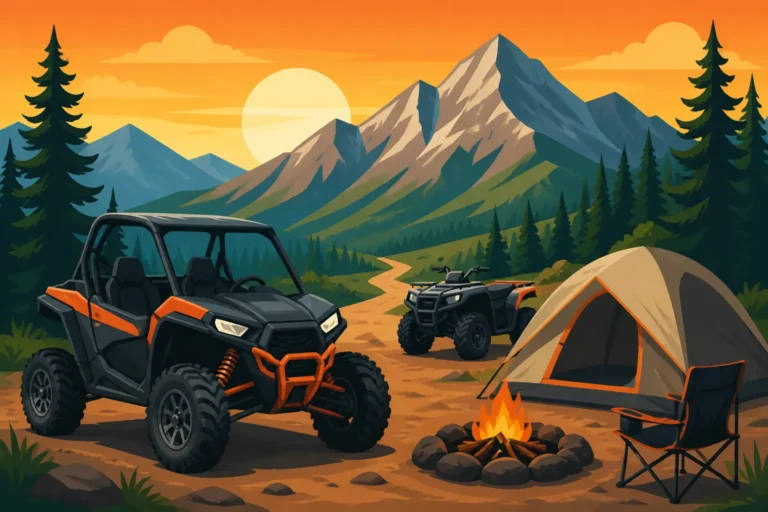
Dispersed camping generally means camping outside a developed campground, often at an existing site on National Forest land. It does not mean every patch of public-looking land is open for camping. The land may be privately owned, managed by another agency, subject to a closure, or within an area where camping is allowed only at signed or designated sites.
Colorado’s National Forests—including the White River, San Isabel, Rio Grande, Gunnison, and Arapaho-Roosevelt—can have different local restrictions. Even within one forest, an area near a popular trailhead may have designated sites, while another road corridor may prohibit roadside camping. Look for posted signs and current forest orders, and check the specific ranger district responsible for your destination.
A practical first step is to identify the exact road, trailhead, or general camping area you have in mind. “Somewhere near Taylor Park” or “outside Ouray” is too broad to confirm the rules. Narrow the plan to a road or area, then check whether camping is permitted there and whether you need to use an established or numbered site.
Check access rules separately from camping rules
A road can be open to motor vehicles without being an approved place to camp. The reverse can also be true: a campsite may be available, but the road or trail you planned to ride may be closed to your machine. Treat these as separate questions:
- Is camping allowed at or near this location?
- Is the access road open to my vehicle?
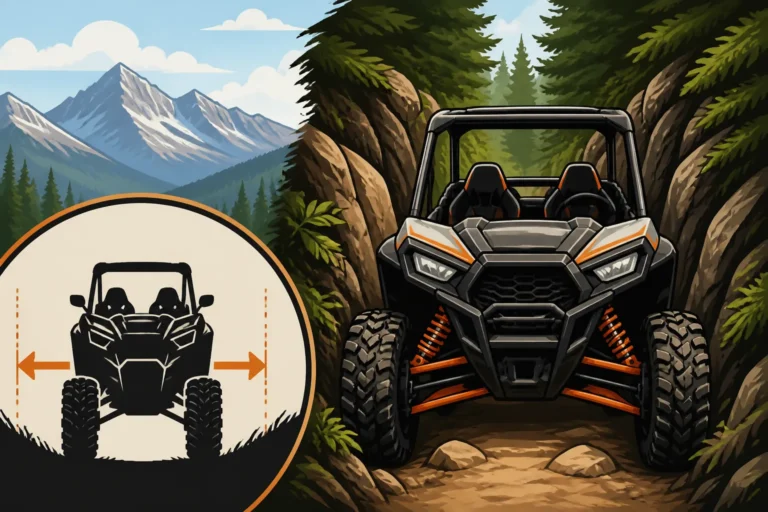
- Are the riding routes open to my type and width of machine?
- Is it legal to ride from camp to the trail, or will I need to trailer the machine?
A Motor Vehicle Use Map, or MVUM, is a key tool for checking which National Forest roads and routes are open to motorized travel. Learn Reading a Colorado Motor Vehicle Use Map before relying on a route displayed in a general-purpose navigation app. A map may show a road without showing that it is seasonally closed, limited to certain vehicle types, or unavailable for the connection you had in mind.
Tools such as onX Offroad can help you see roads, trails, and nearby public-land boundaries while planning. Use onX Offroad as a planning aid, then confirm motorized access and camping restrictions with the relevant land manager and official map. A route line on an app is not, by itself, permission to drive or camp there.
Understand local limits and closures
Many National Forest areas use a maximum stay limit for dispersed camping. A 14-day limit within a 30-day period is common in some places, but don’t assume that one formula applies everywhere. Local orders can set different limits, define how the days are counted, or restrict camping in a specific corridor. Moving a tent or vehicle a short distance may not reset a stay limit.
Closures can also be temporary. Fire danger, flooding, road damage, wildlife protection, restoration work, or heavy visitor use may trigger restrictions. Before leaving home, check current notices from the forest or ranger district. Then check again near the destination: a notice at a road entrance or trailhead may reflect a local restriction that is easy to miss during online planning.
Choose a campsite and reach it legally
Use existing sites and follow posted directions
When dispersed camping is allowed, start by looking for an established campsite rather than creating a fresh one. Existing sites are often recognizable by signs of prior use, such as a durable, already-disturbed area or a clearly defined vehicle pullout. Where the land manager has marked designated sites, use one of those rather than choosing a convenient-looking clearing.
Keep vehicles, trailers, and machines within the area intended for parking. Driving over vegetation to get a better view, reach a stream, or spread out a group can damage fragile ground and may violate motor-vehicle restrictions. On high-elevation terrain, even a small patch of disturbed vegetation can take a long time to recover.
Distance requirements are not universal. Some areas restrict how close you may camp to a road, waterway, or trail; others direct campers to designated sites or use different rules. Don’t apply a distance you remember from another forest to your current trip. Check posted signs and local guidance for that exact area.
Make sure your ATV or UTV route is open
Camping access and recreational riding are not interchangeable. A legal route to a campsite does not automatically authorize extra riding on nearby two-tracks, meadow edges, or unmarked paths. Stay on routes open to your machine and obey seasonal gates, width limits, and closure signs. For more on access and route restrictions, see Colorado Rules on Forest Service Roads and Colorado Trail Closures and Where They Are Posted.
Before the trip, trace the route from the highway to camp and from camp to the riding area. Watch for gaps where a route appears to connect on a digital map but crosses private property, a closed segment, or a route unavailable to your vehicle. onX Offroad can be useful for spotting possible route connections, but verify the route against the official MVUM and local notices. If you cannot confirm the connection, plan to trailer the ATV or UTV to a legal staging area instead.
Your machine’s registration or permit is another separate consideration. A campsite reservation or permission to camp does not replace any registration or permit required for riding on public land. Review Colorado Permit Rules on Public Land and confirm the requirements for your machine and the land you plan to ride.
Plan for parking, trailers, and trailhead traffic
A campsite that fits one truck may not have room for a truck, trailer, and several machines. Don’t assume you can leave a trailer along a narrow road or at a trailhead just because another vehicle is parked there. Look for signed parking rules, turnarounds, pullouts, and staging areas, and avoid blocking gates, road access, or emergency routes.
If your camp is separate from the riding area, decide ahead of time how you’ll get the machines there. Trailering may be the legal and practical option, especially when a route between camp and the trailhead is closed to OHVs. Colorado Trailhead Parking and Staging has more on planning where to unload and park, while Camping Beside Colorado OHV Trails can help you think through the trade-offs of staying near a riding route.
| Before you leave | What to confirm | Why it matters |
|---|---|---|
| Camping location | Camping is allowed, and you know whether sites are designated | Nearby public land may have different rules |
| Access road | The road is open to your vehicle and season | A mapped road may be gated or closed |
| Riding route | The route is open to your machine’s type and width | Access for one vehicle does not guarantee access for another |
| Stay limit | Local maximum stay and how it is counted | Limits can vary by place and order |
| Fire conditions | Current restrictions and allowed equipment | Fire rules can change with local conditions |
| Parking plan | Room for the tow vehicle, trailer, and machines | Roadside parking can block traffic or violate signs |
Camp responsibly in Colorado conditions
Protect water, soil, and vegetation
Use an established campsite and keep your group within its durable, already-disturbed area. Avoid widening the site with extra parking or taking a machine onto meadows, streambanks, or soft ground. If a spot is muddy, a quick shortcut around the puddle can create a wider rut that other visitors follow and deepen.
Give streams, lakes, and wetlands extra care. Do not wash dishes, bathe, or rinse equipment directly in a water source. Follow local rules for how far campsites and vehicles must be from water, since those requirements can vary. Pack out food scraps and litter, including small items such as zip ties, wrappers, and broken gear that are easy to leave behind during a busy ride.
Good route habits matter after you leave camp, too. Stay on designated roads and trails rather than using an open-looking slope as a shortcut. Stay The Trail Ethics in Colorado offers useful guidance on avoiding resource damage and sharing public land responsibly.
Manage fires, food, and waste
Check fire restrictions for the exact area before you travel. A fire ring at a campsite is not proof that fires are currently allowed. Restrictions may prohibit campfires even when a built ring is present, and rules can apply differently to wood fires, charcoal, and portable stoves. If you are unsure, use only equipment permitted by the current order—or skip the fire.
Store food and scented items securely, especially in areas where wildlife may be active. Don’t leave food, coolers, or garbage unattended outside, and don’t feed wildlife. For human waste, follow local requirements and pack out waste when required or when the site lacks an appropriate disposal option. Toilet paper and hygiene products should never be left under rocks or buried casually near camp.
Prepare for high-country conditions even when the forecast looks calm in town. A sunny afternoon near Gunnison or Lake City can turn into cold rain, wind, or a thunderstorm at elevation. Bring enough water, warm layers, and a way to communicate if the group separates or a machine breaks down. For more practical preparation advice, see Water and Sun at 11,000 Feet.
Leave the site safe for the next visitor
Before you pack up, do a slow walk around camp. Check for food scraps, trash, tent stakes, fire debris, and gear that may have slipped under a vehicle. Make sure any fire is completely out when fires are allowed, and don’t leave a smoldering ring because the flames appear to be gone.
Keep noise and dust in mind, especially near other campsites, homes, or a small mountain community. Repeated engine revving, late-night arrivals, or fast passes along a dusty campground road can quickly turn a shared public area into a source of conflict. Ride at a controlled speed near camp, and avoid unnecessary machine trips once you’ve parked for the evening.
A considerate group also makes room for other visitors. Don’t claim a whole area with gear when your group is using only one site, and don’t assume an empty-looking spot is available if it is signed, privately owned, or reserved for another purpose. Dispersed camping works best when people leave the place usable—and welcoming—for whoever arrives next.
Plan a safer trip before you go
Build a backup plan
Popular areas can fill up, access roads can close, and a campsite that looked suitable on a map may not work for a long truck and trailer. Pick a backup area before driving into a remote zone. Confirm that the backup is on land where you may camp and that the route is open to your vehicle.
If your first choice is full, don’t squeeze into a pullout that blocks traffic or create a new campsite. Move to a verified alternative, or use a developed campground. Dispersed Camping Near a Trailhead can help you weigh the convenience of camping close to a route against the parking and access constraints that come with busy trail areas.
Use maps without treating them as permission
Offline maps are helpful when cell service drops, which is common in mountain areas. Save the route, campsite area, and relevant maps before leaving service. onX Offroad can help you keep track of your planned route and identify nearby roads, but carry or download the official MVUM information you need and pay attention to signs on the ground.
If the map, sign, and local notice seem to conflict, don’t guess your way forward. Stop before entering a closed or uncertain route and contact the relevant ranger district when possible. A small change in plans is far easier than discovering after unloading that your campsite or riding route is off limits.
Use a final pre-trip checklist
A quick checklist can prevent the common mistake of planning the ride but forgetting the campsite rules:
- Identify the land manager and ranger district for the camping area.
- Confirm whether camping is open, and whether sites are designated.
- Check stay limits, seasonal closures, and current fire restrictions.
- Confirm the access road and riding routes on the official MVUM.
- Check machine-specific registration or permit requirements.
- Plan parking for the tow vehicle and trailer.
- Download maps and save a backup campsite.
- Pack out trash and bring the supplies needed to leave the site clean.
The main idea is straightforward: verify the campsite, the road, and the riding route as separate parts of the trip. That little bit of planning helps avoid closed gates, crowded pullouts, and unnecessary damage—and gives you more time to enjoy Colorado’s trails.
Disclaimer
This article is for general informational purposes only and does not constitute professional advice. Laws, prices and regulations vary by location and change over time. Consult a qualified professional for guidance on your specific situation.