Colorado Trail Adoption and Volunteer Days
Colorado’s ATV and UTV trails need regular care, but finding a legitimate volunteer opportunity can be harder than showing up with gloves and a shovel. This guide explains how trail adoption works in Colorado, where to find organized workdays, what volunteers typically do, and how to help without accidentally damaging a trail or entering a closed area.
How Colorado trail adoption works
What trail adoption means
Trail adoption is a partnership in which a club, community group, or individual helps care for a particular trail or riding area over time. The work is usually coordinated with the agency or organization responsible for managing the land. That matters: even well-intended trail work can cause problems if it is done in the wrong place or without approval.
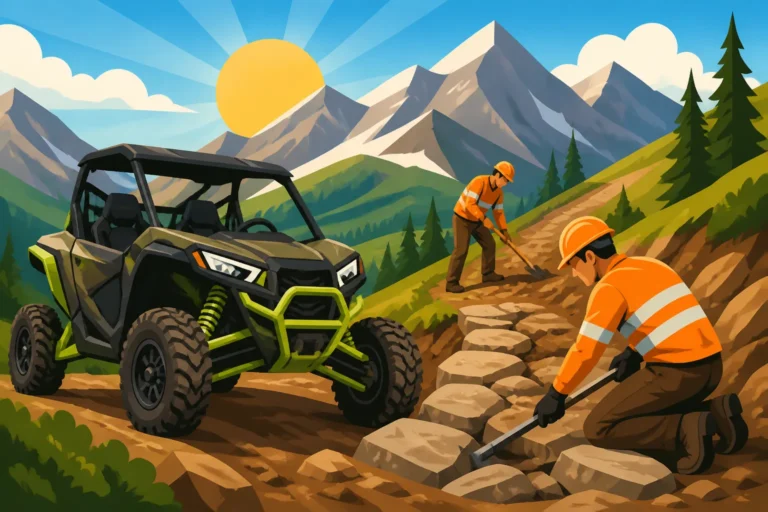
An adopted trail may need attention in several different ways throughout the season. Volunteers might pick up litter, clear small debris, report washouts, help maintain signs, or assist with an organized work project. More involved tasks, such as drainage work or rebuilding a damaged section, generally require direction from the land manager and people with the appropriate training and tools.
Adoption is not the same as owning or controlling a trail. Volunteers help care for a route, but public access, closures, permitted uses, and maintenance decisions remain with the agency or landowner responsible for it. For background on the volunteer partnership model, see Colorado OHV Clubs and Trail Adoption.
Why organized volunteer work matters
Colorado’s changing weather can be tough on trails. A summer storm may leave ruts or move rocks, while regular traffic can wear down a surface over time. In high-use areas, litter and unclear signs can also make a ride less enjoyable—or lead people onto a route they are not supposed to use.
Organized work helps address these issues in a way that considers the surrounding land. Moving water off a trail, for example, is not simply a matter of digging a trench wherever it looks useful. A poorly placed ditch can send runoff toward a stream or create more erosion farther downhill. Work planned with a land manager can account for the trail’s layout, drainage, wildlife concerns, and applicable restrictions.
Volunteer days also build relationships among riders, clubs, and land managers. Riders who participate often get a better sense of why certain routes need seasonal care or why a closure must be respected. For a closer look at the people and projects involved, read Colorado Trail Crews and Summer Repairs.
Finding a Colorado OHV volunteer opportunity
Start with local clubs and land managers
A practical first step is to contact an OHV club that works in the area where you ride. Local clubs may organize cleanup days, help coordinate trail projects, or share information about agency-approved work. If you already ride near a particular town or trail system, ask whether a local group maintains routes there and how it communicates volunteer opportunities.
You can also contact the land manager responsible for the area. Depending on the location, that may be a federal, state, county, or local agency. Ask whether volunteer work is currently authorized, whether a club is already involved, and what kinds of help are needed. This avoids the common mistake of arriving at a trail with tools, only to discover that the work is not approved or that the route is closed.
Opportunities and project needs can change with weather, staffing, and seasonal access. Confirm the meeting place, route, task, and any requirements directly with the organizer before making a long drive. If a project is scheduled near a popular riding area, check Colorado Trail Closures and Where They Are Posted before heading out.
Use maps for planning, not as permission
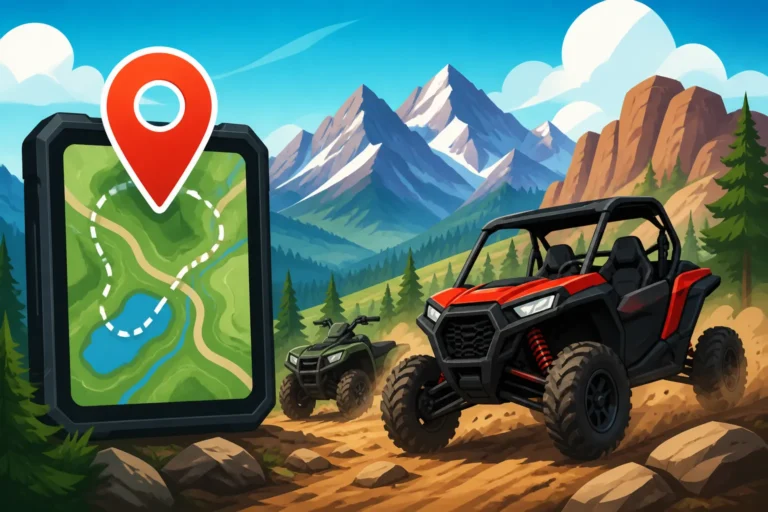
Maps can help you understand where a route starts, how it connects to nearby roads, and whether the volunteer project is near the riding area you know. onX Offroad can be useful for reviewing routes and planning how to reach a trailhead, particularly when you are unfamiliar with the area. Still, a map should not replace current agency guidance or posted closure notices.
Before a workday, confirm the exact location with the organizer. Trail names can be similar, road access may change, and a route shown on a map may have seasonal restrictions. If you use onX Offroad to prepare, compare your route plan with the land manager’s current information rather than treating the app as authorization to travel or work anywhere.
It can also help to save the organizer’s directions and meeting details before you leave cell coverage. Some Colorado trail areas have limited service, so a phone map may not be enough once you are on the way. For broader planning help, see Reading a Colorado Motor Vehicle Use Map and Colorado Trailhead Parking and Staging.
| Before the volunteer day | What to confirm |
|---|---|
| Project location | Exact meeting point, access road, and trail section |
| Authorization | Who is coordinating the work and whether it is approved |
| Task | Cleanup, sign assistance, inspection, or another assigned job |
| Equipment | What to bring and what the organizer will provide |
| Access | Current closures, vehicle restrictions, and parking arrangements |
| Safety | Clothing, water, weather plan, and any required briefing |
What to expect on a volunteer day
Common tasks and how to help safely
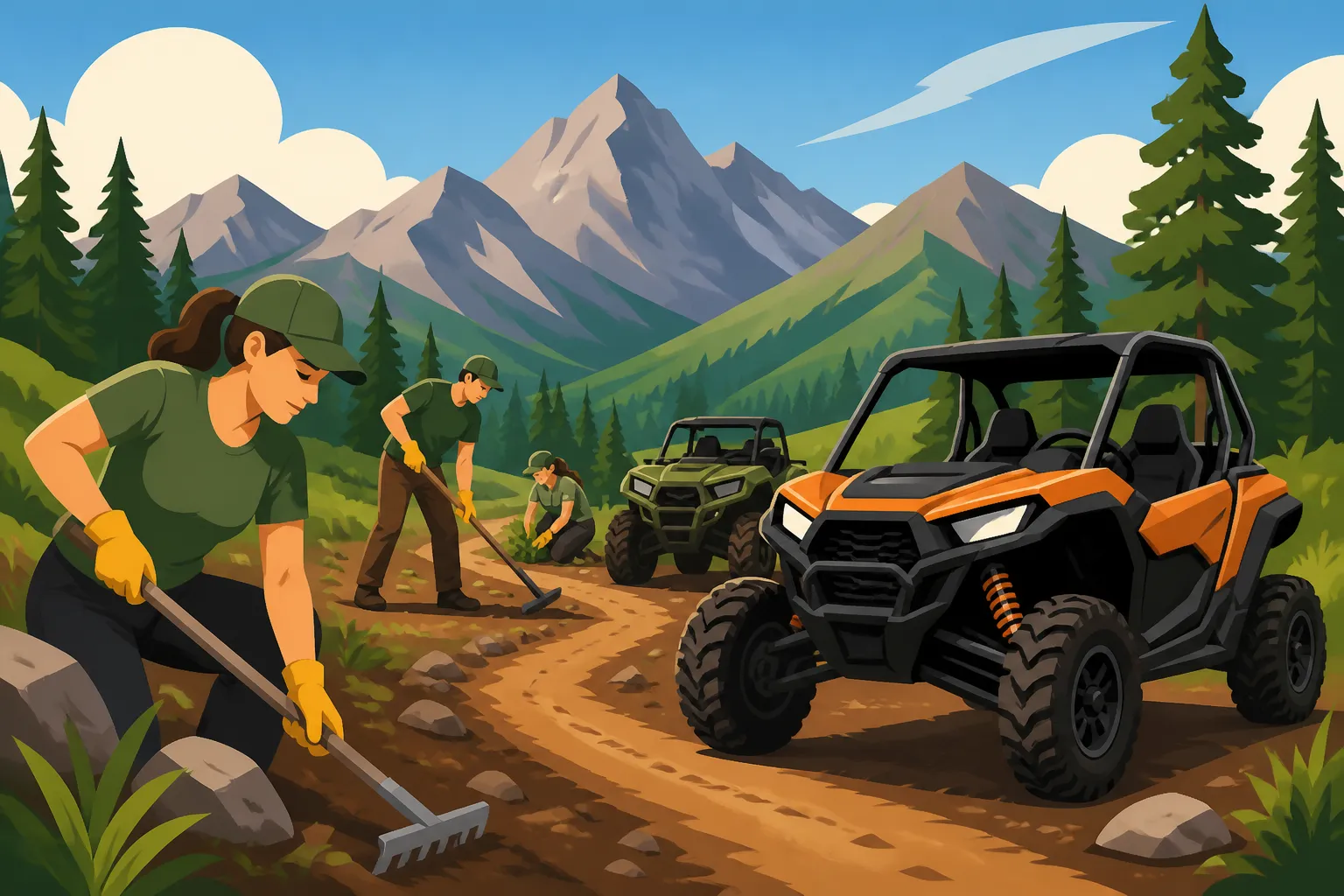
A volunteer day may involve straightforward work such as picking up litter or helping an organizer document trail conditions. Other projects can include clearing debris, assisting with signs, or supporting maintenance under supervision. The exact task depends on the location and what the land manager has approved.
A useful volunteer is not necessarily the person with the biggest tool kit. Showing up on time, following instructions, staying within the assigned area, and speaking up if something looks unsafe are valuable contributions. If you are unsure whether a rock, branch, or sign should be moved, ask before touching it. A feature that seems like clutter may be serving a drainage, boundary, or habitat purpose.
Wear sturdy clothing and footwear suited to the task, bring water and food for the day, and prepare for changing mountain weather. Gloves and basic personal supplies may be helpful, but check with the organizer before bringing power tools or equipment. Do not operate machinery or attempt technical repairs unless the project leader has specifically assigned you to do so.
What not to do on your own
Do not create a new path around a muddy or damaged section. Riding around an obstacle can widen a trail and damage vegetation, while a shortcut may enter a closed or sensitive area. If a section looks unsafe or badly eroded, report what you see and let the responsible organization decide how to address it.
Avoid trimming vegetation, moving signs, building drainage features, or using a vehicle to haul material without permission. These actions can affect public land, private property, wildlife habitat, or water resources. Even if your intention is to improve access, unapproved work can make a problem worse and create confusion for other riders.
Keep your own ride separate from the volunteer assignment unless the organizer has approved riding as part of the work. Stay on designated routes and follow posted restrictions. The principles in Stay The Trail Ethics in Colorado are useful well beyond a workday: remain on the route, respect closures, and leave the surrounding landscape as undisturbed as possible.
Making your volunteer effort count
Report damage and follow up
If you notice a washout, fallen tree, damaged sign, blocked drainage feature, or other concern while riding, note the location as accurately as you can. A nearby trail junction, road number, or recognizable landmark can help an organizer find it. If you use onX Offroad to record or review a location, share the information in the format the club or land manager requests.
Describe what you observed without guessing at the cause or proposing an unapproved fix. For example, note that a section is deeply rutted after a drainage crossing, rather than trying to reshape it during your ride. If the issue creates an immediate hazard, contact the appropriate land manager or local authority rather than assuming a social media post will reach the right person.
For more on communicating a problem responsibly, see Reporting Trail Damage in Colorado. That kind of report is useful even when you cannot attend a workday. Clear, specific observations can help the people coordinating maintenance decide what needs attention and whether a site visit is appropriate.
Support trail work beyond one day
Trail care is ongoing. A one-day cleanup can make a visible difference, but keeping routes in good condition often depends on repeat participation, responsible riding, and communication between clubs and land managers. If you enjoyed a project, ask how to hear about future work or whether the group needs help with planning, outreach, or reporting.
Some trail projects may receive support through grant programs, while others rely on volunteer time and agency resources. Funding does not remove the need for local coordination: projects still need to match land-management priorities and follow the relevant approval process. Learn more about that side of trail stewardship in [Colorado OHV Grant Program for Trails] and Colorado OHV Grant-Funded Trail Work.
Finally, keep riding behavior aligned with the effort volunteers put into maintaining the area. Pack out litter, avoid widening muddy routes, respect closures, and encourage other riders to stay on designated trails. If a route is closed for maintenance or resource protection, do not try to get around the barrier. Giving crews room to work is part of caring for Colorado’s riding areas, just as much as showing up with a rake or a trash bag.
Disclaimer
This article is for general informational purposes only and does not constitute professional advice. Laws, prices and regulations vary by location and change over time. Consult a qualified professional for guidance on your specific situation.