Colorado Trail Crews and Summer Repairs
A trail can look open on a map and still be blocked by fresh drainage work, a washed-out crossing, or a crew repairing damage from snowmelt. In Colorado, summer trail work often happens during the same short season riders plan trips around. This guide explains who does the work, why routes close, how to check conditions, and how to ride without undoing repairs.
Why Colorado trails need summer repairs
Snowmelt, storms, and heavy use take a toll
Colorado’s riding season is shaped by elevation and weather. Snow may linger on high routes after lower trails become passable, while spring runoff can loosen soil, scour stream crossings, and push debris into drainage ditches. Once the ground dries, summer thunderstorms can send water down a trail faster than it can soak in. That combination makes maintenance a recurring job, not a one-time fix.
The damage is not always dramatic. A shallow rut can become a channel that carries water downhill, steadily widening the trail. A blocked culvert can force runoff across the riding surface, washing away gravel and exposing rocks. At a busy staging area, repeated traffic can also compact soil or spread dust and mud into nearby vegetation.
Riders may notice these issues in places such as the San Juan Mountains, Taylor Park, or the Grand Mesa, but the specific conditions vary from route to route. A lower trail may be dry while a nearby high pass remains muddy or snow-covered. For seasonal context, see Colorado’s High-Altitude Riding Season and Colorado Trails Open in July.
What trail crews repair
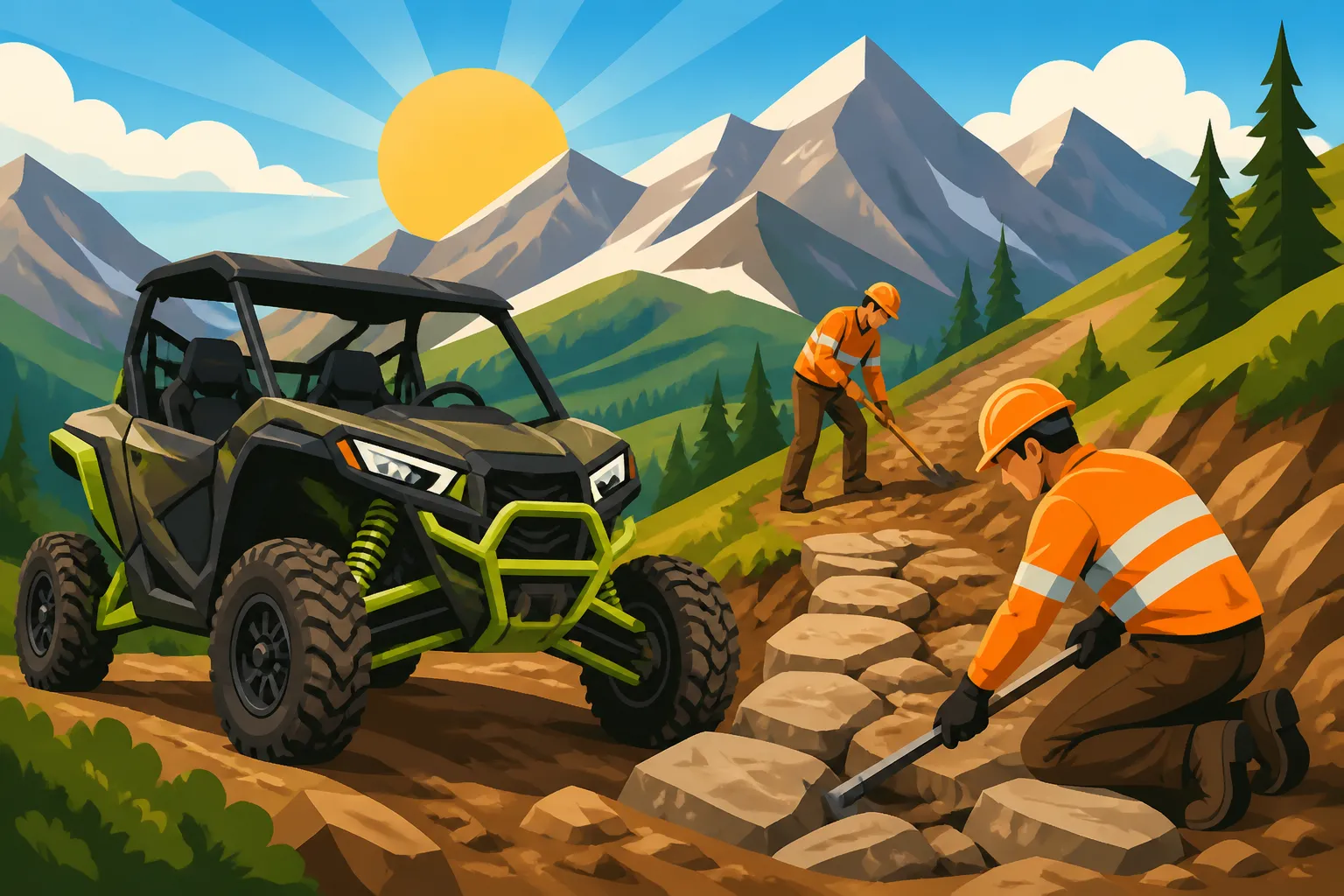
Summer trail work can include clearing fallen trees, cleaning drainage structures, reshaping eroded sections, repairing signs, and stabilizing damaged surfaces. Crews may also improve a route’s drainage so rainwater leaves the trail at planned intervals instead of flowing along it. In some places, they repair a crossing or reroute a short section to reduce recurring erosion.
A repair can be simple but still require a temporary closure. For example, a crew may need machinery or hand tools on a narrow route, or fresh material may need time to settle before traffic returns. A trail can therefore be impassable even when the damage looks minor from a distance. Do not assume that a barrier is only advisory or that a short detour is acceptable; follow posted signs and closure orders.
The kind of repair matters to riders. A newly shaped drainage dip may be easy to miss at speed, and loose material can feel different from the firm surface you rode the previous season. Slow down when you encounter fresh work, keep a safe distance from workers and equipment, and give the surface time to stabilize.
Who maintains Colorado OHV trails
Public agencies, clubs, and volunteers
Trail maintenance is often a shared effort. Public land agencies oversee routes on the lands they manage, while trail clubs and other partners may help with work days, monitoring, or projects carried out through approved arrangements. Local volunteers can be especially important for spotting fallen trees, damaged signs, or a drainage problem before it grows.
The work has practical limits. Crews must coordinate access, equipment, permits, and seasonal conditions. A route may be too wet for repair equipment early in the season, while snow, lightning, wildfire risk, or a short construction window can disrupt a planned project. Even when a crew is ready, the terrain may make it difficult to move tools and materials to a remote site.
Funding can also support maintenance and improvement projects. Colorado’s OHV grant program is one part of the broader trail-work picture; projects may involve multiple partners and are subject to approval and available resources. To understand how grant support connects to local work, read Colorado OHV Grant Program and Trail Funding and Colorado Trail Adoption and Volunteer Days.
Why one trail may close while another stays open
Closures are often specific to a route, segment, or area. A land manager may close one section for construction while nearby routes remain available. Conversely, a closure may affect a larger area if conditions are unsafe or if access is needed to complete work. The reason can range from unstable ground to a damaged bridge or a resource-protection concern.
This is why a general statement such as “the area is open” is not enough to plan a ride. Check the exact route name and the most recent notices before leaving. A map may show a route, but it may not reflect a short-term work closure, a gate that has not yet opened, or an unexpected washout. For broader closure guidance, see Colorado Trail Closures and Where They Are Posted and Where Colorado Closure Orders Are Posted.
| Trail condition or notice | What it may mean for riders | A sensible response |
|---|---|---|
| Work crew or equipment ahead | Active maintenance is underway | Slow down, follow directions, and wait if asked |
| Closed gate or posted closure | The route is not open to public travel | Turn around and use a confirmed open route |
| Freshly repaired surface | Soil or gravel may be loose or unsettled | Ride gently and avoid spinning tires |
| Standing water or deep mud | The trail may be soft and vulnerable to damage | Do not push through; choose another route |
| Missing or unclear sign | The route status may be uncertain | Check official notices before proceeding |
How to check conditions before a ride
Use maps as planning tools, not permission to proceed
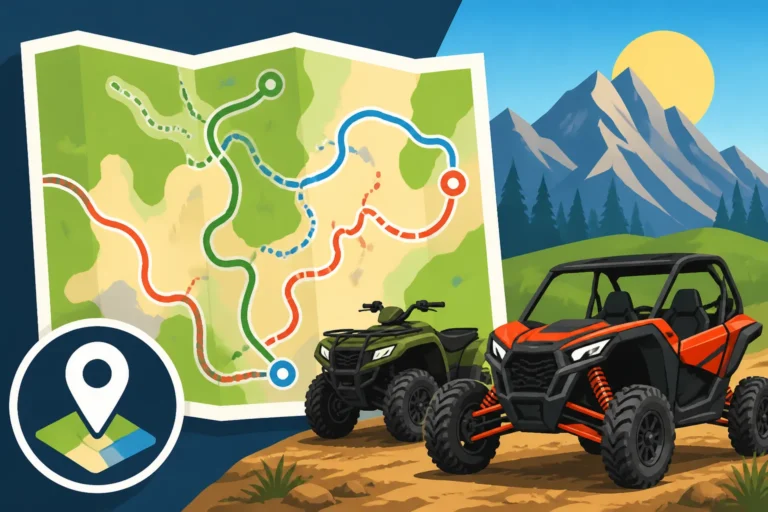
A mapping app can help you understand the shape of a trip, find junctions, and keep track of your route. onX Offroad can be useful for reviewing trail lines and planning an alternate route before you leave. But a mapped route is not proof that it is open today, and a line on a screen does not override a closure sign or land-manager notice.
Before a ride, compare your route plan with current information from the agency responsible for that land. Look for closure orders, seasonal dates, fire restrictions, and notices about construction or storm damage. If you are riding near a trail system with several access points, confirm which entrance is open and whether the route you intend to use connects legally to the next segment. Reading a Colorado Motor Vehicle Use Map explains how to use the official route map as part of that check.
Download or save what you need before traveling into remote areas. Cell coverage can be unreliable in mountain terrain, and conditions can change after you leave town. onX Offroad may help you follow your planned route when service is weak, but it should be one part of a broader plan that includes official maps, offline navigation, and a paper backup when appropriate. See Cell Dead Zones in the San Juans and Carrying a Paper Map Above Treeline.
Build a backup plan before reaching a closure
A useful backup plan is more specific than “we’ll find something nearby.” Identify another legal route, note where you can turn around safely, and check whether your fuel range and daylight allow for the alternate. If a high pass is closed, a nearby lower route may have different conditions, but it still needs to be checked separately.
For example, imagine you are towing to a staging area near a mountain route and discover a closure at the trailhead. If you have not checked another access point, you may be left choosing between a long drive to a different area and an unsafe attempt to get around a barrier. Planning a second option in advance makes it easier to turn back without pressure.
Pay attention to the details of a notice. “Closed to motorized use” is different from a warning that a section is rough, and a closure may apply only between named junctions. When the notice is unclear, ask the responsible land office or local visitor information point before riding. Do not treat another rider’s report as a substitute for current official guidance.
How riders can protect repaired trails
Follow closures and avoid soft ground
The most helpful response to a closure is straightforward: do not ride through it, around it, or across an adjacent patch of vegetation to bypass it. A narrow detour made by one rider can quickly turn into a wider unauthorized track. It can also undermine the repair by sending traffic over the exact ground crews are trying to stabilize.
Soft ground is especially vulnerable. If your tires begin to sink, churn, or leave deep ruts, stop before the damage worsens and retreat using the route you came in on when safe. Spinning the tires to power through can deepen ruts and divert water. If the trail is muddy because of rain or runoff, waiting for it to dry or choosing a different area is often the better decision.
Give workers room to do their jobs. Reduce speed near a crew, obey a spotter, and do not pass operating equipment unless directed. A person working around a blind corner or heavy machinery may not hear an approaching vehicle. Patience protects both the crew and riders, and it helps prevent a temporary work zone from becoming a larger safety problem.
Report damage clearly and ride with care
If you find a blocked route or fresh damage, note the route name, nearby junction, and what you can see without entering a closed area. A clear report is more useful than a general message that “the trail is bad.” If it is safe and permitted, a photo taken from the open route may help explain whether the problem is a fallen tree, a washed-out crossing, or a damaged sign.
Do not move barriers, remove signs, or attempt an unsanctioned repair. A well-meant intervention can create a hazard or conflict with the repair plan. Share information through the appropriate land manager or trail organization, and avoid posting a workaround that encourages others to enter a closed section.
Good riding habits matter even where no crew is working. Stay on the designated route, avoid cutting corners, use suitable speed, and keep noise and dust considerate near homes and trailheads. Those choices reduce preventable damage and help preserve access. For more on responsible riding, read Stay The Trail Ethics in Colorado and Colorado Trail Damage and Resource Protection.
A practical pre-ride checklist
Before heading out, take a few minutes to confirm the route is open and suitable for your machine. A little checking can save a long detour and help protect work that may have taken a crew days to complete.
- Identify the land manager and the exact route or trail segments you plan to ride.
- Check official maps and current closure or construction notices.
- Look for seasonal access dates and recent reports of snow, mud, or storm damage.
- Choose a legal alternate route and note a safe turnaround point.
- Save maps and route information for offline use, and carry a backup navigation option.
- At the trailhead, read posted signs and follow any instructions from workers or land managers.
- Turn around if the route is closed, the ground is too soft, or conditions are unsafe.
Summer repairs can be inconvenient, particularly when a short trip has been planned around one pass or trail system. But closures and maintenance are part of keeping routes usable over time. Checking conditions, respecting work zones, and avoiding damaged ground help make sure the trails are ready for the next rider as well.
Disclaimer
This article is for general informational purposes only and does not constitute professional advice. Laws, prices and regulations vary by location and change over time. Consult a qualified professional for guidance on your specific situation.