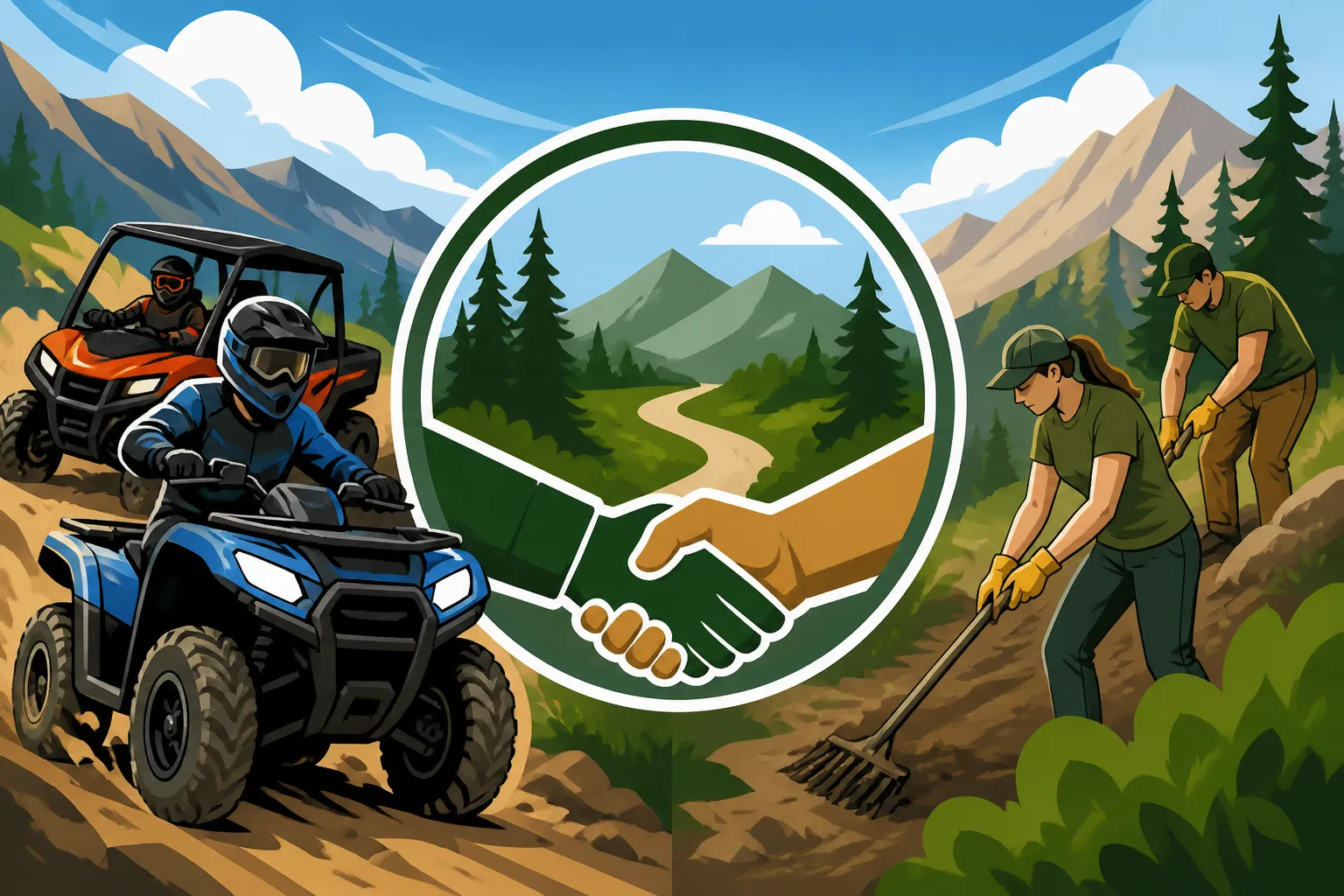
Colorado OHV Clubs and Trail Adoption
Joining a Colorado OHV club can make trail days safer, more welcoming, and more useful to the places you ride. But it is not always clear which groups work on trails, what “adoption” involves, or whether you need to own a particular machine to help. This guide explains how clubs and volunteer programs fit together, and how to find a practical way to contribute.
What Colorado OHV clubs do
Clubs connect riders with local knowledge
An OHV club can be a social group, a trail-work crew, an advocacy organization, or some combination of the three. Some bring ATV and UTV riders together for group rides. Others focus on dirt bikes, four-wheel-drive vehicles, or a particular region. Before joining, look at what the group actually does rather than relying on the word “club” alone.
Local knowledge is one of the most useful things a club offers. Members may know which trailheads fill early, where a route narrows, what seasonal closures typically affect a trip, or which roads are appropriate for a wider side-by-side. That kind of practical experience is especially helpful if you are new to a region such as Taylor Park, Rampart Range, or the San Juan Mountains. For broader riding-area ideas, start with [Where to Ride an OHV in Colorado].
A club can also help riders understand the difference between a route that is open to motorized use and one that simply appears on a map. Ask how the group checks access information and whether it works with a land manager, county, or trail-adoption program. If you use a navigation app such as onX Offroad, treat it as a planning aid, not as permission to ride. Confirm current access and restrictions with the responsible agency before setting out.
Advocacy groups and trail clubs have different roles
Not every OHV organization maintains trails directly. A statewide advocacy group may focus on representing motorized recreation interests, communicating with agencies, or helping clubs understand policy and funding opportunities. A local riding club may organize hands-on work days, lead educational rides, or coordinate with land managers about a particular area.
Colorado Off-Highway Vehicle Coalition, commonly known as COHVCO, is an example of a statewide organization focused on OHV recreation and advocacy. Its role is different from that of a local group coordinating a work day near a trail system. The distinction matters when you are looking for a particular kind of help: a policy question, a ride calendar, or a crew that needs volunteers.
When you contact a group, ask direct questions: Does it welcome ATV and UTV riders? Does it have beginner-friendly volunteer opportunities? Does it work in the area you visit? Are meetings, rides, and work days open to nonmembers? Those answers will tell you more than a long list of general club benefits. If your main interest is hands-on work, ask whether the group participates in [Colorado Trail Adoption and Volunteer Days].
How trail adoption works
An adopted trail is a shared responsibility
Trail adoption usually means that a club or volunteer group agrees to help care for a route or a defined area in coordination with the land manager. The group may report problems, help with approved maintenance, remove litter, or support efforts to keep riders on designated routes. The details depend on the site, the managing agency, and the scope of the agreement.
Adoption does not mean the club owns the trail or can change where it goes. Work such as cutting vegetation, moving rocks, building drainage features, or placing signs may require agency approval. That can feel slower than simply fixing a problem when you see it, but it protects riders, volunteers, wildlife, and the land. If you spot a hazardous washout while riding, reporting it is generally more useful than attempting an unapproved repair.
This is why a trail-adoption project can look less dramatic than people expect. A useful day might involve documenting erosion, picking up trash, checking approved signs, or helping riders understand a closure. To see how longer-term maintenance fits into the season, read [Colorado Trail Crews and Summer Repairs]. Agencies and volunteer leaders can explain which tasks are currently approved and what tools, training, or supervision are needed.
Volunteer work can be practical and beginner-friendly
You do not need to be a mechanic or experienced trail builder to contribute. Many programs need people who can carry supplies, record observations, help with check-in, organize equipment, or communicate clear route information. A volunteer who can reliably show up and follow instructions is valuable, even if this is their first work day.
For example, a family riding near Gunnison might be able to help with a scheduled litter pickup or a sign-checking day, while an experienced rider could take part in a more technical project after receiving direction. A person who cannot manage a full day outdoors might still help with event organization or share accurate closure notices with fellow riders. Ask about the physical demands, duration, meeting location, machine access, and whether the work is suitable for children.
A good first step is to choose one area you visit regularly and ask the local club or land manager how to help there. That gives you a reason to stay involved: you can see whether your effort made a difference and learn the local rules over time. For club events that include actual maintenance, confirm the project details in advance rather than assuming a group ride is also a work day.
Finding a club or volunteer opportunity
Match the group to your machine and riding area
Start with geography and riding style. If you mostly ride a full-size UTV, a group focused on narrow single-track may not be the best fit for your regular rides, though it may still welcome volunteers. Likewise, an ATV club may have a different schedule and route focus from a group that organizes four-wheel-drive trips. Be clear about the machine you own, the places you ride, and whether you are looking for social rides, trail work, or both.
A useful way to compare options is to ask the same questions of several groups. Look for recent activity, clear contact information, and a straightforward explanation of how the organization works with land managers. If a group’s online calendar is quiet, that does not necessarily mean it is inactive; contact the organizer and ask about upcoming meetings or work days.
| What you want | What to ask a club or program |
|---|---|
| Local riding partners | Does the group organize rides in the area I visit? |
| Trail work | Which approved projects can volunteers join? |
| Beginner support | Are new riders or first-time volunteers welcome? |
| Machine-specific guidance | Does the group include ATV or UTV riders? |
| Access information | How does the group confirm routes and closures? |
| Family participation | Are there age, supervision, or task requirements? |
A map can help you identify nearby riding areas, but a route shown in onX Offroad is not a substitute for official land-manager information. Use the app to plan questions and orient yourself, then check the applicable agency’s route map and closure notices. [Reading a Colorado Motor Vehicle Use Map] is useful preparation because a Motor Vehicle Use Map, or MVUM, identifies routes designated for motorized use on relevant Forest Service lands.
Check the commitment before signing up
Some clubs ask for dues or regular participation; others welcome occasional volunteers. A work day may require an early start, a drive to a remote meeting point, or the ability to walk uneven ground. Before you commit, ask what you should bring, whether the group provides tools, how weather affects the plan, and whom to contact if you need to cancel.
It is also worth checking whether the work is designed for riders or for volunteers arriving in a passenger vehicle. In some places, the route to a project site may be rough or require a suitable machine; in others, volunteers may work close to a trailhead. Do not assume you can ride your ATV or UTV into a work area just because the project concerns an OHV trail. Ask about access and parking before loading up.
If a club cannot offer the right opportunity, ask whether it can point you to another group or the relevant agency contact. A useful introduction might be as simple as: “I ride a side-by-side near Lake City and can help one Saturday a month. Are there approved volunteer days that need extra hands?” Being specific makes it easier for an organizer to give you a clear answer.
Responsible trail use is part of adoption
Prevent damage before it needs repair
Trail work is only one part of keeping an area in good shape. Riders help protect routes every time they stay on the designated trail, avoid widening muddy sections, and respect seasonal closures. Riding around a puddle can create a second track that gradually becomes a bigger erosion problem. In a fragile area, stopping to decide where to go next is better than improvising a new line.
If a route is closed, do not treat a map, a friend’s old recollection, or a visible tire track as proof that it is open. Closures can be seasonal, temporary, or tied to a specific segment. Check official notices before leaving and again when you reach the area, especially after storms, fires, or early-season snow. See [Colorado Trail Closures and Where They Are Posted] for more on checking closure information.
Responsible riding also means giving other trail users room, keeping noise in mind near homes and towns, and packing out what you bring in. The habits described in [Stay The Trail Ethics in Colorado] are relevant whether you are on a club ride or exploring on your own. Clubs can reinforce good habits, but every rider has a role in preventing damage and avoiding conflict.
Report problems with useful details
A clear report helps a land manager understand what is happening and where. Note the trail or road name if you know it, the nearest junction or landmark, the date, and the type of problem. “A large washout on the road” is less useful than “a washout just beyond the signed junction, blocking the uphill side of the route.” If it is safe and appropriate, a photograph can help explain the issue.
Do not place yourself or others at risk to collect information. Avoid stopping in a blind corner or unstable area, and do not attempt to clear a fallen tree or repair a drainage problem unless the land manager has authorized the work. If a route appears unsafe, turn around when you can do so safely and report the condition through the responsible agency or the club’s established contact.
For more serious concerns, such as repeated off-trail riding or damage to a sensitive area, use the appropriate reporting channel instead of confronting another rider in a tense situation. A club may know which agency manages a route, but it cannot replace that agency’s reporting process. [Reporting Trail Damage in Colorado] can help you think through what information to provide.
Funding, stewardship, and making your effort count
Understand how trail projects are supported
Trail work can depend on a mix of volunteer hours, agency staff, club coordination, grants, and other funding. A volunteer project may handle small tasks while a larger repair requires professional equipment, environmental review, or a formal work plan. That is why it is helpful to ask what the project is intended to accomplish and how the club’s effort fits into the broader maintenance plan.
Colorado’s OHV grant process supports trail and recreation projects, though individual projects and their needs vary. Clubs and agencies may seek funding for work that volunteers cannot reasonably complete alone. For an overview of the program’s role, see [Colorado OHV Grant Program for Trails] and [Colorado OHV Grant-Funded Trail Work]. These topics can also help explain why membership, advocacy, volunteer hours, and responsible permit use may all contribute to trail stewardship in different ways.
When you volunteer, follow the project leader’s instructions and stay within the agreed work area. A well-intentioned shortcut can create more work if it damages vegetation, changes drainage, or sends riders in the wrong direction. Ask how the group records completed work and whether there will be a follow-up visit. That lets you understand the result rather than assuming a project is finished because the work day ended.
Build a sustainable way to participate
The most useful volunteer plan is one you can keep. You might attend one club meeting, join a trail cleanup, or help share an official closure notice before a busy weekend. If you enjoy the work, take on more. If family schedules or travel make regular attendance difficult, occasional help is still meaningful.
Keep a simple record of the places where you volunteer, the contacts you meet, and any follow-up tasks. If you ride several regions, that record can prevent confusion about which agency manages which route. It can also help you return with better questions the next time you visit. An app such as onX Offroad may help you organize ride planning, but pair it with official route information and the club’s guidance rather than relying on a saved track alone.
Finally, tell other riders what you learned without presenting personal experience as a blanket access rule. A route that was open during one visit may later close, and an adopted trail is not automatically open to every vehicle type. Encourage people to check the current designation, stay on the route, and contact a local club when they are unsure. That combination of practical riding knowledge and careful stewardship is how volunteer effort supports trails over the long term.
Disclaimer
This article is for general informational purposes only and does not constitute professional advice. Laws, prices and regulations vary by location and change over time. Consult a qualified professional for guidance on your specific situation.