Altitude Sickness on a Riding Trip
A ride from Denver to a high Colorado trail can mean a quick jump from familiar elevation to thin mountain air, and the first signs of altitude sickness can look like ordinary tiredness. That confusion matters on an ATV or UTV: headache, nausea, and poor coordination can turn a manageable ride into a dangerous one. This guide explains what to watch for, how to prepare, and when to descend.
Why altitude sickness matters on a Colorado riding trip
How a quick climb affects your body
At higher elevations, each breath provides less available oxygen than it does closer to sea level. Your body needs time to adjust. Driving to a trailhead and heading straight onto a demanding route can make that adjustment harder, especially if you have traveled from a much lower elevation or have spent the night in a low-lying town.
Colorado rides can involve substantial elevation changes in a single day. A rider might sleep in Gunnison, then climb toward Taylor Park or a high pass. Another might begin in Ouray or Lake City and travel above treeline. Even people who are fit and accustomed to exercise can feel unwell at altitude. Physical fitness does not guarantee protection from altitude sickness.
Symptoms often begin after an ascent, but the timing and severity vary. A mild headache or unusual fatigue can be easy to dismiss as dehydration, a rough night’s sleep, or a long day on the trail. Pay attention to the combination of symptoms and whether they are getting worse. At altitude, pushing onward to “see if it passes” can be a poor gamble.
Why riding can make the risk harder to spot
A day of riding adds exertion, sun, wind, dust, and vibration to the challenge of adjusting to elevation. A helmet and goggles can also make it harder for a riding partner to notice that someone looks pale, unusually tired, or confused. Meanwhile, headaches and nausea may be blamed on motion, skipped meals, or a bumpy route.
Altitude illness can affect judgment, balance, and coordination. Those problems matter on narrow trails, steep descents, loose rock, and shelf roads, where riders need to make careful decisions. A person who is struggling to focus may not recognize that they are riding unsafely—or may insist they are fine because they want the group to keep moving.
Build regular check-ins into the day instead of waiting for someone to ask for help. Before a long climb, agree that anyone can call for a stop without having to justify it. If someone is noticeably unwell, do not leave them alone or send them back on a difficult route by themselves.
Recognizing altitude sickness while you are on the trail
Common early symptoms
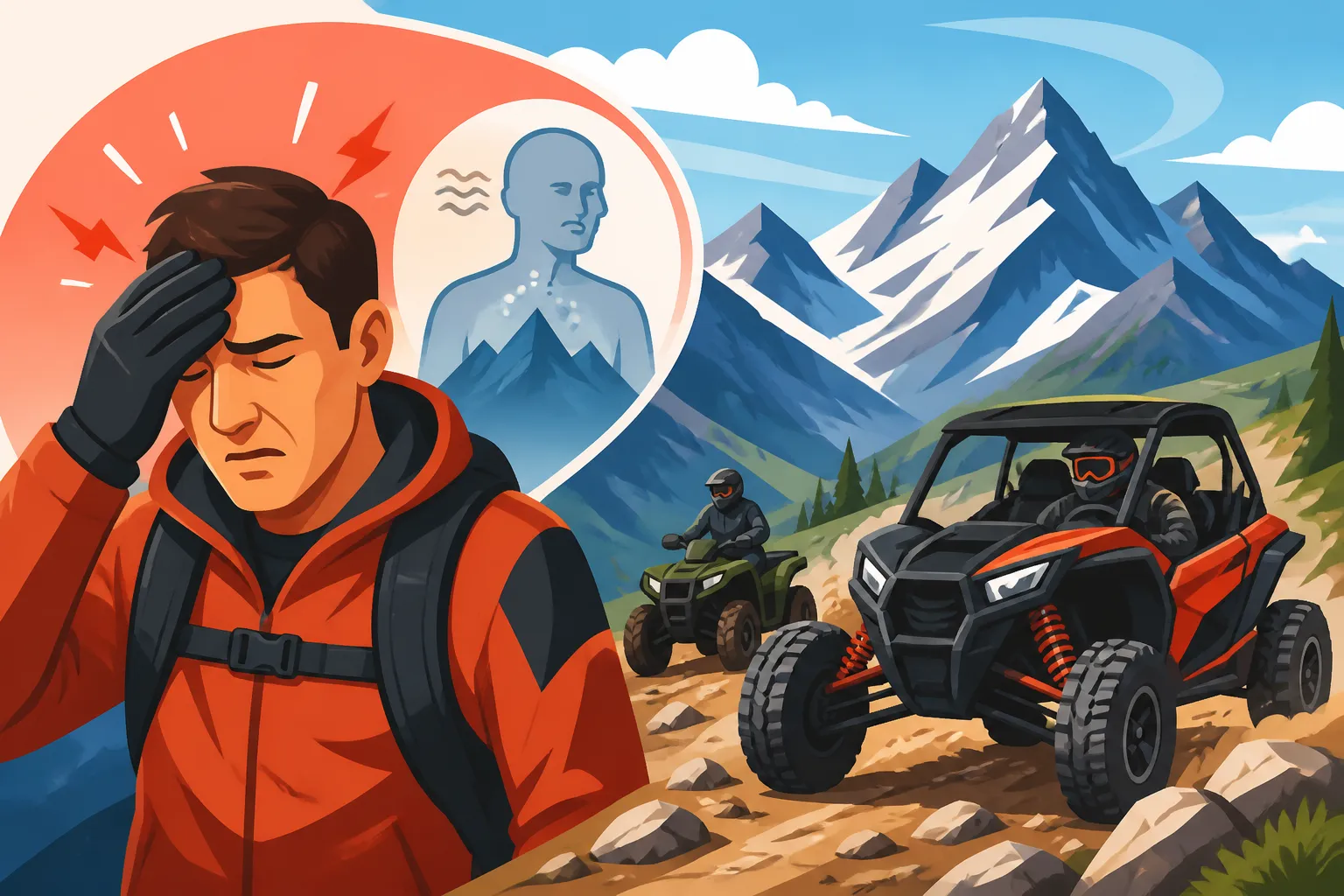
Acute mountain sickness often includes a headache along with symptoms such as nausea, dizziness, fatigue, or reduced appetite. Sleep can be poor, too. One symptom by itself does not prove altitude sickness, but a new headache after gaining elevation—particularly with nausea or unusual tiredness—deserves attention.
| What you notice | What to do |
|---|---|
| Mild headache, nausea, dizziness, or fatigue after ascending | Stop climbing higher, rest, assess the rider, and watch closely for changes |
| Symptoms that persist, worsen, or interfere with riding safely | End the ride and descend; seek medical advice |
| Confusion, unusual behavior, loss of coordination, or difficulty walking straight | Treat as an emergency; arrange immediate descent and emergency medical help |
| Shortness of breath while resting, worsening cough, chest tightness, or blue-tinged lips | Treat as an emergency; arrange immediate descent and emergency medical help |
This table is a practical guide, not a way to diagnose someone in the field. A rider may have another medical problem, and altitude sickness can become serious. When symptoms are concerning, err on the side of getting help rather than continuing the ride.
Emergency warning signs
Confusion, unusual behavior, severe drowsiness, or difficulty walking steadily can indicate a dangerous brain-related altitude illness. Severe breathlessness while resting, a worsening cough, chest tightness, or blue-tinged lips can signal a serious lung-related problem. These symptoms require urgent action, not a break at the trailhead followed by another attempt.
If someone has emergency warning signs, call emergency services if you have a connection and start arranging the safest possible descent. Do not leave the person alone. Keep them warm, minimize exertion, and use supplemental oxygen if it is available and someone knows how to use it. Descent is a key response, but it does not replace medical care. If the person is deteriorating, do not wait to see whether they improve on their own.
Remote terrain complicates emergencies. A route that looks short on a map may be slow or difficult for a sick rider, and a vehicle may not be able to reach every location. Before heading out, review [First Aid Far From a Trailhead] and [Cell Dead Zones in the San Juans]. If you ride where phone service is unreliable, consider carrying a suitable satellite communication device and learn how to use it before the trip; [Satellite Messengers Above Treeline] offers more planning context.
Preparing for high elevation before you ride
Give your body time to adjust
When possible, avoid going straight from a low elevation to a strenuous ride at high elevation. Spend time at a moderate elevation first, and increase sleeping and riding elevations gradually rather than treating the first day as a race to the highest point. If you arrive in Colorado and feel unusually tired or unwell, make the first ride shorter and lower instead of forcing a full day on a high pass.
Acclimatization is not a guarantee that you will avoid symptoms. It is a way to reduce the strain of a rapid ascent and give yourself a better chance to notice how your body responds. A conservative first day can feel disappointing when you have planned a big route, but it is much better than discovering halfway up a remote trail that you cannot safely continue.
Discuss your itinerary with a healthcare professional before travel if you have a medical condition, have had altitude illness before, or are considering medication for prevention. Do not borrow someone else’s prescription or use medication based on a riding partner’s experience. The right approach depends on the person and situation.
Plan the route around elevation and escape options
Look beyond the trail’s name and mileage. Check the route’s elevation profile, the highest point, how quickly it climbs, and whether there are practical ways to turn around or descend. A route that seems manageable on flat ground may feel entirely different after a steep climb, a poor night’s sleep, and several hours of riding.
Use a current official map or other reliable route information to check access, closures, and route conditions. onX Offroad can help you review a planned route and its terrain before you leave, but a digital map is not a substitute for local closure information, an emergency plan, or the judgment to turn around. Download or save the information you will need before entering a dead zone. For broader trip preparation, see [Planning a Colorado Riding Trip] and [Reading a Colorado Motor Vehicle Use Map].
Make the plan flexible. If the group has a headache or feels unusually winded during the climb, choose a lower route or stop for the day. If a storm, closure, or mechanical problem changes the plan, do not let the pressure to “finish the loop” override safety. [Riding Colorado Above 12,000 Feet] and [What to Carry Over a High Pass] can help you think through the added demands of high-country travel.
Hydration, food, sun, and sleep
Drink regularly, but do not force excessive amounts of water. Dehydration can make a riding day feel worse, while drinking far beyond thirst is not a safe way to prevent altitude sickness. Bring enough water for the route and delays, and take breaks to eat something familiar. A long, bumpy day can make it easy to forget both.
High-elevation sun can be intense, and wind may hide how much heat you are losing. Use sun protection, wear layers, and keep warm clothing accessible rather than buried under gear. Try to get a good night’s sleep before a demanding ride; poor sleep can compound fatigue and make it harder to tell what is causing symptoms. More practical preparation is covered in [Water and Sun at 11,000 Feet].
Avoid alcohol before and during acclimatization, and be cautious with anything that causes drowsiness. Those substances can worsen sleep or cloud judgment, making it harder to recognize symptoms and ride safely. If you are taking medication, ask a qualified healthcare professional whether it could affect your response to altitude or your ability to operate an ATV or UTV.
What to do if someone feels sick during the ride
Stop the climb and assess the rider
If a rider develops a headache, nausea, dizziness, or unusual fatigue after gaining elevation, stop ascending. Find a safe place away from traffic and unstable terrain. Have the person rest, stay warm, and sip fluids if they are alert and able to drink normally. Reassess how they feel rather than assuming a short break will solve the problem.
Do not let the rider continue just because the group is close to a viewpoint or the top of a pass. A person who feels unwell may not be able to judge their own condition accurately. Ask direct questions: Is the headache getting worse? Are they confused? Can they walk steadily? Are they short of breath while resting? If another rider is available, have one person stay with the sick rider while someone else coordinates the safest way down.
If symptoms do not improve, worsen, or make riding unsafe, descend to a lower elevation. Choose the simplest safe route, not the most scenic one. A rider who is dizzy or poorly coordinated should not be expected to negotiate technical terrain alone. If a safe descent by machine is not possible, contact emergency services or use your communication plan.
Treat severe symptoms as an emergency
For confusion, loss of coordination, difficulty walking, severe breathlessness at rest, or other alarming symptoms, seek emergency help and arrange immediate descent. Do not wait for the person to “sleep it off,” and do not send them down alone. If you have a satellite messenger, use it according to your emergency plan and provide your location as clearly as possible.
A route app can help you orient yourself, but a map cannot assess a rider’s condition. onX Offroad may be useful for checking your position or reviewing route options when you have prepared for offline use, but emergency communication and medical care remain essential. If you are planning to ride alone, reconsider whether the route and conditions justify that added risk; [Riding Alone Over a High Pass] covers some of the planning concerns.
After the incident, do not rush back to the same elevation or resume the ride as soon as symptoms ease. A qualified medical professional can help determine what happened and advise when it is safe to return to high elevation. If altitude illness has occurred before, discuss future travel plans with a healthcare professional before another high-country trip.
Disclaimer
This article is for general informational purposes only and does not constitute professional advice. Laws, prices and regulations vary by location and change over time. Consult a qualified professional for guidance on your specific situation.