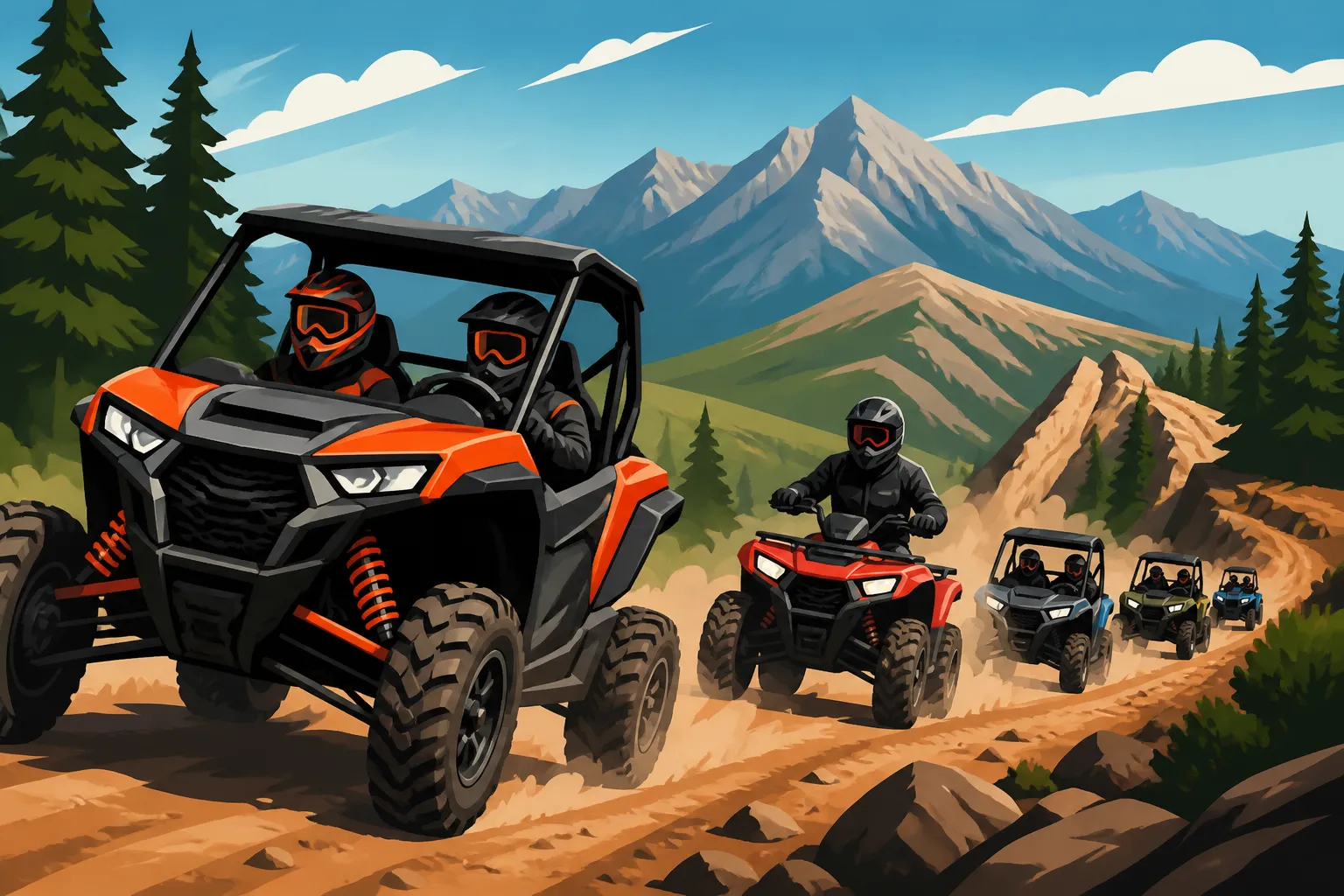
Rampart Range Weekend Crowds
A quiet weekday ride at Rampart Range can feel very different from a sunny Saturday, when trailers, dust, and slower-moving groups make popular trailheads busy early. This guide explains when crowds tend to build, how to plan parking and routes, and what to do when your ride gets delayed. A little preparation can make a crowded day safer and much less frustrating.
Why Rampart Range gets crowded on weekends
Location and easy access draw a mix of riders
Rampart Range Recreation Area sits in the Pike National Forest, west of Colorado Springs and within reach of the Front Range’s larger population centers. That makes it a practical destination for people hauling an ATV or UTV for a day trip, especially when the weather is pleasant and the trails are open. The same convenience that makes the area appealing also means you may share access roads and staging areas with plenty of other visitors.
The crowd is not always made up of motorized riders. Depending on where you are, you may encounter hikers, mountain bikers, campers, hunters, or people driving forest roads. A busy access point can feel hectic even when the specific route you want to ride is not packed. If you are new to the area, [Rampart Range Riding Near Colorado Springs](Rampart Range Riding Near Colorado Springs) is a useful related topic for getting oriented to the recreation area and its riding context.
On busy days, the impact often shows up in small delays rather than a complete standstill: a line of vehicles turning onto an access road, a full staging area, or a slower group ahead on a narrow section. Give yourself more time than your map suggests. A short trip from the highway can take longer when trucks are maneuvering trailers or riders are stopping to sort out equipment.
The busiest days are not always the ones you expect
Warm weekends, holiday periods, and days with good weather often bring more visitors. A blue-sky forecast can change someone’s plan from “maybe next weekend” to “let’s go today,” so a late decision to head out may put you into the same arrival window as many other riders. Crowds can also vary by trailhead and by conditions elsewhere in the region.
The season matters, too. Snow, mud, fire restrictions, maintenance, or seasonal closures can affect which routes are available. When access is reduced in one area, visitors may concentrate on routes that remain open. Before loading the trailer, check current land-manager information and posted signs rather than assuming that a route you rode last season is open now. [Rampart Range Closures for Fire Danger](Rampart Range Closures for Fire Danger) and [Rampart Range Road Conditions](Rampart Range Road Conditions) cover two conditions that can change a ride plan.
A simple way to think about weekend crowding is to plan for the busiest practical version of your trip, not the quietest one. That means allowing extra time to park, unload, review your route, and deal with a slower pace. If things are calmer than expected, you can enjoy the bonus. If they are not, you will not feel rushed into poor decisions.
Plan your arrival, parking, and route
Arrive with a staging plan, not just a destination
A common source of stress is reaching the area and only then figuring out where to park, unload, and meet the rest of the group. Before leaving home, identify your intended staging area, check the approach route, and make sure your truck and trailer can fit in the spaces you plan to use. A tight turn or crowded lot is a bad place to discover that your trailer needs more room than you expected.
If your group is bringing more than one vehicle, agree on a meeting location before the drive. Cell service can be unreliable in mountain and forest areas, and a last-minute text may not reach everyone. Share a written plan with the trailhead name, backup meeting point, and a time to regroup. For larger rigs, [Colorado Trailhead Parking That Fits a Toy Hauler](Colorado Trailhead Parking That Fits a Toy Hauler) offers related planning considerations.
Try to arrive early enough that unloading does not feel like a race. Early arrival does not guarantee an empty staging area, but it gives you more flexibility to choose a spot and complete basic checks before the day gets busy. If you arrive and the available parking is unsafe or clearly unsuitable, do not block an access road or squeeze a trailer into a space that prevents others from moving. Use a legal alternative or change the plan.
Pick a route that suits the group and the day
A crowded day is not the best time to test a machine’s limits or push a new rider onto a route they are not ready for. Match the trail to the least experienced rider and the least capable machine in your group. Consider width, surface, grades, visibility, and the possibility of meeting oncoming traffic. A route that feels straightforward when empty can feel more demanding when you are stopping often or sharing narrow sections.
Review the route before you unload. Use official maps and signs to confirm which routes are open to your machine and which uses are allowed. A navigation app can help you understand where you are, but it should not replace posted restrictions or current land-manager guidance. If you use onX Offroad, download the information you need before heading into an area with limited reception, and treat the app as a planning aid rather than permission to travel on every line shown. [Reading a Colorado Motor Vehicle Use Map](Reading a Colorado Motor Vehicle Use Map) explains why checking the official map matters.
Build a backup route into the plan. If a staging area is full, a route is closed, or the group is moving more slowly than expected, you will be less tempted to improvise under pressure. Route ratings can help you compare options, but conditions and rider ability still matter; a rating cannot account for every rut, loose rock, vehicle, or weather change. See [Rampart Range Trail Ratings](Rampart Range Trail Ratings) when you are thinking through route difficulty.
| Weekend issue | Helpful preparation | If the area is already busy |
|---|---|---|
| Full staging area | Identify a legal backup location before leaving | Do not block roads or park where trailers cannot maneuver |
| Slow-moving traffic | Add time to the schedule and leave room between groups | Stay patient and avoid risky passing |
| Limited cell service | Share the plan and meeting point in advance | Use the agreed regroup location |
| Route closure or restriction | Check current official notices and signs | Choose a verified open route or call off that portion |
| Mixed rider experience | Select a route for the least experienced person | Turn around or shorten the ride if the group is uncomfortable |
Ride safely and courteously in a crowd
Expect slower travel and limited sightlines
Dust, blind corners, and stopped vehicles can make a busy trail feel more challenging than an empty one. Keep a generous following distance so you have room to react if the rider ahead brakes, stops for an oncoming group, or encounters an obstacle. If dust obscures your view, slow down until you can see clearly rather than following tail lights at close range.
Avoid treating a queue as an invitation to pass. Passing can be especially risky where the trail is narrow, the surface is loose, or visibility is limited. If you do need to pass, wait for a clearly safe and permitted location, communicate calmly, and make sure the other rider understands what you are doing. Oncoming riders may have little room to move aside, so slow down and give them space.
Take breaks in places where you are not blocking the route, a trail junction, or an access point. Stopping around a blind corner can surprise someone coming from the other direction. If your group needs to regroup, choose a wide, visible spot and move fully out of the way when it is safe to do so. These habits help prevent small delays from turning into tense encounters.
Keep noise, dust, and trail etiquette in mind
Crowding can make the effects of one machine more noticeable. Accelerating hard near other visitors can throw dust into a group or campsite, and unnecessary revving may disturb people who are using the forest for a quieter experience. Ride at a controlled pace near staging areas and wherever you see other recreationists. A respectful approach also makes it easier for different kinds of visitors to share the area.
Stay on designated routes and avoid widening a trail to get around a bottleneck. Riding around a mud hole, obstacle, or stopped group can damage vegetation and create a new track that others may follow. If you are unsure whether a side route is allowed, do not assume it is open just because tire marks are visible. [Stay The Trail Ethics in Colorado](Stay The Trail Ethics in Colorado) covers the practical value of staying on authorized routes and reducing resource damage.
Be courteous when you meet another group. Reduce speed, make eye contact where possible, and communicate clearly before moving through a tight spot. Let people finish maneuvering trailers or repositioning machines rather than trying to thread through a crowded staging area. Good etiquette will not make a busy weekend empty, but it can make the shared experience feel much more manageable.
Make a backup plan for a crowded or changing day
Check conditions and be ready to adjust
Before you leave, check for current closures, fire restrictions, access changes, and weather concerns through the appropriate official channels. Conditions can change after a map or guide was created, so confirm the information that affects your specific route. Pay attention to notices at the trailhead as well; a sign posted at the entrance may be more relevant than an old route description.
Use onX Offroad to organize waypoints or keep track of your intended route, but prepare for the possibility that your phone will lose service or run low on battery. Download maps in advance, bring a backup power source, and consider carrying an offline or paper map. Keep the route simple enough that every driver can understand the plan, not just the person holding the phone.
Set a turnaround time and a clear regroup procedure. For example, if the group is delayed at the staging area or a route is taking longer than expected, decide in advance whether you will shorten the loop or return the way you came. This prevents one person from feeling pressured to keep going simply because the group has already invested time in getting there.
Know when to switch plans
Sometimes the best response to a packed trailhead is to change the day’s plan. If parking is unsafe, the route is closed, or the group is uncomfortable with the conditions, do not force the ride. A backup destination or a shorter, easier route can still make the trip worthwhile, while trying to squeeze into an unsuitable space or ride beyond the group’s ability can create avoidable problems.
Before choosing another riding area, verify that it is open and that your machine and planned activity are permitted there. Do not assume that a nearby forest road or trail is an acceptable substitute. If the broader region is also busy, a relaxed turnaround may be better than searching from one crowded access point to another. [Busy Colorado Trails on a Holiday Weekend](Busy Colorado Trails on a Holiday Weekend) offers related ideas for managing peak-day expectations.
After the ride, take a moment to note what worked: your arrival time, parking setup, route choice, and how long the trip actually took. That information makes the next weekend outing easier to plan. You may find that a different start time, a smaller group, or a less ambitious route makes all the difference. For general planning around staging and access, [Colorado Trailhead Parking and Staging](Colorado Trailhead Parking and Staging) is another useful topic to explore.
Disclaimer
This article is for general informational purposes only and does not constitute professional advice. Laws, prices and regulations vary by location and change over time. Consult a qualified professional for guidance on your specific situation.