Cattle on Open Range Trails
Cattle can appear around a blind bend, stand across a narrow trail, or wander through an open gate on a Colorado ride. That can turn a relaxed day into a tense one, especially when a machine is loud and a herd has nowhere obvious to go. This guide explains how to approach cattle safely, pass without provoking them, and handle gates and trail closures responsibly.
Why cattle are on Colorado riding routes
Open range means livestock may be near the route
In parts of Colorado, public roads and trails cross working ranchland or open range where cattle are not kept behind a fence on every side. That does not mean every route is open to motorized use, or that riders can cross private property whenever they see an opening. It means that on a permitted route, livestock may be present and may move around freely.
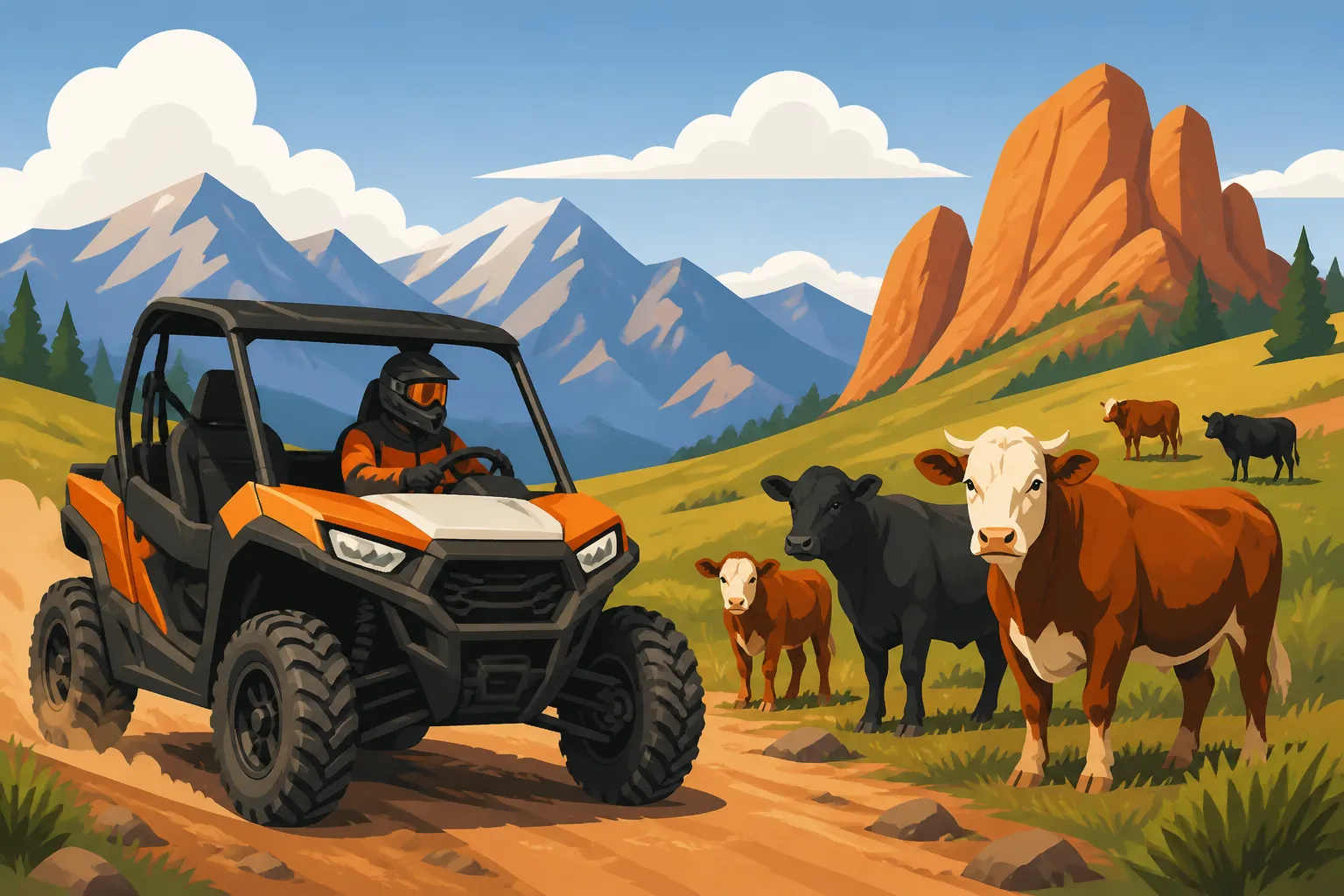
You might meet a few cows near a water trough, a group grazing along the edge of a forest road, or a whole herd moving between pasture areas. Encounters are possible in ranching country, including areas around Gunnison, the San Juan Mountains, and the high-country routes near Lake City. The exact location and timing can vary with grazing activity, weather, and the season.
Cattle are large, but they are not predictable trail obstacles. A cow may step away from a machine, stand still, bunch up with other animals, or move suddenly in the direction you least expect. Calves add another complication: a cow may react defensively if she thinks a rider is getting too close to her young.
A trail map does not tell you where the herd is
Maps help you understand where a route goes, but they cannot guarantee that a stretch is clear of livestock when you arrive. A line on a map may take you through open country where cattle have room to roam, and conditions can change between one ride and the next.
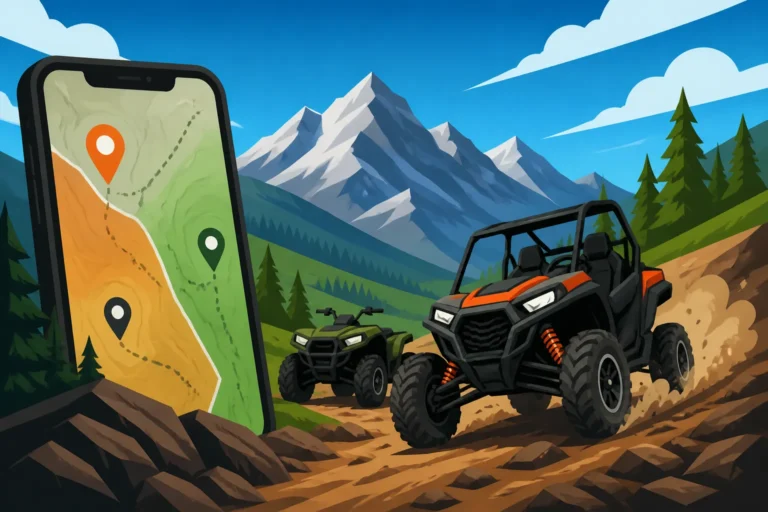
Use a navigation tool such as onX Offroad to review your planned route and reduce the chance of taking an unintended turn onto private land or a route closed to motorized use. Before heading out, compare your plan with the applicable official map and posted signs. If an app and a sign appear to conflict, do not treat the app as permission to continue. Route access and seasonal restrictions are covered in Reading a Colorado Motor Vehicle Use Map and Colorado Trail Closures and Where They Are Posted.
A little planning also helps you avoid rushing. If you have built a tight schedule around a long route, you may feel pressure to push past a herd or squeeze through a gate quickly. Allow time for unexpected delays, including waiting for cattle to clear a narrow section.
How to approach cattle safely
Slow down early and give the animals room
If you see cattle ahead, ease off the throttle well before you reach them. On a dusty or winding road, the animals may not see or hear you until you are closer than expected. Slow, controlled riding gives you more time to judge what the herd is doing and gives the animals a chance to notice you without being startled.
Keep a generous distance. Do not drive directly at cattle, weave through a group, or try to split a herd. Avoid revving the engine, honking repeatedly, shouting, or making sudden movements to force the animals off the route. Loud or abrupt behavior can startle cattle and may cause them to scatter toward riders, vehicles, fences, or a drop-off.
If the cattle are moving, stop somewhere safe and let them continue. If they are standing on the route, wait rather than trying to rush them. Keep children and passengers calm, and ask everyone to remain seated unless there is a clear, safe reason to get off the machine. A noisy group that gathers close to the animals can make the situation harder to manage.
Pass only when there is a clear, spacious way through
Sometimes cattle move away on their own, leaving a broad, unobstructed route. If you decide that passing is safe, go slowly and leave as much space as the terrain allows. Avoid riding between a cow and a calf, squeezing along a fence, or passing so closely that an animal has nowhere to move.
There is no useful universal distance that makes every encounter safe. A broad, level area with a calm animal is different from a narrow shelf road, a steep hillside, or a crowded herd with calves. If you cannot see a clear escape path for both the cattle and your machine, wait. On a narrow mountain road, one rider’s decision to stop may keep the whole group from turning an awkward encounter into a dangerous one.
Keep your route choices conservative. Do not leave the designated trail to go around a herd if doing so would take you off route, across private property, or into sensitive terrain. For general guidance on respecting designated routes and avoiding damage, see Stay The Trail Ethics in Colorado and Colorado Trespass Rules Along Forest Roads.
| Situation | Safer response | Avoid |
|---|---|---|
| Cattle are visible ahead | Slow down and stop at a safe distance | Accelerating toward them |
| A herd is crossing the route | Wait until the animals have moved through | Splitting the herd |
| Cattle are standing on a narrow trail | Give them time and reassess the route | Squeezing between animals and a drop-off |
| A cow is close to a calf | Give the pair extra space and wait | Passing between them |
| A gate is closed | Stop and follow posted instructions | Opening it without permission |
| You cannot tell whether the route is open | Turn back or confirm access before proceeding | Treating an open gate as an invitation |
Gates, fences, and changing conditions
Treat every gate as a responsibility
A gate is not a signal that the route is open to everyone. It may be part of a working ranch boundary, and its position can matter to livestock management. Follow any sign posted at the gate, and do not enter private land just because a gate happens to be open.
If you are on a route where access is permitted and you need to pass through a gate, follow the posted directions and leave it in the condition required by the sign or land manager. Some gates are meant to be left closed; others may have specific instructions. If you cannot tell what to do, stop and seek reliable guidance rather than guessing. A gate left open can allow cattle to wander onto a road or into an area where they do not belong.
Never push cattle through a gate or use your machine to herd them. If animals are gathered around the entrance, wait for the area to clear. If a fence is damaged or cattle appear to be loose in a hazardous place, do not try to repair the fence or move the livestock yourself. Note your location and report the problem to the appropriate land manager or property contact when possible.
Route access can change with closures and local rules
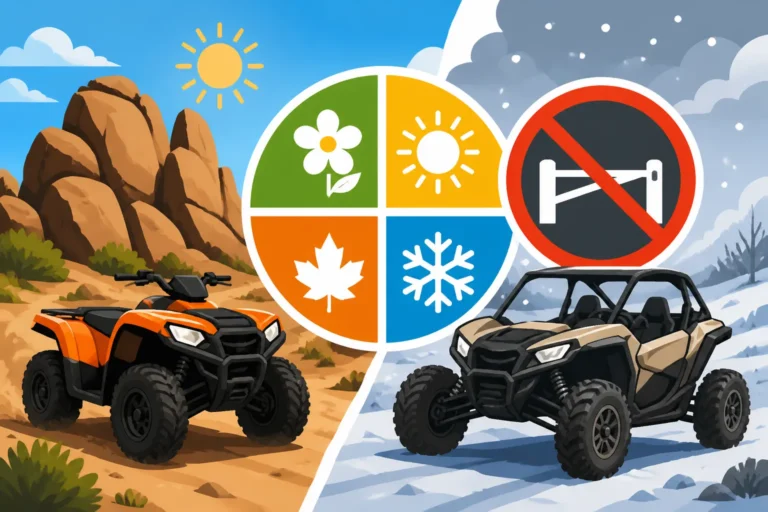
Livestock presence and route access are separate questions. Seeing cattle does not automatically mean you are trespassing, and seeing tire tracks does not prove that a route is open to motorized travel. Check the route’s status before you ride and pay attention to signs at trailheads and junctions. For help understanding seasonal gates and route information, consult Forest Service Seasonal Gates in Colorado and Colorado Trail Conditions Reports.
This is especially important when a route crosses a mix of public and private land. A road may look continuous on the ground even when access rules change along it. If a sign says the route is closed, do not continue simply because the trail looks well used or another rider has gone through. When access is unclear, turning around is safer than relying on assumptions.
Digital maps can be useful for planning, but use them as one part of your preparation. onX Offroad can help you follow a planned route and identify property boundaries shown in the app, while official maps and posted restrictions help you check whether motorized use is allowed. Save or download route information before leaving areas with limited cell coverage, and carry a backup navigation option for a long ride.
Preparing for a cattle encounter
Set expectations with your riding group
Before the ride, tell everyone what to do if cattle appear: slow down, keep a safe distance, avoid loud reactions, and wait for the lead rider’s direction. A group can become unpredictable when several machines approach a herd at once, especially if riders are separated by dust or terrain.
Choose a lead rider who can make calm decisions and a sweep rider who knows when the group has stopped. Keep enough spacing between machines that the last rider is not surprised by a sudden halt. On narrow routes, bring the group to a complete stop in a place where riders are not blocking a blind corner or creating another hazard.
If you are riding with children or inexperienced passengers, explain in simple terms that they should stay seated and quiet unless the lead rider says otherwise. Do not let anyone approach cattle to take a photograph or try to move an animal out of the way. The closer people get, the less room they leave for the animal to move.
Know when to wait or turn around
Waiting is usually the sensible choice when cattle are blocking the route, moving unpredictably, gathered tightly, or standing near calves. It is also the right call when the terrain offers no safe passing space. If the animals do not move and you cannot safely pass without leaving the designated route, turn back or choose another authorized route.
A delayed ride is frustrating, particularly when you have hauled a machine a long distance or planned around a short weather window. But forcing a pass can create risk for you, your passengers, the cattle, and other trail users. Build extra time into your itinerary, check route conditions before departure, and be willing to adjust the day’s plan.
For more general preparation, including conditions at elevation and what to carry on a remote route, see Planning a Colorado Riding Trip and What to Carry Over a High Pass. If you come across an immediate hazard, such as injured livestock or a damaged barrier beside a public route, keep a safe distance and contact the appropriate authority or land manager rather than attempting a hands-on fix.
Disclaimer
This article is for general informational purposes only and does not constitute professional advice. Laws, prices and regulations vary by location and change over time. Consult a qualified professional for guidance on your specific situation.