Riding a Colorado County Road at Dusk
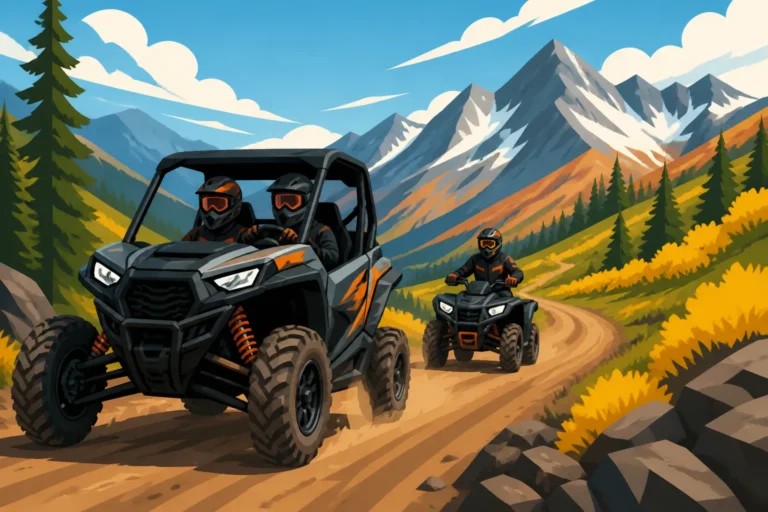
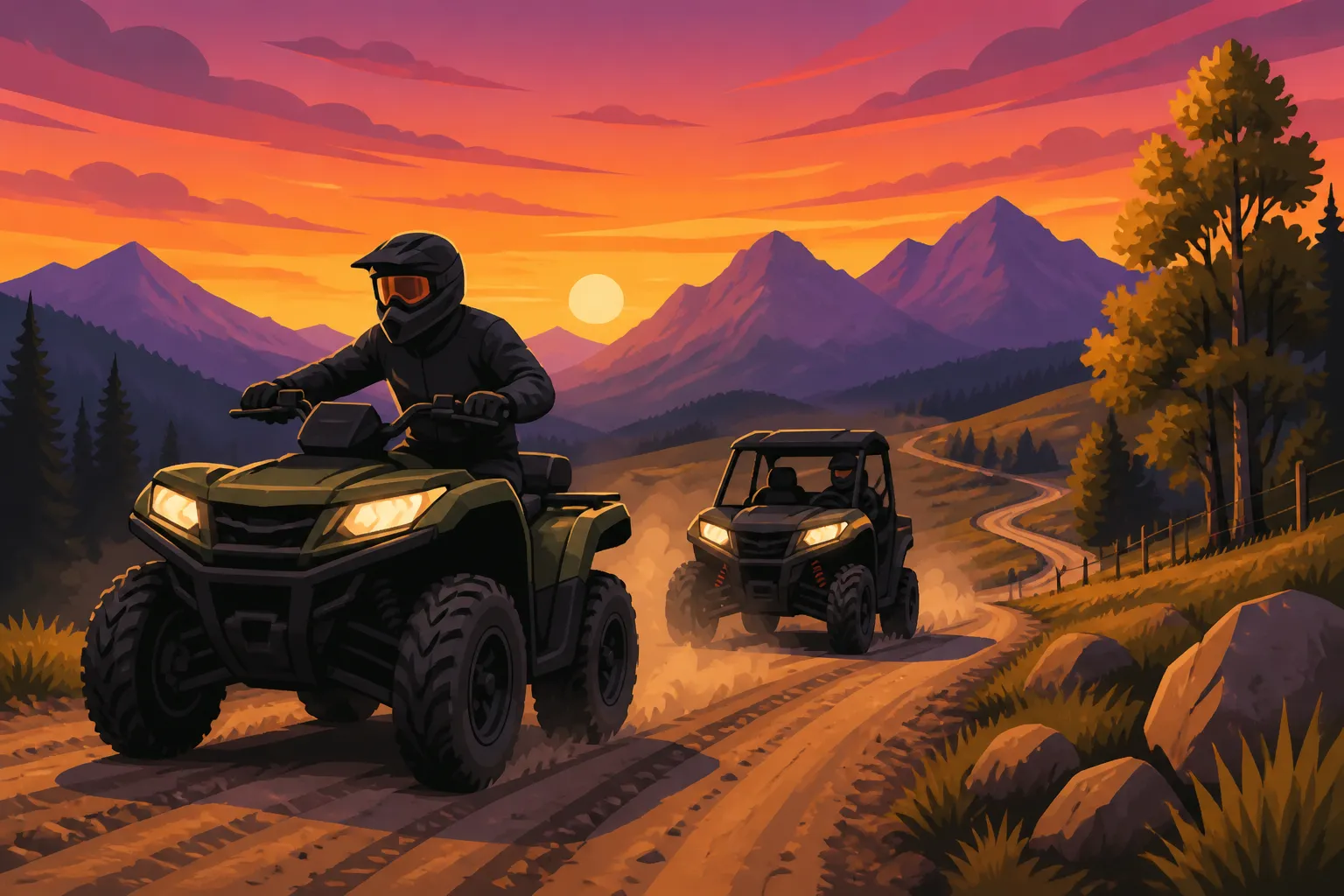
You’ve spent all day exploring the incredible Colorado high country, maybe navigated some challenging passes, or simply enjoyed the scenic beauty of a winding county road. As the sun begins its slow descent, painting the peaks with brilliant hues of orange and purple, the thought of one last stretch of trail before heading back to camp or town is incredibly tempting. But that magical "golden hour" quickly gives way to twilight, bringing with it a unique set of hazards and legal considerations for ATV and UTV riders on Colorado county roads. This guide aims to prepare you for those dimmer conditions, ensuring you understand the rules, have the right gear, and ride safely when daylight starts to fade.
Understanding the Unique Risks of Dusk Riding on Colorado County Roads
Riding an off-highway vehicle (OHV) on a county road as day turns into night isn't just about turning on your lights; it's about navigating a vastly different environment where visibility drops dramatically for everyone. It's easy to underestimate how quickly ambient light fades and how that impacts not only your ability to see but also others' ability to see you.
Reduced Visibility for All
When the sun dips below the horizon, the natural light quickly diminishes, but artificial light sources like streetlights are often few and far between on many of Colorado's rural county roads. This creates a challenging scenario where your eyes, and the eyes of other drivers, struggle to adjust. What might have been a clear view of an approaching turn or a deer grazing roadside in daylight suddenly becomes a shadowy blur. Dust kicked up by other vehicles, or even your own, can hang in the air and further obscure vision, making headlights less effective and creating a diffuse glow that reduces clarity. You might feel confident with your machine's headlights, but remember that oncoming traffic, especially larger vehicles, has a much higher likelihood of overlooking a smaller OHV in the fading light.
Encountering Wildlife on the Move
Dusk is prime time for wildlife activity, and this risk is significantly amplified on remote county roads. Deer, elk, and even smaller creatures like rabbits and raccoons become far more active and are often crossing roads as they move between feeding grounds and cover. Their natural camouflage, which works so well in daylight, makes them virtually invisible against the deepening shadows until they are directly in your headlights – often too late to react. Striking an animal at speed, even a small one, can lead to serious injury or even a rollover accident. Being extra vigilant, scanning the sides of the road, and anticipating potential crossings is crucial.
Other Road Users and Uneven Surfaces
Colorado county roads aren't just for OHVs. You'll encounter everything from passenger cars and trucks to agricultural equipment, bicycles, and even pedestrians or horseback riders, all of whom are also dealing with diminishing light. A bicyclist without proper reflective gear or a walker in dark clothing can be incredibly difficult to spot. Moreover, many county roads, particularly in the mountains, are unpaved, featuring washboards, loose gravel, potholes, and unexpected dips. These imperfections, which you might easily navigate in full daylight, become trip hazards in low light, making it harder to judge their depth and severity. It’s a recipe for a bent rim, a punctured tire, or worse, losing control of your machine. Before you venture out, it's wise to understand which of these routes are actually designated for your machine by checking [Colorado County Roads Open to OHVs].
Colorado's Legal Requirements for OHV Lighting at Dusk and Night
Colorado takes rider safety seriously, and that includes specific regulations for operating OHVs during periods of low visibility. These aren't just suggestions; they are laws designed to protect you and everyone else sharing the roads. Understanding and complying with these rules is non-negotiable, and overlooking them can lead to tickets and fines.
When Lights Are Legally Required
Colorado law is quite clear: if you're operating an OHV on a county road, or any public land where OHVs are permitted, your machine must be equipped with working headlights and taillights during certain times. Specifically, these lights must be on and operational from sunset to sunrise. This isn't a vague guideline; it's a hard rule. Additionally, if visibility is poor at any time of day due to weather conditions like heavy fog, snow, or rain, your lights must also be on. Think of it this way: if you'd turn on your car's headlights, you should absolutely turn on your OHV's. It's not just about seeing; it's about being seen. For comprehensive details, you might want to look into [Lighting Requirements for a Colorado Road Ride].
Specifics of Headlights and Taillights
Your OHV's lighting system isn't just a single light bulb. The law specifies that you need at least one white headlight visible from a distance of 500 feet to the front, and at least one red taillight visible from a distance of 500 feet to the rear. Many modern OHVs come with excellent stock lighting, but it’s always a good idea to check your owner’s manual for compliance and to routinely inspect your lights. Beyond these basic requirements, many riders choose to upgrade for enhanced safety. Auxiliary lighting can significantly improve your field of vision, but make sure it complies with local statutes regarding brightness and aim, especially when driving towards oncoming traffic. [Headlights and Taillights on a Road Ride] offers more specific insights into these components.
Additional Visibility Enhancements and Penalties
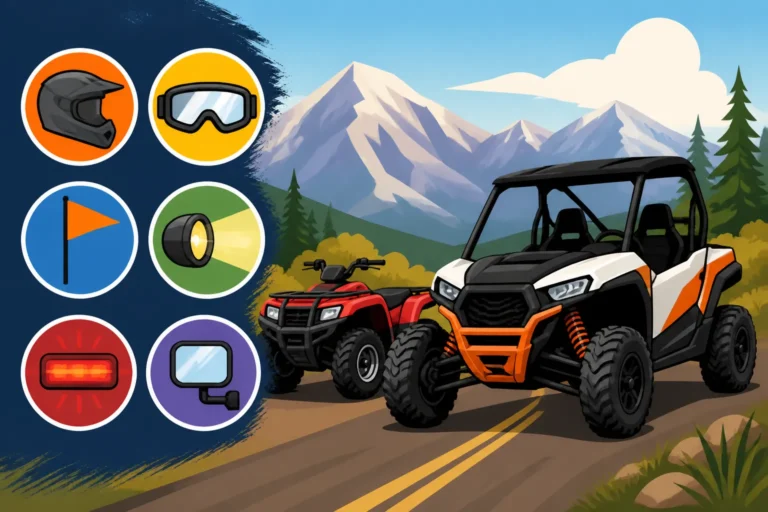
While not always legally mandated for county roads, reflective materials and flags can dramatically increase your visibility, particularly from the side. A whip flag with a reflective stripe or an LED light can make your machine stand out on dusty or winding roads. Some open riding areas might even require them during certain hours. Neglecting your lighting requirements can lead to citations. Law enforcement, including county sheriffs and Colorado Parks and Wildlife rangers, actively patrol these areas. A ticket for an unregistered OHV or one without proper lighting can put a significant dent in your riding budget, not to mention ruin your trip. Always carry your [Colorado OHV Registration Card] and be prepared for potential [Colorado Ranger Checks at a Trailhead].
Equipping Your OHV for Maximum Visibility and Safety at Twilight
Preparing your OHV for dusk and night riding goes beyond simply ensuring your stock lights work. It involves a holistic approach to visibility, both for you to see and for others to see you. Investing in the right gear and making smart modifications can make all the difference when that golden hour fades.
Upgrading Your Lighting System
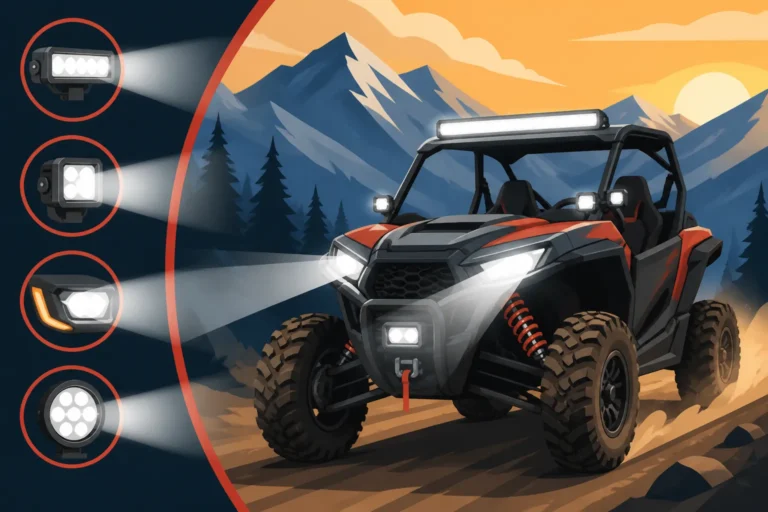
Stock headlights on many ATVs and UTVs are adequate for basic visibility but can leave you wanting more when navigating technical terrain or encountering unexpected obstacles on a county road in low light. Upgrading to brighter LED headlights provides a much clearer, whiter light that illuminates the path ahead more effectively and for a greater distance. Many riders also add auxiliary light bars or cube lights, like those offered by SuperATV, to fill in dark spots, widen their beam pattern, or provide an extra punch of light for spotting wildlife further down the road. When considering auxiliary lights, think about different beam patterns: flood patterns for wide, short-range illumination, and spot patterns for long-range, narrow light. Ensure these auxiliary lights can be turned off when encountering oncoming traffic to avoid blinding other drivers.
Enhancing Side and Rear Visibility
While headlights and taillights are crucial, side and rear visibility are often overlooked, yet they are vital, especially when turning onto or crossing county roads. Reflective tape applied to the sides of your machine, the roll cage of a UTV, or even your helmet can catch the light from other vehicles and make you more noticeable. Consider reflective decals or strips on your fenders. Some riders opt for illuminated whip flags, particularly useful in dusty conditions where standard lights can be obscured. These flags, especially LED versions, extend above the vehicle, making it easier for drivers of taller vehicles, like trucks or SUVs, to spot your OHV from a distance. Don't forget the importance of proper [Reflectors and Flags on a Mountain Road], which can be lifesavers.
Personal Protective Equipment with Visibility in Mind
Your gear plays a significant role in your personal visibility. Dark clothing, while practical for hiding trail dust, can make you virtually invisible to others in low light. Opt for riding gear with reflective elements or choose brighter colors. A high-visibility vest, easily worn over your riding jacket, is an inexpensive and highly effective way to increase your profile. Your helmet is another critical piece of equipment; many helmets come with reflective decals or can be fitted with them. Consider a helmet with a light-colored or reflective finish. Remember that your personal safety also depends on staying alert and sober; [Colorado Alcohol Limits for OHV Operators] apply to OHVs, just like any other vehicle on the road.
| Visibility Enhancement Type | Purpose | Best Use Case | Consideration |
|---|---|---|---|
| LED Headlight Upgrade | Brighter, whiter light for forward vision | Improving range and clarity on dark roads | Ensure proper aim to avoid blinding others |
| Auxiliary Light Bars/Cubes | Wider, more intense light spread | Spotting obstacles, wildlife off-road | Must be switchable for oncoming traffic |
| Reflective Tape/Decals | Passive visibility from all angles | Enhancing machine profile to catch light | Apply to flat, clean surfaces for best adhesion |
| Illuminated Whip Flags | Vertical visibility, especially in dust | Open areas, dusty conditions, tall vehicles | Check local regulations for height limits |
| High-Visibility Riding Gear | Making the rider more noticeable | General safety, especially for pedestrians | Choose bright colors or gear with reflective panels |
Best Practices for Safe Riding as Daylight Fades
Even with the best equipment, safe dusk riding ultimately comes down to your judgment and riding habits. The transition from day to night demands a change in your approach to the trail and the road, emphasizing caution and defensive riding.
Adjusting Your Speed and Following Distance
This might sound like common sense, but it’s amazing how often riders maintain their daytime speed as light fades. Reduced visibility means you have less time to react to hazards, whether it's an unexpected pothole, an animal darting across the road, or a vehicle approaching a blind curve. Slowing down gives you precious extra seconds to identify threats and respond safely. Similarly, increase your following distance from other vehicles. Dust becomes more problematic in low light, creating a blinding haze, and you need more space to stop if the vehicle in front of you suddenly brakes. Remember that [Speed Limits for OHVs on Colorado County Roads] still apply, but safe driving often means going slower than the posted limit.
Using High Beams Responsibly and Scanning Ahead
On unlit county roads, your high beams can be invaluable for extending your field of vision, allowing you to spot wildlife or distant obstacles much sooner. However, responsible use is key. Always dim your lights for oncoming traffic, and consider dimming them when following another vehicle closely to avoid blinding their rearview mirrors. Continuously scan the road ahead and the shoulders, not just the area directly in your headlight beam. Your peripheral vision diminishes significantly in low light, so consciously move your head and eyes to take in as much information as possible. Keep an eye out for reflective eyeshine from animals in the ditches.
Pre-Ride Checks and Route Planning for Dusk Conditions
A thorough pre-ride inspection becomes even more critical when you plan to be out after dark. Check all your lights – headlights, taillights, brake lights – to ensure they are working properly and are free of mud or dust. Make sure your battery is fully charged, as lights draw power. If you’re riding with a group, confirm that everyone's lights are operational. Beyond your machine, plan your route strategically. Try to minimize time spent on unfamiliar or highly technical trails after dark. If possible, stick to county roads you know well, where you’re familiar with the curves, dips, and potential hazards. Always let someone know your planned route and estimated return time, especially if you anticipate being out late. Carrying a physical map or a downloaded GPS map on your device, like with onX Offroad, is also a smart move, as cell service can be spotty in the mountains. For general good practices, it helps to know about [Colorado Rules for Agricultural Road Use], as these types of roads often get less maintenance and are frequented by slower, less visible vehicles.
Remember, the goal isn't just to stay out of trouble with the law; it's about making sure every ride, especially those magical dusk excursions, ends safely for everyone.
Disclaimer
This article is for general informational purposes only and does not constitute professional advice. Laws, prices and regulations vary by location and change over time. Consult a qualified professional for guidance on your specific situation.