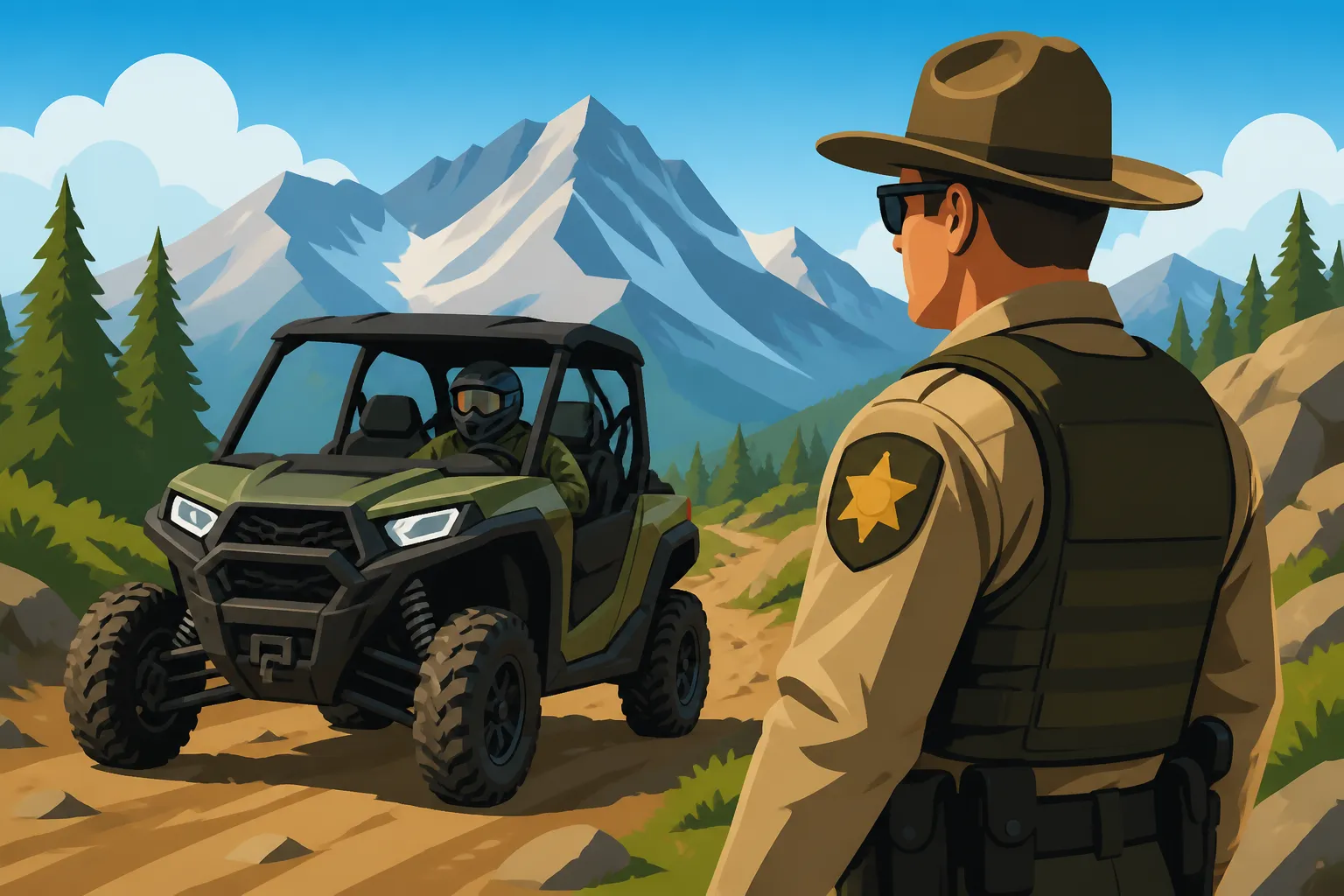
Colorado Sheriff Patrols on OHV Routes
It’s a beautiful day out on the Colorado trails, the sun is shining, and your machine is humming along perfectly. Then, up ahead, you spot it – a sheriff’s vehicle. For many of us, that sight can instantly make our hearts pound a little faster, even if we’re pretty sure we haven't done anything wrong. Navigating Colorado’s vast network of OHV routes, which often mix public lands with county roads and even traverse small towns, means understanding how local law enforcement, especially county sheriffs, operate. This guide will help you understand their role, what they're looking for, and how to ensure your ride stays fun, safe, and free from unwanted interruptions.
The Role of Local Law Enforcement on Colorado OHV Routes
When you're out exploring the incredible backcountry of Colorado on your ATV or UTV, it’s easy to feel like you're miles from civilization, just you and the wilderness. But even in the most remote areas, there's a system of rules and enforcement designed to keep everyone safe and preserve access for future generations. Local law enforcement, particularly the county sheriff's department, plays a crucial role in maintaining order and ensuring compliance with these regulations.
Jurisdictional Overlap and Patrol Areas
One of the most confusing aspects for riders can be the patchwork of jurisdictions across Colorado's diverse landscapes. You might be riding on a designated trail managed by the U.S. Forest Service one minute, cross onto Bureau of Land Management (BLM) land the next, and then find yourself on a county road that has been legally opened to OHVs. While federal agencies like the Forest Service and BLM have their own law enforcement officers (often referred to as Forest Rangers or BLM Rangers), county sheriffs typically have the broadest jurisdiction within their respective counties.
This means that a county sheriff can enforce state and local laws across all these lands, as long as they are within their county boundaries. They are particularly active on county roads that have been designated as OHV-friendly routes, as well as on trails that connect directly to these roads or pass through unincorporated areas. For instance, in popular riding counties like San Juan, Hinsdale, Grand, and Gunnison, you'll often see sheriff patrols. They work to ensure riders respect local ordinances, especially concerning noise, speed, and parking, which can be critical for maintaining good relationships between riders and local communities. Understanding this overlap is key; just because you're on a federal trail doesn't mean you're entirely outside the purview of the local sheriff.
What Powers Do Sheriffs Have on OHV Routes?
When a Colorado county sheriff pulls you over on an OHV route, they aren't just there to check your registration. Their authority extends to enforcing a wide array of laws, encompassing everything from traffic regulations to general criminal statutes. This means they can issue citations for violations that pertain specifically to off-highway vehicles, but also for more general infractions that apply to any vehicle on a public road or land.
For example, a sheriff can pull you over and issue a citation if your OHV lacks required safety equipment, if you're riding in an area not designated for OHVs, or if you don't have the proper [Colorado OHV Registration] or permit. They also have the power to enforce speed limits on county roads and trails, address reckless operation that endangers others, or investigate incidents of trespass onto private land. Moreover, just like on any public road, sheriffs are on the lookout for impaired drivers. Operating an OHV under the influence of alcohol or drugs is a serious offense in Colorado, carrying penalties similar to those for driving a car while impaired. Essentially, when a sheriff approaches, they have the full weight of state law behind them, and their powers are broad, covering both OHV-specific rules and the wider legal framework.
Common Reasons for an OHV Stop by a Colorado Sheriff
No one wants to see those flashing lights in their rearview mirror, especially when you're out trying to enjoy a peaceful ride. But understanding why a Colorado sheriff might stop you can help you avoid those situations entirely. It often comes down to two main categories: ensuring your machine and documentation are in order, and making sure you're operating safely and legally on the trails and roads.
Equipment and Compliance Checks
One of the most frequent reasons for an OHV stop by a sheriff is to perform a routine equipment and compliance check. Think of it like a vehicle inspection on a regular car, but tailored for off-highway vehicles and their unique operating environments. Sheriffs are trained to spot non-compliance from a distance, so keeping your machine up to snuff is your first line of defense.
They'll often be looking for things like functioning headlights and taillights, especially if you’re operating on county roads opened to OHVs or if dusk is approaching. A properly installed spark arrester is critical for fire prevention, and a muffler that meets noise regulations is essential for harmonious trail sharing. If your machine is approved for road use in specific towns, they might check for mirrors or turn signals. Beyond the machine itself, they'll want to see your valid Colorado OHV registration sticker, ensuring it's properly displayed – for ATVs, often on the front or rear fender; for side-by-sides, it typically goes on the left side of the machine, visible to law enforcement. [Where the Colorado OHV Sticker Goes] They’re also looking out for proper licensing and supervision for youth riders, so if you're riding with younger family members, be sure you understand [Colorado Supervision Rules for Riders 10 to 16]. Making sure all these small details are in order will significantly reduce your chances of being stopped for a compliance issue.
Road Rule Violations and Public Safety Concerns
Beyond equipment, sheriffs are vigilantly enforcing road rules and addressing behaviors that raise public safety concerns. Colorado has made strides in opening up county roads and even some town streets to OHVs, but these privileges come with responsibilities. A sheriff might stop you if you're observed riding on a closed road, making an illegal highway crossing, or simply going too fast on a gravel county road where children might be playing or other vehicles are present. Riding into towns that haven't passed ordinances allowing OHV use on their streets is another common reason for a stop, as these areas are typically off-limits. [Colorado OHV Rules on State Highways]
They're also highly attuned to reckless operation. This could include things like excessive dust clouds near homes, unsafe passing, or creating loud noise that disturbs residents or other trail users. Noise complaints, in particular, are a big deal in many mountain communities. An aftermarket exhaust from a brand like SuperATV that's designed to keep noise levels down can be a game-changer here. And of course, one of the most serious public safety concerns is alcohol or drug impairment. Sheriffs are always looking for signs of impaired driving, and a DUI on an OHV carries severe consequences. [Colorado Alcohol Limits for OHV Operators] Remember, the goal of these patrols isn't to ruin your fun, but to ensure that everyone can enjoy Colorado's beautiful outdoors safely and respectfully.
What to Expect During an OHV Stop in Colorado
Encountering a sheriff on the trail or a county road can be a bit intimidating, even if you’re confident you’re following all the rules. Knowing what to expect and how to respond can make the experience smooth and stress-free, ensuring you get back to enjoying your ride as quickly as possible.
Professional Conduct and Your Rights
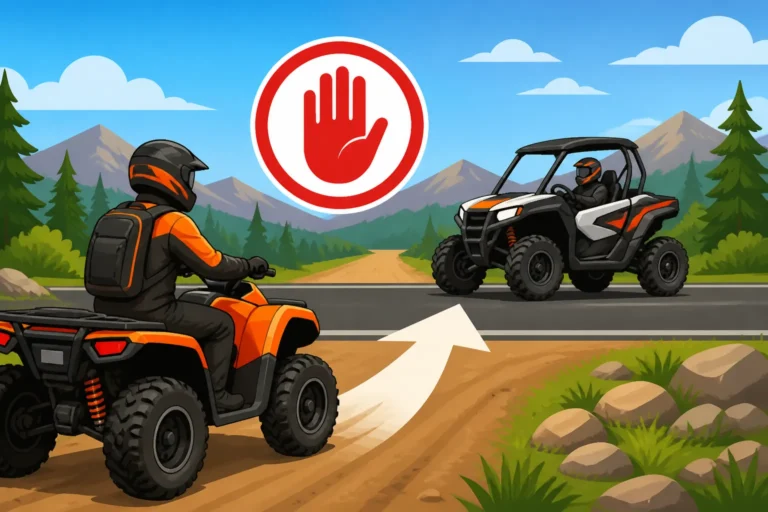
If a sheriff signals you to stop, the most important thing is to do so safely and promptly. Pull your OHV to the side of the trail or road in a clear, safe spot, turn off your engine, and if you’re in a side-by-side, keep your hands visible, perhaps on the steering wheel. Remain calm and courteous. This initial interaction sets the tone for the entire stop. The officer will likely approach and explain the reason for the stop.
You should always be prepared to provide necessary documentation. This includes your driver's license (if applicable for the area you're riding), your current Colorado OHV registration or permit, and sometimes proof of ownership like a bill of sale or title. While not always mandatory for trail riding, having [Do You Carry Paperwork on the Trail?] a copy of your OHV insurance card can also be helpful. You have the right to remain silent and decline to answer questions that might incriminate you, beyond providing identification. You also have the right to refuse a search of your vehicle unless the officer has probable cause or a warrant. However, always be respectful and avoid arguing. If you believe your rights are being violated, state your objection clearly and calmly, but comply with lawful orders. You can address any concerns later through the proper channels.
Potential Outcomes and Penalties
The outcome of an OHV stop can vary widely, depending on the severity of the alleged infraction and the discretion of the sheriff. You might receive a simple verbal warning, which is often the case for minor, easily correctable issues like a slightly obscured registration sticker or a reminder about dust control. A step up from that is a written warning, which serves as a formal record of the stop and a heads-up that future violations could lead to a citation.
However, for more serious offenses – such as riding in a closed area, significant equipment violations, reckless operation, or operating an unregistered machine – you'll likely receive a citation. These citations come with fines, which can range from minor to quite substantial, depending on the specific violation. For example, [Fines for an Unregistered OHV in Colorado] can be steep. Furthermore, some infractions, like a DUI on an OHV, can lead to much more severe penalties, including court appearances, suspension of your driving privileges for regular vehicles, and even seizure of your machine. Points can also be assessed against your driver's license for certain violations, impacting your insurance rates. If you believe a citation was issued in error or unjustly, you always have the right to contest it in court, but it's important to understand the process for [Appealing an OHV Citation]. Knowing these potential consequences helps reinforce the importance of riding responsibly.
Riding Responsibly to Avoid Sheriff Encounters
The best way to handle a sheriff encounter is to avoid one altogether! By being a responsible rider, you not only ensure your own safety and enjoyment but also help preserve access to Colorado's incredible OHV trails and roads for everyone. It comes down to preparation and respect.
Knowing the Rules and Planning Your Route
Colorado's OHV rules can be complex, especially with the mix of federal, state, and local regulations. The golden rule is: know before you go. Before heading out, take the time to research the specific areas you plan to ride. This means checking local ordinances for any towns or counties you might pass through, as many have unique rules regarding OHV access on their streets. [Finding Your Colorado County's OHV Ordinance] Some towns welcome OHVs, others have strict restrictions, and some, like Silverton, have specific bans.
Always consult Motor Vehicle Use Maps (MVUMs) for Forest Service and BLM lands, or check with Colorado Parks and Wildlife (CPW) for state-managed trails. These maps clearly delineate where motorized use is permitted, what type of vehicles are allowed, and any seasonal closures. Never assume that just because a road looks like a trail, it's open to OHVs. Stick to designated routes, understand the difference between riding on specific county roads and open trails, and ensure your machine meets the requirements for the terrain you'll be on. Planning your route carefully isn't just about avoiding a ticket; it's about staying safe and respecting the land.
Maintaining Your Machine and Being a Good Neighbor
A well-maintained machine is not only safer but also less likely to draw unwanted attention from law enforcement. Regularly check your lights, brakes, and tires. Ensure your spark arrester is clean and functional, and that your muffler meets noise standards. If you're riding on county roads, consider adding accessories like proper mirrors or turn signals from companies like SuperATV to ensure full compliance. These small additions can make a big difference in how you're perceived by both law enforcement and other road users.
Being a good neighbor extends beyond just legal compliance. It means riding respectfully, especially when near private property, residential areas, or shared-use trails. Control your dust, keep your speed down when passing homes or other trail users, and always be mindful of your machine's noise levels. Remember that many mountain communities are home to people seeking peace and quiet, and excessive noise or dust can quickly lead to complaints to the sheriff. Yield to hikers, cyclists, and equestrians, and always stay on marked trails to prevent resource damage and erosion. By being a responsible rider and showing respect for the environment and other people, you'll help ensure that OHV access remains open and enjoyable for everyone in Colorado.
Here's a quick summary of common violations that could lead to a sheriff stop:
| Violation Category | Common Examples | Potential Sheriff Action |
|---|---|---|
| Registration/Permit | Expired sticker, no permit, incorrect placement | Citation, warning, fine |
| Equipment | Missing spark arrester, no headlights/taillights, loud exhaust, no mirrors (if required) | Citation, warning, fine |
| Road Rules/Operation | Riding on closed roads, excessive speed on county roads, illegal highway crossings, riding in banned towns, reckless driving | Citation, warning, fine, potential impound (severe) |
| Public Safety | DUI/DUID, excessive dust/noise near residences, trespass, unsafe passing | Citation, arrest (DUI/DUID), fine, court appearance |
| Youth Rider Rules | Unsupervised riding, operating oversized machine for age | Warning to adult, citation to adult/guardian, fine |
Disclaimer
This article is for general informational purposes only and does not constitute professional advice. Laws, prices and regulations vary by location and change over time. Consult a qualified professional for guidance on your specific situation.