Group Riding Etiquette in a Small Town
There’s nothing quite like the thrill of loading up your ATVs or UTVs and heading out with your buddies for an epic group ride in Colorado’s stunning backcountry. But let’s be real, that feeling can quickly turn to anxiety when your route takes you through a charming little mountain town. You want to enjoy the ride, but you also don't want to be those riders who leave a bad impression. This guide is all about navigating those picturesque small towns with your group, ensuring you all ride respectfully and keep those doors open for future adventures.
Why Etiquette Matters More Than You Think!
When you’re out on the trails, roaring through a high mountain pass, the noise of your machine and the dust you kick up are just part of the experience. But the moment those wheels hit pavement in a small town, everything changes. Suddenly, that exhilarating rumble can become an unwelcome intrusion, and that swirling dust a genuine nuisance for the folks who call that place home. It’s a delicate balance, and it’s why understanding and practicing good group riding etiquette isn't just about being polite – it's crucial for the future of our sport in Colorado.
The Local Impact of Off-Highway Vehicles
Imagine you live in a quiet, historic town nestled in the San Juans. You cherish the peaceful mornings, the sounds of birds, and the friendly hellos from your neighbors. Now imagine a constant stream of off-highway vehicles, sometimes in large groups, rumbling down your main street, perhaps even past your home. The noise can be jarring, especially for those sensitive to sound or with young children trying to nap. The dust, even on paved roads, can be a major issue, settling on homes, businesses, and even aggravating respiratory conditions.
Locals often feel a strong sense of pride and ownership over their community, and when large groups of riders pass through without apparent consideration, it can feel like a direct affront. These towns often struggle to balance the economic benefits of tourism with the quality of life for their long-time residents. One too many negative interactions, and suddenly, what was once a welcoming vibe can shift, leading to frustrations that boil over into public forums and town council meetings. It's a very real challenge, and as riders, we have a significant role to play in easing those tensions.
Preserving Access for Everyone
This isn't just about making friends; it's about protecting the places we love to ride. Unfortunately, negative experiences in towns can quickly snowball into local ordinances that restrict or even ban OHV access on town streets. We've seen it happen in various communities, and it's heartbreaking when a beautiful riding area becomes less accessible because a few bad apples soured the well for everyone. Think about the discussions around [Silverton's Ban on OHVs in Town] – these decisions aren't made lightly and often come after prolonged complaints from residents.
Every time you and your group ride respectfully through a town, you're making a deposit in the "goodwill bank." You're showing residents and town officials that OHV enthusiasts are responsible, considerate visitors who appreciate being allowed to pass through. This self-policing is incredibly important. If we want to keep enjoying the privilege of riding through these charming communities, connecting trails, and supporting local businesses, we have to demonstrate that we can do so without disrupting their way of life. It’s about ensuring that the next generation of riders can also experience the joy of exploring Colorado's trails and towns.
Core Principles of Respectful Group Riding in Town
Riding through a small town in Colorado with your group requires a different mindset than conquering a rocky trail. It's about being seen and heard, but in a way that is polite and mindful of the local community. These core principles are your roadmap to being a welcomed visitor rather than an unwanted disruption.
Keep the Noise Down, Seriously
This is probably the biggest complaint locals have about OHVs in town: the noise. What sounds like a thrilling exhaust note on the open trail can be deafening inside a quiet storefront or a family's living room. As a group, your combined noise can be truly overwhelming.
First and foremost, ensure your machines are in good working order and comply with [Muffler Noise Limits in Colorado]. Aftermarket exhausts can be a point of contention; while they might offer performance benefits on the trail, they often increase noise significantly. If you're running a particularly loud exhaust, be extra conscious of how you're riding in town. Avoid unnecessary revving, especially at stop signs or when idling outside a shop. When you pull up to a cafe or a general store, turn off your engine if you're going to be there for more than a minute or two. This small action makes a huge difference. If you're serious about reducing your machine's footprint, companies like SuperATV offer various accessories, including some sound-dampening panels or alternative exhaust options, designed to reduce noise while maintaining performance, which can be a game-changer when passing through residential areas. Remember, silence is golden in a quiet town, and even a slight reduction in your group's collective noise can significantly improve the local perception of OHV riders.
Slow and Steady Wins the Welcome
Speed limits in small Colorado towns are often lower than you might expect – sometimes 15 or 20 mph. But even if the posted limit is higher, consider the spirit of the speed limit, especially on gravel roads or when navigating narrow streets with pedestrians. Dust is a major concern. Speeding down a gravel street kicks up massive clouds of dust, coating everything in its path. Imagine that dust settling on someone's porch swing or inside their open window. Slowing down to a crawl on unpaved town roads is not just courteous; it’s a necessity to prevent becoming a local antagonist.
Avoid sudden accelerations or hard braking. These actions create more noise and can feel aggressive to residents and other drivers. Drive predictably, just as you would a car. Give pedestrians and cyclists a wide berth, and be prepared to stop for children or pets. When you see a local trying to back out of their driveway, slow down and give them plenty of space. It's about blending in, not standing out for the wrong reasons. [Speed Limits for OHVs on Colorado County Roads] aren't just suggestions; they're vital for maintaining local peace.
Mind Your Manners, Mind Your Wake
Your machine leaves a "wake" – not just the sound and dust, but sometimes mud or debris. If you've just come off a muddy trail, try to avoid splashing mud onto parked cars or storefronts. It sounds obvious, but in the excitement of the ride, it's easy to forget. When passing other vehicles or pedestrians, slow down even further. Nobody wants to be covered in dust or splashed with water or mud by a passing OHV. This also includes simple road manners. Use your turn signals, stop completely at stop signs, and yield to traffic and pedestrians as required. Don't block intersections or driveways.
Remember, you're sharing the road. Be aware of your surroundings, especially if your group is large. Don't spread out across both lanes of traffic. Stick to the right, and allow faster traffic (even if it's just a local in a pickup truck trying to get home) to pass safely. The cumulative effect of a group of OHVs occupying an entire street can be intimidating and frustrating for other road users. This also applies to managing [Dust and Neighbors on a County Road] – a little less speed means a lot less dust.
Parking and Staging Smartly
Finding parking for a single OHV can be tricky, let alone for a whole group. Before you roll into town, have a plan for where you’ll park. Look for designated OHV parking areas if they exist, or large public lots away from main street businesses and residences. Avoid parking directly in front of businesses unless you’re actively patronizing them, and even then, consider if a larger group is monopolizing valuable parking spaces.
Never block driveways, fire hydrants, or crosswalks. Don't park on sidewalks or landscaped areas. If you need to stage your group before heading out or after coming back, do so discreetly and away from town centers. A common frustration for locals is when OHV groups take over prime parking spots meant for customers of local shops, especially if the riders aren't spending money in those specific businesses. Think about the impact on local commerce and resident convenience. If you’ve got a bunch of gear, solutions from brands like SuperATV can help you secure it to your machine, ensuring nothing falls off or becomes an obstacle when you're parked. Proper [Parking an OHV on a Colorado Main Street] demonstrates respect for the town's flow and appearance.
| Good Group Etiquette in Town | Bad Group Etiquette in Town |
|---|---|
| Noise & Speed | |
| Riding single file, below posted speed limits, minimal engine noise. | Riding abreast, exceeding speed limits, revving engines loudly. |
| Turning off engines when stopped for more than a minute. | Idling loudly for extended periods at intersections or parking spots. |
| Road Manners | |
| Giving wide berth to pedestrians/cyclists, stopping at stop signs. | Kicking up dust on gravel roads, ignoring stop signs, cutting off traffic. |
| Using turn signals, staying to the right, allowing others to pass. | Spreading across lanes, not signaling, blocking traffic flow. |
| Parking & Presence | |
| Parking in designated OHV areas or away from main street, not blocking access. | Parking on sidewalks, blocking business entrances or driveways, taking up multiple spaces. |
| Smiling, waving, making eye contact with locals. | Ignoring locals, having a "we own the road" attitude, being dismissive. |
| Interaction | |
| Supporting local businesses with purchases, being patient and polite. | Complaining about prices, being demanding with staff, leaving trash. |
| Having paperwork ready for rangers, being courteous during interactions. | Arguing with law enforcement, not having proper registration/permits. |
Group Dynamics and Communication
Riding in a group is fantastic, but it also brings added responsibility, especially when you're in an area where your presence might be scrutinized. Effective group dynamics and clear communication are key to ensuring everyone maintains good etiquette.
Staggered Formations and Spacing
When your group rolls into a small town, a long, snaking line of OHVs can be visually imposing and make other drivers feel nervous or impatient. Riding single file, or better yet, in a staggered formation, is generally safer and less intimidating. This formation allows other vehicles more room to see around you and find opportunities to pass safely if needed. It also creates smaller gaps, making it easier for local traffic to turn onto or cross the street without having to wait for an excessively long parade of machines.
Maintain a reasonable distance between machines. This isn't just for safety – it also prevents a continuous wall of noise and dust. Leaving a little space allows the sound to dissipate more, and for dust to settle somewhat, rather than a constant plume. It communicates that your group is organized and considerate, not just a chaotic swarm.
Clear Communication Within the Group
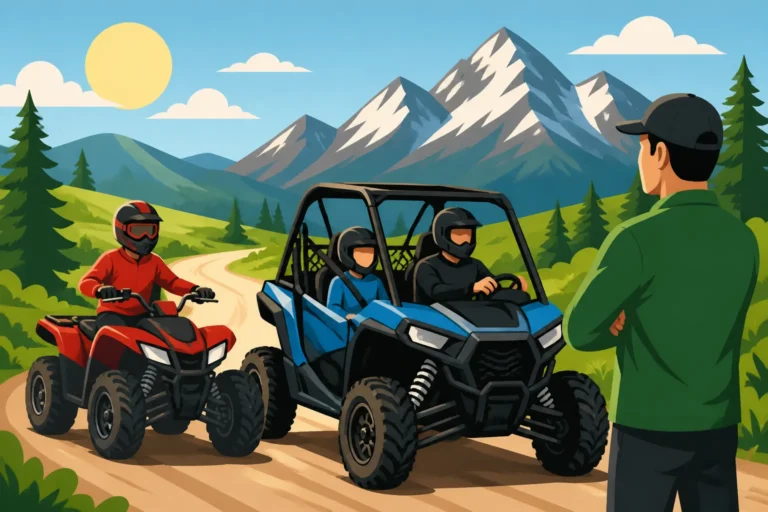
Before your group even approaches a town, take a moment to brief everyone on the plan. Discuss the upcoming town's speed limits, designated routes, and parking spots. If you use radios, establish clear channels and agree on essential hand signals for things like "slow down," "stop," or "single file." The group leader should be clear that respectful riding in town is not optional – it's a mandatory part of the ride.
If someone in the group is getting a little too eager with the throttle or making too much noise, the leader or another rider needs to communicate that gently but firmly. A quick radio call or a discrete hand signal can remind everyone to dial it back. The last thing you want is a member of your group unintentionally creating a negative incident that reflects poorly on everyone.
Leading by Example: The Group Leader's Role
The group leader carries extra responsibility when navigating towns. You are the face of your group and, to some extent, the entire OHV community in that moment. It's imperative that the leader demonstrates impeccable etiquette: riding slowly, quietly, using turn signals, and being courteous to pedestrians and other drivers. Your actions set the tone for everyone behind you.
If you notice someone in your group failing to adhere to the agreed-upon etiquette, it's your job to address it. This might mean a quick word at the next stop, or a pre-arranged signal to pull over and regroup. Ignoring poor behavior sends a message that it's acceptable, which undermines the entire effort to foster good relations with the community. Remember, one person's careless act can lead to town-wide restrictions that affect all riders. Take pride in leading a respectful, well-managed group that leaves a positive impression.
Interacting with Locals and Law Enforcement
Your presence in a small Colorado town isn't just about how you drive; it's also about how you interact with the people who live there. A friendly demeanor and a cooperative attitude can go a long way in shaping their perception of OHV riders.
A Friendly Wave Goes a Long Way
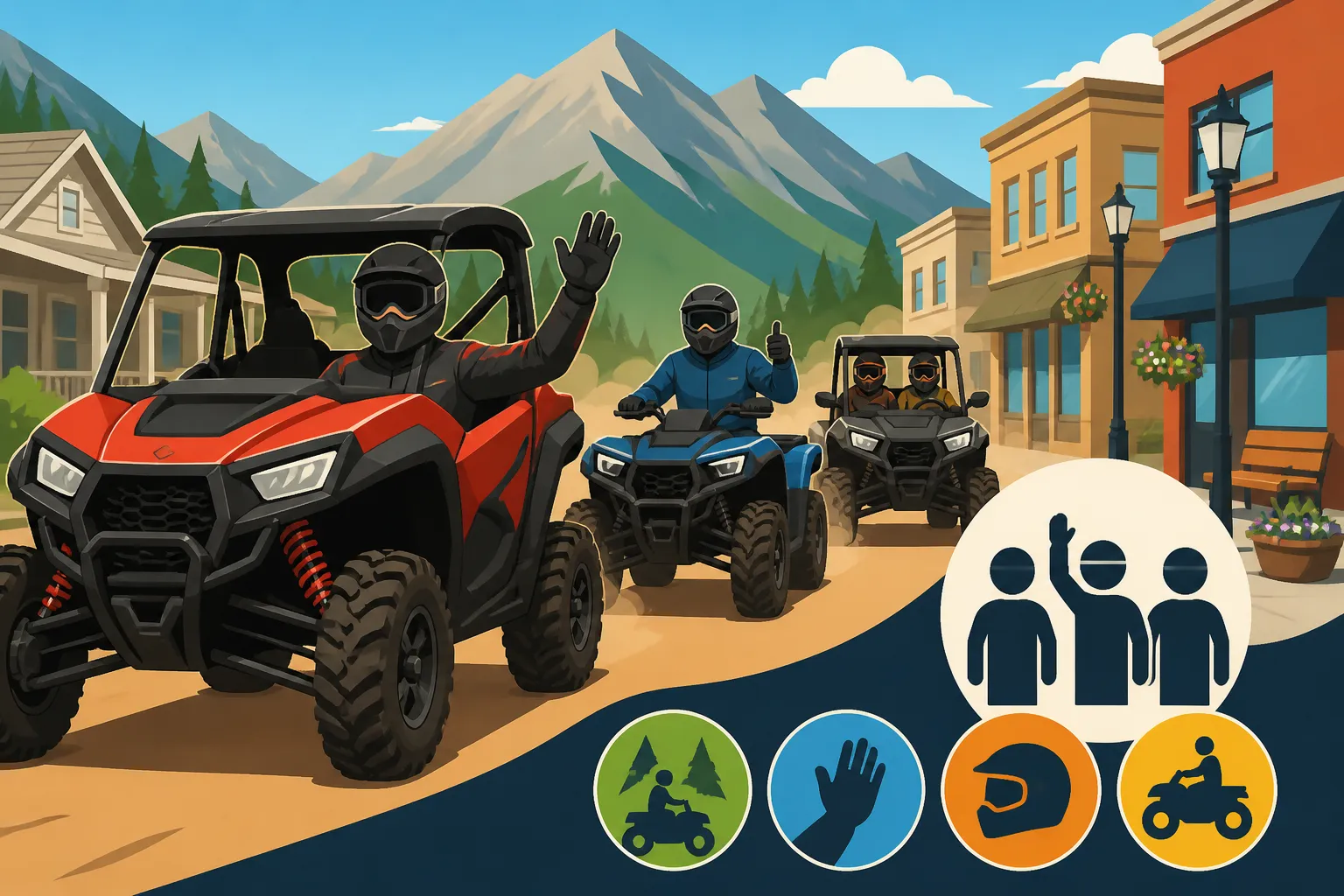
It might sound simple, but a smile and a friendly wave can work wonders. When you pass locals on the street, tip your helmet or offer a quick wave. If someone asks you a question about your machine or your ride, take a moment to answer politely. These small gestures show that you acknowledge their presence, appreciate their town, and are not just passing through without a care. It humanizes the experience and often diffuses potential frustrations before they even start.
Remember, many of these small towns rely on tourism, and while OHV riders might not be their traditional demographic, they are still visitors spending money. Being a positive ambassador for the sport can turn skeptics into supporters. A positive interaction can change someone's entire outlook on OHV riders, making them more inclined to advocate for continued access or simply offer a welcoming smile to the next group that comes through.
Navigating Ranger and Sheriff Checks
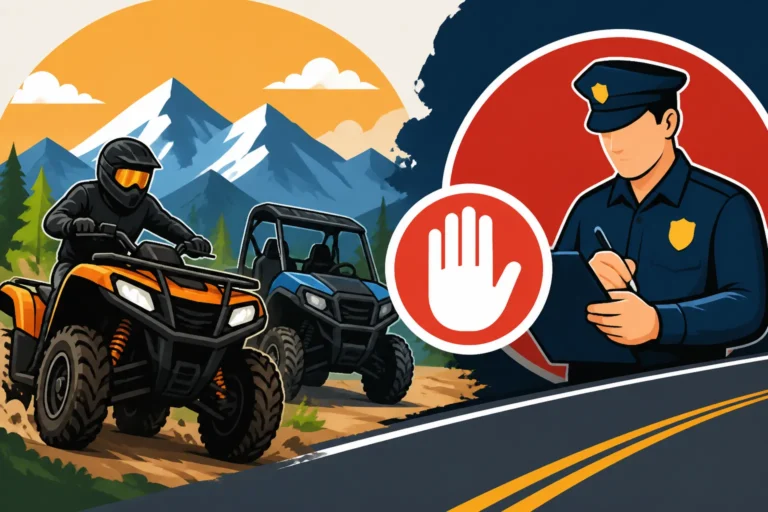
It's not uncommon to encounter local law enforcement or park rangers in or near Colorado trail towns, especially during peak season. They are there to ensure everyone is following the rules, both for safety and to maintain order. If you or your group are flagged down, pull over safely and promptly. Be courteous and cooperative. Have your [Colorado OHV Registration] or [Colorado Non-Resident OHV Permit] readily available, along with your driver's license and any other required paperwork.
Rangers and sheriffs are simply doing their job, and a polite, respectful interaction will always lead to a better outcome. If you're asked about your route or destination, provide the information clearly. Avoid arguing or becoming defensive, even if you feel you haven't done anything wrong. Many times, these are routine checks, like [Ranger Checkpoints at Trailheads], to verify permits and ensure compliance with [Colorado Alcohol Limits for OHV Operators]. If you have accessories like SuperATV mirrors, ensure they are clean and adjusted, providing clear visibility so you're always aware of your surroundings and any approaching officials. Being prepared and polite can turn a potential hassle into a quick and easy stop, allowing you to get back to enjoying your ride without unnecessary delays or, worse, [Fines for an Unregistered OHV in Colorado].
Supporting Local Businesses Responsibly
Part of the appeal of riding through these towns is the opportunity to grab a bite, fuel up, or pick up a souvenir. Supporting local businesses is a great way to show appreciation for the community. However, do so responsibly. If your group is large, consider splitting up into smaller contingents when visiting a restaurant or shop so as not to overwhelm staff or monopolize all the space. Be patient if service is slower than you're used to – these are small towns, not big cities.
When [Fueling an OHV in a Colorado Trail Town], be mindful of gas station etiquette, especially if there are other vehicles waiting. Don't block pumps unnecessarily while you gather your group or buy snacks inside. Clean up any trash, and be considerate of restrooms. Remember, every dollar you spend helps the local economy, but how you spend it and how you behave while doing so leaves a lasting impression. Leave the town better than you found it, both in terms of physical cleanliness and the impression you leave on its residents.
Disclaimer
This article is for general informational purposes only and does not constitute professional advice. Laws, prices and regulations vary by location and change over time. Consult a qualified professional for guidance on your specific situation.